
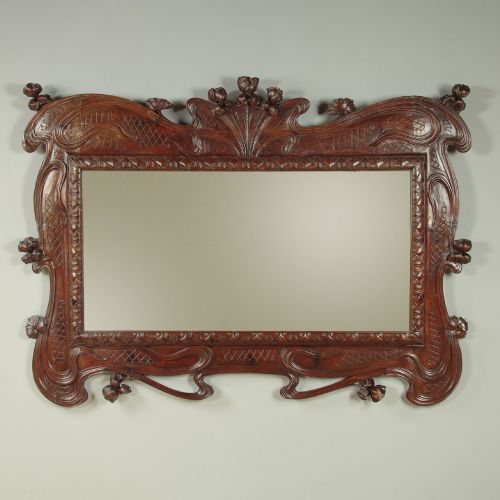
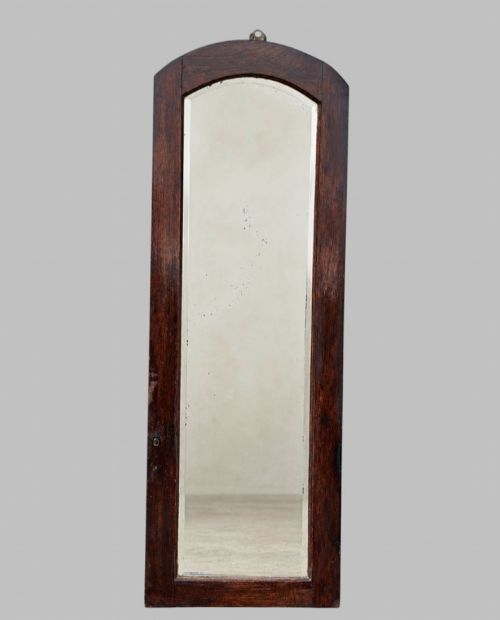
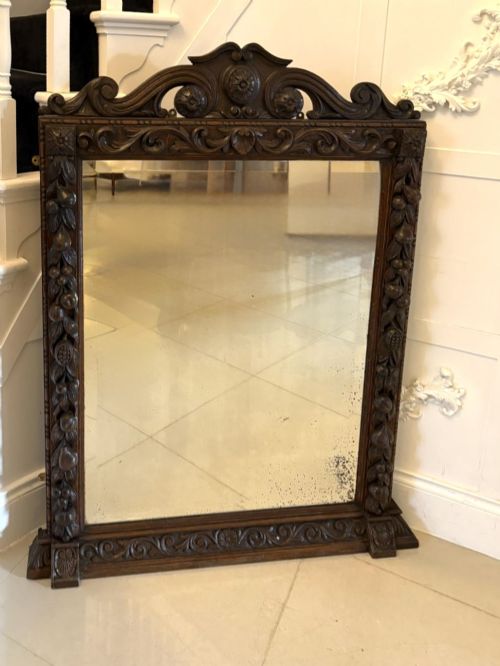
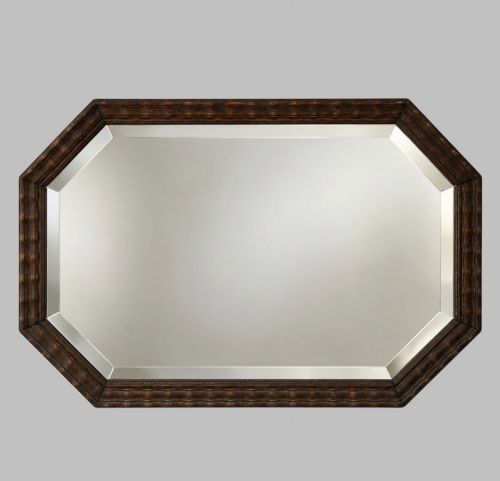
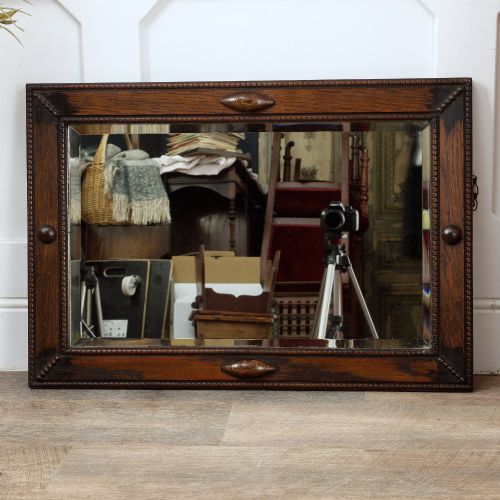
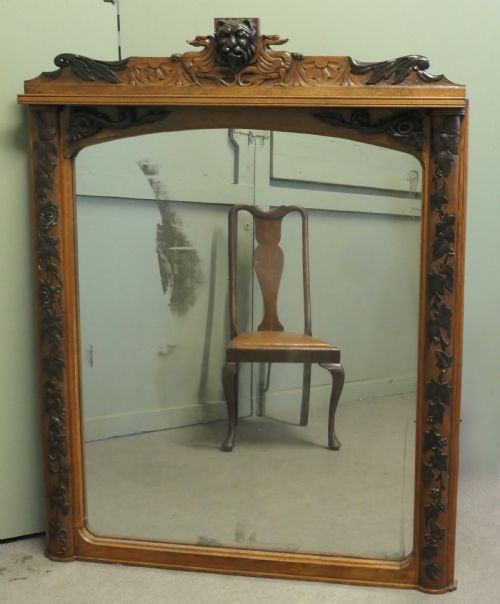
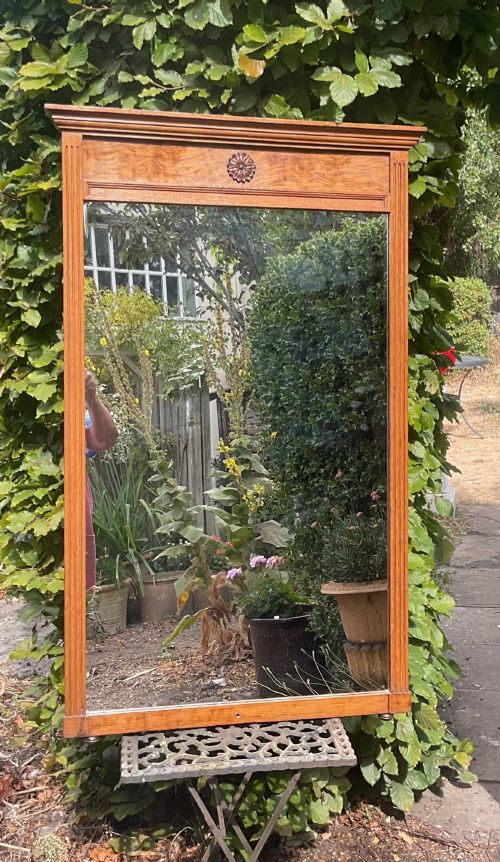
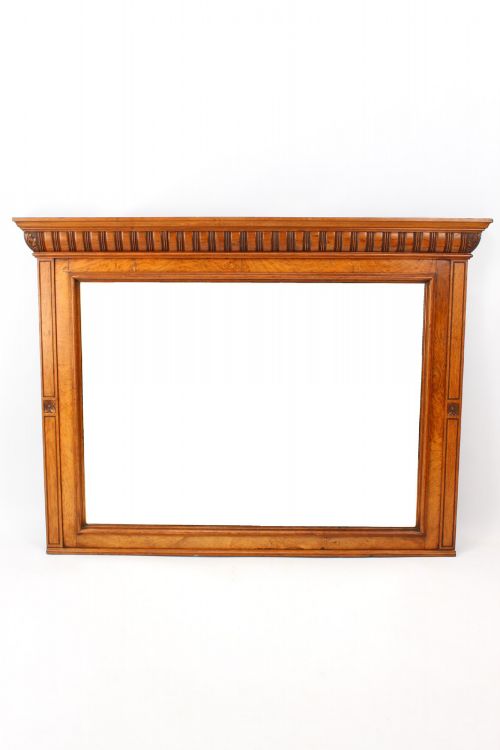
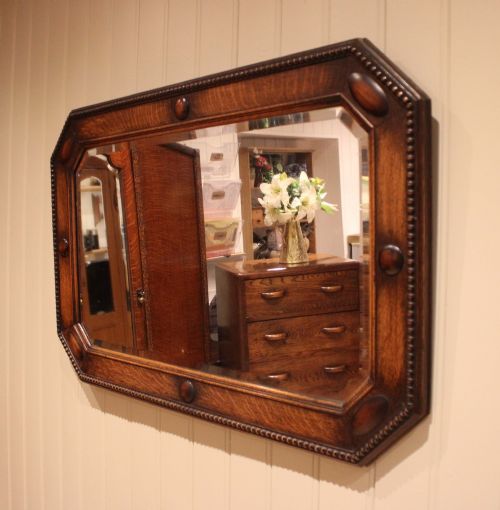
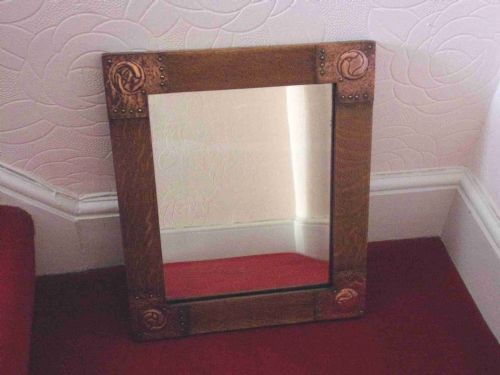
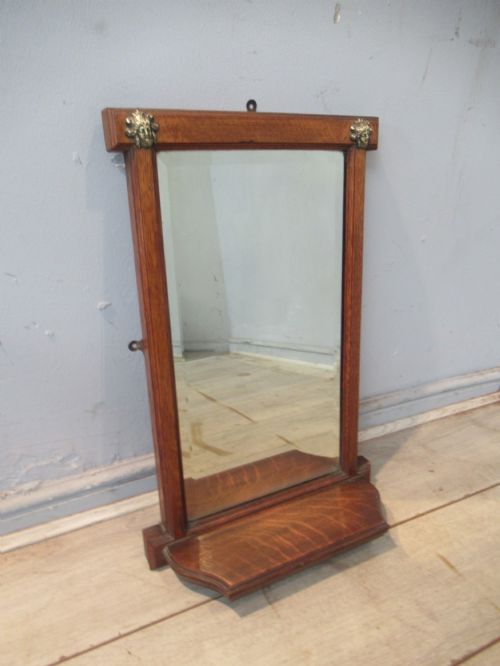

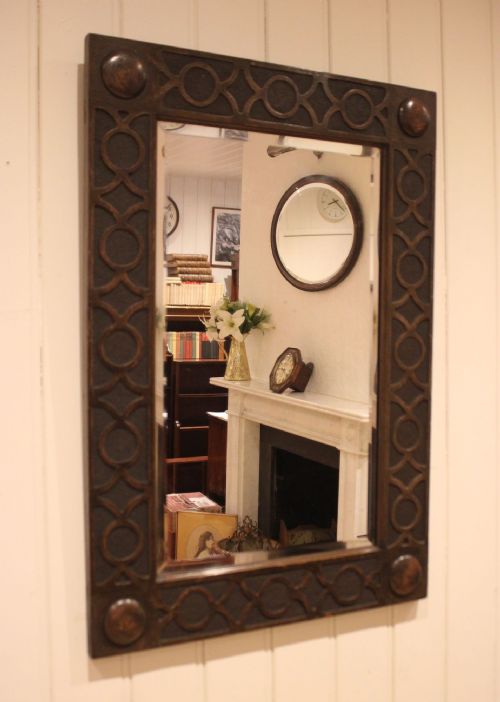


Edwardian Oak Framed Mirror
An edwardian oak framed mirror brings solid timber grain and bright glass into a hallway or living room, offering a sturdy piece of period craft.
Edwardian Oak Framed Mirror
An edwardian oak framed mirror appears in several domestic forms, most commonly as wall-hung rectangular, oval, or arched glasses intended for halls and living spaces. These pieces emerge from periods spanning the early twentieth century alongside late nineteenth-century examples.
Makers produced these mirrors in styles ranging from plain solid timber frames to heavily carved decorative borders, incorporating specific regional variations such as Welsh designs.
How they were made
Craftsmen utilised solid oak and blonde oak timbers, shaping frames through carving, gesso application, and occasional parcel-gilding.
Makers set heavy glass plates into the timber housings, frequently employing bevelled edges alongside auxiliary materials like brass and copper decorations.
Listings include styles from Arts and Crafts to Gothic Revival, utilising oak, brass, copper, and gesso.
What varies in quality
The standard of carving and the depth of timber moulding distinguish basic utility pieces from elaborate workshop productions.
The inclusion of hand-bevelled glass plates and applied metalwork, such as copper Celtic knot motifs, separates simpler frames from finer examples.
Waring and Gillow·Rowley Gallery
The Edwardian Oak Framed Mirror Glossary
- Bevelled Glass
- Glass with an angled edge ground down to a thinner border, catching the light and adding depth to the reflection.
- Gesso
- A plaster-based mixture applied to wood frames to create a smooth surface for gilding or intricate moulded ornament.
- Overmantle Mirror
- A large mirror designed to hang specifically above a fireplace mantelpiece, often spanning the width of the hearth.
- Cheval Mirror
- A full-length dressing mirror suspended on a vertical pivoting frame supported by floor feet.
Edwardian Oak Framed Mirror: Frequently Asked Questions
Where should I hang an oak mirror?
These pieces suit entrance halls, living rooms above mantelpieces, or bedrooms where timber furniture predominates.
Their solid wood frames anchor surrounding decor while reflecting light into darker corners.
How do I identify an Edwardian frame?
Edwardian examples typically display lighter oak tones compared to dark Victorian pieces, often featuring simplified Arts and Crafts or Art Nouveau motifs.
Construction details and period timber patination help distinguish them from later reproductions.
Are the glass plates original?
Many mirrors retain their original bevelled glass plates, which often display subtle surface variations and age marks.
Original plates contribute significantly to the authenticity and character of the piece.
How do I care for the oak frame?
Maintain the wood by dusting with a dry cloth and occasionally applying suitable beeswax to nourish the timber grain.
Avoid placing the mirror in direct sunlight or damp environments to protect the frame and glass backing.