
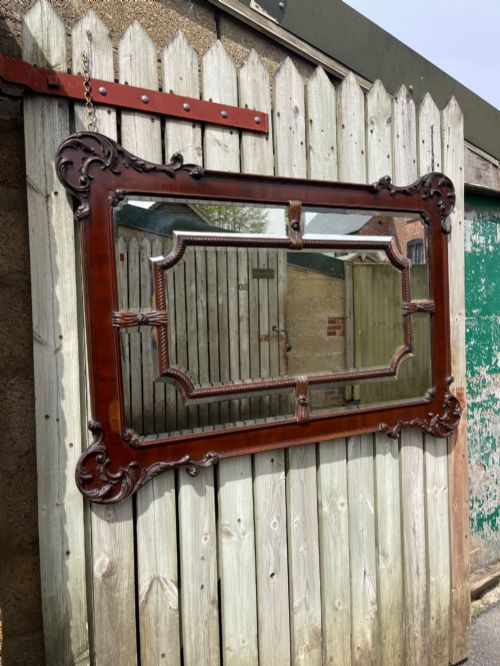


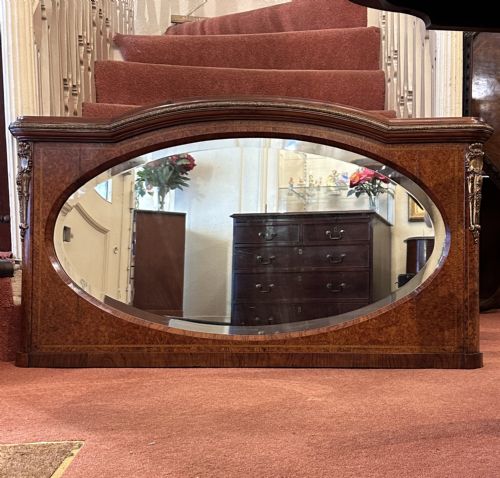


Victorian Bevelled Plate Mirror
A victorian bevelled plate mirror brings deep perspective and reflected light into a room, combining substantial timber or gilt frames with distinctive angled edges.
Victorian Bevelled Plate Mirror
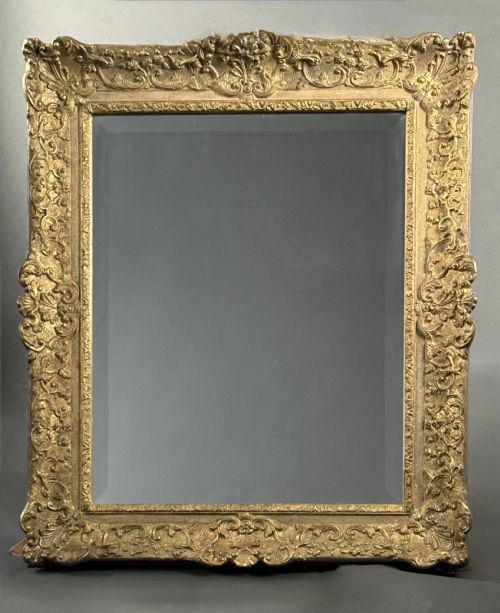
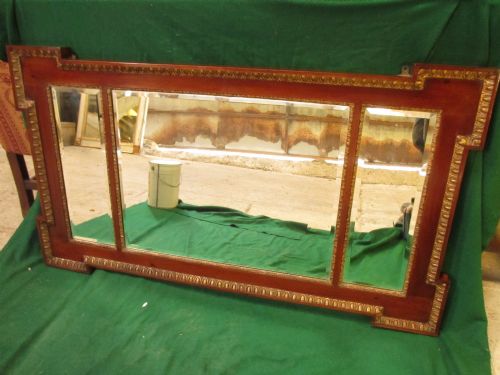
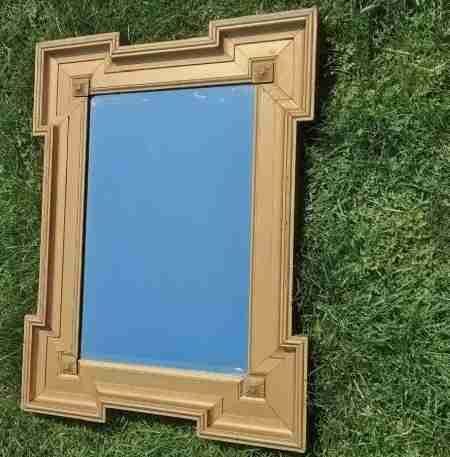
When you search for a victorian bevelled plate mirror, you encounter wall mirrors, overmantels, and vanity pieces that rely on angled glass edges to catch the light. The pieces on this page span the nineteenth century and into the Edwardian period, utilising sturdy wooden and gilt frames.
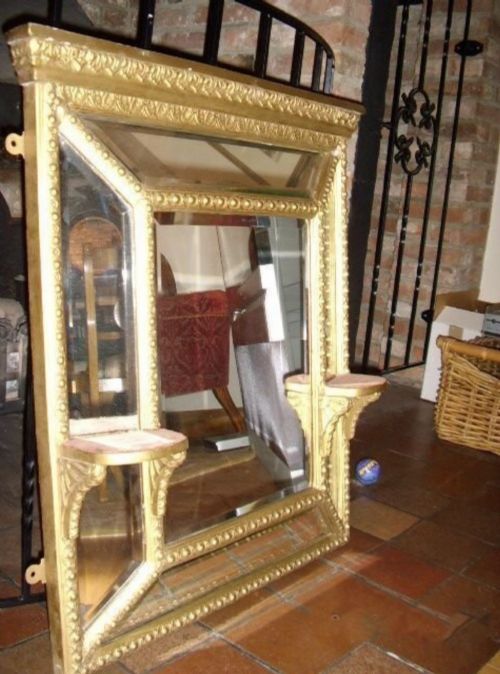
Most examples take the form of wall mirrors or large overmantels designed to sit above a fireplace. You also find specialised items such as horseshoe mirrors, cushion mirrors with ornament shelves, and hall racks fitted with brass hooks.
The styles range from straightforward Victorian oak and mahogany designs to elaborate Rococo Revival giltwood and nineteenth century French pieces. A smaller selection includes Edwardian interpretations and later twentieth century sectional pieces that maintain the heavy plate glass tradition.
Materials and construction methods
Makers utilised heavy glass plates alongside durable structural timbers such as mahogany, oak, and burr yew-wood. Frames were often enriched with gesso mouldings or finished in giltwood, while brass elements appeared as hooks or decorative mounts.
The characteristic bevel along the edge of the mirror glass required careful hand-grinding and polishing to achieve a precise angled slope. Gilt frames combined carved wood or gesso layers beneath gold leaf or metallic paint, creating a reflective border that complemented the central glass.
Listings feature periods spanning the nineteenth century, the Victorian era, the Edwardian period, and the nineteen-twenties alongside materials like mahogany, oak, gesso, and giltwood.
Distinctions in quality and execution
The division between standard items and superior examples rests on the depth and clarity of the glass bevelling alongside the crispness of the frame carving. Finer frames show hand-applied gesso work and well-joined timbers like burr yew or rich mahogany rather than simpler mouldings.
Consideration also belongs to the integrity of the original plate glass and the retention of early gilding. Pieces that preserve their original backing and unblemished silvering hold a stronger material presence than those with heavily degraded reflection.
The Victorian Bevelled Plate Mirror Glossary
- Bevelled glass
- Glass with an angled edge ground and polished down to a thinner perimeter. This technique creates a prismatic light effect around the margin of the mirror.
- Gesso
- A plaster-like mixture applied to wood frames and carved or moulded into decorative relief before gilding. It provides a smooth base for gold leaf.
- Giltwood
- Timber carved and coated with gold leaf or metallic powder. It defines the bright, ornate appearance found in revival frames.
- Overmantel mirror
- A large horizontal mirror designed specifically to hang on the wall directly above a fireplace mantelpiece. These pieces often feature architectural or arched frames.
- Cushion mirror
- A mirror featuring a convex or swelling frame profile that projects outward from the wall. This form was popular for adding depth and complex reflection to a space.
Victorian Bevelled Plate Mirror: Frequently Asked Questions
Where should I hang a large overmantel mirror?
These large mirrors traditionally sit directly above a fireplace mantel to anchor the room and reflect natural light from windows opposite.
Ensure the wall fixings are secured into solid masonry or proper studs because the combination of thick glass and wooden or gilt frames adds considerable weight.
How do I clean the original glass safely?
Use a soft microfiber cloth and a mild, ammonia-free glass cleaner applied to the cloth rather than directly onto the mirror surface. This prevents moisture from seeping behind the bevelled edges and damaging the older silvering.
Avoid abrasive pads or harsh chemicals that can scratch the glass or strip the aged patina from the surrounding frame.
Are these mirrors suitable for hallways?
Smaller wall mirrors, hall racks, and vanity pieces fit narrow corridors well by bouncing light into darker transitional spaces. Models fitted with brass hooks offer practical utility alongside their decorative reflection.
Check the dimensions carefully to ensure the frame projection does not obstruct movement in tight spaces.
What indicates a nineteenth century frame style?
Nineteenth century frames frequently draw on Rococo Revival, Gothic Revival, or French aesthetic influences, showing deep mouldings, egg and dart motifs, or elaborate gesso ornamentation. The use of solid mahogany, oak, or heavy giltwood provides a strong period indicator.
Examining the construction joints and the thickness of the glass plate helps confirm the era of manufacture.