
Carved Oak Buffet Dresser
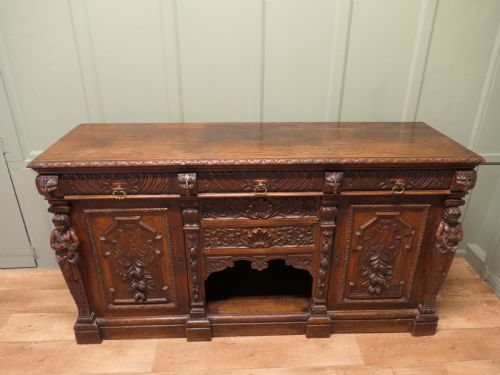
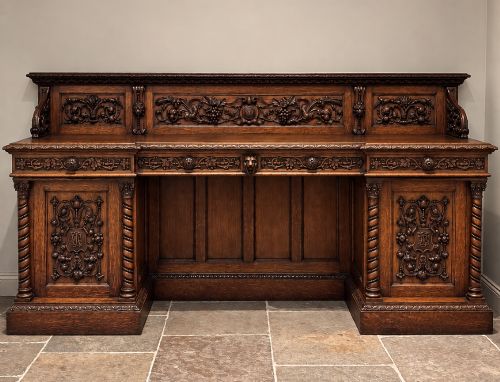
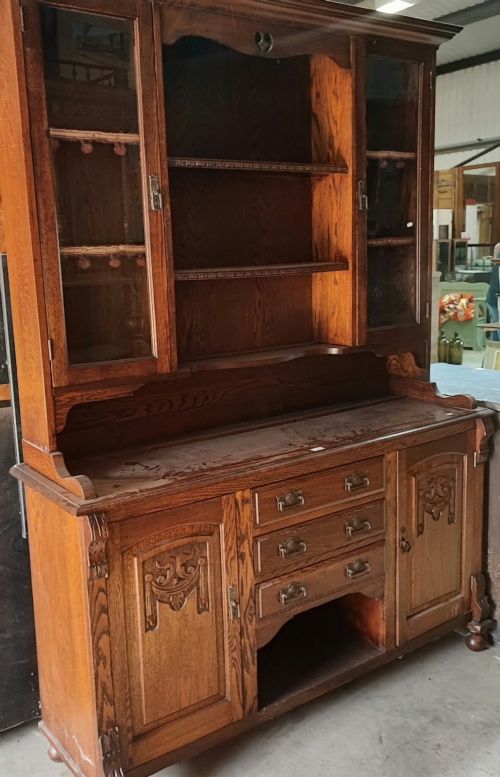
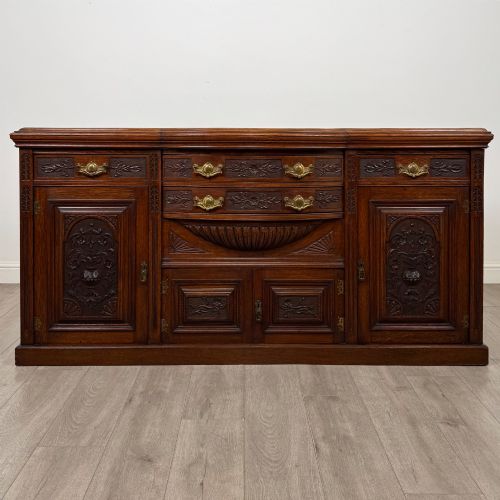
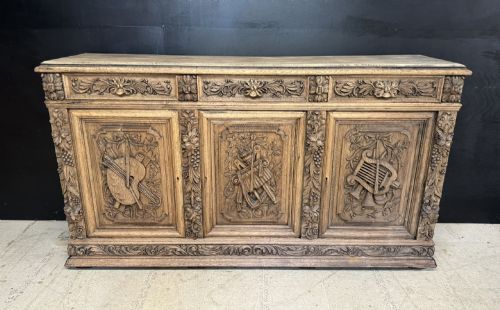
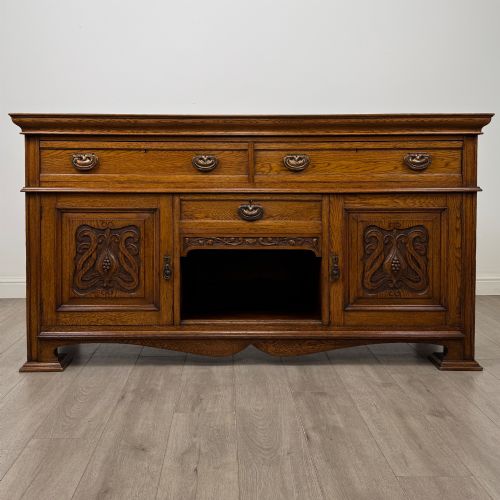
These carved oak buffet dresser pieces combine utility with deep-relief decoration, emerging mostly from the Victorian, Edwardian, and 19th-century periods.
Carved Oak Buffet Dresser
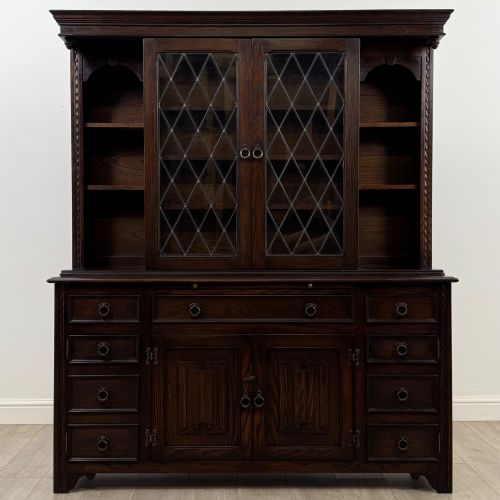
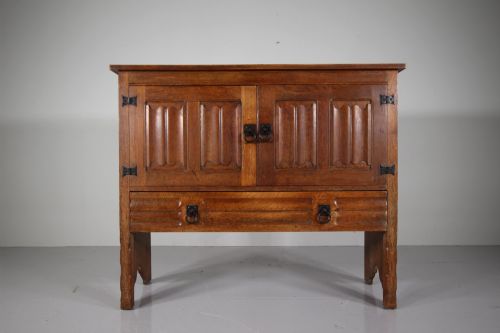
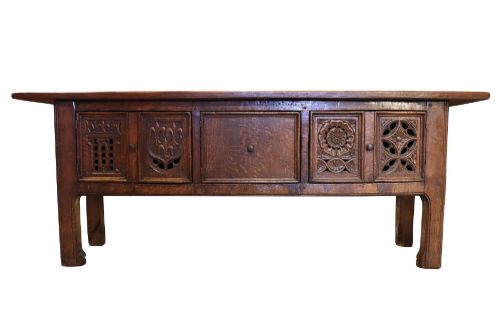
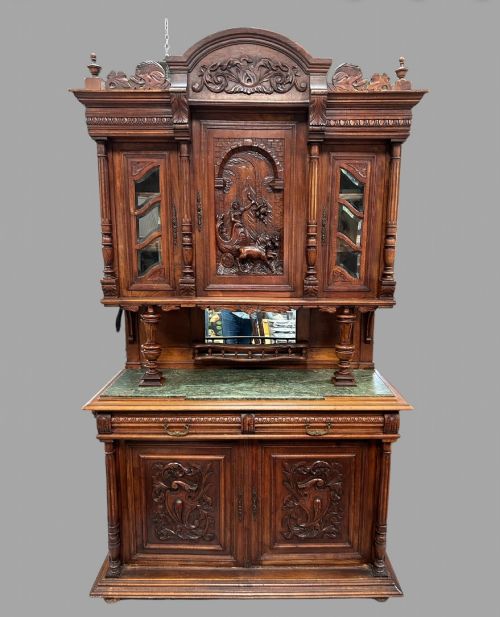
A carved oak buffet dresser serves as a substantial storage vessel for dining rooms and halls, combining surface display with enclosed cupboards or drawers. The pieces seen here span the 17th century through to the 1930s, encompassing Georgian, Victorian, and Edwardian eras.
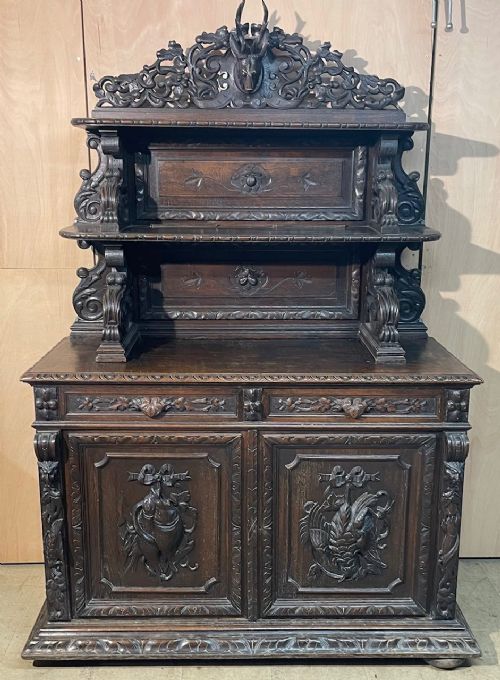
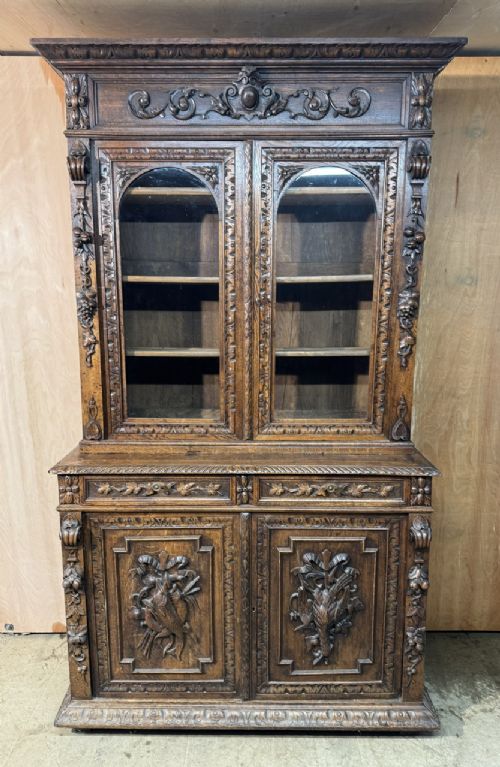
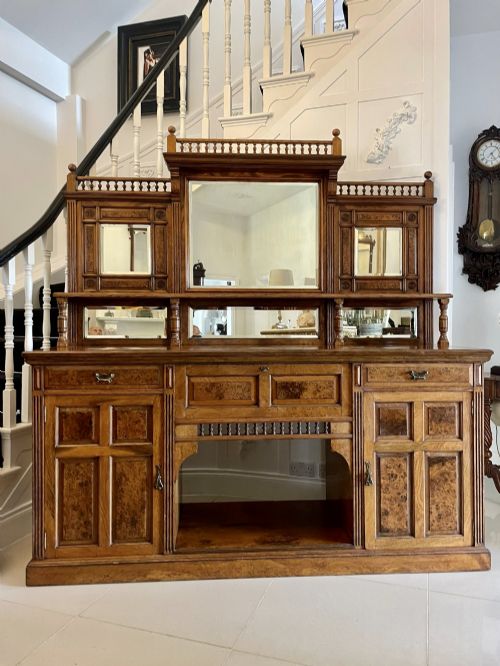
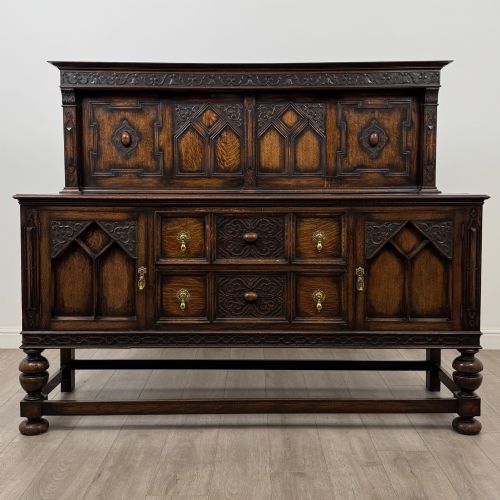
Buyers most frequently encounter Edwardian and 19th-century examples, often fashioned in revivalist modes such as Jacobean, Gothic, and Arts and Crafts. Forms range from low dresser bases and court cupboards to tall mirror-back sideboards and French hunting buffets.
Markers of Quality
Quality depends upon the crispness and depth of the hand carving, where purposeful chiselling separates master work from mechanical factory output. Heavy, flat ornamentation indicates mass-produced revival pieces, whereas sharp undercutting shows genuine hand-tooled execution.
Timber selection dictates the overall presence, with quarter-sawn golden oak or figured pollard oak displaying superior medullary rays. Structural integrity, original brasses, and untouched patination elevate examples originating from workshops such as Heal and Son or James Schoolbred.
Listings feature oak alongside iron, brass, copper, and mirrored glass.
Ambrose Heal for Heal & Son
The Carved Oak Buffet Dresser Glossary
- Court cupboard
- A short, enclosed cupboard, often featuring a recessed upper section supported by turned pillars, used historically for storing food and plate.
- Jacobean Revival
- A 19th-century style imitating 17th-century English furniture through geometric panelling, strapwork, and heavy proportions.
- Barley-twist
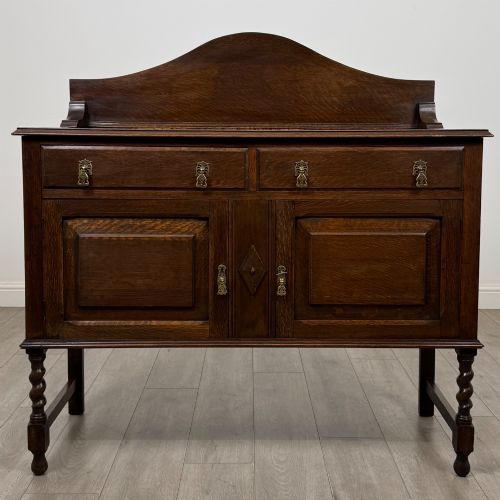
- A turned wooden column resembling a twisted rope, commonly found supporting shelves or framing the doors of 19th-century and Edwardian sideboards.
- Enfilade
- A suite of rooms or a long piece of furniture with a continuous line of three or more doors, typical of French 18th-century design.
- Dresser base
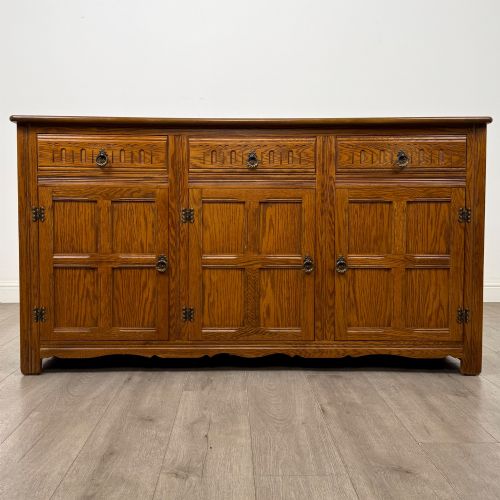
- A low, long cabinet fitted with drawers and cupboards beneath a flat top, omitting the plate racks found on taller Welsh dressers.
Carved Oak Buffet Dresser: Frequently Asked Questions
How do I care for a carved oak surface?
Apply a natural beeswax periodically using a soft cloth, buffing gently along the grain to feed the timber and preserve the patina.
Avoid placing these heavy wooden pieces near direct heat sources or in damp rooms to prevent the oak from splitting.
Can I use a buffet dresser in a modern kitchen?
These robust cabinets offer generous storage for tableware, linens, and dry goods, making them practical additions to contemporary dining spaces.
Measure doorways carefully before purchase, as these solid timber units arrive fully assembled and possess considerable weight.
How do I distinguish Jacobean Revival from original 17th-century pieces?
Revival items produced during the 19th and 20th centuries typically feature machine-cut secondary woods and standardised screw fixings behind the panels.
Original 17th-century work displays hand-riven timbers, irregular peg construction, and wear patterns consistent with centuries of domestic use.
What is the difference between a buffet and a sideboard?
A buffet traditionally incorporates tiered surfaces or cupboards specifically designed for serving food and displaying silver vessels.
Sideboards generally focus on drawer storage and flat top space, though the terms overlap frequently in antique descriptions.