
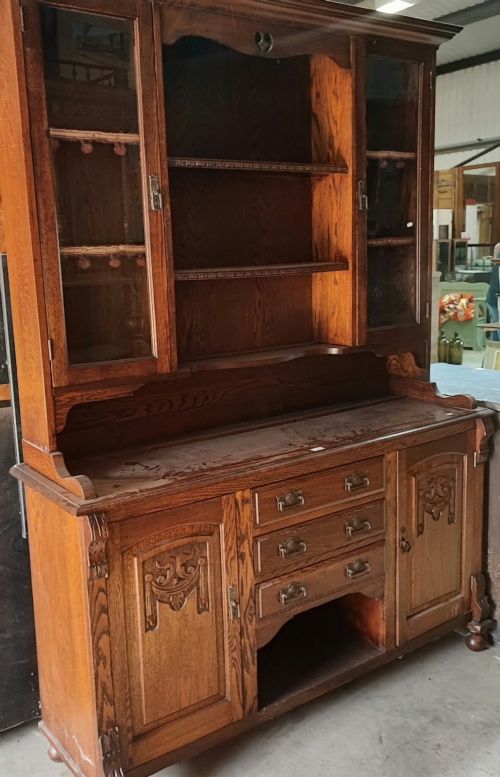
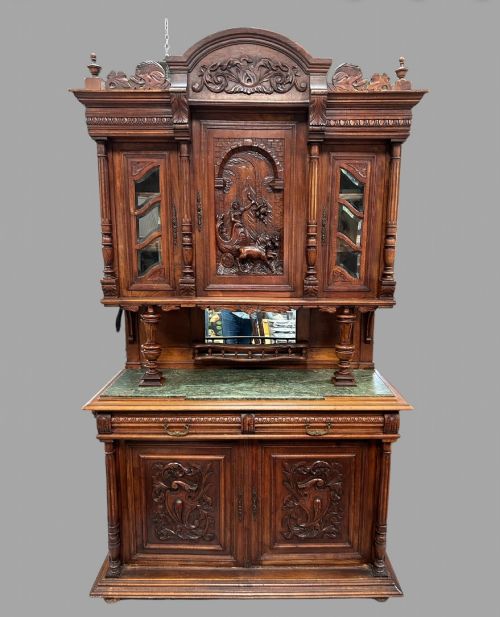
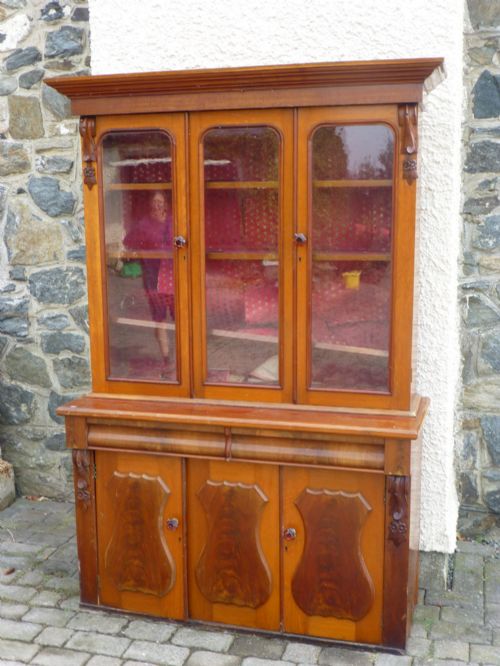
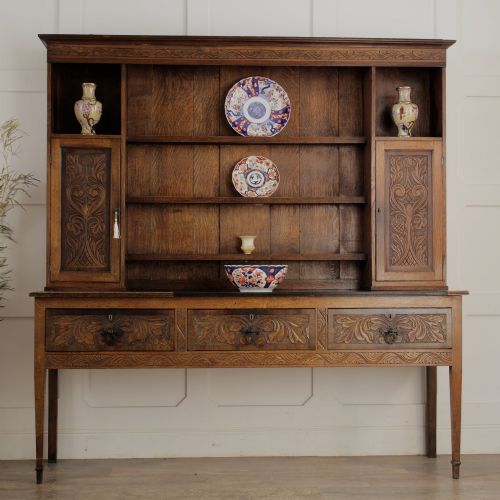
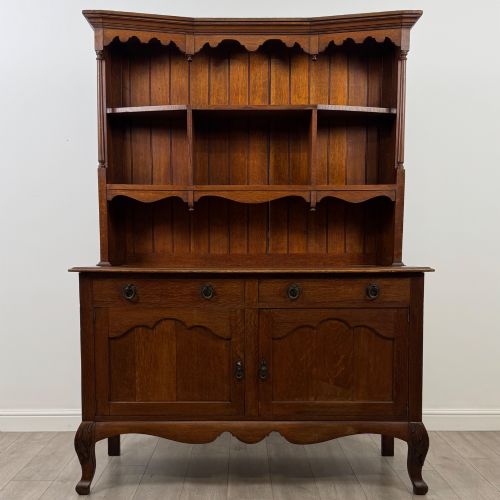
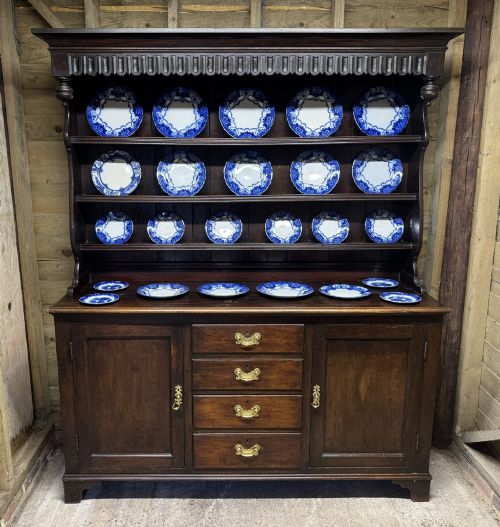
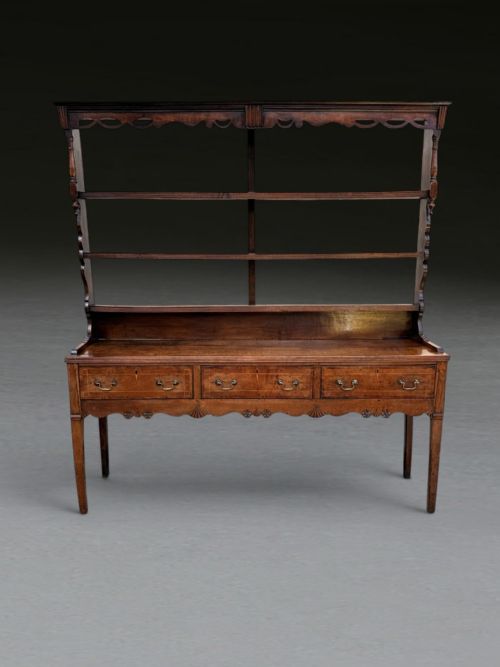
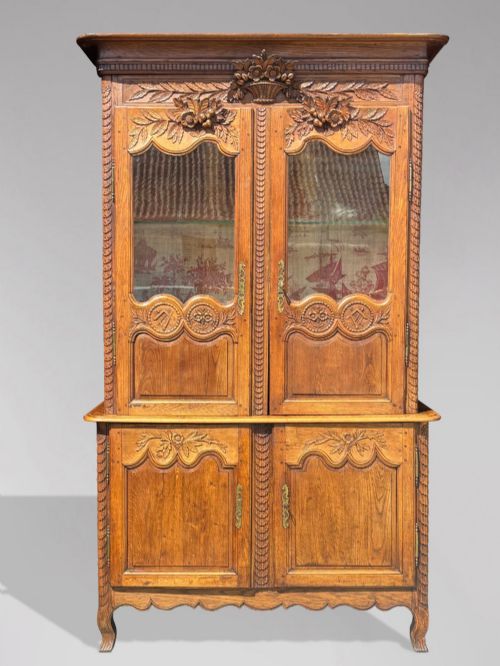


Carved Oak Kitchen Dresser
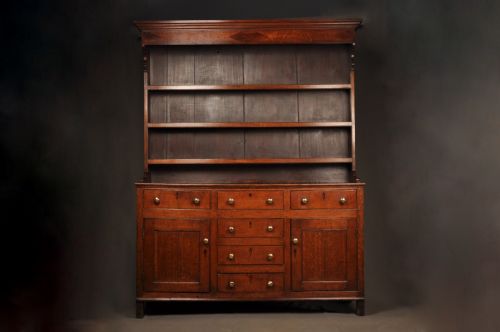
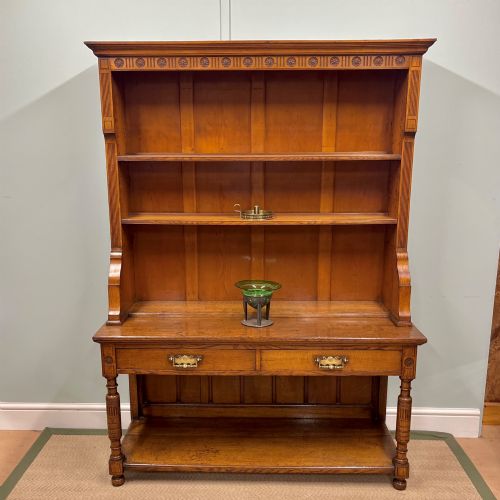
A carved oak kitchen dresser brings rustic warmth and practical storage to a room, offering sturdy shelves for display and deep cupboards below.
Understanding the carved oak kitchen dresser
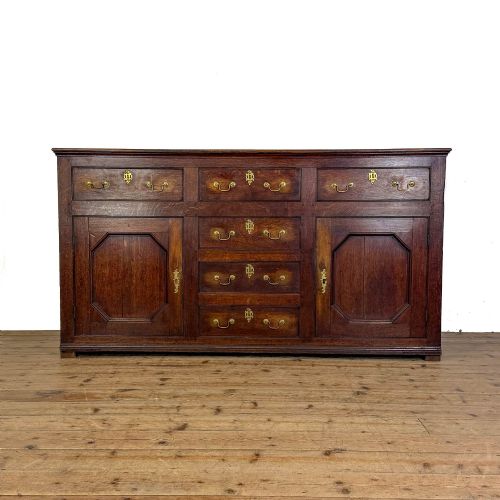
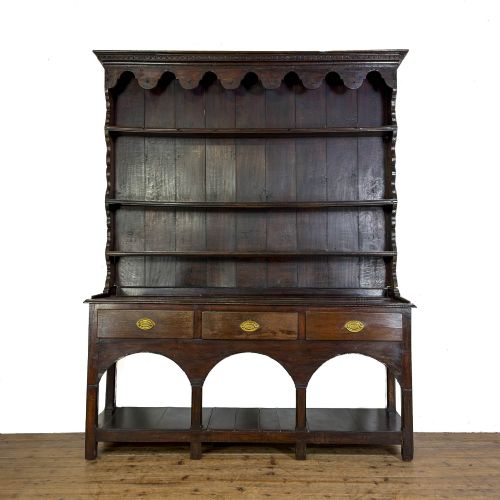
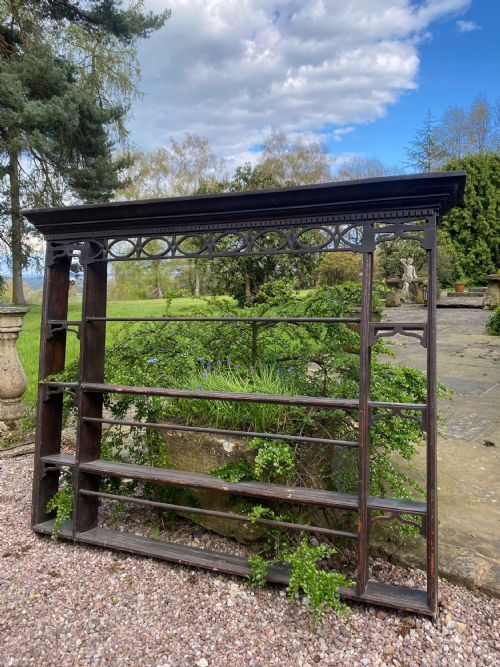
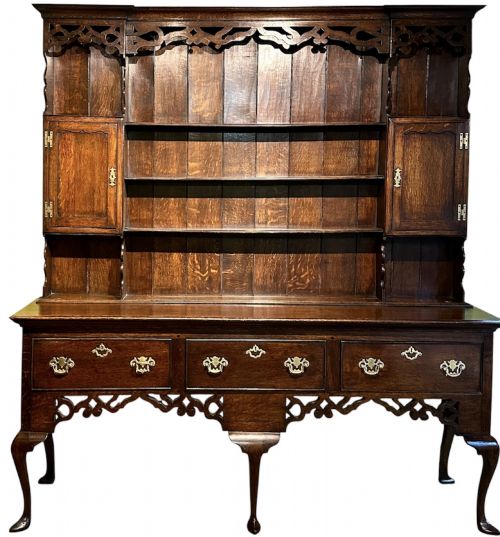
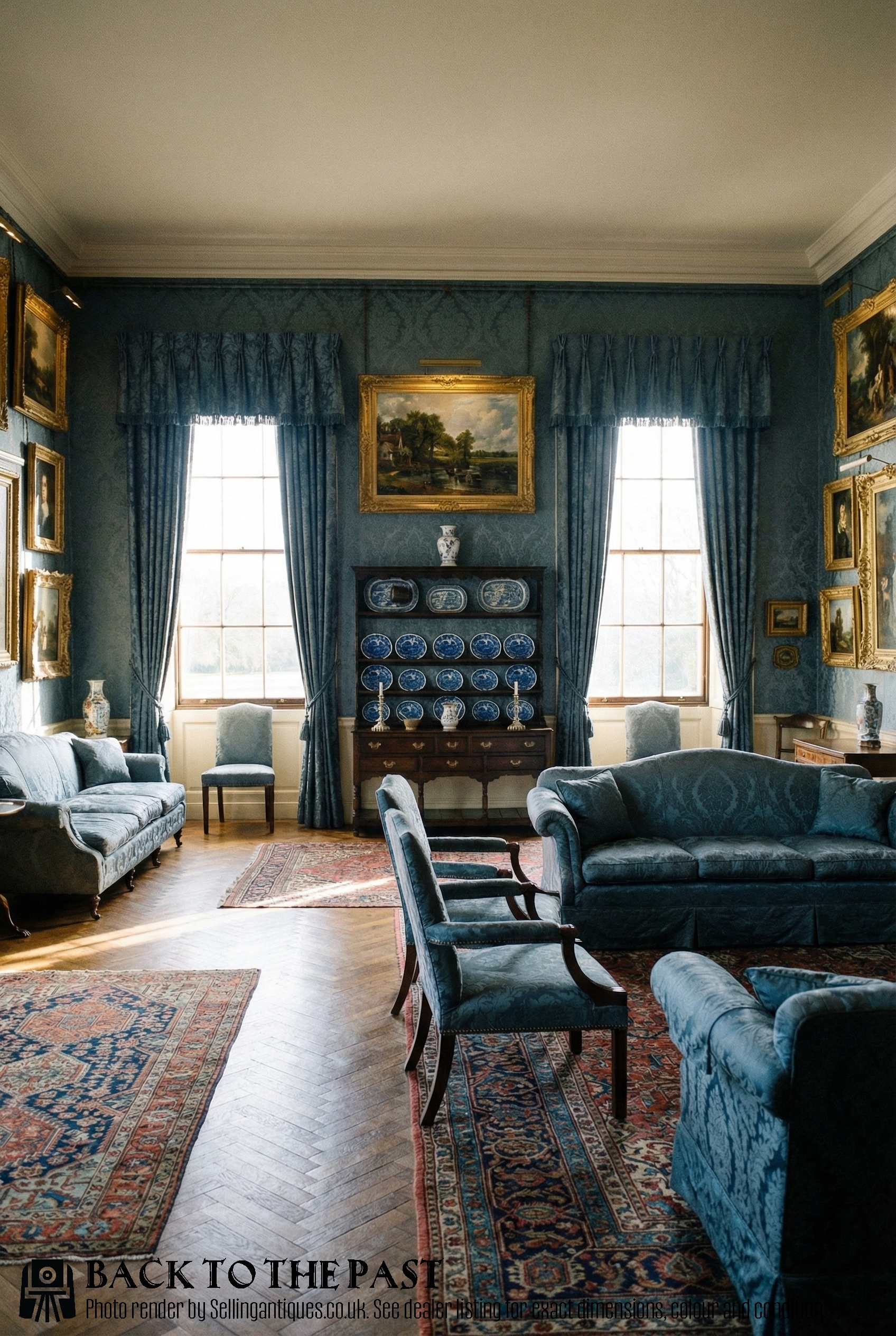
A carved oak kitchen dresser forms the backbone of country house utility, combining an upper plate rack with a heavy base unit for storage. These pieces emerge in styles ranging from Georgian and English Country to Welsh Country Vernacular and Jacobean Revival.
Buyers encounter examples spanning from the mid-eighteenth century up to the early twentieth century. The selection includes potboard dressers, pieces with cabriole legs, and items featuring carved bases.
Regional variations appear clearly in Welsh dressers, which often integrate generous plate racks above substantial wooden counters. Later interpretations adopt Jacobean revival motifs or cleaner twentieth-century proportions while retaining the core utility.
Materials and construction
Carpenters built these dressers primarily using solid oak, chosen for its durability and resistance to daily wear in busy kitchens. Metal fittings and brass handles appear as functional hardware on doors and drawers.
Makers shaped the timber using traditional joinery techniques, incorporating fielded panels, pegged joints, and hand-carved details along the friezes and baseboards. Potboard versions feature open lower slatted shelves designed to hold heavy earthenware and platters.
Retail Price Guide 2026
Typical UK retail prices for carved oak kitchen dresser, calculated from the Sellingantiques database of over a million retail prices indexed since 2003. This retail price guide relies exclusively on Sellingantiques data; no external sources or auction records are used, so the figures do not describe the wider market.
The listings span from seventeen-fifty through the early twentieth century, utilising oak, brass, and metal across Georgian, Jacobean Revival, and vernacular styles.
Judging quality in oak dressers
Quality rests upon the proportion of the timber, the depth of the carving, and the integrity of the original construction. Earlier eighteenth-century examples display hand-planed surfaces and patination that develop naturally through decades of use.
Later twentieth-century revivals rely on mechanised cutting and heavier applied ornamentation. Superior pieces maintain crisp detail in their carved panels and balanced proportions between the upper shelving and the lower base.
The Carved Oak Kitchen Dresser Glossary
- Potboard
- A lower slatted shelf beneath a dresser base, traditionally used for storing pots and pans. This feature is especially common in Welsh country furniture.
- Cabriole leg
- A furniture leg that curves outward and then tapers inward, ending in a pad or foot. This form appears on finer Georgian pieces.
- Welsh dresser
- A traditional tall piece of furniture featuring plate racks above a sideboard base. It serves both display and storage functions in the kitchen.
- Jacobean Revival
- A nineteenth or twentieth-century style imitating seventeenth-century English design. It typically incorporates geometric moulding and heavy strapwork carving.
- Patina
- The surface sheen and colour developed by aged oak through handling and polishing over centuries. It indicates genuine age and use.
Frequently Asked Questions
How do I date an oak dresser?
Dating relies on examining the timber grain, tool marks, joinery methods, and overall style. Eighteenth-century pieces show hand-planed boards and pegged joints.
Later revivals from the twentieth century utilise more uniform machine-sawn timber and standardised hardware fixings.
What is a potboard dresser?
A potboard dresser includes an open slatted shelf fixed near the floor beneath the main cupboards or drawers. This design provided dry storage for heavy earthenware vessels in older kitchens.
Over time, these open lower shelves became a defining characteristic of country vernacular furniture.
Are Welsh dressers different?
Welsh dressers traditionally feature taller open plate racks integrated directly into the upper section. They were designed to showcase everyday ceramic plates and serving platters.
English regional variations often placed greater emphasis on enclosed cupboards or distinct base configurations.
How do I care for antique oak?
Antique oak benefits from occasional applications of natural beeswax to nourish the wood and preserve the surface sheen. Avoid placing timber furniture near direct heat sources or in areas with high humidity.
Regular dusting with a soft dry cloth prevents dirt accumulation in carved recesses.