

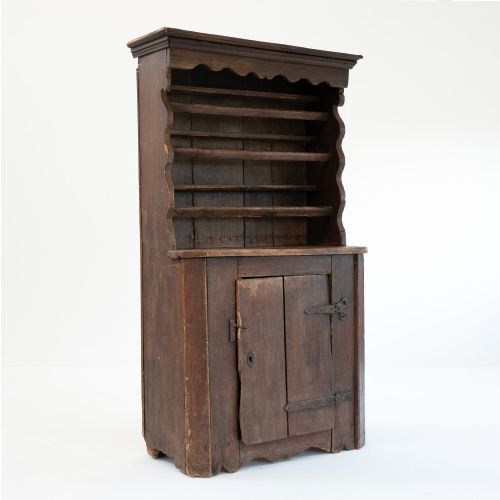
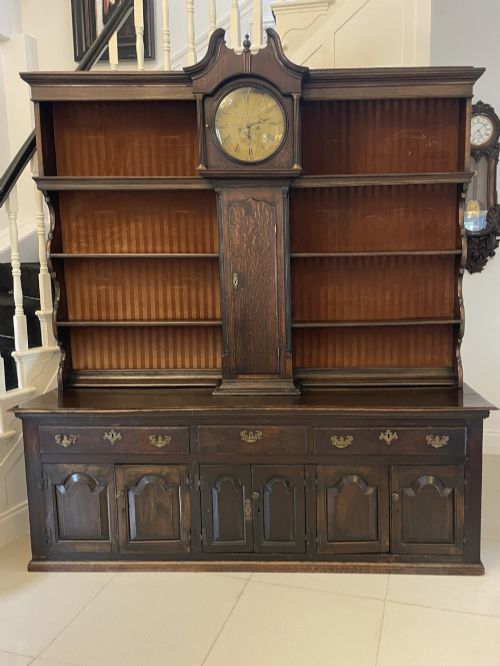
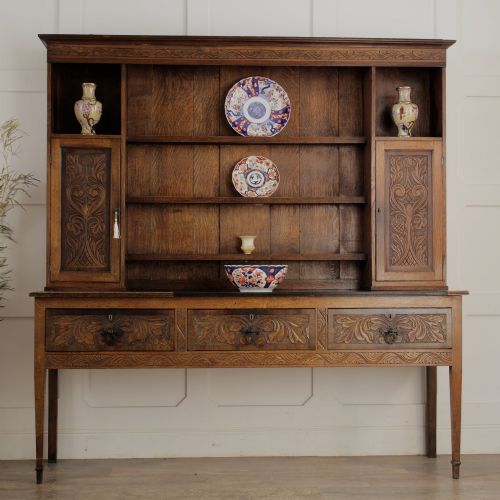
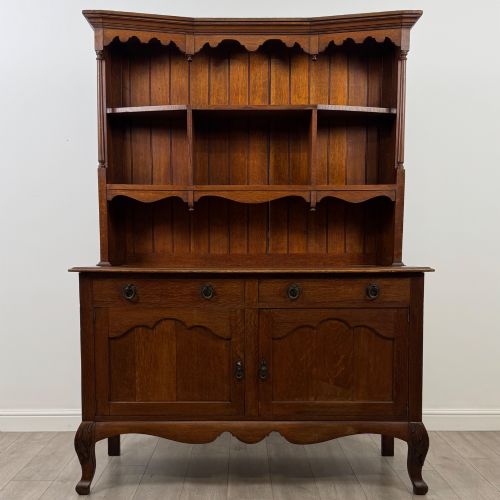
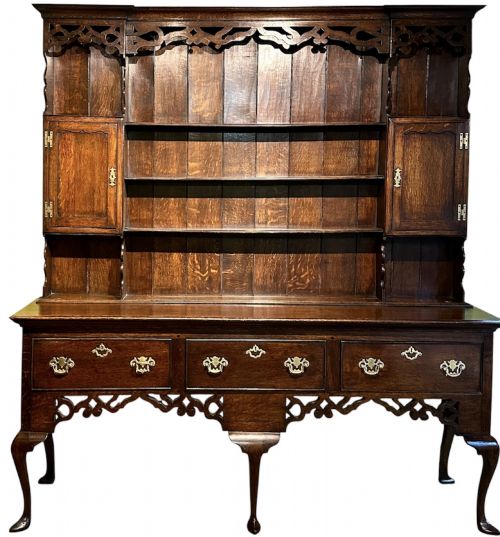
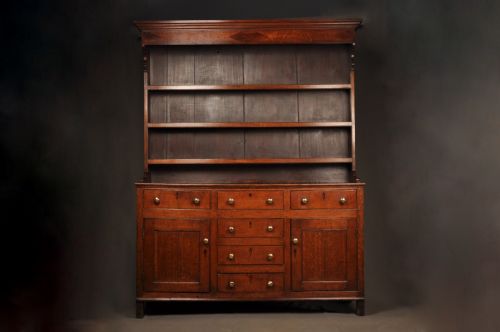

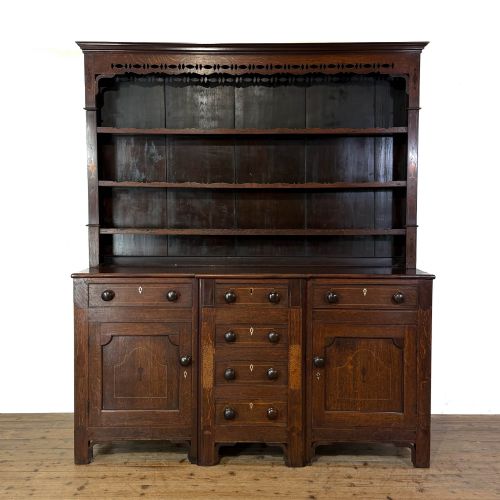


Antique Plate Rack Cupboard
An antique plate rack cupboard combines open display shelves with enclosed storage, offering practical kitchen furniture built to hold vernacular ceramics.
Antique Plate Rack Cupboard
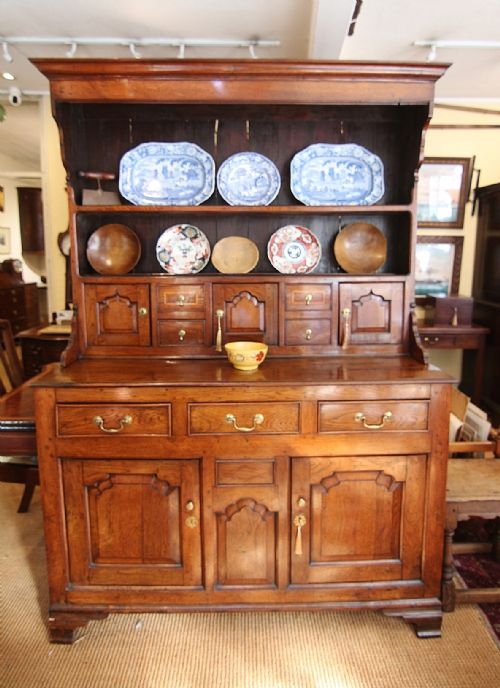
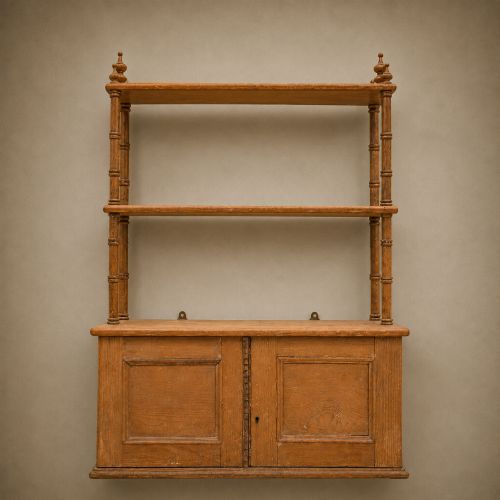
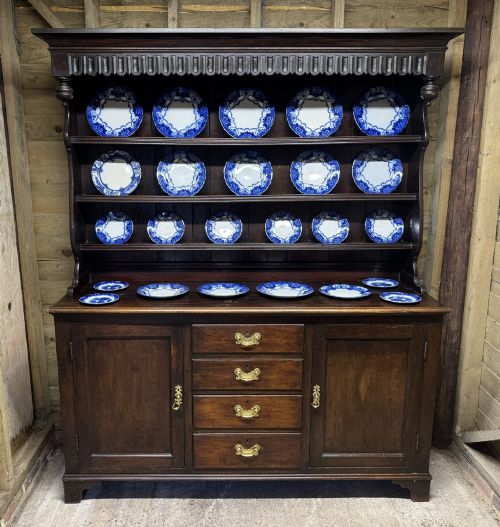
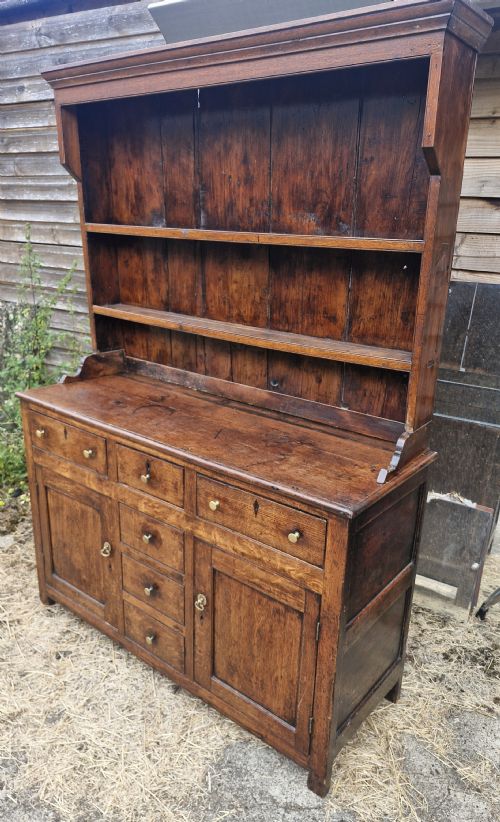
When you search for an antique plate rack cupboard, you are looking at substantial kitchen and dining furniture that pairs a plate rack superstructure with a lower base of drawers, cupboards, or open pot boards. The pieces available here span the eighteenth and nineteenth centuries, originating from regional workshops in Wales, England, Ireland, and continental Europe.
The version you are most likely to meet on this page is the regional country dresser in oak or pine, often featuring an open-backed or boarded rack above a working base. These utilitarian forms served generations of rural households for storing and displaying everyday tableware.
Regional variations dominate the selection, including Welsh vernacular forms, North and South Wales workshops, and English country pieces built in local timbers. Simpler cottage iterations sit alongside larger George III examples and provincial adaptations from the nineteenth century.
Materials and construction
Joiners built these cupboards primarily using native hardwoods and softwoods, predominantly oak and pine, occasionally incorporating elm, mahogany, and painted wood surfaces. Boards were hand-planed and joined using traditional methods suited to domestic workshops.
Surface treatments vary from bare stripped timber and warm golden wax finishes to historic painted coats and folk art decoration. Iron and brass hardware secures doors and drawers, while bone details appear on select decorative elements.
Some nineteenth-century cupboards hide fierce Green Man carvings among their foliage, keeping a watchful glass eye on the kitchen butter.
Judging quality and integrity
Quality rests upon the integrity of the timber, the proportion of the upper rack to the lower base, and the survival of original surface finishes. Pieces retain greater merit when racks and bases belong together as a unified creation rather than being married at a later date.
The crispness of vernacular carvings, such as Green Man motifs or regional panel detailing, distinguishes superior examples from standard utility furniture. Original brass or iron hardware and untouched patination elevate the standing of a piece considerably.
The Antique Plate Rack Cupboard Glossary
- Pot board
- A low slatted or boarded shelf positioned near the floor between the legs of a dresser, originally designed to hold heavy pots and pans out of the way. This lower platform defines many traditional country kitchen pieces.
- Breakfront
- A cabinet design where the central section projects forward from the flanking outer sections. This architectural arrangement creates depth and visual rhythm across the lower drawer or cupboard run.
- Vernacular
- Everyday furniture built by local country joiners using regional traditions rather than strict London pattern books. These pieces reflect the specific materials and domestic needs of their immediate geographic area.
- Folk art
- Decorative work executed outside academic artistic traditions, often featuring hand-mixed paint and vernacular motifs. Farmhouse pieces frequently display this direct, unpretentious aesthetic.
- Provincial
- Of or relating to the regions outside the capital, characterised by robust construction and local stylistic quirks. Provincial furniture prioritises utilitarian strength over fashionable urban refinement.
Antique Plate Rack Cupboard: Frequently Asked Questions
What is a plate rack cupboard?
A plate rack cupboard is a traditional item of vernacular furniture that combines vertical shelving for displaying ceramic plates with a lower storage base of drawers and cupboards.
These pieces formed the heart of the historic kitchen or farmhouse dining area, keeping everyday tableware accessible while offering enclosed storage for provisions and linens.
How do I date an oak dresser?
Dating an oak dresser relies on examining the construction methods, timber characteristics, and regional stylistic traits visible in the woodwork and hardware.
Earlier eighteenth-century pieces often display hand-planed surfaces and pegged joints, whereas nineteenth-century iterations incorporate machine-sawn boards and alternative drawer construction.
Are the plate racks original to the bases?
Many racks and bases started life together, though some dressers have been paired or married over the centuries as utilitarian items were reconfigured in domestic settings.
Matching timber grain, colour, and wear patterns between the upper shelves and lower cupboards help confirm whether the two sections share a continuous history.
Where were these cupboards made?
These cupboards were made by local joiners and country cabinet makers across regional workshops in Wales, England, Ireland, and continental Europe.
Distinct geographic styles emerged, such as Welsh vernacular dressers and West Country cupboards, utilising the specific native timbers available to local makers.
How do I care for antique oak furniture?
Caring for antique oak involves maintaining stable humidity levels in the room and keeping the timber away from direct heat sources and strong sunlight.
Applying a traditional beeswax polish occasionally helps nourish the dry grain and preserves the historic patination accumulated over centuries of domestic use.