



Carved Oak Sideboard Rack
These carved oak sideboard rack pieces bring together sturdy timbers and traditional display shelving for domestic dining spaces.
Carved Oak Sideboard Rack
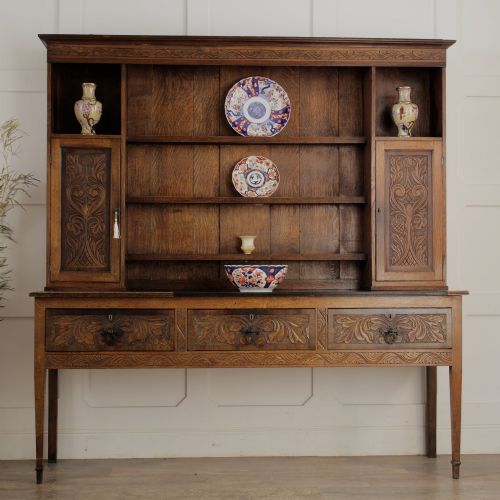
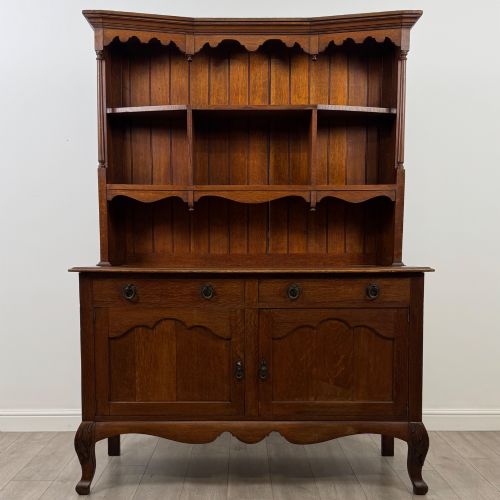
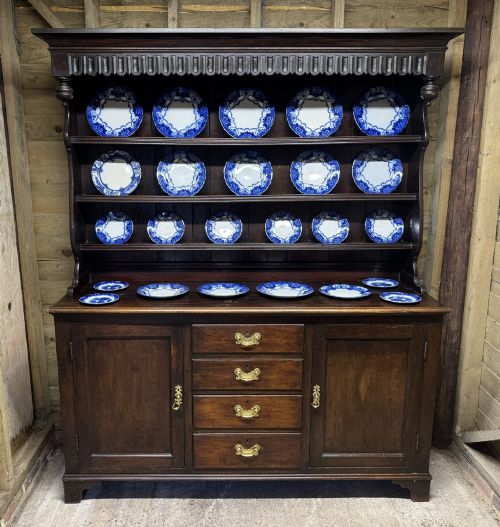
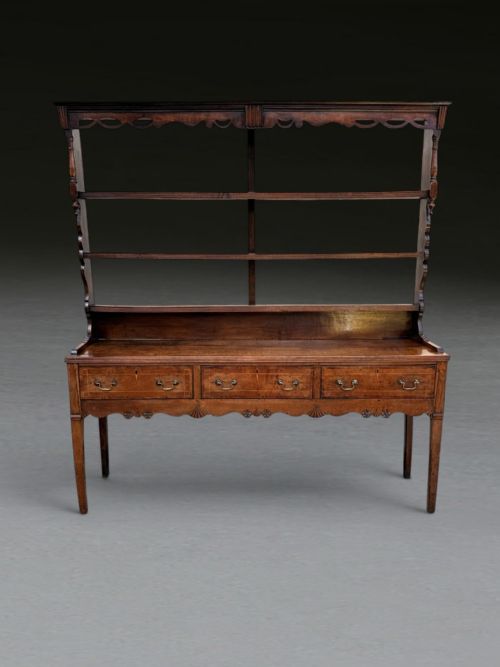
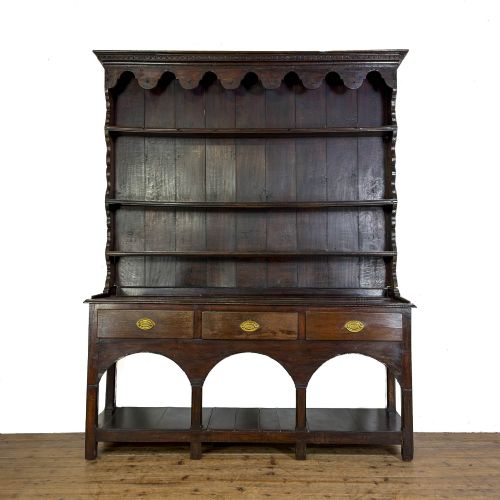
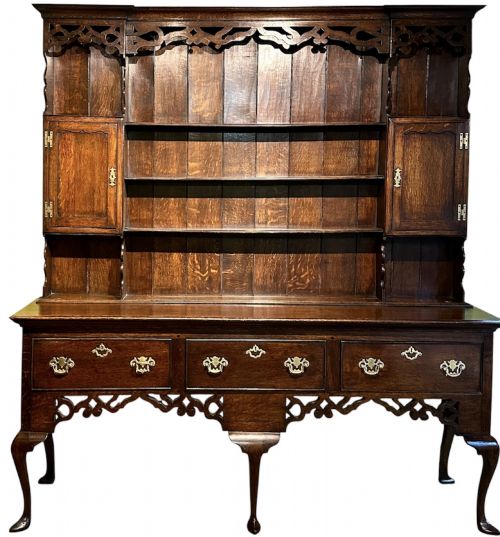
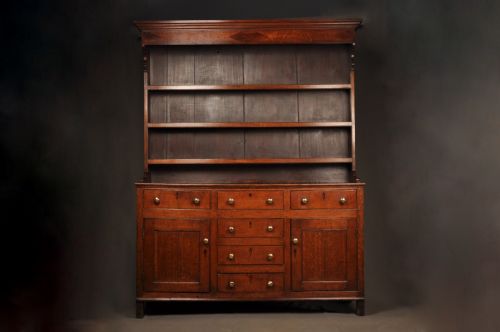
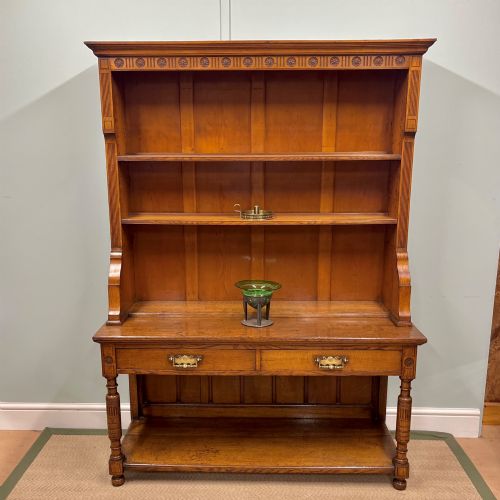
When you search for a carved oak sideboard rack, you are looking at substantial timber furniture designed to hold and display tableware. The pieces appearing here span the eighteenth and nineteenth centuries, alongside later Edwardian interpretations.
You will most commonly encounter regional forms such as Welsh dressers and country cottage examples. These combine a lower sideboard base with an upper plate rack for practical storage.
The design ranges from plain vernacular farmhouse items to richly ornamented revival styles featuring deep relief carving.
How they were made
Cabinet makers built these pieces primarily from solid oak, sometimes combining secondary timbers like pine or mahogany for internal elements. Metal fixings such as brass and iron appear in hinges, handles and structural brackets.
Construction relied on traditional joinery methods suited to heavy domestic service. Surfaces received hand-carved detailing, ranging from geometric panels to figurative motifs and vernacular flourishes.
Look closely among the foliage to spot the occasional hidden Green Man staring back from the oak.
What varies in quality
The standard of timber selection and joinery execution largely defines the category. Dense, well-figured oak with sound structural integrity sits at the upper end of the scale.
Carving depth and sharpness also separate work produced by skilled hands from simpler workshop output. Proportion and the retention of original brass or iron hardware influence the character of each piece.
The Carved Oak Sideboard Rack Glossary
- Potboard
- A lower open shelf built into the base of a dresser for storing heavy kitchen pottery. This feature is particularly characteristic of earlier Welsh examples.
- Plate rack
- The upper shelving superstructure mounted on a sideboard base, designed to display plates upright. It often incorporates grooved ledges to secure the ceramics.
- Breakfront
- A cabinetry format where the central section projects forward from the flanking outer sections. This arrangement creates visual depth across the drawers and doors.
- Green Man
- A sculptural motif depicting a human face entwined with foliage, symbolizing rebirth. It appears occasionally on carved Victorian and revival furniture.
- Vernacular
- Furniture designed and built by local craftsmen to satisfy regional domestic needs rather than following strict metropolitan fashion. These pieces often display charming local eccentricities in proportion and detail.
Carved Oak Sideboard Rack: Frequently Asked Questions
How do I clean a carved oak sideboard rack?
Dust the surfaces regularly with a soft, dry cloth to prevent dirt accumulation in the carved recesses. Apply a traditional beeswax periodically to nourish the timber without building up sticky layers.
Avoid using modern silicone sprays or harsh chemical cleaners, as these can strip the historic finish and damage the wood grain over time.
Where should I place this in my home?
These pieces suit dining rooms and large kitchens where their display shelving can hold everyday ceramic collections. Ensure they stand away from direct heat sources and strong sunlight to protect the oak from drying out.
Because of their substantial weight and height, anchor them securely to the wall if there is any risk of instability.
How do I distinguish eighteenth-century pieces from later revivals?
Look closely at the construction methods, tool marks and timber characteristics visible inside the drawers and at the backboards. Earlier pieces often display hand-sawn boards and pegged joinery that differ from twentieth-century manufacturing techniques.
Revival furniture from the Edwardian period frequently employs sharper, more uniform machine carving and standardised internal hardware.
Are the plate racks removable from the base?
Many examples are constructed in two distinct sections, with the upper rack simply resting on or bolting to the sideboard base. This modular approach made movement through narrow cottage doorways much easier for past owners.
Some vernacular pieces, however, are built as a single integrated unit where the rack and base cannot be separated without dismantling the structure.