
Dark Brown Oak Sideboard
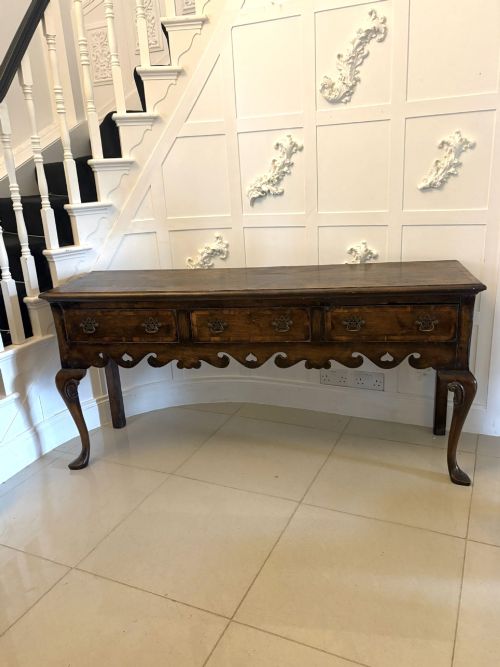
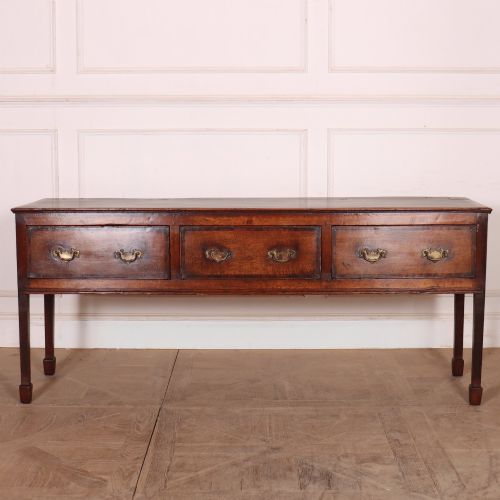
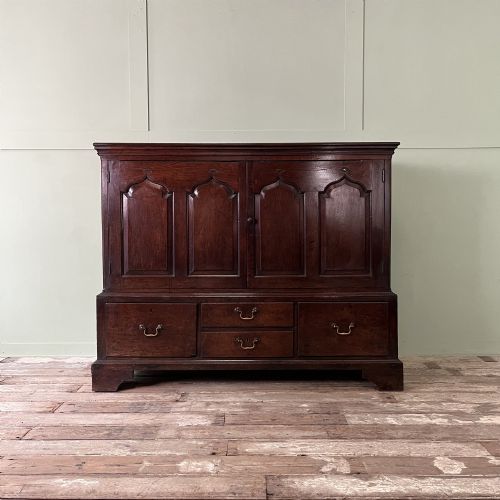
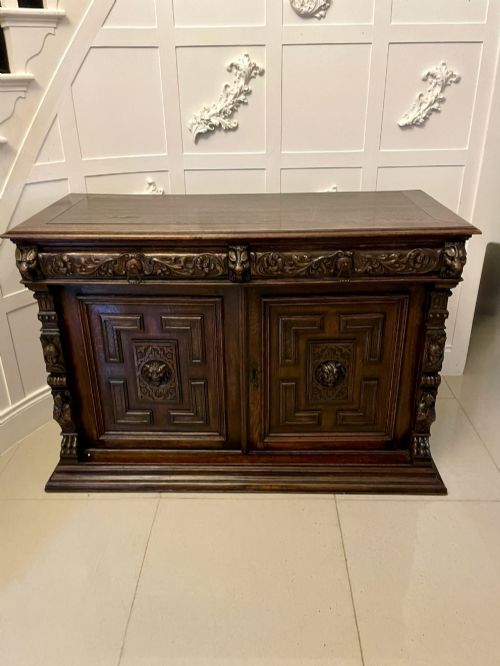
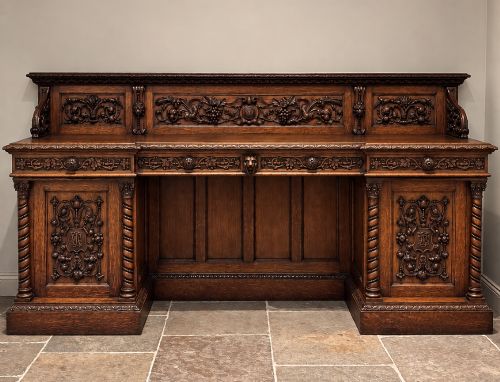
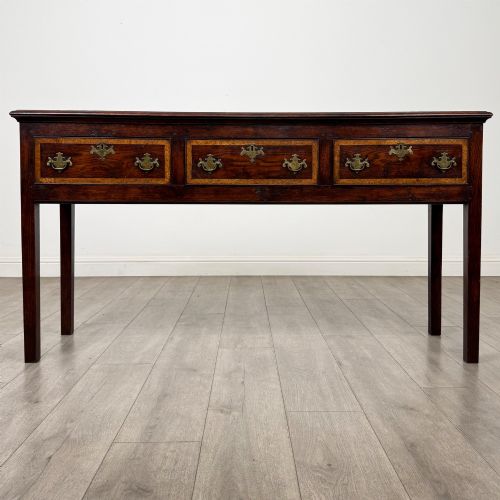
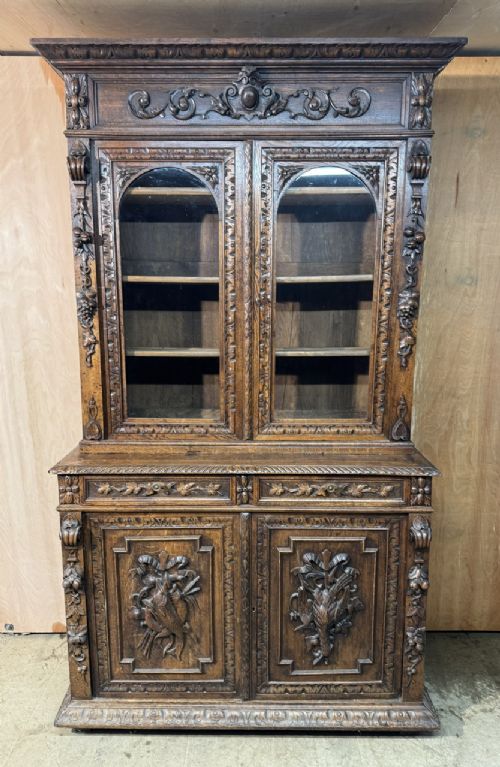
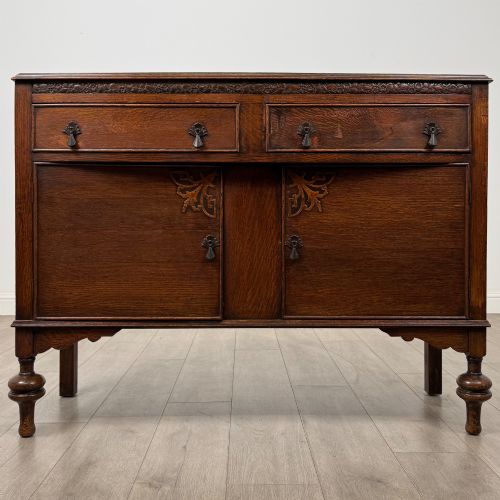
A dark brown oak sideboard delivers solid timber storage with deep historical character, ranging from 17th-century country utility to Edwardian revival craftsmanship.
Dark Brown Oak Sideboard
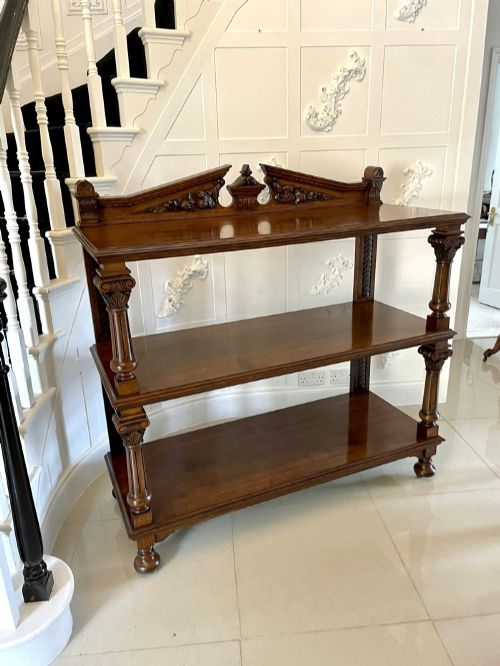
When you search for a dark brown oak sideboard, you encounter substantial serving furniture, dresser bases, and court cupboards spanning several centuries. The material unites them, showing deep brown tones whether formed in the eighteenth century or during the Edwardian period.
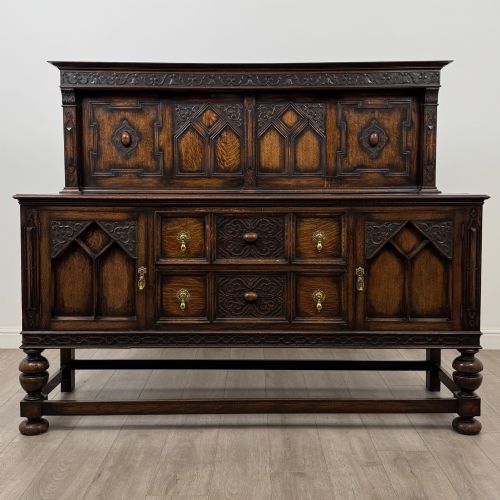
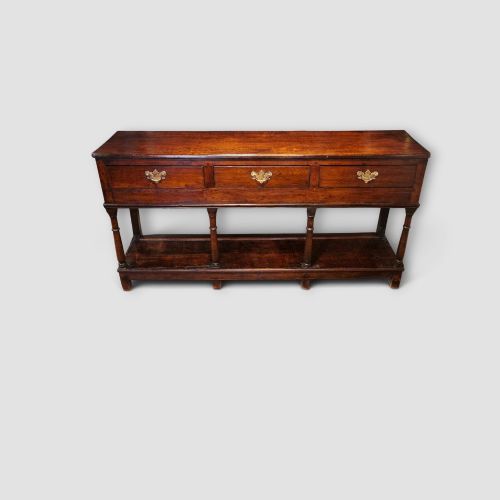
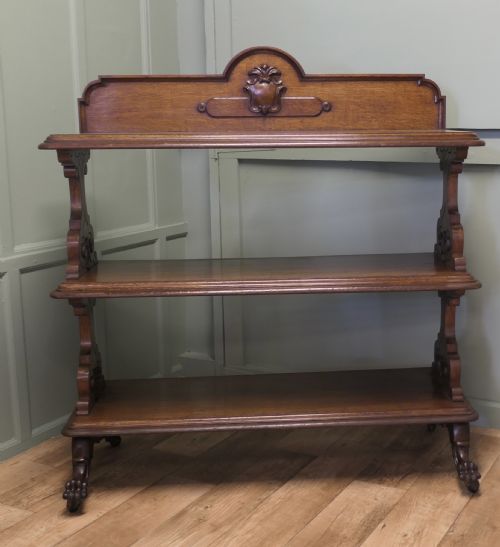
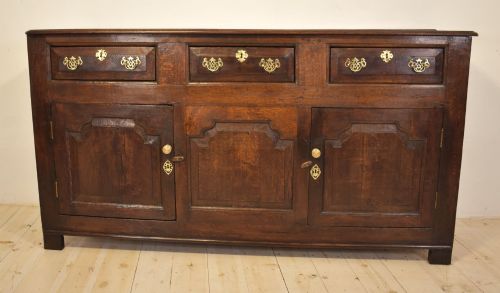
The pieces on this page lean heavily toward British country workshops, featuring regional forms like Welsh and Lancashire dresser bases alongside revival dining room buffets. You find low linen presses, potboards, and heavy serving tables built for domestic service and storage.
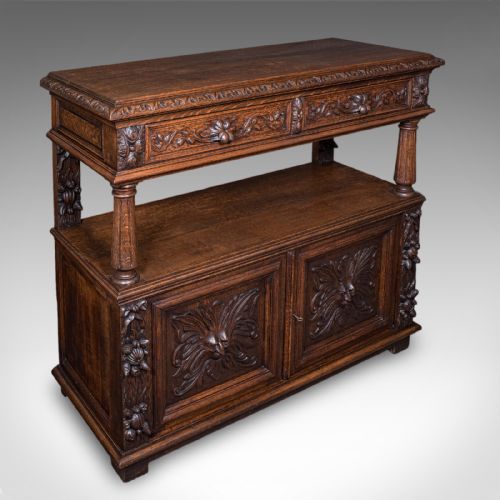
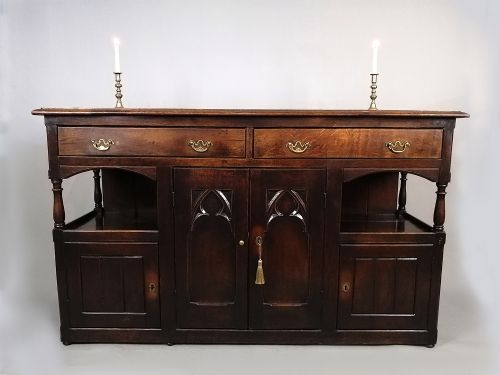
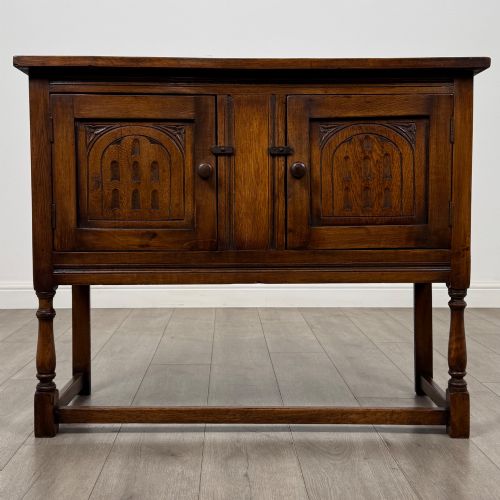
Earlier examples display the simple proportions of the seventeenth and eighteenth centuries, while later nineteenth- and twentieth-century versions adopt Jacobean, Gothic, or Arts and Crafts styling. Each piece provides a heavy timber surface for display and deep lower storage compartments.
How they were made
Joiners built these pieces using solid timber construction, relying on pegged mortise and tenon joints to secure the heavy frames. Oak panels were often hand-planed and fitted into grooved stiles, allowing the wood to move naturally with seasonal humidity changes.
Carved decoration on the better examples was executed entirely by hand, utilising gouges and chisels to create geometric mouldings, strapwork, and linenfold panels. Secondary timbers such as elm occasionally appear in structural elements like drawer bases or drawer linings.
Hardware consists principally of cast brass drop handles, backplates, and iron hinges fixed directly to the heavy doors and drawer fronts. Surfaces finished over generations acquire a dark brown patina through natural oxidation, wax application, and daily handling.
Dark Brown Oak Sideboard Retail Price Guide 2026
Typical asking prices for dark brown oak sideboard among the pieces listed under this phrase on Sellingantiques today, from the lower quarter to the upper quarter. They describe what is for sale here now, not the wider market.
Several pieces preserve bread and cheese compartments, built for rural storage before the domestic refrigerator existed.
What varies in quality
The depth and precision of the carved enrichment separate everyday utility pieces from ambitious regional commissions. Crisp, hand-carved strapwork and deep relief mouldings require skilled labour that elevates the status of a dresser base or court cupboard.
Originality of surface and timber integrity dictate the standing of any dark brown oak sideboard. Retaining untouched patination, original brass hardware, and period boards without extensive timber replacement marks the distinction between preserved history and later reconstruction.
The Dark Brown Oak Sideboard Glossary
- Dresser base
- A low wooden table fitted with drawers and occasionally a lower shelf, used historically for food preparation and serving.
- Potboard
- An open lower shelf positioned beneath a dresser base, traditionally designed to hold heavy pots and ceramic vessels.
- Court cupboard
- A heavy enclosed storage piece featuring an upper cabinet recessed above a larger lower section, often supported on stout posts.
- Linen press
- A tall cupboard fitted with interior shelves or sliding trays specifically designed for storing household textiles and folded linen.
- Patina
- The deep surface sheen and dark brown coloration developed on oak timber over centuries through handling, light exposure, and polishing.
Dark Brown Oak Sideboard: Frequently Asked Questions
How do I care for a dark brown oak sideboard?
Feed the dry timber periodically with a traditional beeswax polish applied sparingly with a soft cloth. Avoid placing solid oak furniture near direct heat sources or in fluctuating humidity to prevent timber splitting.
Keep the surface clear of standing liquids by utilising coasters and mats beneath glassware and serving dishes. Gentle dusting with a dry lint-free cloth maintains the dark brown patina without stripping the historic finish.
Where were these sideboards used originally?
These heavy oak pieces belonged primarily in the dining rooms, kitchens, and great halls of country houses and farmsteads. They served as central working surfaces for food preparation and as storage points for heavy tableware.
In larger domestic settings, dining room buffets and serving tables managed the presentation of food before it reached the table. Smaller dresser bases functioned as practical storage units in domestic pantries and sculleries.
How can I tell an 18th-century piece from an Edwardian revival?
Examine the construction methods visible inside the drawers and along the backboards for tool marks left by hand planes or circular saws. Eighteenth-century pieces typically display irregular hand-split or hand-sawn timbers with pegged joinery.
Revival pieces built around 1900 often feature standardised machine-cut components, regular screw fixings, and cleaner interior surfaces. Stylistic details on Edwardian copies frequently exaggerate Jacobean or Gothic motifs with heavier, deeper machine carving.
What is a potboard base?
A potboard base incorporates a low slatted or solid wooden platform positioned just above the floor between the lower legs of a dresser. This space provided a dry, stable area to store heavy ceramic pots and metal cookware off damp stone floors.
In modern living spaces, this open lower shelf serves as a display area for large decorative platters, books, or baskets. It lightens the visual weight of the heavy oak framework while retaining its traditional country proportions.