
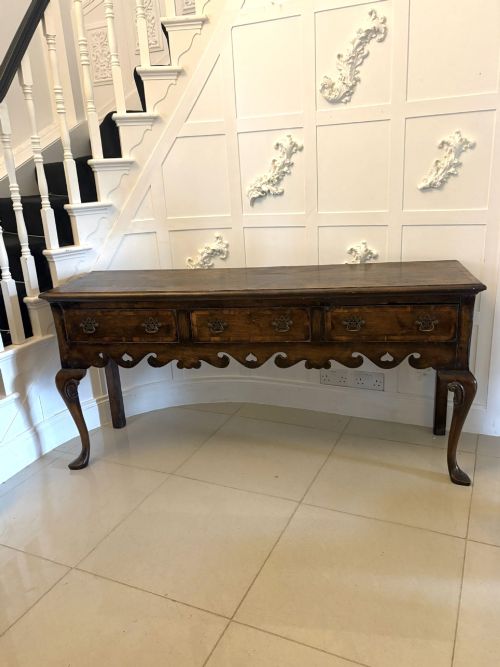
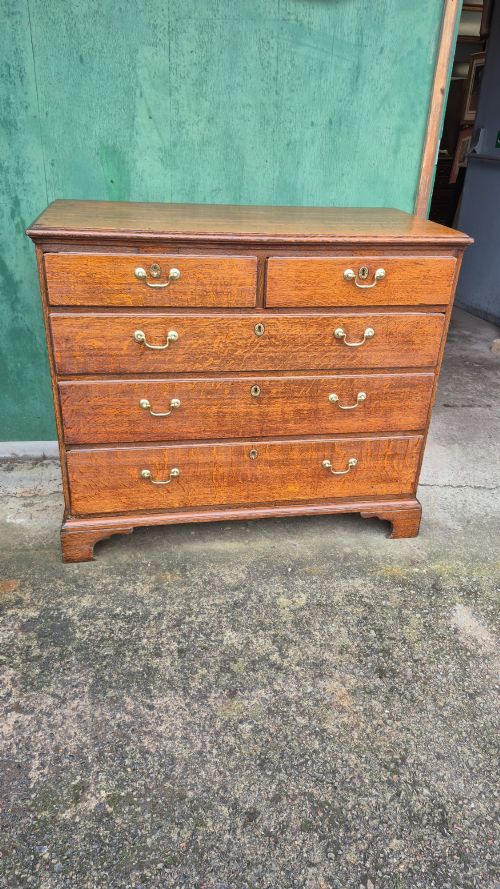
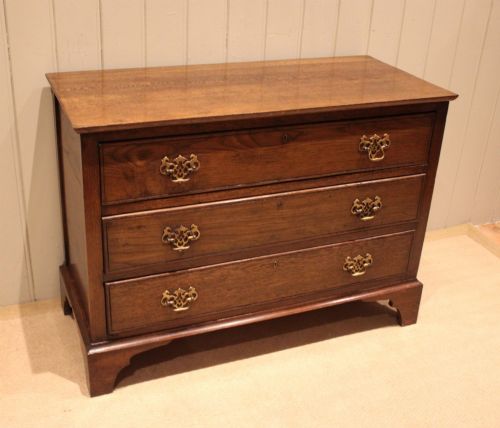
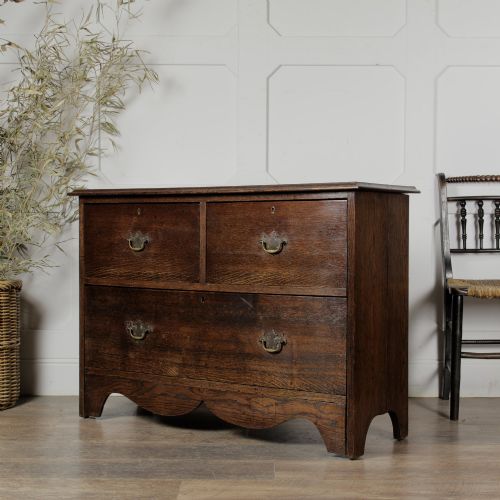


Traditional Oak Country Dresser
A traditional oak country dresser brings honest vernacular proportion and open plate display into a room, forged from sturdy timber to store domestic ware.
Traditional Oak Country Dresser
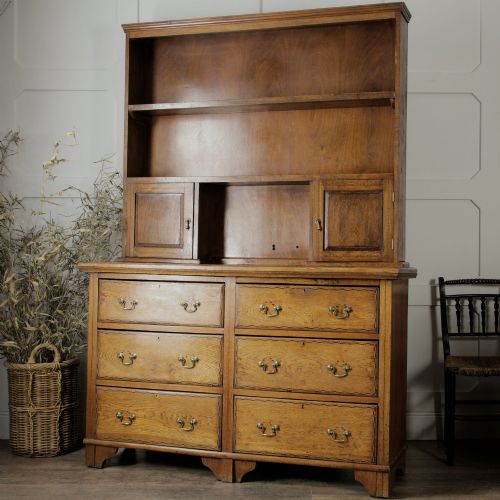
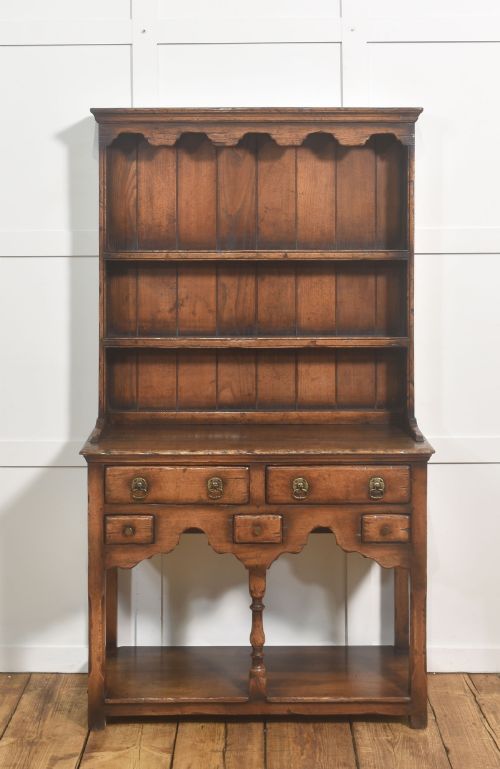
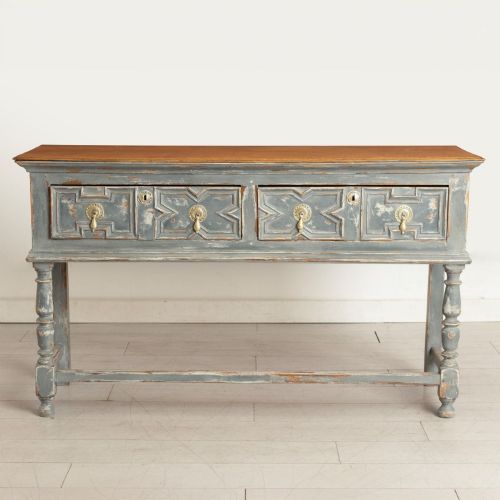
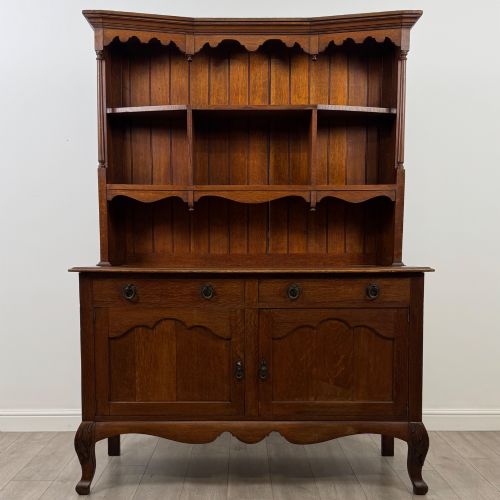
A traditional oak country dresser combines a lower base fitted with drawers, cupboards, or open potboards with an upper plate rack designed to display ceramics. These pieces emerge primarily from 18th-century Georgian eras, the 19th century, and later revivals spanning the Edwardian period up to 1920.
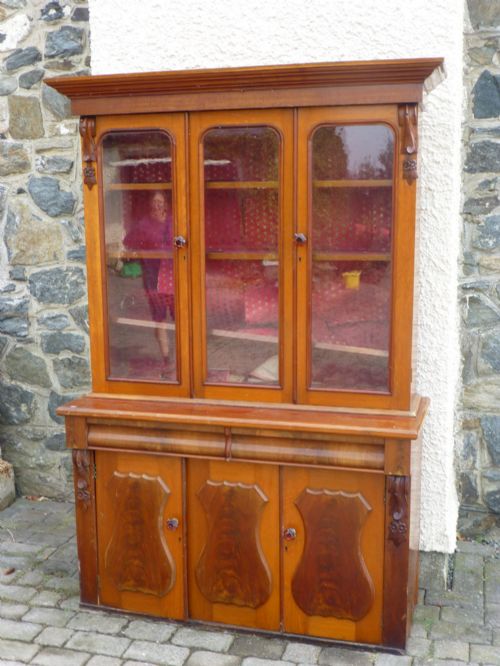
The format varies between regional idioms such as Welsh vernacular styles featuring glazed bookcase cupboards or three-tier constructions, Lancashire potboard bases, and simpler English country sideboard configurations. Buyers most frequently encounter 18th-century George III examples alongside early 20th-century golden oak interpretations built in historical styles.
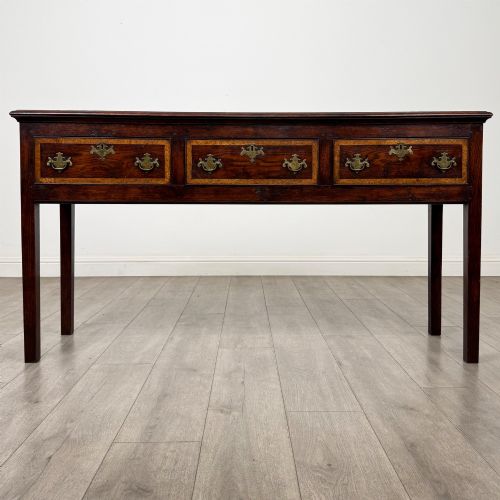
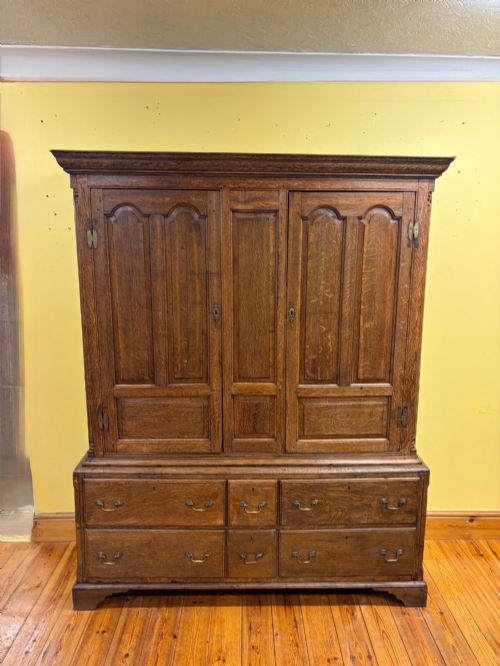
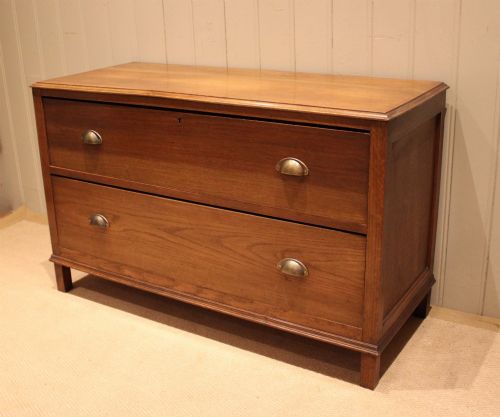
Beyond complete dresser units with plate racks, listings encompass dresser bases, enfilades, and housekeeper's cupboards that share the same robust utilitarian ancestry. These items utilise dense hardwoods primarily intended for hard-working kitchens and dining rooms rather than formal parlours.
Materials and construction methods
Construction relies heavily on solid oak timber complemented by secondary woods like pine and mahogany, joined with traditional pegged mortise and tenon joints. Hardware typically consists of brass drop handles, drawer pulls, and iron hinges, occasionally accented with inlay or bone details.
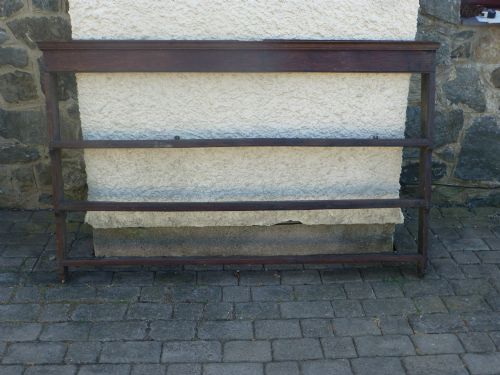
Surfaces exhibit natural grain patterns enhanced by age, sometimes finished with traditional polish, paint, or bleaching techniques depending on the period of manufacture. Plate racks incorporate grooved display ledges designed to secure delftware plates upright without sliding.
Object forms span full plate-rack dressers, dresser bases, potboards, enfilades, and housekeeper's cupboards in styles from Jacobean Revival to Queen Anne.
Distinctions in build and proportion
Quality rests upon the integrity of the timber selection, such as richly figured golden oak versus plain utilitarian boards, and the retention of original brass hardware. Proportions dictate desirability, with smaller cottage scales and balanced potboard arrangements holding distinct visual appeal compared to bulkier forms.
Construction depth separates superior examples, seen in hand-cut dovetails on drawer linings and uncompromised structural frames that have survived centuries of domestic service. The presence of matching original plate racks attached to period dresser bases elevates the completeness of the piece.
The Traditional Oak Country Dresser Glossary
- Potboard
- An open slatted lower shelf built into the base of a dresser to store pots and heavy kitchenware off the damp floor. This structural feature is particularly associated with 18th-century English and Welsh vernacular pieces.
- Delft rack
- An upper wooden shelving unit featuring grooved plate rails designed specifically to display ceramic plates upright. These racks form the upper half of a traditional kitchen dresser.
- Enfilade
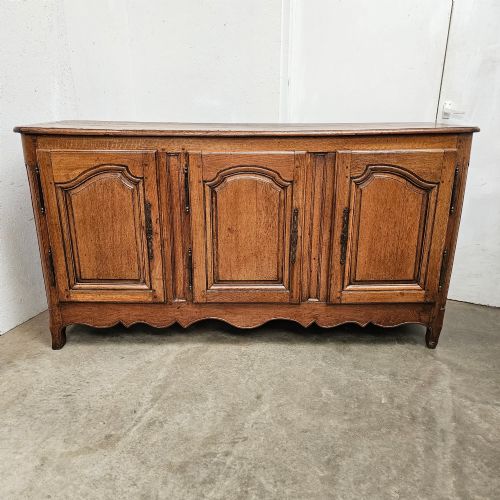
- A long sideboard or cabinet featuring a row of multiple doors leading to internal storage compartments. French regional variants appear alongside traditional British oak forms.
- Vernacular
- Furniture built by local country craftsmen using regional traditions and readily available native timbers rather than following strict metropolitan design books. These pieces prioritize practical utility and local aesthetic preferences.
- Cwpwrdd Tridarn
- A traditional Welsh three-tier cupboard featuring an enclosed upper section, an open middle stage with turned balusters, and a large lower base. This complex regional form represents a high point of Welsh cabinet making.
Traditional Oak Country Dresser: Frequently Asked Questions
How do I spot an 18th-century dresser?
Eighteenth-century dressers display hand-cut dovetails, pegged timber joints, and deep patination acquired through generations of domestic use.
Makers utilised solid native oak, frequently showing the irregular grain patterns characteristic of early hand-sawn boards.
Can I remove the plate rack?
Most plate racks sit atop the dresser base and can be detached for ease of transport or to alter the visual weight within a room.
Buyers should examine how the rack secures to the base to ensure stability when freestanding or wall-fixed.
What is the difference between a Welsh dresser and an English one?
Welsh dressers often incorporate more elaborate upper cabinetry, glazed display doors, or regional variations like the three-tier Cwpwrdd Tridarn.
English country equivalents tend to focus on open plate racks paired with potboard bases or simple drawer configurations.
How do I care for oak furniture?
Maintain antique oak by applying natural beeswax sparingly to nourish the timber and preserve the historic surface patination.
Keep pieces away from direct heat sources and sudden humidity changes to prevent the solid wood from splitting.