
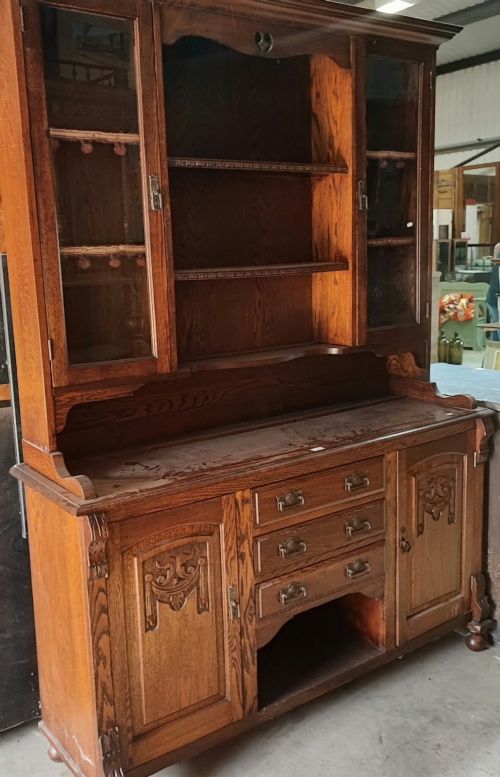
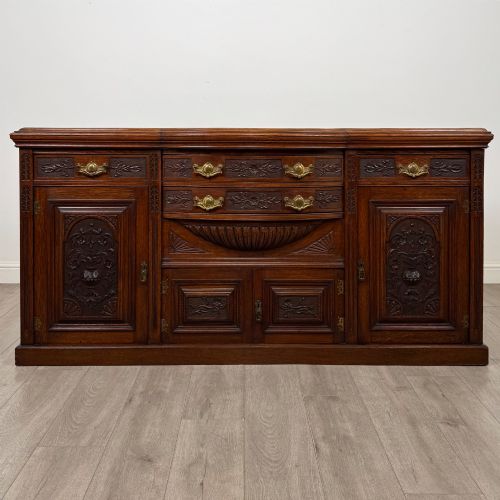
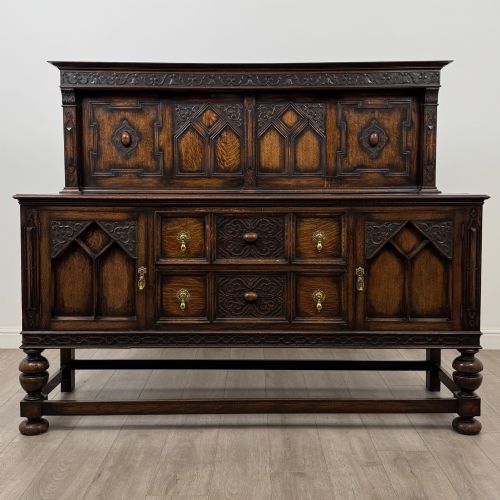
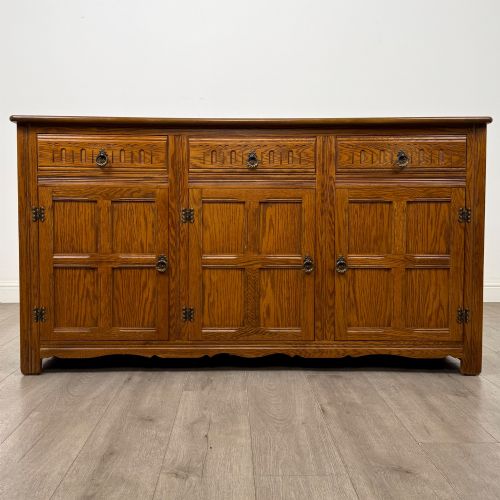
Carved Panel Oak Dresser
These heavy timber surfaces bring centuries of domestic utility to a room, offering sturdy storage through a carved panel oak dresser.
Carved Panel Oak Dresser
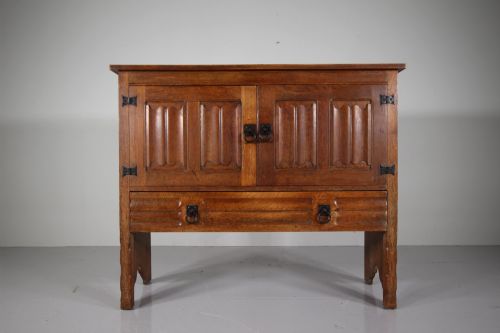
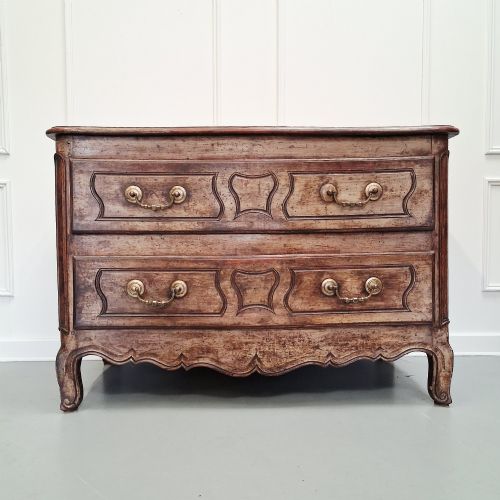
A carved panel oak dresser provides surface display and lower storage, appearing across periods from the seventeenth century through the Edwardian era with regional influences including French Provincial and English country styles.
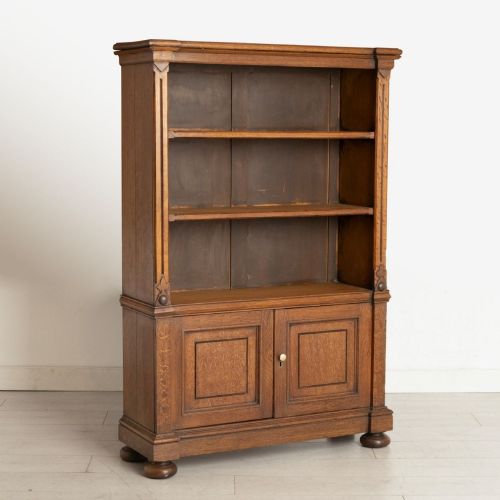
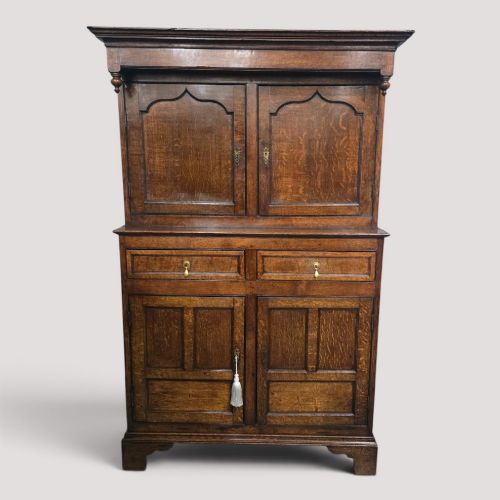
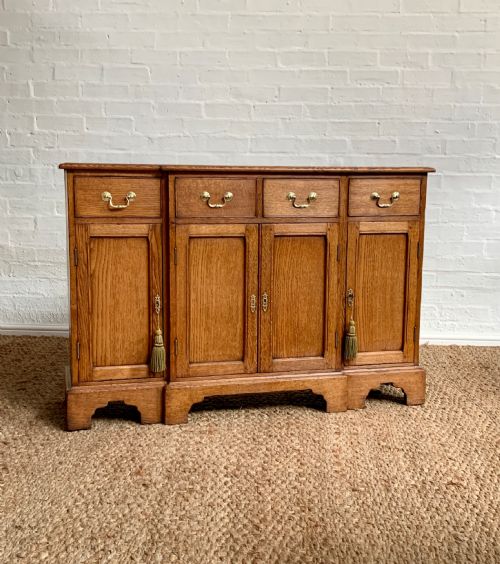
Buyers encounter forms ranging from low dresser bases and servers to towering court cupboards and Welsh dressers, constructed primarily in solid oak with occasional elm or tiger oak variants.
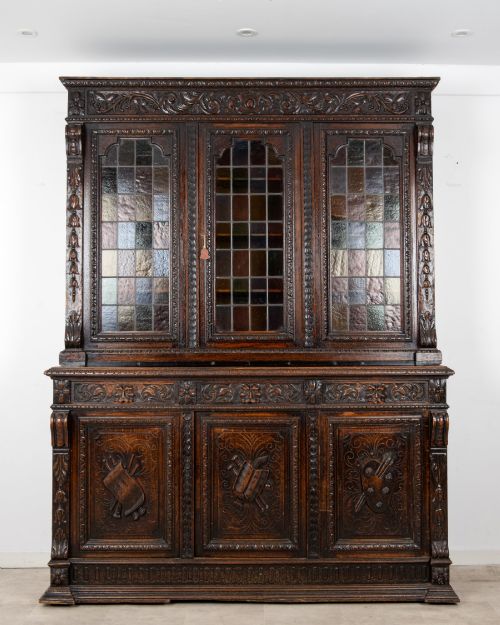
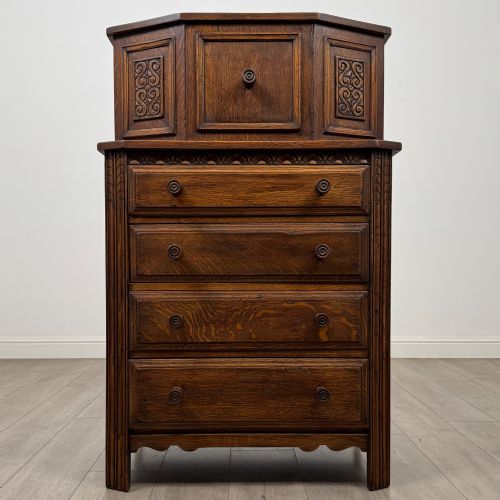
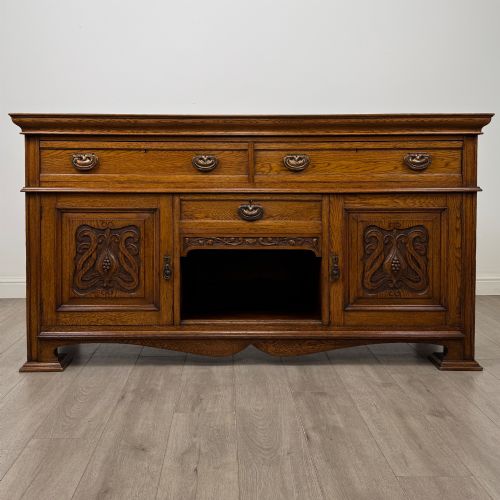
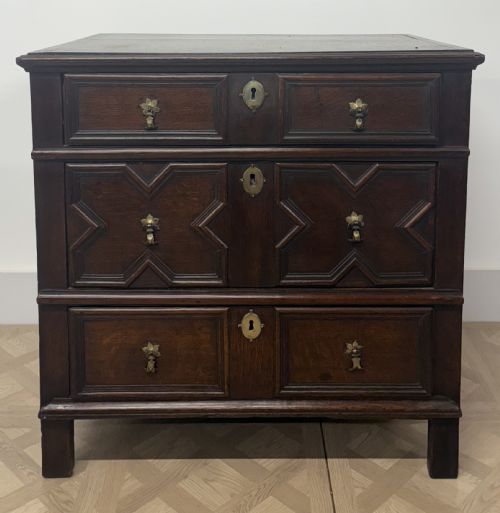
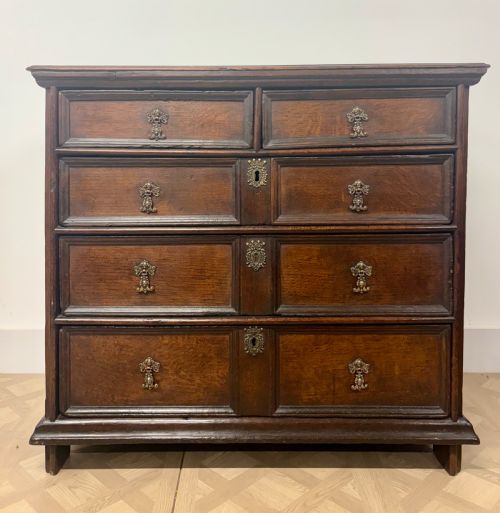
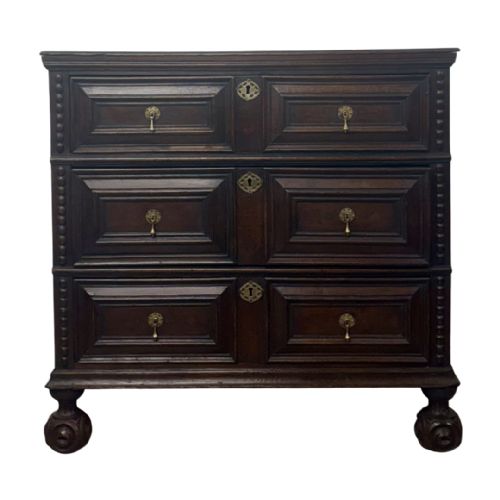
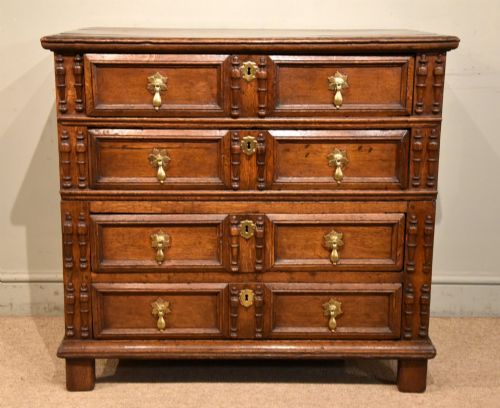
Surface decoration frequently displays Jacobean geometric moulding, Gothic Revival motifs, or deep relief carving on panelled doors and drawer fronts.
Materials and construction methods
Joinery relies on traditional pegged mortise and tenon joints to frame solid oak boards, ensuring stability across heavy carcases and panelled doors.
Metal hardware incorporates forged iron and brass for drop handles, hinges, and escutcheons, often paired with glass elements in glazed upper cabinets.
Listings span eight distinct periods from the seventeenth century through the 1930s, uniting oak, brass, iron, and glass in heavy functional furniture.
Assessing quality in timber and carving
The depth and crispness of hand-carved panels distinguish finer examples from later revival pieces, where mechanical routing appears shallower and less defined.
The choice of timber grain, such as quarter-sawn tiger oak or richly figured seventeenth-century boards, dictates the visual depth of the finished piece.
The Carved Panel Oak Dresser Glossary
- Court cupboard
- A heavy enclosed storage piece with an upper and lower section, often supported on stout posts. These domestic items date primarily to the seventeenth and eighteenth centuries.
- Pot board
- An open lower shelf fitted beneath a dresser base or sideboard. Historically, this platform held pots and earthenware vessels off the damp floor.
- Coiffer
- A traditional wooden storage chest with a hinged lid, frequently utilised for linens and wools before dedicated drawer chests became common.
- Dog kennel dresser
- A regional dresser variant featuring a central recessed open space flanked by banks of drawers or cupboards below the main surface.
- Geometrical moulding
- Raised applied wooden moulding arranged in geometric patterns across drawer fronts and panel faces, typical of seventeenth-century joinery.
Carved Panel Oak Dresser: Frequently Asked Questions
How do I date an oak dresser?
Dating relies on examining construction techniques, such as hand-cut dovetails, pegged joints, and the method of timber preparation. Tool marks and the style of carving also offer clear indicators of period origin.
Hardware placement and timber shrinkage patterns further assist in confirming whether a piece belongs to the seventeenth century or later revival periods.
What is a Welsh dresser?
A Welsh dresser combines a lower base of cupboards or drawers with an upper plate rack designed to display ceramics. These items served as central functional furniture in rural kitchens.
Over time, glazed upper cabinets replaced open shelves in various regional adaptations across England and France.
How do I care for antique oak?
Maintain antique oak by applying traditional beeswax sparingly to nourish the timber and protect the surface from drying out. Avoid placing wooden furniture near direct heat sources or in fluctuating humidity.
Regular dusting with a soft, dry cloth preserves the patina built up over centuries of use.
What is the difference between a dresser and a sideboard?
A traditional dresser includes an upper plate rack or shelving unit mounted above the lower storage base. Sideboards consist solely of the lower cabinet or buffet structure.
Both forms utilise heavy oak construction and panelled doors across various historical periods.