
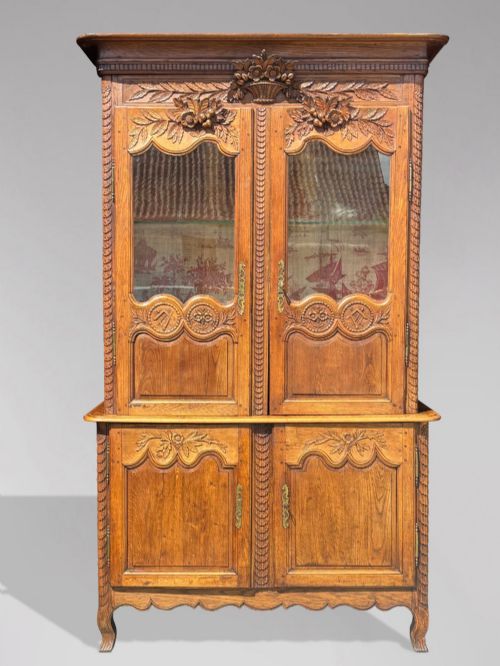
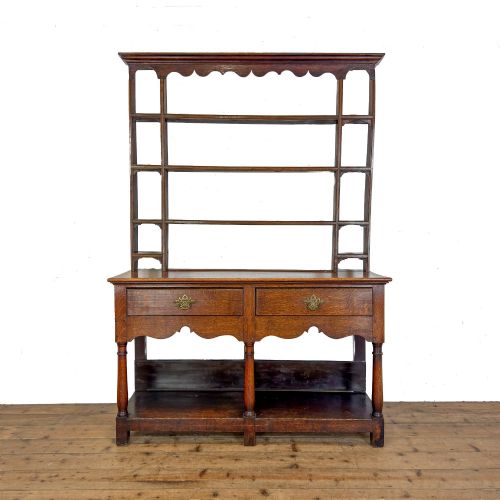

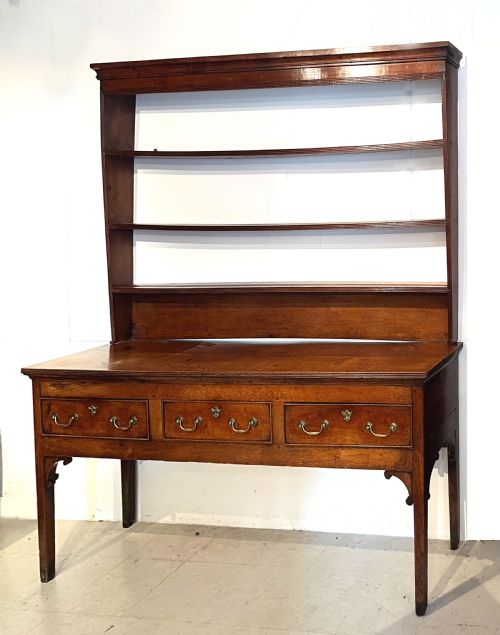


Oak Kitchen Display Cabinet
An oak kitchen display cabinet provides robust storage and open shelving for crockery, bringing functional country character to domestic spaces.
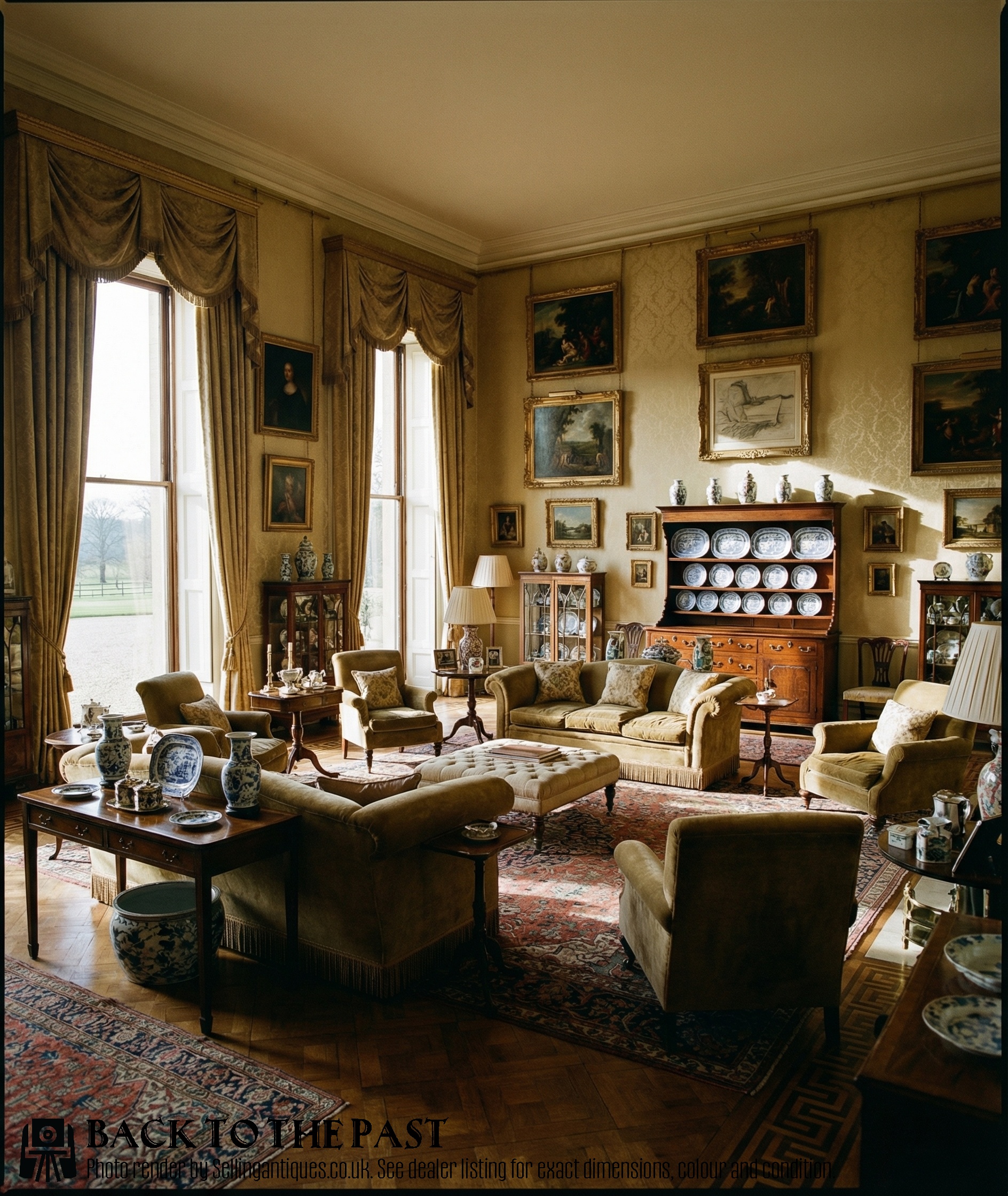
Oak Kitchen Display Cabinet
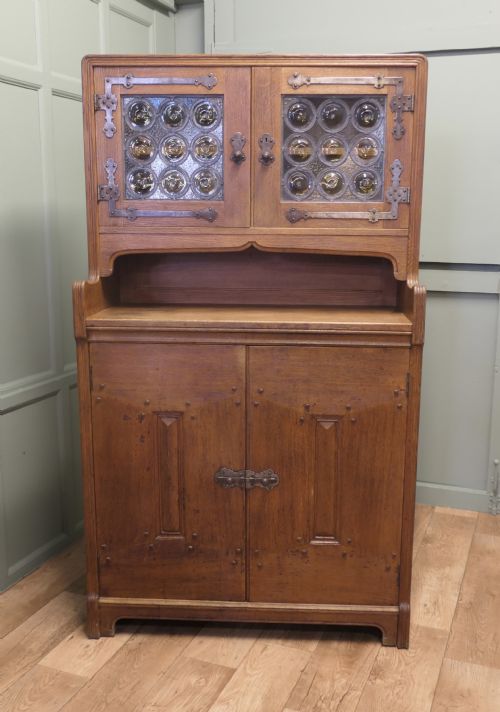
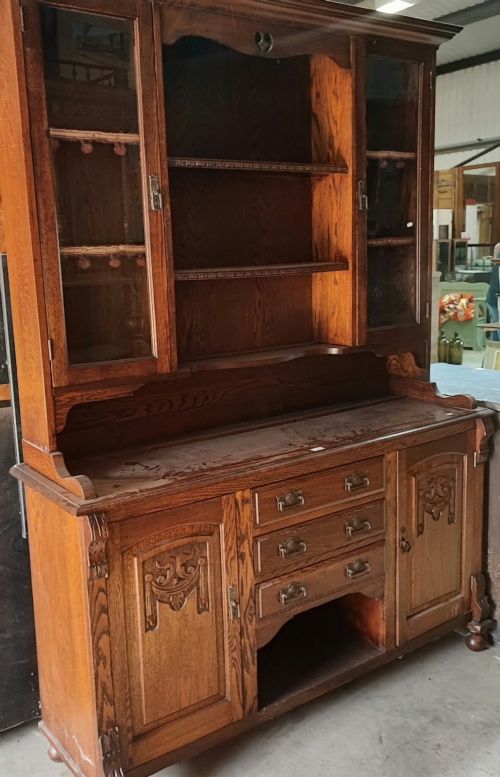
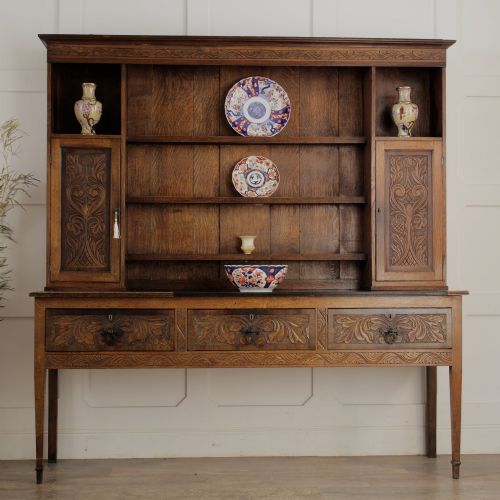
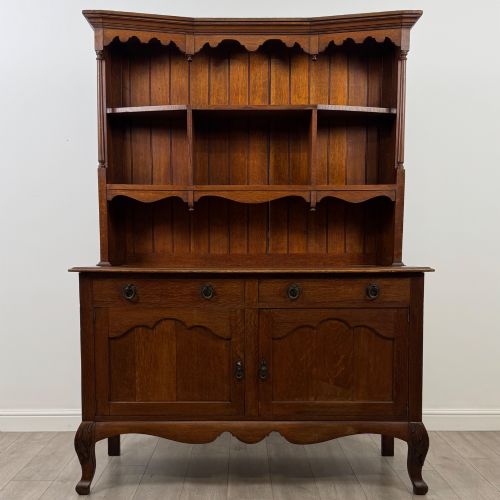
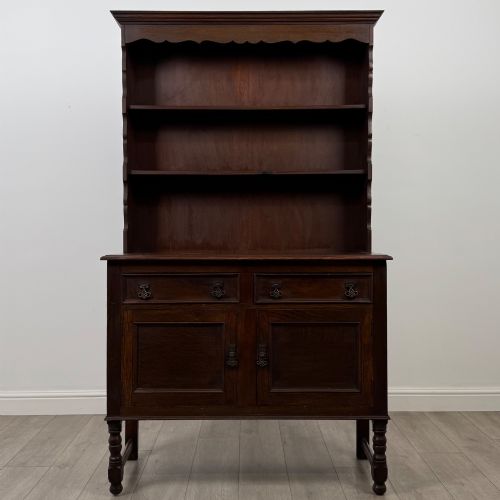
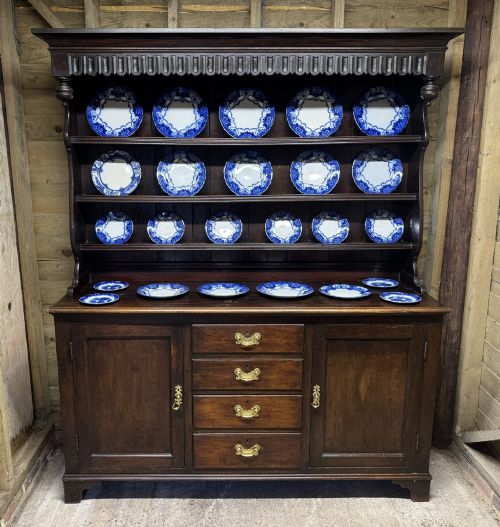
An oak kitchen display cabinet appears across several traditional forms, with regional Welsh dressers and country cupboards forming the majority of this selection. These pieces combine lower base cupboards or drawers with upper plate racks or glazed display sections designed for everyday utility.
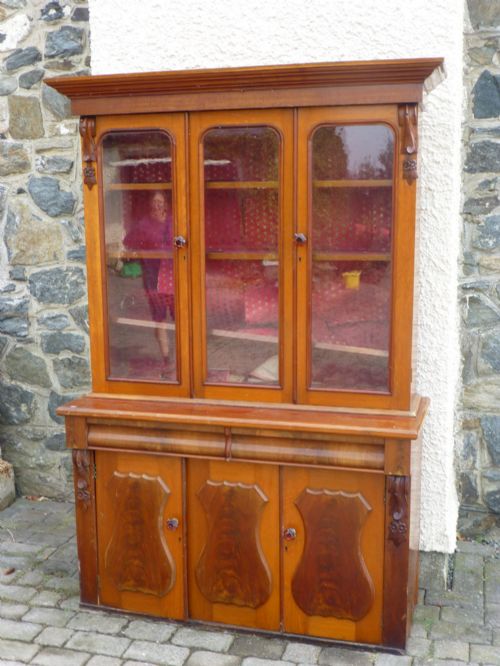
The periods represented span from the eighteenth century through to the early twentieth century, encompassing Georgian, Victorian, and Arts and Crafts examples. English country workshop traditions sit alongside French provincial interpretations in this collection.
Buyers select these items to anchor a room with timber warmth and practical shelving. The combination of enclosed storage and upper display space serves domestic requirements efficiently.

Construction and Materials
Solid oak serves as the primary timber across these items, frequently paired with secondary woods like mahogany, walnut, or pine in internal and secondary components. Carpenters utilised traditional joinery methods such as mortise and tenon framing to build durable storage furniture.
Hardware elements incorporate brass and iron for hinges, handles, and escutcheons, supporting heavy doors and drawer fronts. Glazed upper sections utilise timber framing to hold glass panels securely for the exhibition of ceramic plates and glassware.
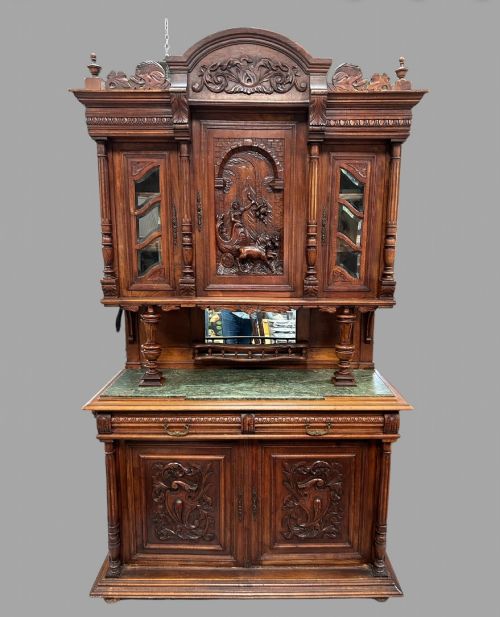
Several cabinets feature carved Green Man faces hiding quietly among the foliage, keeping a watchful eye over the kitchen crockery.
Qualities of Construction
Depth of carving and proportion separate standard regional items from more ambitious workshop pieces, particularly where decorative elements like Green Man motifs or Jacobean panels appear. The integration of the upper plate rack or display cabinet to the lower base demonstrates structural harmony.
Timber selection and grain figure dictate visual presence, with quarter-sawn golden oak or tiger oak surfaces exhibiting greater visual depth. Original brass hardware, uncompromised patination, and intact glass panes elevate the standing of a survival.
Liberty·Heals of London
The Oak Kitchen Display Cabinet Glossary
- Welsh dresser
- A traditional kitchen storage unit comprising a lower wooden base of drawers and cupboards surmounted by open shelves for displaying plates.
- Plate rack
- The upper tiered section of a dresser designed specifically to hold ceramic plates upright in grooves against a timber backboard.
- Buffet deux corps
- A substantial two-part cupboard originating in France, featuring an upper cabinet seated upon a deeper lower buffet base.
- Breakfront
- A piece of furniture where the central section projects forward from the flanking outer sections, creating architectural rhythm.
- Tiger oak
- Oak timber exhibiting distinctive medullary ray figuring that resembles the stripe patterns found on a tiger's coat.
Oak Kitchen Display Cabinet: Frequently Asked Questions
How do I clean an oak display cabinet?
Dust timber surfaces regularly with a dry, soft cloth to prevent particulate accumulation in carved details. Apply traditional beeswax periodically to nourish the grain and maintain the natural lustre without sealing the wood.
Avoid chemical polishes and keep wooden furniture away from direct heat sources to prevent timber splitting. Clean glass panels using a mild vinegar solution applied to a cloth rather than sprayed directly.
Can I store heavy crockery on the shelves?
Most antique dressers and display cabinets were constructed for domestic service and handle everyday ceramic dinnerware reliably. Check that shelf supports and timber boards remain secure before loading heavier items.
Distribute weight evenly across the shelves to maintain structural balance over time. Fixed plate grooves assist in keeping plates secure against the backboards during daily use.
How do I date an antique oak cabinet?
Examine construction methods, tool marks on internal timbers, and hardware styles to determine the likely era of manufacture. Hand-cut dovetails and pegged joints generally indicate eighteenth or nineteenth-century origins.
Stylistic markers such as Arts and Crafts influences or Victorian geometric mouldings provide further chronological clues. Compare the patination of the oak surfaces with known periods of production.
What is the difference between a dresser and a buffet?
A dresser typically incorporates an upper plate rack or display shelving positioned above a lower sideboard base. This configuration combines storage with display capability for kitchen and dining spaces.
A buffet generally consists of enclosed cupboard sections without open plate display racks above. These pieces focus on concealed storage for linen, silver, and provisions.