
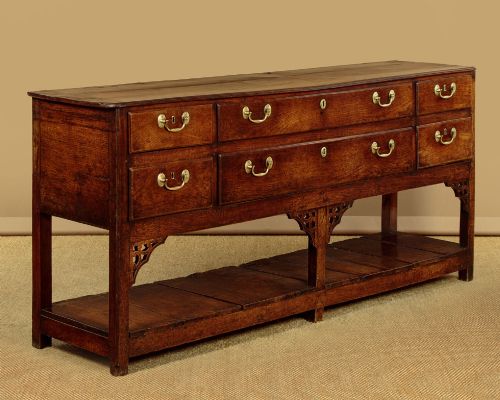
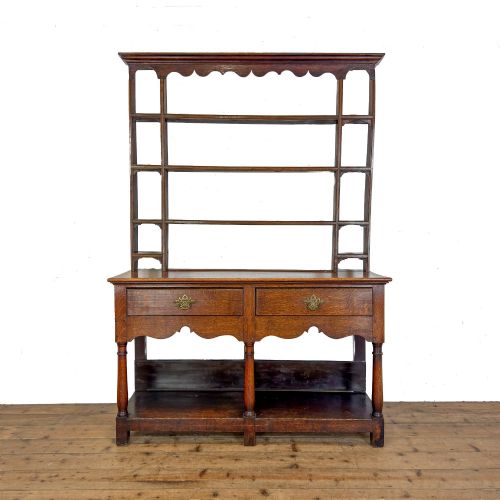
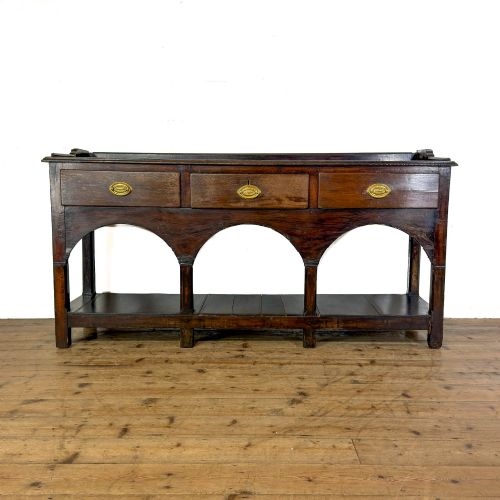
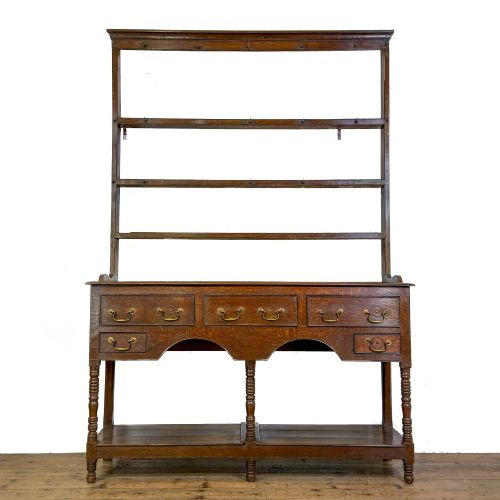
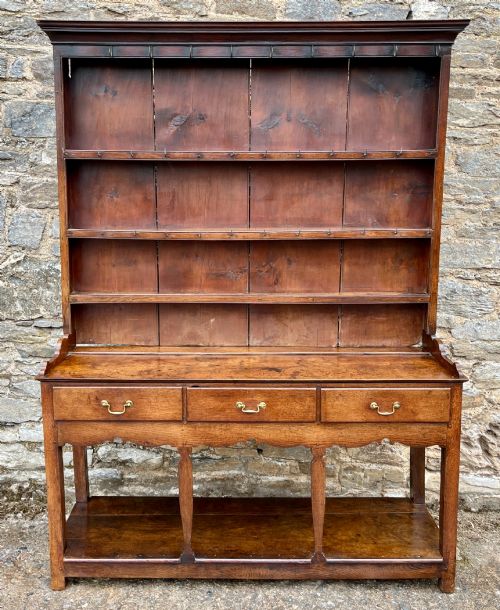
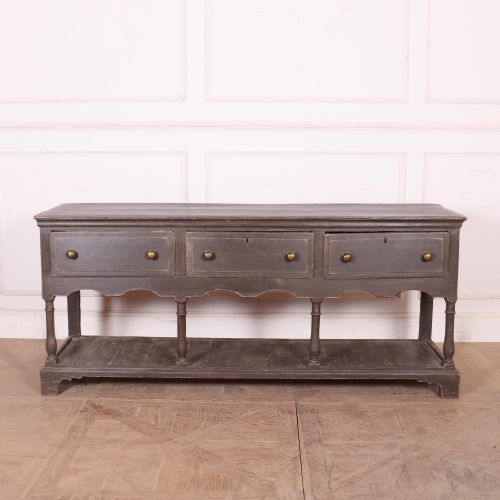


Oak Open Potboard Dresser
An oak open potboard dresser grounds a room with regional vernacular presence, offering deep timber surfaces and open lower shelves built for everyday domestic utility.

Oak Open Potboard Dresser
An oak open potboard dresser combines a substantial timber base with a lower potboard shelf, frequently surmounted by an open plate rack for displaying ceramics. These vernacular items emerge primarily from English and Welsh rural workshops during the eighteenth and nineteenth centuries, spanning Georgian and Victorian eras.
The pieces on this page range from compact country cottages examples to grand regional forms originating in South Wales, Carmarthenshire, Glamorgan, and Yorkshire. Buyers encounter both complete dresser and rack combinations and independent dresser bases.
Native timber construction defines the category, with cabinetmakers utilising local resources to build sturdy storage furniture that survived generations of heavy kitchen use.
How they were made
Joiners constructed these pieces predominantly from solid oak, supplemented occasionally by secondary timbers such as pine and elm, utilising traditional pegged mortise and tenon joints to ensure rigidity. Timber surfaces were hand-planed and left unfinished or treated with simple painted finishes.
Hardware such as brass handles and iron fittings were secured to drawers and cupboards, reflecting the functional requirements of country workshops during the Georgian and Victorian periods.
Materials recorded across the inventory include solid oak, elm, pine, burr walnut, iron, and brass.
What varies in quality
Proportion and scale dictate the upper tier of the range, where smaller dimensions or distinct regional idioms from centres like Glamorgan command attention. Retaining original open plate racks alongside the base elevates a piece above those separated over time.
The integrity of the native timber and the honesty of the patination separate standard examples from exceptional ones, particularly when surface finishes remain undisturbed across centuries of domestic service.
The Oak Open Potboard Dresser Glossary
- Potboard
- A lower shelf fitted near the floorboards of a dresser base, originally designed for storing heavy pots and pans. This platform defines the distinct architectural character of the form.
- Plate rack
- An upper wooden superstructure featuring grooved shelves and vertical slats designed to hold plates upright for display. These racks are sometimes original to the base and sometimes associated later.
- Vernacular
- Furniture built by regional country joiners following local traditions rather than metropolitan academic designs. These pieces display idiosyncratic construction methods tied to specific counties.
- Dresser base
- The lower cabinet portion of a dresser, comprising drawers and cupboards above a potboard or plain feet. Many survive independently after their upper plate racks were lost.
- Georgian
- The design period spanning the reigns of the four Georges, characterised in country furniture by robust proportions and restrained classical influence. Pieces from this era show high standards of timber selection.
Oak Open Potboard Dresser: Frequently Asked Questions
What is a potboard dresser?
A potboard dresser is a heavy timber storage unit featuring an open lower shelf positioned close to the floor beneath drawers and cupboards. This lower board provided practical storage for kitchen utensils in historic country homes.
Today, these pieces serve as substantial sideboards in modern dining rooms and kitchens, combining display space with concealed storage.
Are the plate racks original?
Many dressers retain their original plate racks, though some bases and racks have been reunited over the centuries due to changing domestic needs. Examining the timber grain, wear patterns, and fixing methods helps determine if a rack belongs to the base.
Collectors generally prize combinations that have remained together since the eighteenth or nineteenth century.
Where were these dressers made?
These pieces originated in rural workshops across England and Wales, with notable regional variations emerging from counties such as Glamorgan, Carmarthenshire, and Yorkshire. Country joiners utilised native timbers available in their immediate localities.
Local craftsmanship traditions gave each region distinct structural quirks and decorative proportions.
How do I care for oak furniture?
Historic oak benefits from stable indoor humidity and protection from direct sunlight to prevent timber shrinkage and cracking. Regular dusting with a dry cloth maintains the surface without the need for heavy modern polishes.
Feeding the dry timber occasionally with traditional wax preserves the natural sheen developed over centuries of handling.