

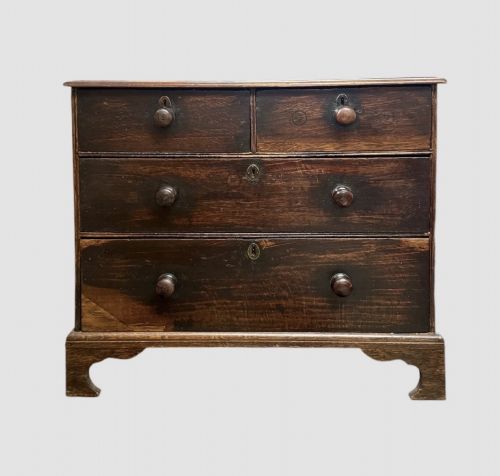
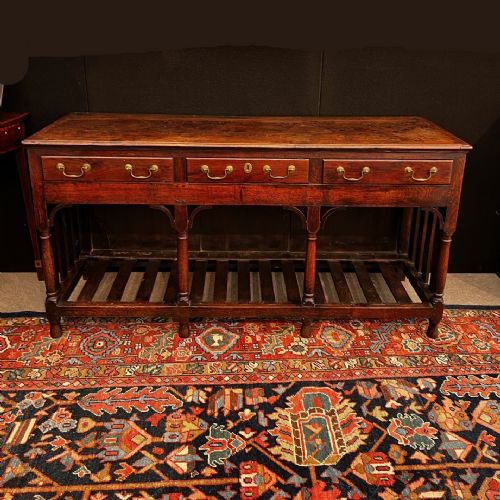


Traditional English Oak Dresser
A traditional english oak dresser grounds a room with centuries of utility, offering deep timber surfaces and open plate display.
Traditional English Oak Dresser
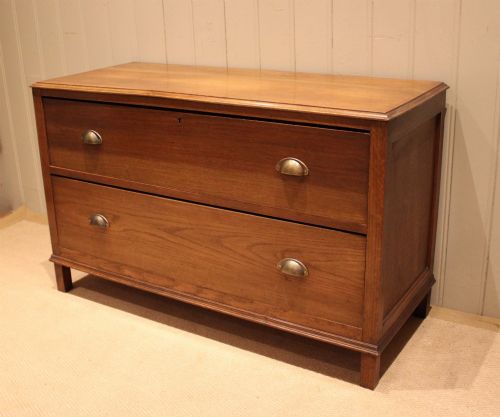
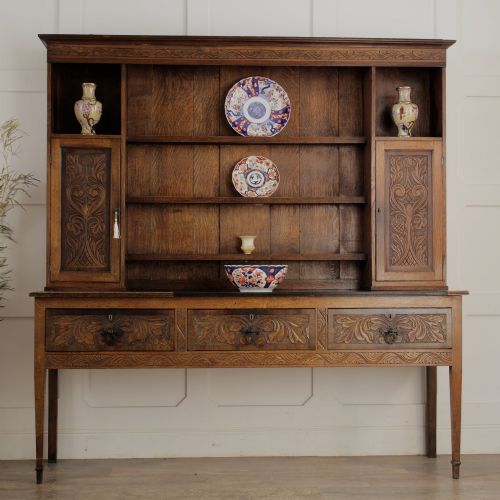
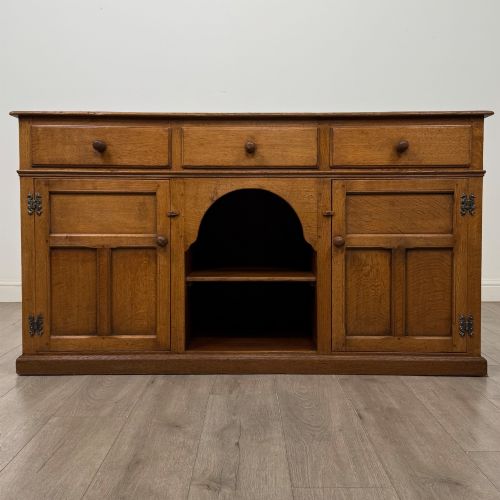
A traditional english oak dresser combines a sturdy base cabinet with open shelving or a plate rack, built for domestic service. These pieces originate primarily from the 17th and 18th centuries, spanning periods such as Georgian and William and Mary.
The form frequently appears as a potboard dresser base, an open dresser with rack, or an enclosed court cupboard. Provincial variations include elm and painted wood elements, reflecting regional English vernacular traditions.
Materials and construction methods
Construction relies on solid oak, frequently paired with elm and pine for secondary framing and internal boards. Brass and iron hardware secures doors and drawers, while occasional mahogany cross-banding adds contrast.
Joinery methods utilise pegged mortise and tenon joints alongside hand-cut dovetails for drawer construction. Surfaces are finished with natural wax and polish, displaying the open grain characteristic of native timber.
Kitchen dressers often double as impromptu cocktail bars when guests gather around the oak base.
Distinctions in construction and surface
Quality rests on the integrity of the timber selection and the preservation of original surfaces. Early examples with untouched patination and minimal structural alteration stand apart from heavily restored pieces.
Proportion and detail determine the hierarchy of these items, from simple vernacular kitchen furniture to formally carved Jacobean and Georgian designs. The presence of original potboards, plate racks, and brass furniture elevates the integrity of the piece.
The Traditional English Oak Dresser Glossary
- Potboard
- A lower open shelf positioned beneath a dresser base, traditionally used for storing pots and heavy domestic earthenware. This open platform is a defining feature of country house furniture.
- Plate rack
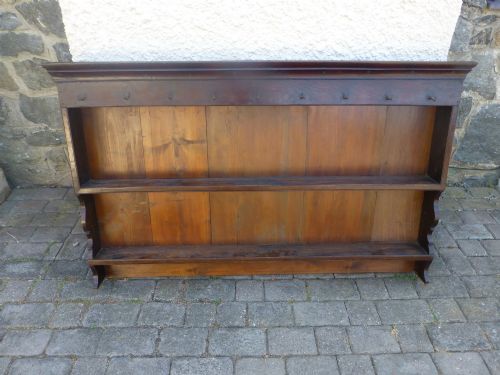
- An upper wooden shelving structure attached to a dresser or hung separately on a wall, featuring narrow grooves to hold plates upright. These racks often include small hooks or shelves.
- Court cupboard
- An enclosed antique cupboard featuring recessed upper doors supported by turned columns, used for storing victuals and plate. They date primarily to the 17th century.
- Cross-banding
- A decorative border technique where thin strips of veneer are laid across the grain of the primary wood. This method appears on fine Georgian drawer fronts.
- Vernacular
- Furniture designed by regional craftsmen to meet local domestic needs rather than following strict metropolitan stylistic rules. These pieces utilise native timbers such as oak and elm.
Traditional English Oak Dresser: Frequently Asked Questions
How do I date an oak dresser?
Dating relies on examining joinery methods, timber species, and overall proportions. Hand-cut dovetails, pegged joints, and surface patination provide primary clues to age.
Secondary woods, handles, and regional construction traits help narrow the period further, distinguishing 17th-century vernacular work from later Georgian and Edwardian revivals.
Are dressers and court cupboards the same?
Court cupboards are enclosed storage pieces with doors, whereas dressers combine lower drawer storage with open surface space and plate racks. Both forms served central functions in historical kitchens and dining spaces.
Cupboards generally date earlier, often to the 17th century, while dressers became more common through the Georgian era.
How should I care for antique oak?
Maintain oak furniture by applying natural beeswax sparingly to nourish the dry timber and preserve the historic surface. Avoid placing pieces near direct heat sources or strong sunlight.
Regular dusting with a soft, dry cloth protects the patina without stripping the centuries of polish built into the wood.