
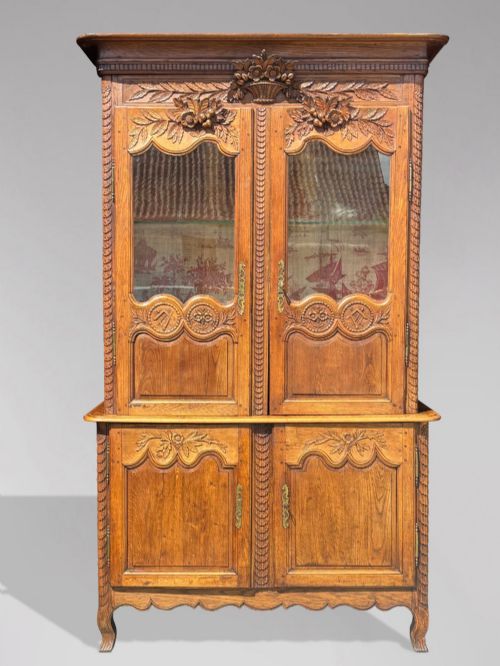


Carved Oak Buffet Display
A carved oak buffet display brings substantial presence to a room, offering both generous storage and a stage for domestic display.
Carved Oak Buffet Display
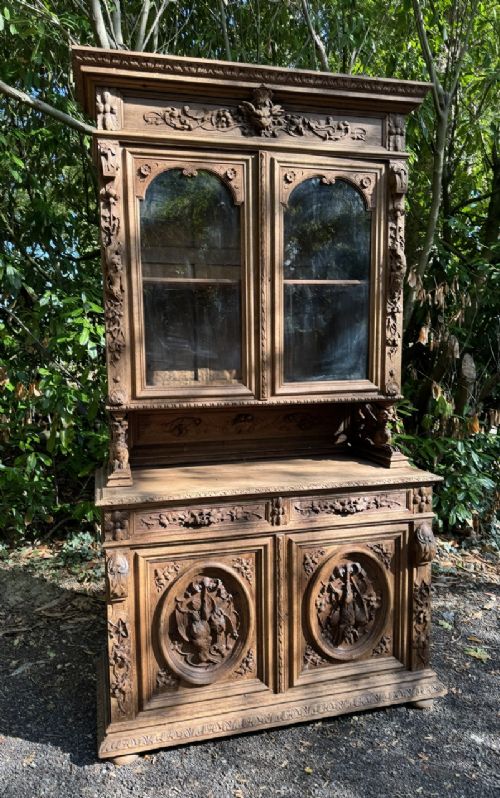
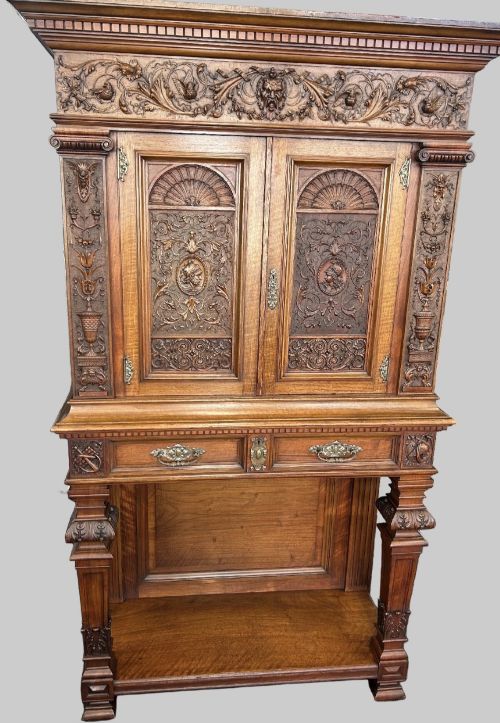
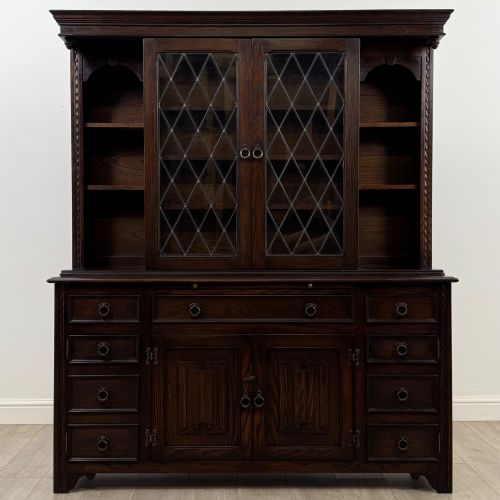
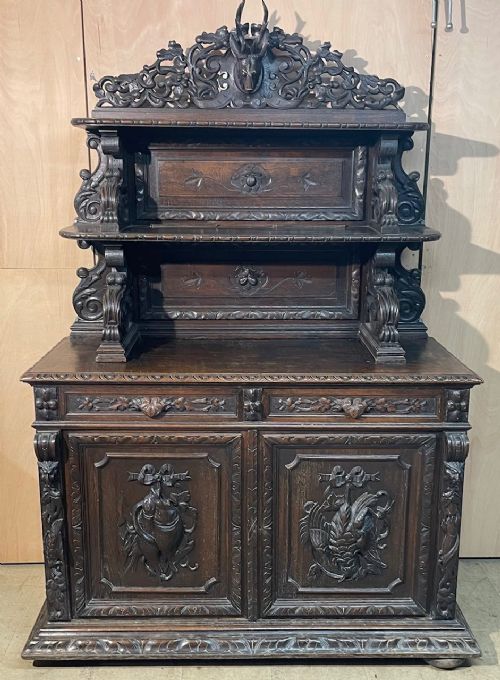
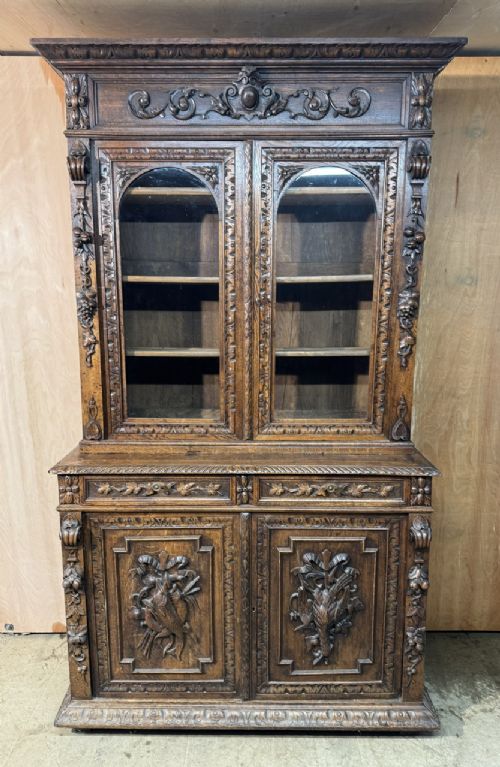
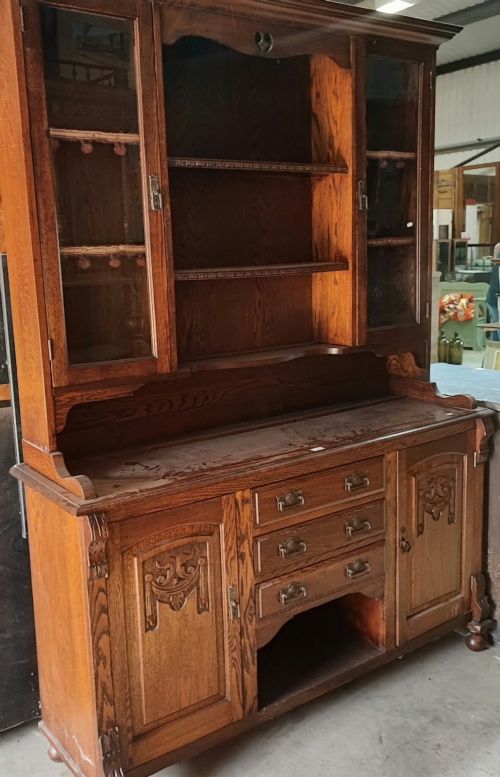
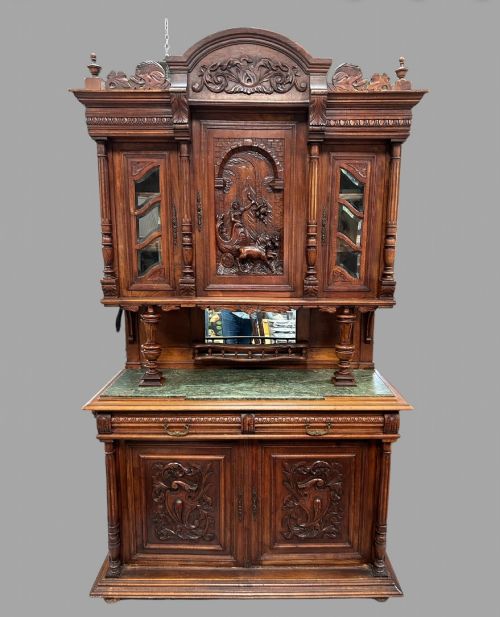
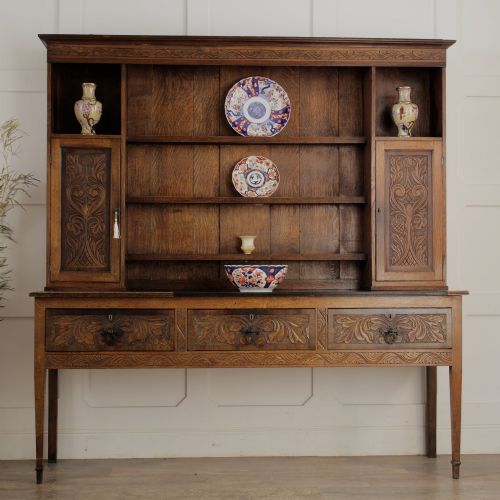
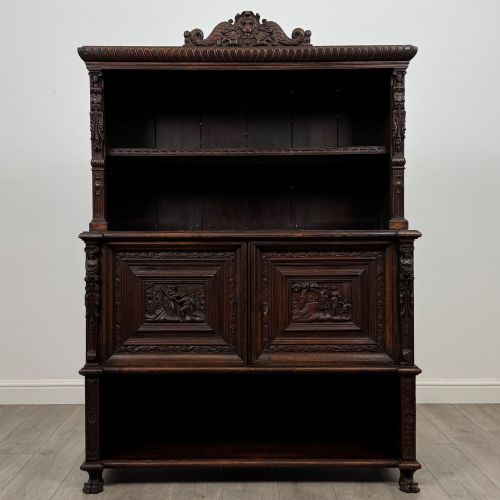
When you search for a carved oak buffet display, you encounter a robust range of heavy storage furniture spanning the eighteenth, nineteenth, and early twentieth centuries. These pieces appear under various historical descriptors including sideboards, dressers, court cupboards, and cabinets a deux corps.
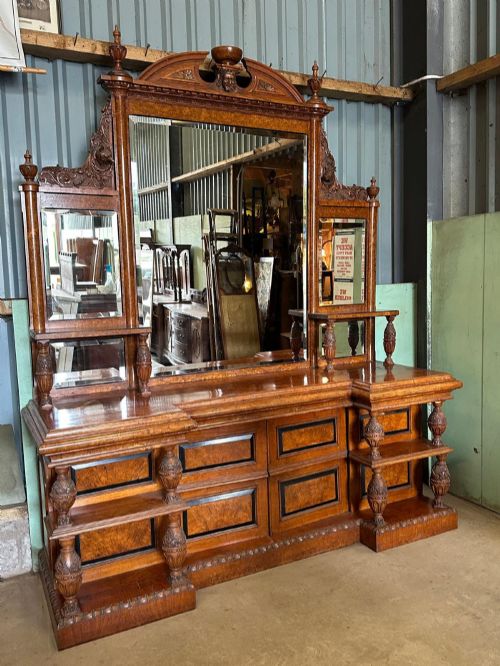
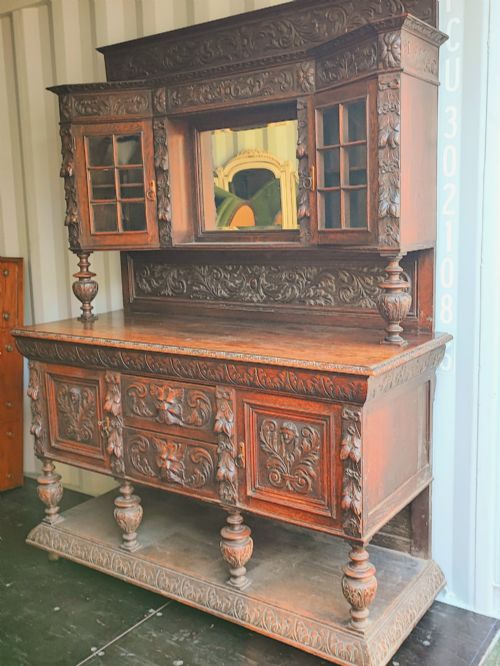
The nineteenth century dominates the current selection, bringing Victorian interpretations heavily influenced by Jacobean, Renaissance, and Arts and Crafts revivals. You are most likely to meet substantial Victorian and Edwardian iterations featuring carved panels, glazed doors, and mirror backs.
Earlier eighteenth-century examples also surface, showing simpler geometric carvings or regional French provincial styling. Forms shift from low serving tables and sideboards to towering display cabinets and multi-tiered dressers designed to hold plates and glassware.
Distinctions in construction and design
The depth and crispness of the carving distinguish finer examples from simpler vernacular output. Deep relief work, particularly in Jacobean and French Renaissance revival pieces, requires skilled hand execution that elevates the visual impact.
The selection of timber grain heavily influences overall character, with figured golden oak, pollard oak, and tiger oak creating distinct visual richness. Integrated elements such as leaded glass, bevelled mirrors, and substantial brass fittings indicate higher workshop ambition.
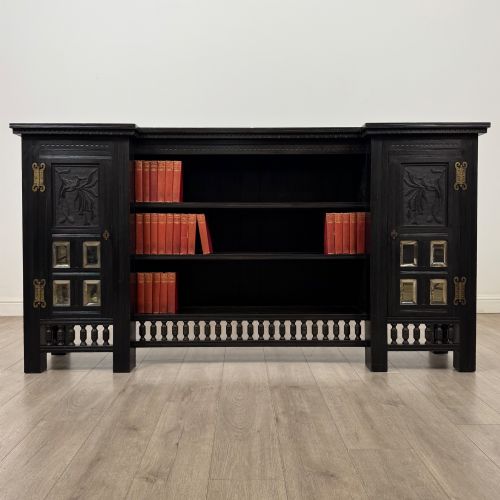
Materials recorded include solid oak, pollard oak, walnut, ebonised wood, brass, iron, glass, and mirrors.
Gillows
The Carved Oak Buffet Display Glossary
- Buffet deux corps
- A tall two-tier cabinet, usually featuring an enclosed upper cupboard section above a lower sideboard base. This French regional form provides extensive storage and display space.
- Court cupboard
- A traditional English enclosed cupboard with a recessed upper tier, frequently supported by heavy turned columns. These pieces date back centuries and heavily inspired later Victorian revival furniture.
- Pollard oak
- Timber taken from trees that have been pollarded, producing a dense, highly figured grain with distinctive clustered knots. Makers utilised this decorative veneer for dramatic surface patterning on Victorian sideboards.
- Arts and Crafts
- A design movement prioritising honest construction, visible joinery, and simplified natural motifs over ornate historical revivals. Pieces from this tradition often feature strapwork hinges and hammered copper details.
- Breakfront
- A cabinet design where the central section projects forward from the flanking wings. This architectural arrangement creates depth and breaks up the linear profile of large sideboards.
Carved Oak Buffet Display: Frequently Asked Questions
What is a carved oak buffet display?
A carved oak buffet display is a heavy storage and presentation piece, typically combining cupboards, drawers, and shelving. These items serve to store dining ware while providing surfaces to exhibit ceramics and glassware.
They range from low serving tables to monumental multi-tiered dressers and glazed cabinets. The form evolved across centuries, absorbing various revivalist styles from Jacobean to Arts and Crafts.
How do I identify a Victorian piece?
Victorian examples frequently display heavy relief carving, dark patinated oak, and often incorporate mirror backs or glazed display doors. Stylistic revivals such as French Renaissance and Jacobean styles heavily influence the ornamentation.
Cabinetmakers of this era utilised machine assistance alongside hand carving, producing substantial furniture designed to anchor large dining rooms. Pollard oak and tiger oak veneers frequently appear in these nineteenth-century iterations.
Where were these pieces used?
These pieces traditionally stood in dining rooms, halls, and large kitchens to house tableware, linens, and provisions. The upper tiers and mirror backs allowed households to display prized silver, pewter, and ceramic collections.
Today, they transition easily into modern living spaces, serving as substantial storage units and display focal points in dining areas or open-plan kitchens.
How do I care for antique oak furniture?
Antique oak benefits from stable indoor humidity and protection from direct sunlight, which can dry out timber and fade the finish. Regular dusting with a soft, dry cloth preserves the surface without building up residue.
Application of traditional beeswax can nourish the timber periodically, maintaining the natural sheen of the grain. Avoid placing these heavy wooden pieces near direct heat sources to prevent warping.