

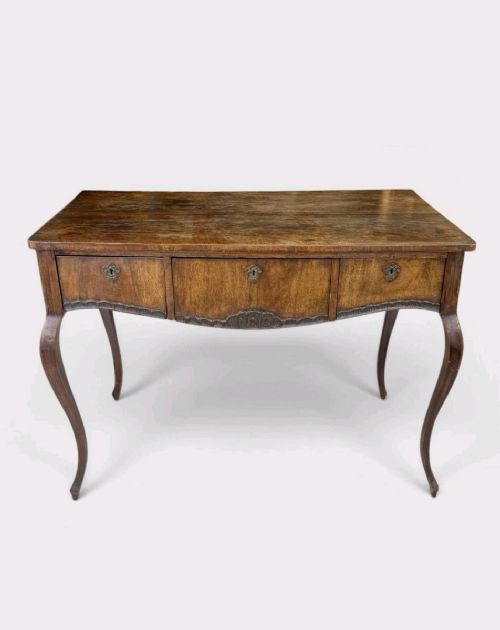
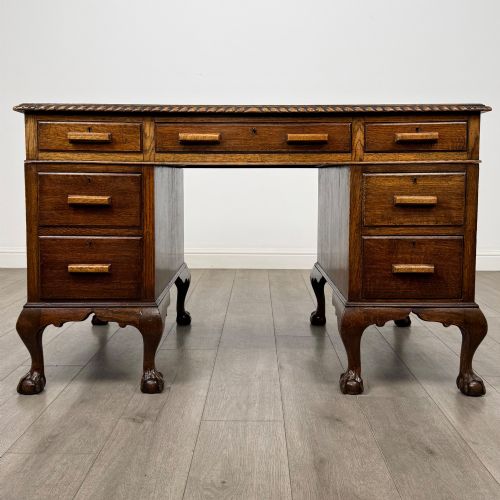
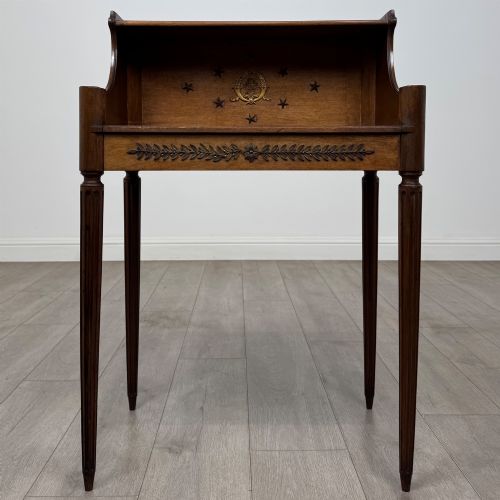
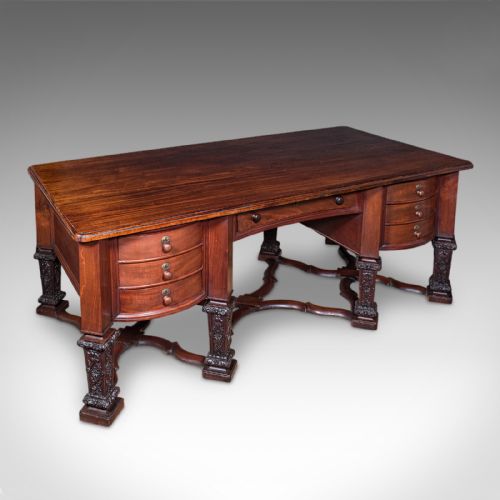
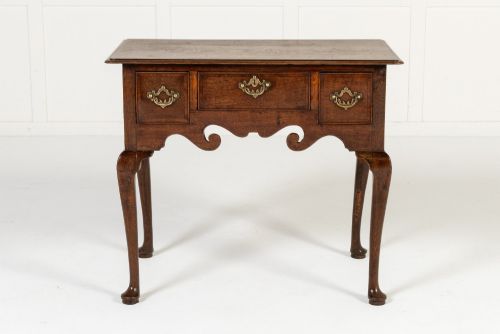
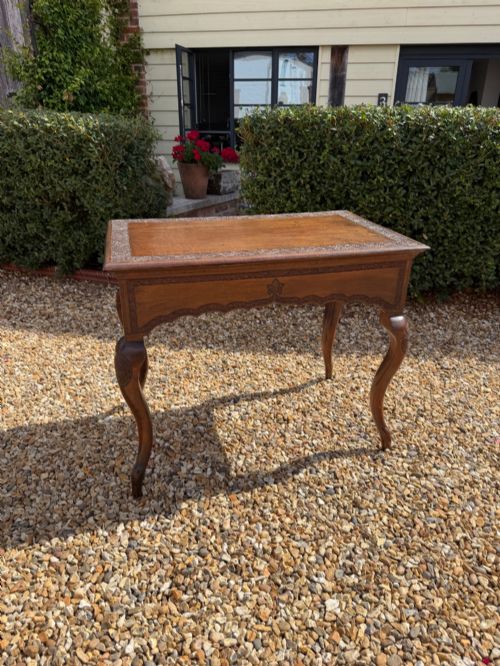
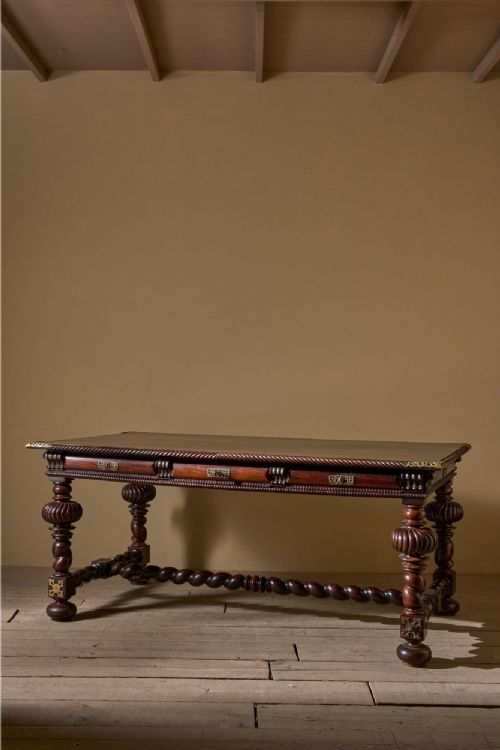
Carved Leg Writing Table
A carved leg writing table brings architectural presence to a room while offering a proper surface for correspondence.
Carved Leg Writing Table
A carved leg writing table combines a practical workspace with decorative woodwork executed on the structural supports. These pieces emerge across the nineteenth and early twentieth centuries, drawing on Georgian, Victorian and Edwardian design idioms.
The versions most common on this page span the Victorian and Edwardian eras, alongside later revivals of earlier styles. Oak, mahogany and walnut form the primary timbers for these functional surfaces.
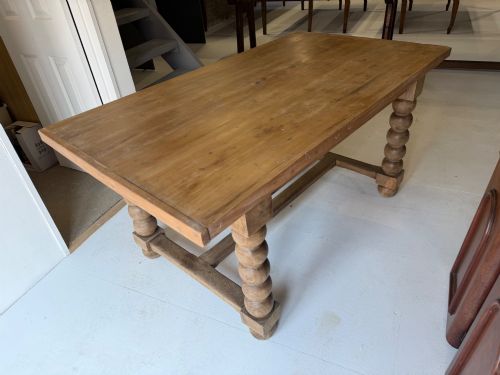
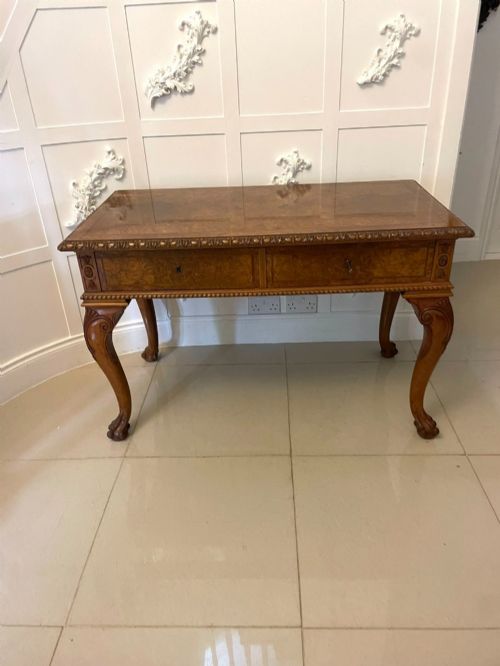
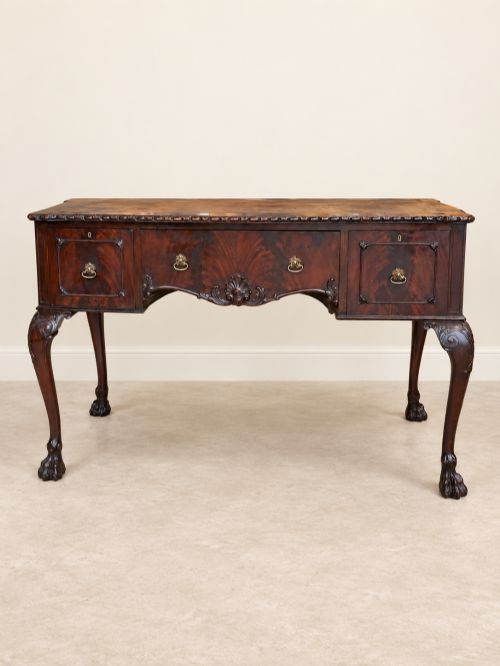
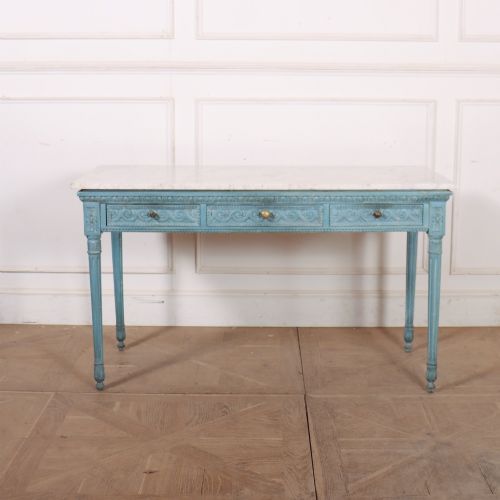
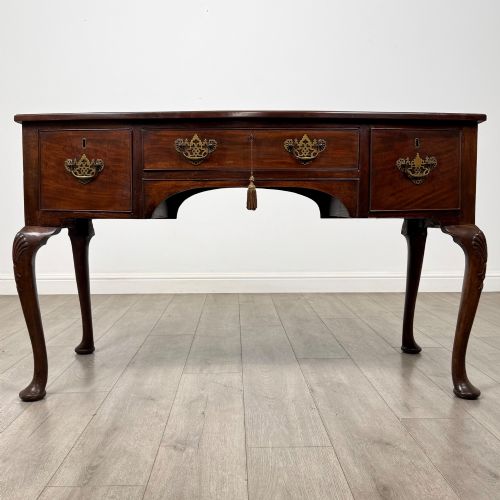
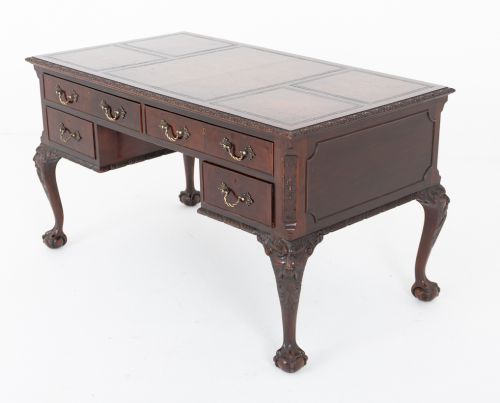
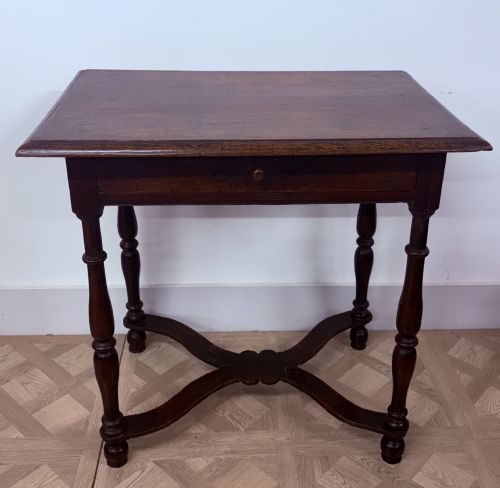
Makers often turned to revival aesthetics, producing Queen Anne and Chippendale interpretations alongside straightforward nineteenth-century examples. The supporting legs receive the sculptural enrichment that defines the group, whether through cabriole curves, turned shapes or classical motifs.
Materials and construction
Cabinet makers selected dense hardwoods such as mahogany, walnut and oak to ensure structural stability under daily use. Secondary timbers like beech or pine appear in secondary framing elements and drawer linings.
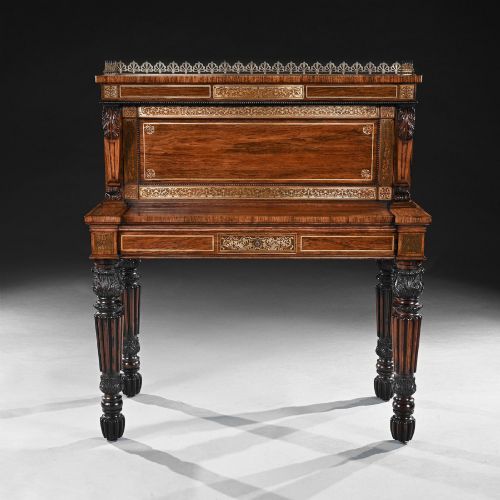
Workshops applied decorative veneers including burr walnut and flame mahogany over solid foundations to achieve striking grain patterns. Leather writing surfaces, frequently tooled with gold, were inset into the timber tops.
Carving was executed directly into the solid timber of the legs or applied as shaped mouldings, combining hand-chisel work with traditional joinery like dovetails for the drawers.
The listings on this page span the seventeenth century through to the Edwardian era, featuring oak, mahogany, walnut and rosewood.
Judgments of quality
The depth and crispness of the carved detail on the legs dictate the standard of execution. Sharp undercutting and refined proportions distinguish master cabinet work from simpler commercial production.
Selection of timber veneer and the integration of secondary woods reveal the original ambition of the piece. Well-figured burr walnut or flame mahogany indicates a workshop using superior stock.
Hardware integrity, such as original brass handles and smooth drawer action, marks the difference between standard utility items and finer pieces produced by established firms.
Gillows Oxford Street Workshop·Wylie & Lochhead Glasgow·Frank Giles upholsterers Kensington·James Mein of Kelso·George Smith
The Carved Leg Writing Table Glossary
- Cabriole leg
- A furniture leg that curves out and then in, resembling the leg of an animal. This form became central to Queen Anne and Chippendale revivals.
- Lowboy
- A small seventeenth or eighteenth-century table with drawers, often set on tall legs. These early forms influenced later writing table designs.
- Partners desk
- A large double-sided desk designed for two people to work opposite one another. These frequently feature banks of drawers beneath both long sides.
- Monopodia
- A carved support resembling an animal foot or limb, often seen on Regency furniture. This classical motif lends substantial visual weight.
- Tooled leather
- Leather decorated with blind or gold-leaf impressions using heated brass tools. It provides a durable writing surface inset into the timber top.
Carved Leg Writing Table: Frequently Asked Questions
How do I date a carved leg writing table?
Examine the secondary timbers inside the drawers and the style of the carving on the legs. Georgian and Victorian periods display distinct structural characteristics and revival motifs that help place the piece in time.
Construction methods like hand-cut dovetails and timber selection provide further clues. Comparing the hardware and finish against known period examples narrows down the decade of manufacture.
What is the difference between a writing table and a library table?
A writing table is designed specifically for correspondence, often incorporating drawers for stationery and an inset leather writing surface. Library tables tend to be larger and freestanding, intended for general reading and manuscript storage in domestic studies.
Both forms utilise carved legs for decorative impact, but the interior layout of drawers usually distinguishes the dedicated desk from the central library table.
How should I care for the leather top?
Keep the leather surface away from direct sunlight and excessive heat to prevent the material from drying out and cracking. Periodic application of a suitable leather balm maintains suppleness.
Avoid using harsh chemical cleaners on the gold tooling around the edges. Gentle dusting with a dry cloth keeps the surface safe during daily use.
Are these tables suitable for modern laptop use?
Most antique writing tables offer sufficient surface area and height for contemporary laptops and writing tasks. Their shallow drawer depths were originally built for paper and pens rather than bulky electronics.
Ensure the internal clearance of the kneehole matches your seating requirements before placing the desk into daily service.