


Carved Paw Feet Desk
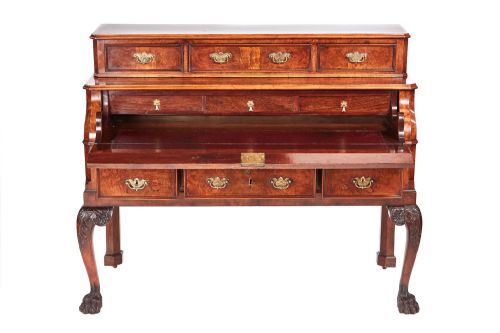
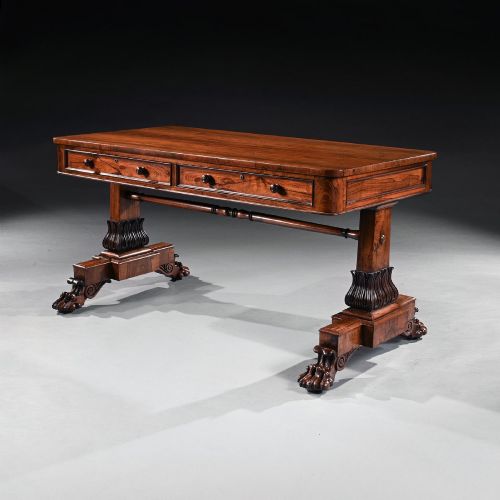
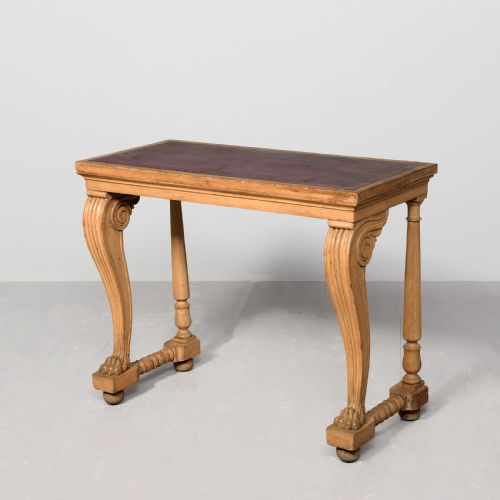
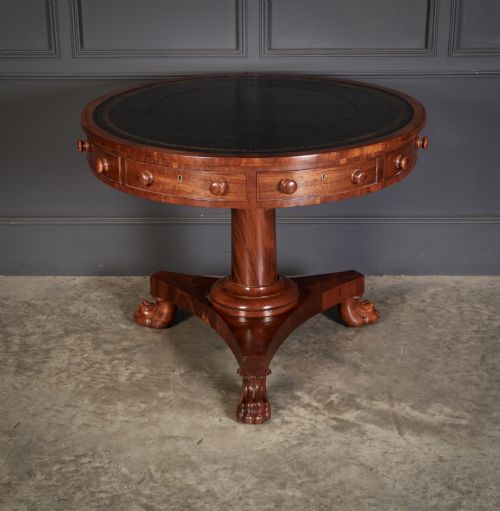
These carved paw feet desk pieces bring commanding nineteenth-century presence and rich timber figure into a room.
Carved Paw Feet Desk
When you search for a carved paw feet desk, you encounter substantial nineteenth-century writing furniture, library tables, and bureau forms grounded by sculptural animal feet. The selection draws primarily from the Regency, George IV, William IV, and Victorian periods, alongside continental Biedermeier and French Empire examples.
The objects span varied writing and centre table formats, including sofa tables, rotating drum tables, and secretaire bookcases, constructed in rich timbers like mahogany, rosewood, burr walnut, and burr birch.
How they were made
Cabinetmakers utilised dense figured hardwoods such as mahogany, rosewood, and burr walnut, often pairing the primary timber with secondary woods for internal drawer construction. Rich veneers and solid sections were shaped, turned, and hand-carved to create the characteristic robust paw supports.
Detailed metal mounts in brass and ormolu frequently complement the woodwork, while writing surfaces often incorporate inset leather inserts tailored to the bureau or desk function.
Several pieces feature fiercely carved animal claws ready to hold their ground across your study floor.
What varies in quality
The standard of a carved paw feet desk rests on the crispness and depth of the timber carving, where hand-rendered lion or animal paws display distinct knuckle and claw articulation rather than soft, mechanical shaping. Grain selection dictates visual impact, with highly figured burr walnut, flame mahogany, and exotic rosewood elevating the overall presence.
Structural integrity depends on the precision of the joinery across rotating mechanisms, drop leaves, and drawer slides, alongside the harmonious integration of brass or ormolu mounts and inset leather writing surfaces.
James Mein of Kelso·Jean-Joseph Chapuis·Thomas Hope
The Carved Paw Feet Desk Glossary
- Regency
- A British design period spanning the early nineteenth century, characterised by classical restraint, architectural lines, and Greco-Roman decorative motifs. It frequently incorporates dark timbers and bold brass enrichments.
- Burr Walnut
- A specialised wood cut from the wart-like growths on walnut trees, yielding intricate, swirling grain patterns. Cabinetmakers prize this timber for high-status table tops and bureau facades.
- Ormolu
- Gilded bronze applied as decorative mounts, feet, or gallery rails on fine furniture. The technique involves coating cast bronze with a mercury-gold amalgam before firing.
- Sofa Table
- A long, narrow nineteenth-century table designed to stand in front of a sofa, featuring drop leaves at either end. These versatile pieces often incorporate twin pedestal supports or trestle bases.
Carved Paw Feet Desk: Frequently Asked Questions
What periods do these desks come from?
These pieces date predominantly from the nineteenth century, encompassing Georgian, Regency, George IV, William IV, and Victorian eras.
Continental workshops from the French Empire and Biedermeier periods also contribute distinct regional interpretations to the category.
How were these tables used originally?
Such pieces served primarily for correspondence, reading, and administrative duties in libraries, studies, and formal drawing rooms.
Many incorporated pivoting mechanisms, drawers, and drop leaves to accommodate varied domestic and writing tasks.
What woods should I expect to find?
Construction relies heavily on dense nineteenth-century hardwoods, with mahogany and rosewood forming the structural backbone of British pieces.
Exotic veneers such as burr walnut, burr birch, gonçalo aves, and birdseye maple provide decorative grain contrast on primary surfaces.
How do I care for the leather tops?
Leather writing surfaces require gentle dusting and occasional conditioning with specialised balms to prevent drying and cracking.
Keep these surfaces away from direct sunlight and excessive moisture to preserve the original material and gold-tooled borders.