
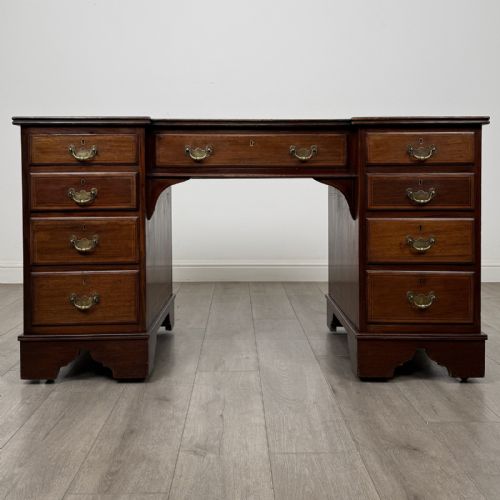
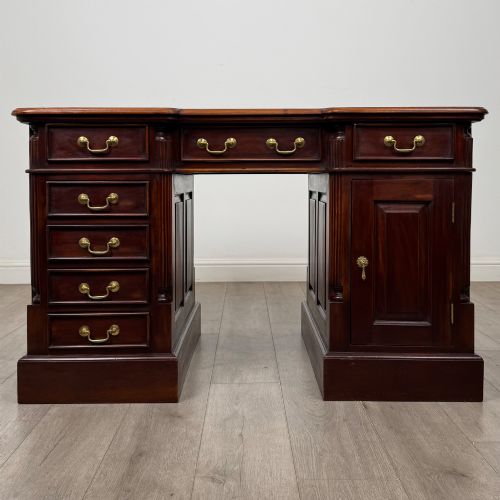

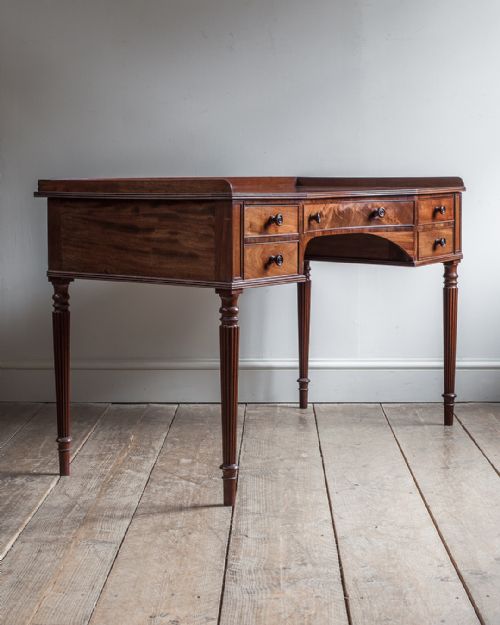
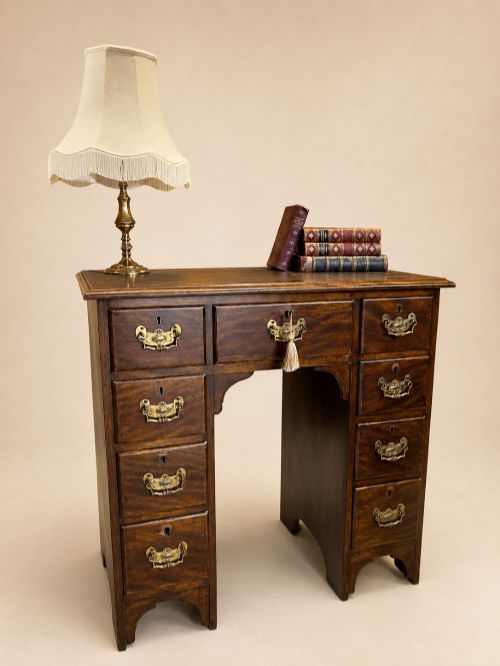
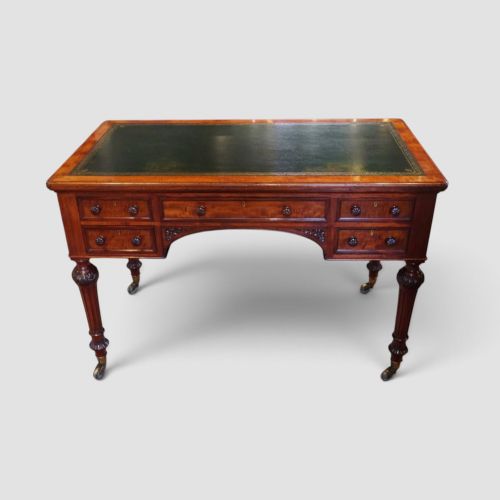
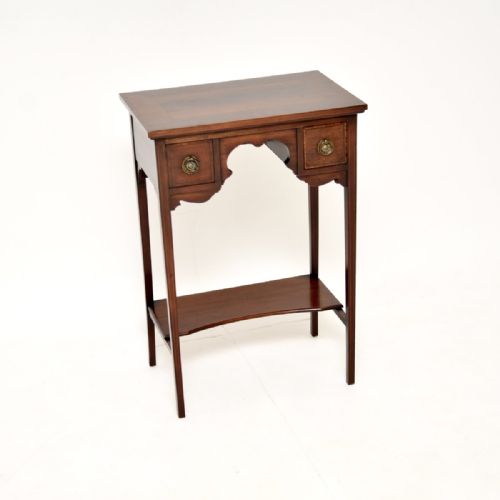
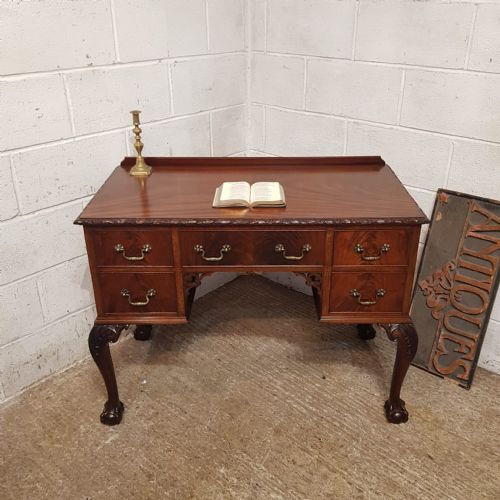
Dark Mahogany Kneehole Desk
A dark mahogany kneehole desk brings serious architectural order to a study, offering deep timber tones and a concealed central recess behind pedestal drawers.
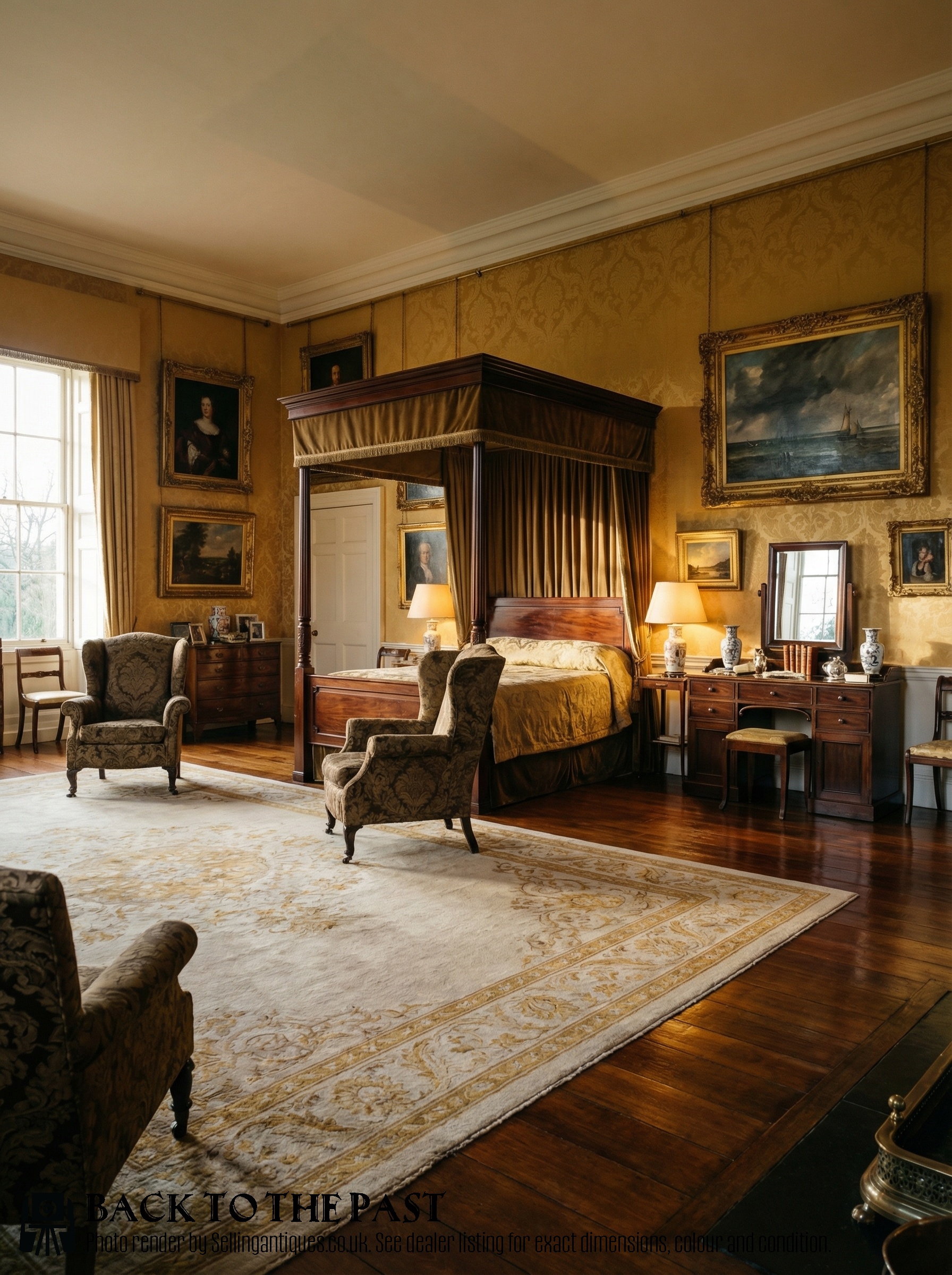
Dark Mahogany Kneehole Desk
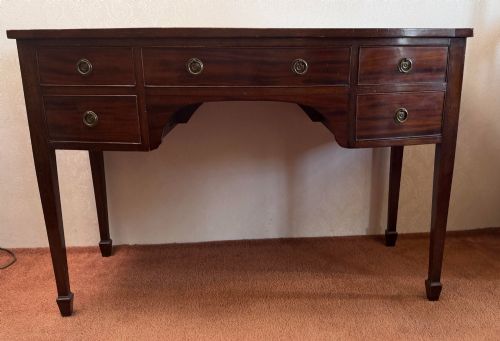
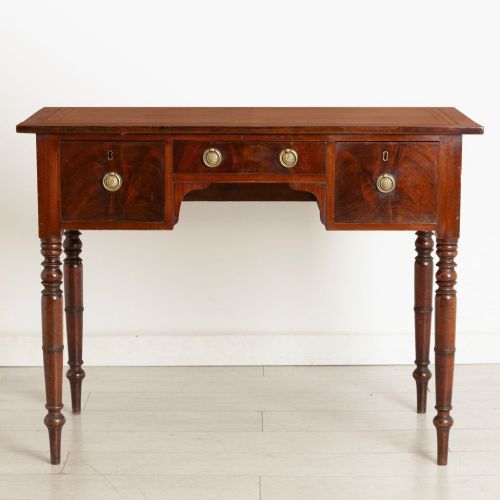
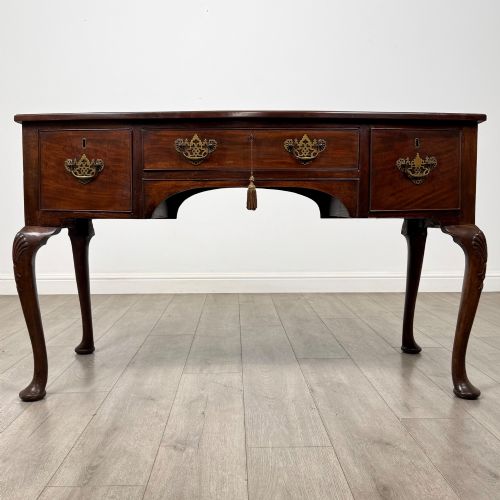
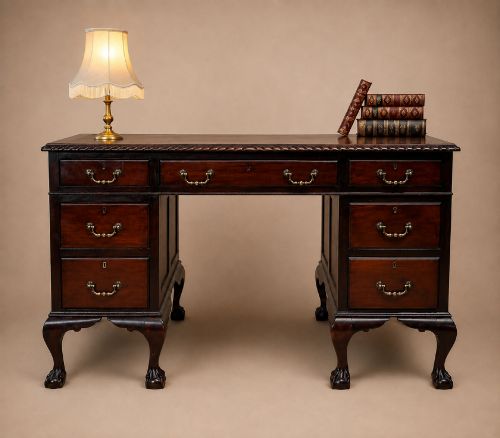
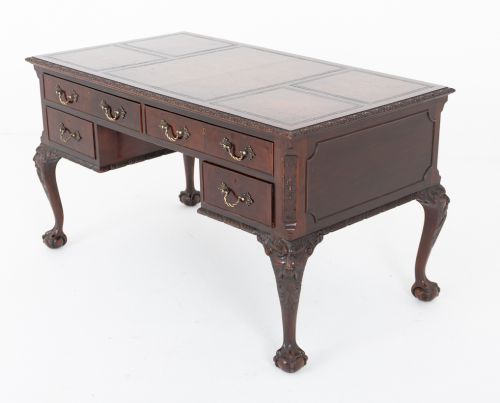
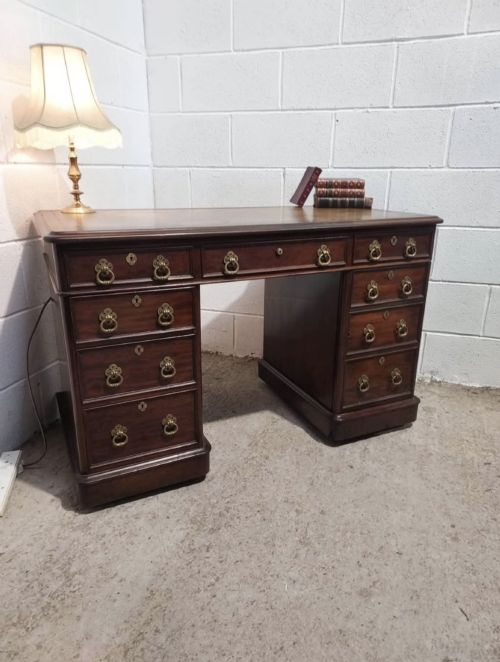
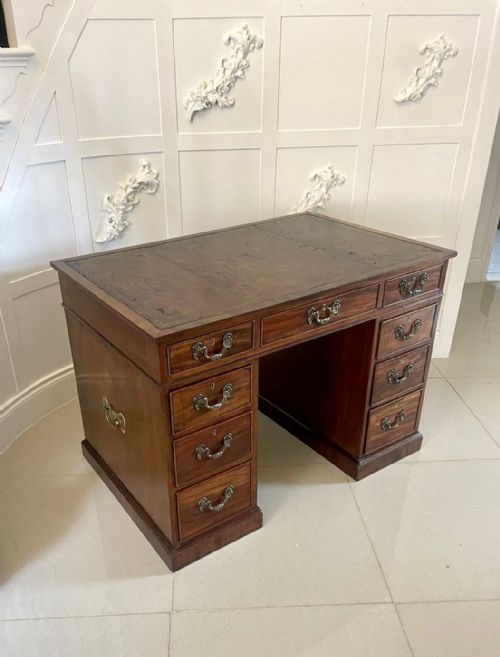
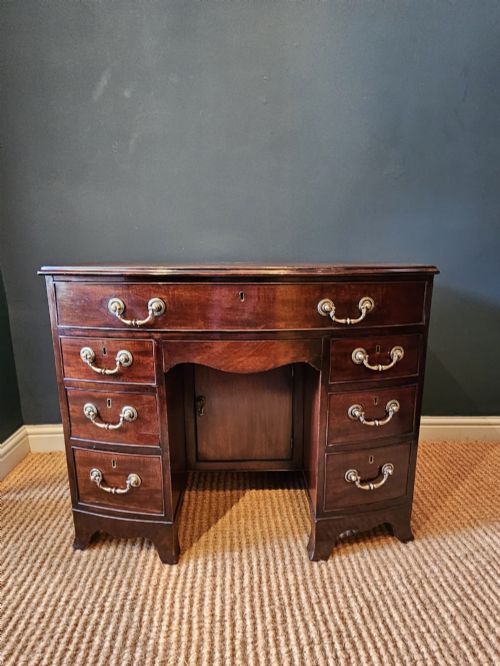
A dark mahogany kneehole desk typically presents a compact pedestal format featuring a recessed cupboard or open space beneath the central drawer, flanked by stacks of smaller drawers. These sturdy writing pieces emerge most frequently from Georgian, Victorian, and Edwardian workshops, spanning the eighteenth into the early twentieth centuries.
Buyers encountering this search phrase often evaluate variations that range from formal George III library pieces to later revival styles and compact Edwardian writing tables. The primary form relies on solid timber and figured veneers, often accompanied by related sideboard or dressing table variants sharing the characteristic kneehole proportion.
The layout prioritises compartmentalised storage alongside a designated writing surface, occasionally incorporating leather inserts or fitted secretaire drawers. Construction adheres to traditional cabinetmaking standards, maintaining structural symmetry across the pedestals.
Distinctions in craftsmanship
Quality in a dark mahogany kneehole desk rests upon the selection of figured timber veneers and the precision of the cabinetwork uniting the pedestals. Superior examples display continuous grain matching across drawer fronts and seamless integration of secondary woods within the carcase.
The refinement of internal drawer linings, the retention of original brass hardware, and the subtlety of carved details like bracket feet or cockbeading elevate certain pieces above standard utilitarian workspace furniture.
Some nineteenth-century architects specified extra-deep drawers specifically to accommodate rolled blueprints and oversized parchment.
Trollope & Sons·Holland & Sons·Betty Joel·Johnstone & Jeanes
The Dark Mahogany Kneehole Desk Glossary
- Kneehole desk
- A writing table featuring a central recessed space beneath the desktop, flanked by two banks of smaller drawers. This configuration provides concentrated storage while maintaining a compact footprint.
- Flame mahogany
- A timber veneer sliced from logs where the growth pattern creates a flickering, flame-like figure. Cabinetmakers prized this grain for prominent drawer fronts.
- Secretaire
- A desk or chest incorporating a pull-down writing flap that conceals small drawers and pigeonholes. This element allows a piece of case furniture to double as a functional writing station.
- Cockbeading
- A narrow semi-circular moulding fitted around the edges of a drawer front. It protects the drawer edges from impact and frames the individual drawer plane.
Dark Mahogany Kneehole Desk: Frequently Asked Questions
How do I date a mahogany desk?
Dating relies on observing construction methods, timber choice, and hardware styles across the carcase. Earlier eighteenth-century examples display hand-cut dovetails and solid timber framing, whereas later nineteenth-century pieces often incorporate machine-sawn elements and distinct veneer thicknesses.
Secondary woods inside the drawer linings also offer chronological clues, transitioning from oak and pine in Georgian periods to various softwoods in Edwardian production. Examining the locks, handles, and overall proportions confirms the stylistic period.
What is a kneehole desk used for?
These pieces function primarily as compact writing tables or study desks designed for correspondence and administrative tasks. The central recess allows the user to sit comfortably close to the writing surface while keeping reference materials within arm's reach in the flanking drawers.
Historically, they served in libraries, parlours, and private offices as dedicated writing stations. Today, they integrate easily into residential studies as functional workspace furniture.
How do I care for mahogany surfaces?
Maintaining mahogany requires dusting with a soft, dry cloth and avoiding excessive moisture or direct sunlight. Periodic application of quality beeswax feeds the timber and preserves the deep polish without building up artificial residue.
Leather writing inserts benefit from careful cleaning suited to aged hide, avoiding harsh chemical solvents. Consistent indoor humidity prevents the solid timber and veneers from shrinking or cracking.
Are kneehole desks and partners desks the same?
Kneehole desks feature a single working side with drawers positioned in front of a seated user, while the reverse typically presents a finished or panelled back. Partners desks are built to accommodate two people sitting opposite each other, featuring drawer banks accessible from both sides.
This structural difference changes where the desk can sit within a room, as kneehole variants usually rest flat against a wall or in a corner.