
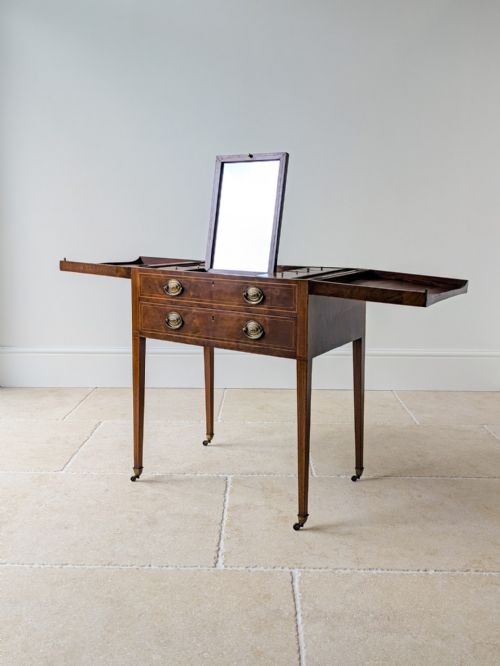
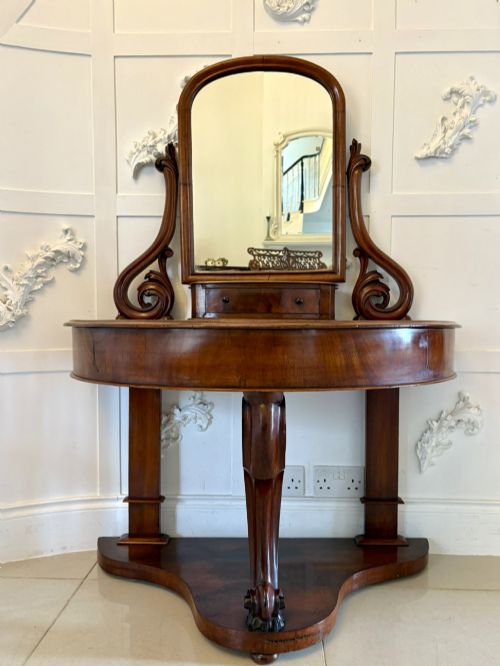
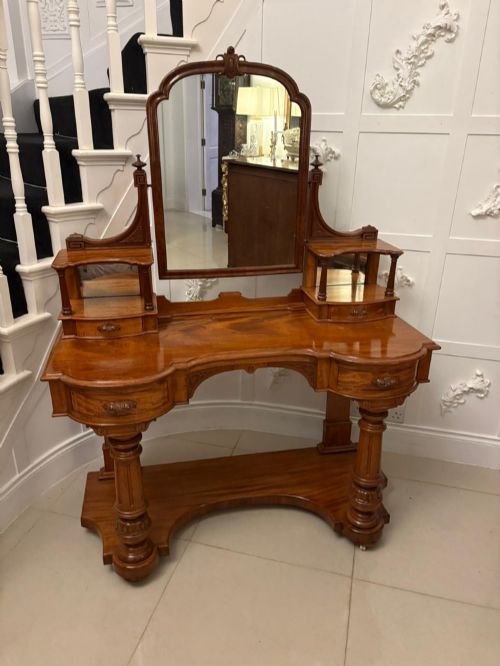
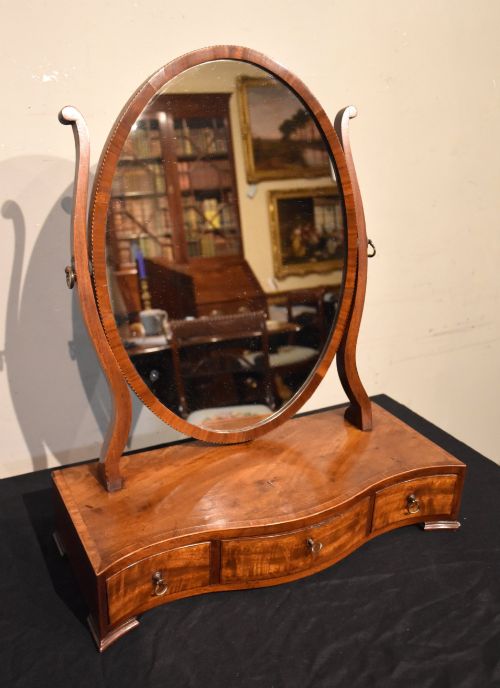


Mahogany Toilet Mirror Desk
These mahogany toilet mirror desk examples combine a compact glass plate with practical drawers for personal grooming, offering timeless elegance for a traditional dressing room.
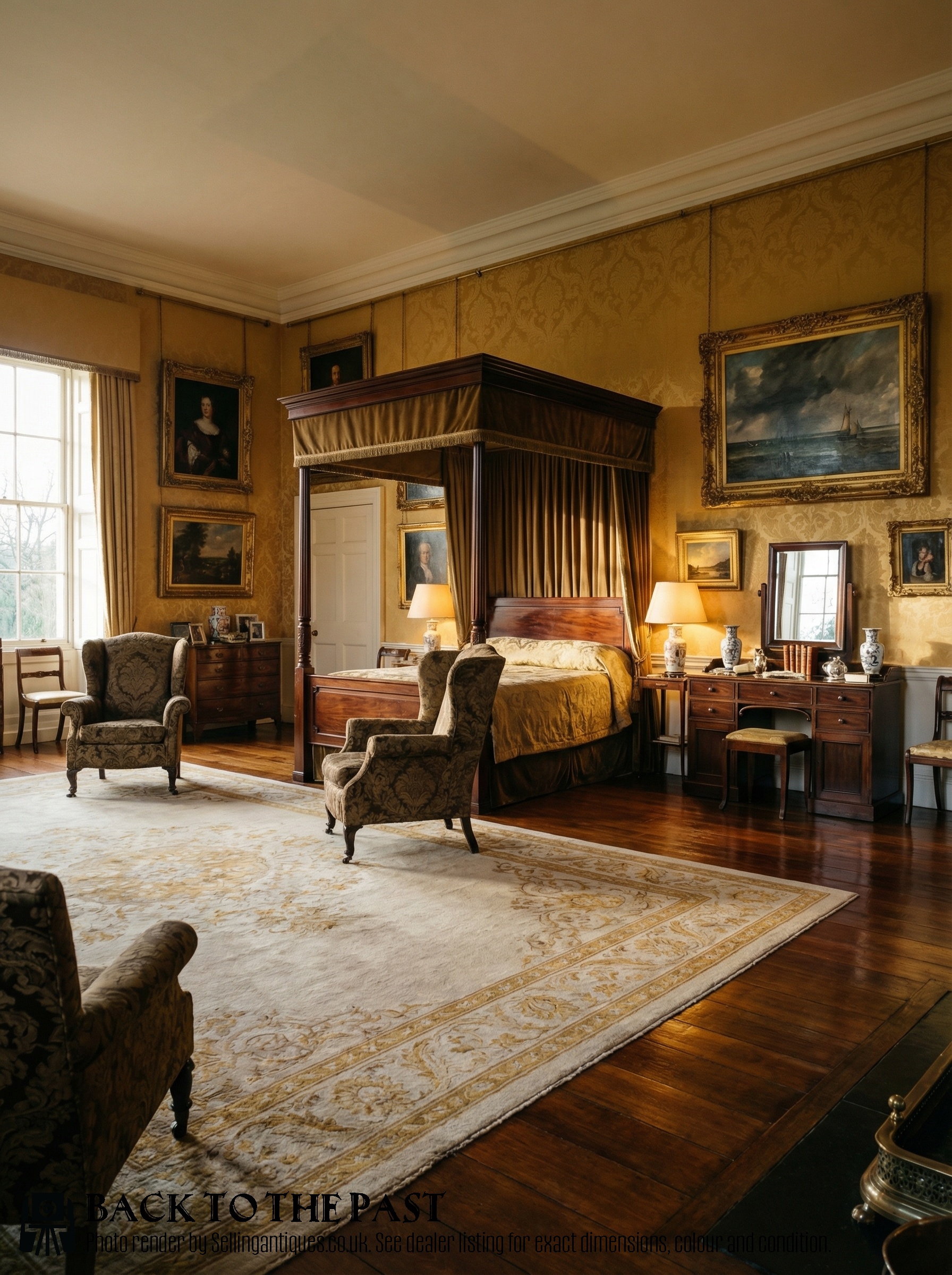
Mahogany Toilet Mirror Desk
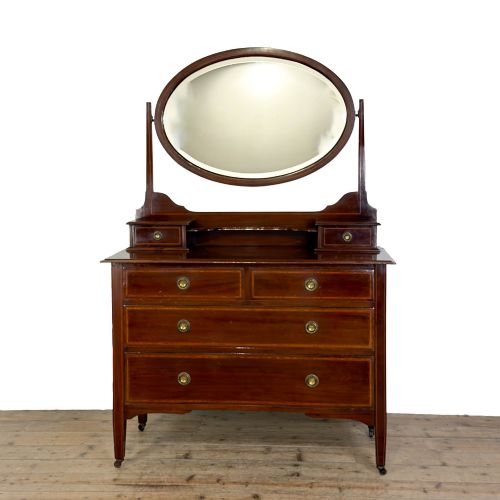
A mahogany toilet mirror desk brings together surface space, storage drawers, and an adjustable glass plate designed for daily grooming and personal care. When exploring this category, buyers encounter forms ranging from compact tabletop bureau mirrors to substantial freestanding Victorian and Edwardian dressing tables with integrated swing plates.
The surviving pieces span multiple design epochs, with strong representation from the Georgian era through to the Victorian, Edwardian, and early twentieth-century periods. These objects served utilitarian roles in bedrooms and boudoirs, adapting over generations from simple tabletop toilet glasses into fully developed vanity furniture.
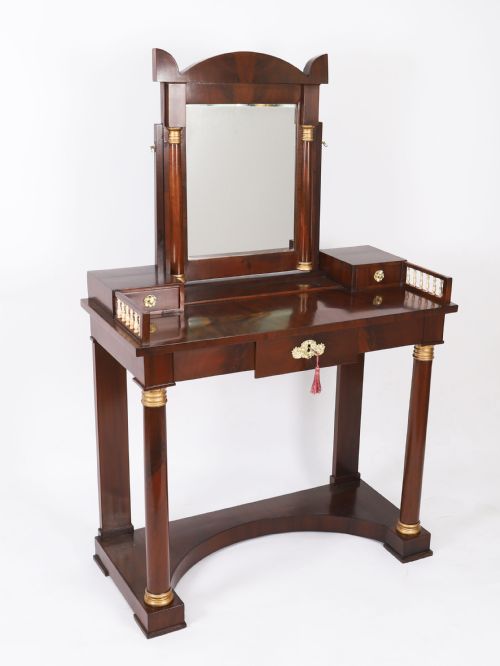
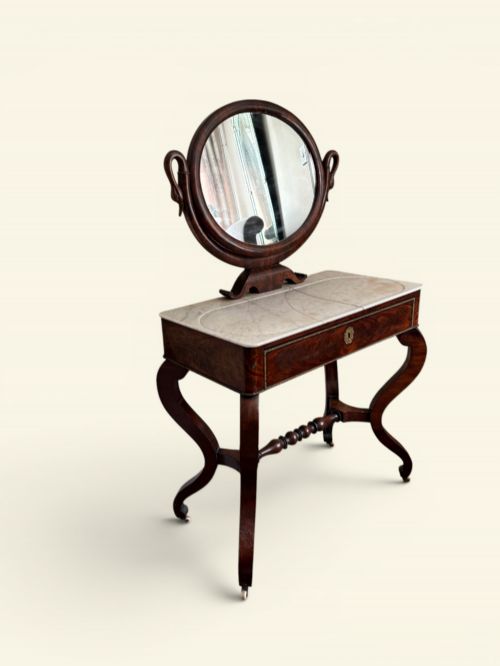
Makers utilised rich timbers alongside functional compartments, creating pieces that sit comfortably upon larger chests or stand independently as designated dressing stations. The selection reflects diverse European influences, including French Empire styling and Sheraton revival aesthetics, alongside traditional English cabinetmaking.
Materials and construction methods
Cabinetmakers relied heavily on solid and veneered mahogany, frequently pairing the warm reddish-brown timber with secondary woods like maple and satinwood for contrast. Brass fittings, including pivoting screw knobs, handles, and occasional ormolu mounts, provide structural support and decorative accentuation.
Glass production yielded reflective mirror plates, often housed within pivoting frames that allowed the user to adjust the angle. Joinery techniques involved precise drawer construction, sometimes featuring serpentine fronts or crossbanded borders to enhance the visual depth of the timber surfaces.
Materials appearing across these pieces include solid mahogany, mirror glass, brass, marble, ormolu, and contrasting satinwood inlay.
Distinctions in craftsmanship and design
Superior examples demonstrate meticulous timber selection, where grain patterns align harmoniously across drawer fronts and frame borders. The sophistication of the carving, the crispness of brass mounts, and the integrity of the original mirror glass separate finer workshop productions from simpler utilitarian items.
Proportion and structural balance dictate the refinement of a piece, particularly in how the mirror supports integrate with the lower desk or box base. Well-executed dovetailing in the concealed drawer compartments indicates high standards of period joinery.
The Mahogany Toilet Mirror Desk Glossary
- Serpentine front
- A furniture face featuring a gentle convex centre flanked by concave curves, common in finer Georgian pieces. This contour requires advanced woodworking skill to execute properly.
- Shield mirror
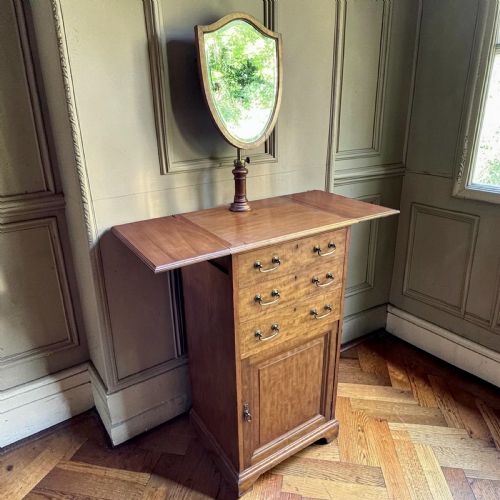
- A dressing glass cut into the shape of a heraldic shield, typically suspended between upright support arms. This design gained popularity during the Edwardian and Sheraton revival periods.
- Bureau mirror
- A compact tabletop desk unit featuring small storage drawers beneath an adjustable mirror plate. These pieces often incorporated sloped writing surfaces or concealed compartments.
- Crossbanding
- A decorative border technique where thin strips of veneer are laid across the grain of the primary panel. This adds visual framing to drawer fronts and tabletops.
- Duchess dressing table
- A large Victorian vanity form characterised by a substantial mounted swing mirror and generous lower storage. These pieces frequently incorporate demi-lune or curved lower frameworks.
Mahogany Toilet Mirror Desk: Frequently Asked Questions
What is the difference between a toilet mirror and a dressing table?
A toilet mirror is a smaller, portable unit with drawers designed to sit upon an existing chest or table. A dressing table is a larger, freestanding piece of furniture that incorporates its own surface, legs, and frequently an attached mirror.
While both served personal grooming functions in period homes, toilet mirrors offer greater versatility for placement within smaller rooms.
How do I identify a Georgian mahogany mirror desk?
Georgian pieces typically display restrained proportions, bracket feet, and solid mahogany construction with hand-cut dovetails in the drawer boxes. The glass is often held within simple moulded frames supported by upright skittle-shaped arms.
Decorative restraint and high-quality timber selection are the primary markers of this eighteenth-century aesthetic.
Are the mirror plates on these pieces original?
Mirror glass was fragile and subject to degradation, meaning many surviving pieces have replacement plates fitted during later restorations. Older mirror plates often exhibit minor foxing, dark spots, or slight distortions within the glass reflection.
Examining the backing boards and fixings helps determine whether the glass dates to the original period of manufacture.
How should I care for antique mahogany furniture?
Keep wooden surfaces away from direct sunlight and steady heat sources to prevent the timber from drying out or splitting. Regular dusting with a soft, dry cloth maintains the finish without requiring heavy chemical polishes.
Applying a traditional beeswax occasionally helps nourish the grain and preserve the lustre of the antique polish.