
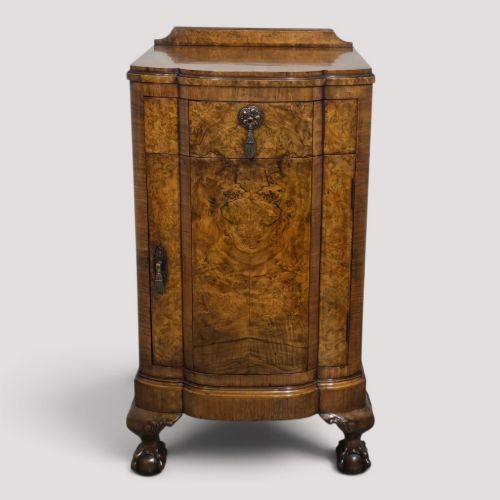
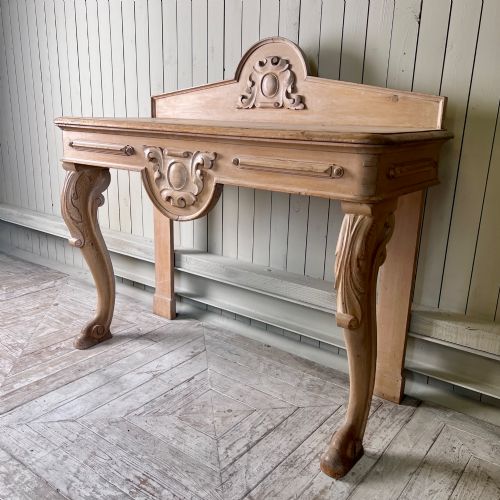
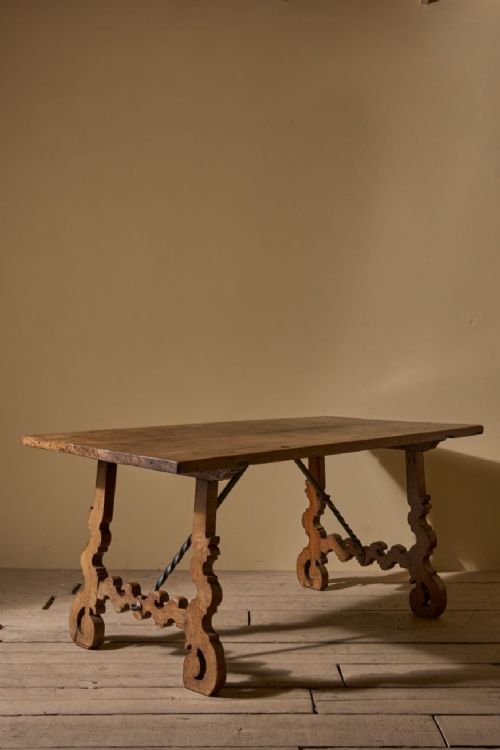
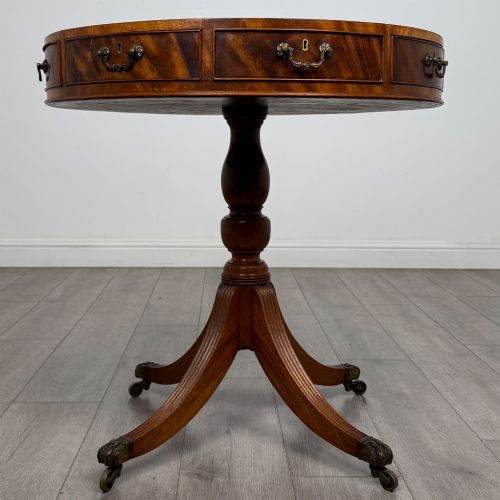
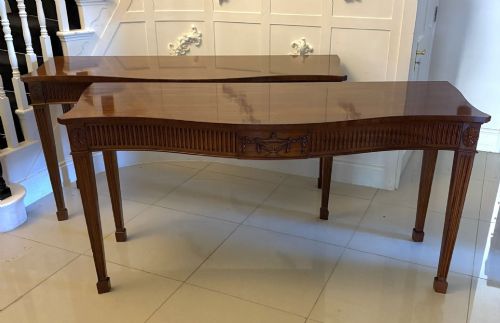
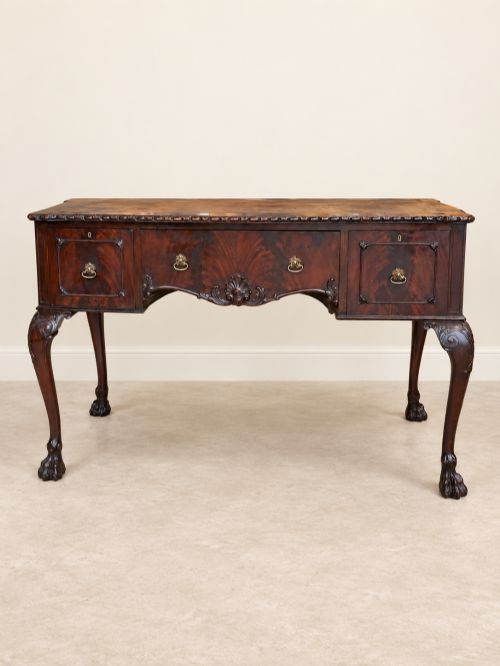

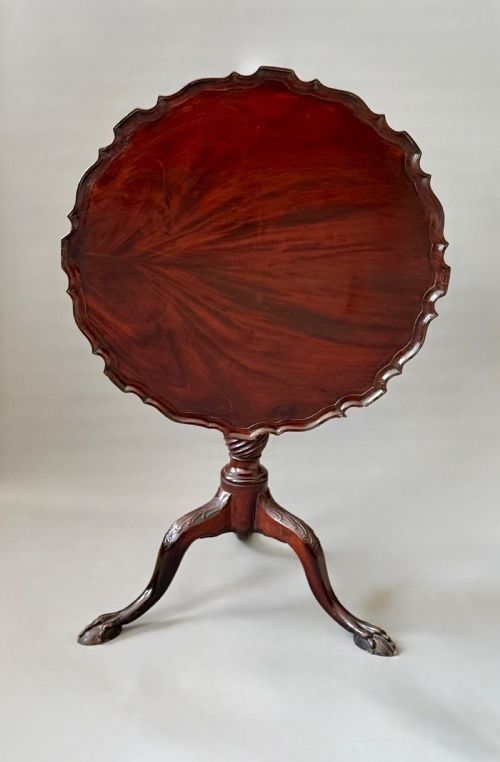
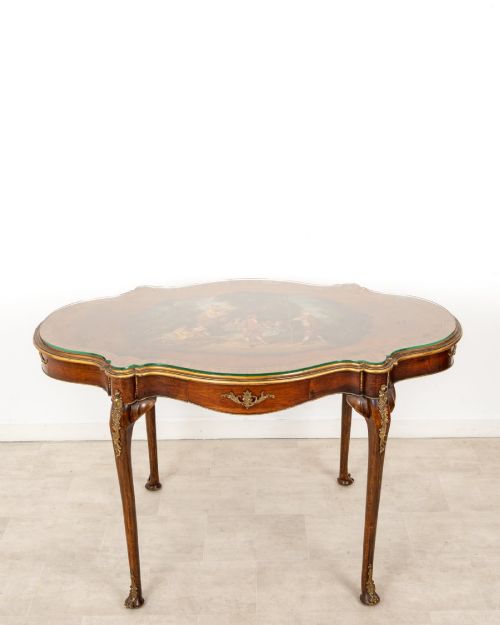
Carved Leg Side Table
A carved leg side table brings solid timber character and detailed ornamentation to any room.
Carved Leg Side Table
A carved leg side table is a compact surface built for utility and display, resting on legs shaped with hand or machine chiselling. You will frequently encounter mahogany, oak, and walnut examples spanning periods from the seventeenth century through to the early twentieth century.
The selection ranges from simple occasional pieces to grander console and lamp tables. These items provide functional surfaces for halls, bedrooms, and reception rooms whilst showcasing regional cabinet-making styles.
Victorian and Edwardian iterations dominate the selection, often drawing inspiration from earlier Georgian and Jacobean motifs. Each piece reflects the domestic requirements of its era, combining surface utility with decorative leg work.
Materials and construction methods
Cabinet makers utilised dense hardwoods such as mahogany, oak, and walnut to ensure structural integrity and a suitable ground for deep relief carving. Secondary timbers often provided internal support for drawers and framing.
Joinery techniques relied on traditional mortise and tenon joints alongside dovetailing for drawers. Turning lathes shaped preliminary profiles before craftspeople applied chisels to define leaves, scrolls, and gadrooning on the legs.
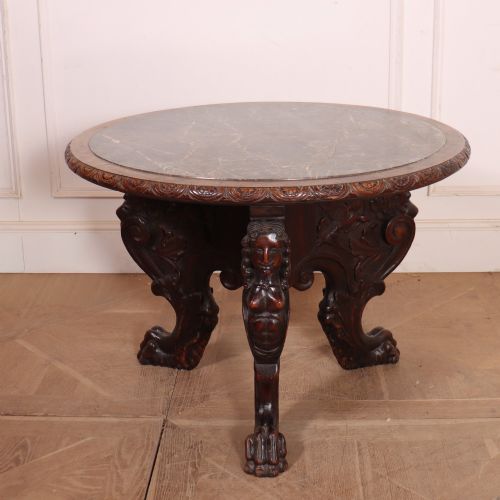
Materials recorded across the inventory include solid mahogany, oak, walnut, burr walnut, beech, and marble.
Assessing craftsmanship and proportion
Quality rests in the crispness and depth of the carving rather than mere surface decoration. Superior examples display sharp undercutting and confident handling where the timber grain supports the sculptural form.
Proportion and stability dictate the standing of a piece within its type. Well-balanced frames with tight joinery and sympathetic timber selection outrank heavier, clumsily adapted furniture.
The Carved Leg Side Table Glossary
- Cabriole leg
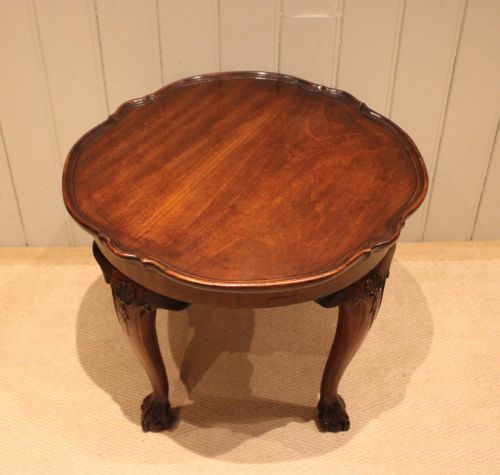
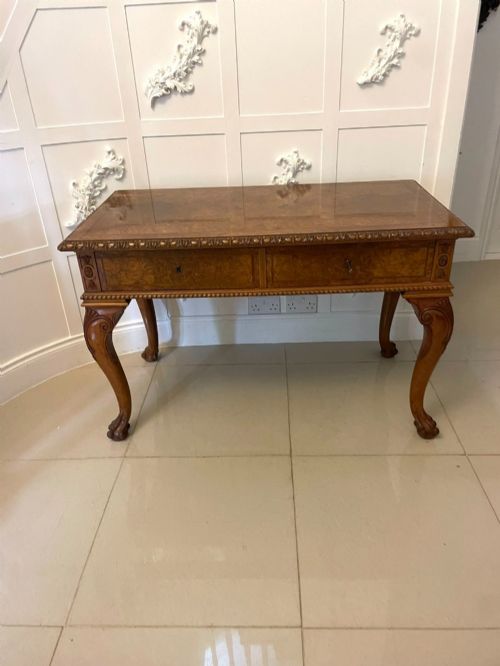
- A furniture leg that curves out and then in, resembling the leg of an animal. This form frequently terminates in pad, claw and ball, or scroll feet.
- Console table
- A table designed to stand against a wall, sometimes supported by brackets or legs at the front only. These pieces often feature decorative carving to the frieze and legs.
- Tripod table
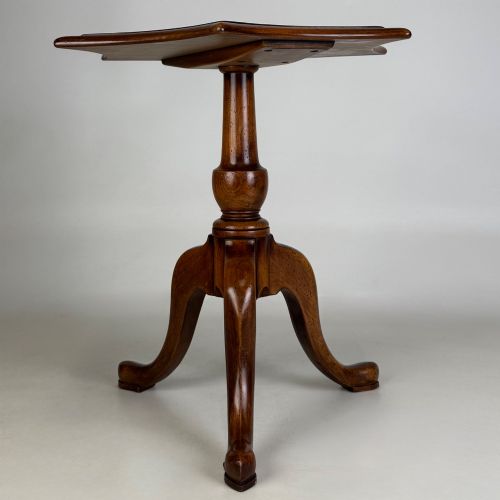
- A small freestanding table supported by a single central pillar resting on three legs. They often feature tilt-top mechanisms or pie crust rims.
- Frieze
- The horizontal band running directly beneath the tabletop. This area often houses drawers or receives decorative carving.
- Barley twist
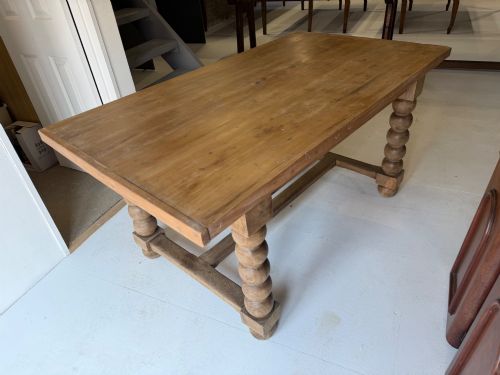
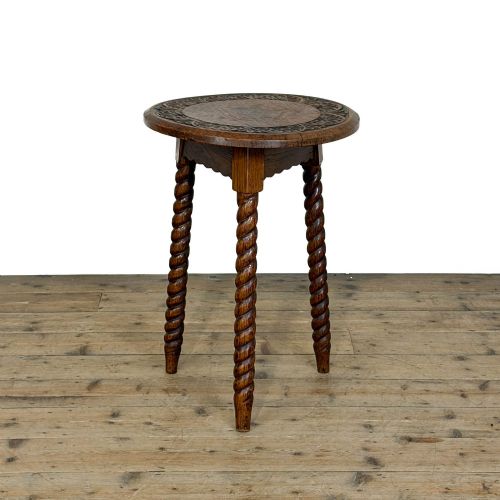
- A type of column or leg turned on a lathe to resemble a twisted rope. It appears frequently on seventeenth-century and later revival oak furniture.
Carved Leg Side Table: Frequently Asked Questions
Where should I place a side table?
These tables suit hallways, living rooms, and bedrooms where surface space is required without occupying a large footprint.
Their compact dimensions allow them to sit beside seating or against empty wall spaces to hold lamps and decorative objects.
How do I identify the wood type?
Examine the grain pattern, colour, and weight of the timber used in the construction. Mahogany typically shows a reddish-brown tone, while oak displays prominent medullary rays.
Walnut offers rich figuring, sometimes enhanced by burr veneers on top surfaces.
Are these tables sturdy enough for daily use?
Tables constructed from solid hardwoods with traditional joinery remain robust for everyday placement.
Care should be taken with delicate antique finishes and joints when moving the furniture across rooms.
How can I date my table?
Dating relies on combining the timber species, construction marks, and stylistic revival cues visible in the carved details. Secondary wood usage and tool marks inside drawers offer further chronological clues.
Comparing leg profiles and stretcher arrangements against documented period pieces helps narrow down the decade of manufacture.