


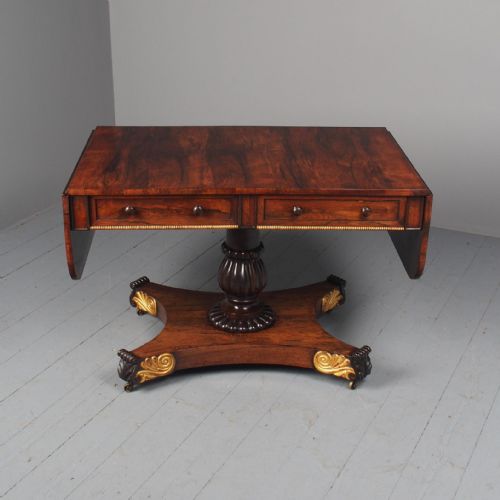

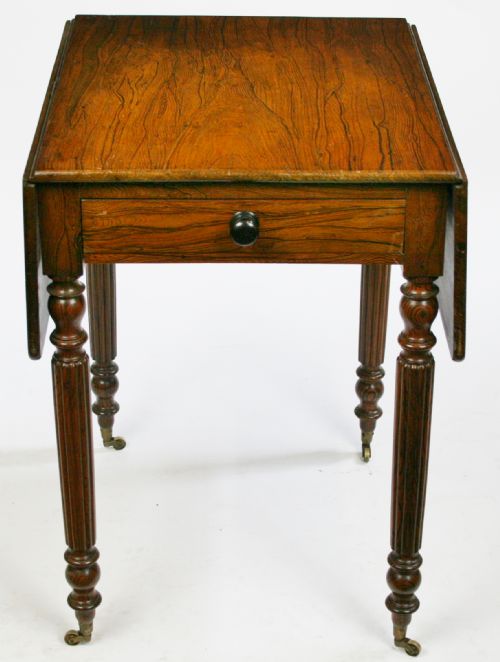
Rosewood Pembroke Table
A rosewood pembroke table brings drop-leaf versatility and rich grain to a room, uniting functional surface area with compact elegance.
Rosewood Pembroke Table
A rosewood pembroke table is a drop-leaf occasional piece designed with hinged flaps on either side to extend its surface when needed. These tables appear frequently in Regency and Victorian incarnations, alongside Georgian and Edwardian examples.
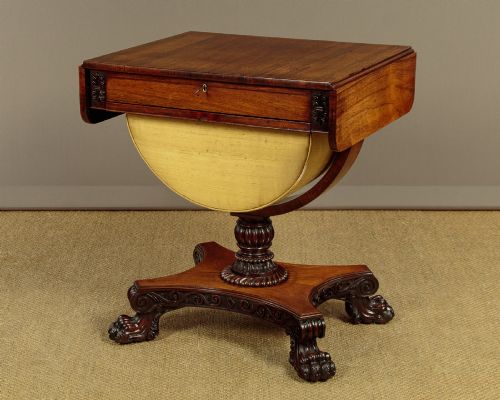
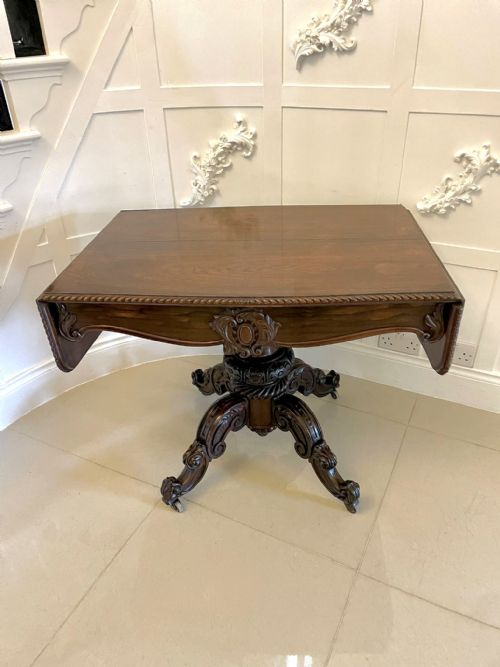
The form typically incorporates work tables fitted with silk bags, alongside library and side variants built from the nineteenth century onward. Buyers meet both pedestal columns and four-legged supports across the available inventory.
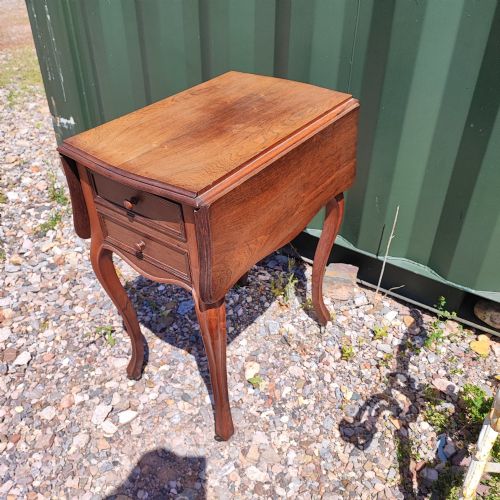
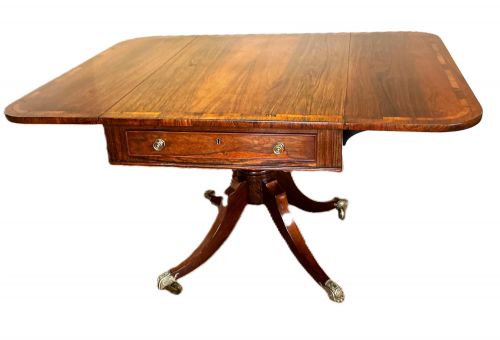
Makers often shaped the leaves with rounded or square corners, pairing the folding flaps with single or double drawers. These pieces served diverse domestic functions, moving easily from tea tables to bedside units.
How they were made
Cabinet makers utilised solid wood and veneers of rosewood, frequently incorporating mahogany, satinwood, boxwood, and amboyna for contrasting crossbanding. Brass inlay and giltwood details occasionally accent the timber framework.
Work tables integrated silk compartments beneath the drawers to hold sewing materials, while pedestals rested on brass castors for mobility. Joinery relied on traditional techniques to stabilise the pivoting drop leaves and folding brackets.
Rosewood Pembroke Table Retail Price Guide 2026
Typical asking prices for rosewood pembroke table among the pieces listed under this phrase on Sellingantiques today, from the lower quarter to the upper quarter. They describe what is for sale here now, not the wider market.
Listings feature periods spanning from George III and Regency through to Victorian and Edwardian eras, predominantly built in rosewood and mahogany.
What varies in quality
Quality rests in the selection of the timber, where rich grain patterns and intricate wood inlay separate superior examples from plain surfaces. The crispness of carved details and the precision of brass work define the upper tier of production.
Structural integrity of the drop-leaf hinges and the smooth operation of drawers determine the enduring utility of each piece. Finer specimens display harmonious proportions and careful matching of veneers across the flaps and top.
The Rosewood Pembroke Table Glossary
- Pembroke table
- A small table with two hinged flaps that drop down from the sides. This form gained popularity during the eighteenth century for breakfast and occasional use.
- Crossbanding
- A strip of veneer applied to the border of a table top, running perpendicular to the grain of the central panel. This technique frames the wood with a contrasting border.
- Drop leaf
- A hinged flap attached to the main surface of a table to allow expansion. These leaves are supported by pivoting brackets when raised.
- Sofa table
- A long, narrow table designed to stand in front of a sofa, frequently sharing the drop-leaf construction of pembroke tables. They often include drawers on opposite sides.
- Work table
- A small table equipped with drawers and a fabric bag for needlework and sewing implements. These items were essential accessories in nineteenth-century sitting rooms.
Rosewood Pembroke Table: Frequently Asked Questions
What is a pembroke table used for?
These tables served primarily as versatile surface areas in parlours and bedrooms, expanding with drop leaves for writing, tea, or needlework.
When folded down, the compact footprint allowed them to sit unobtrusively against a wall when not in use.
How do I date a rosewood table?
Dating relies on stylistic markers such as Regency brass inlay, Victorian carving, or Georgian proportions, alongside construction methods.
Makers changed leg profiles and underframe designs across the nineteenth century, moving from slender tapering supports to heavier pedestals.
Are all pembroke tables made of solid rosewood?
Most examples utilise rosewood veneers applied over a secondary timber foundation like mahogany or pine to achieve rich grain patterns.
Solid rosewood occurs less frequently, while simulated rosewood graining appears on nineteenth-century pieces made from alternative woods.
What is a work table?
A work table incorporates internal drawers and a hanging silk bag designed to store sewing and needlework supplies.
These pieces combined the utility of a small folding table with dedicated storage for domestic crafts.
How do I care for rosewood furniture?
Protect antique rosewood from direct sunlight and extreme humidity fluctuations to prevent veneer splitting and fading.
Regular dusting with a dry cloth preserves the polish without introducing moisture to the aged timber.