

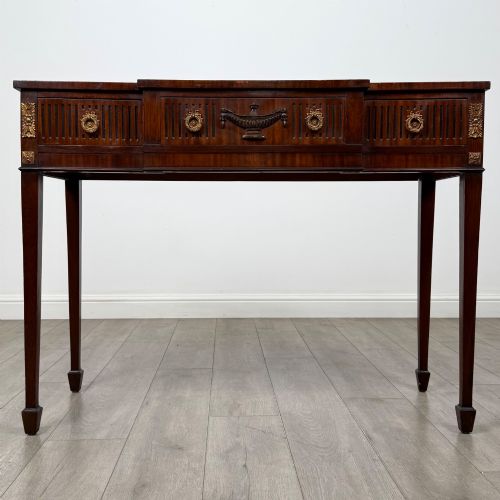
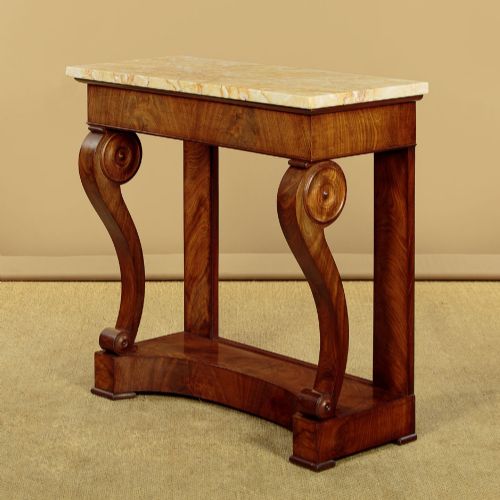
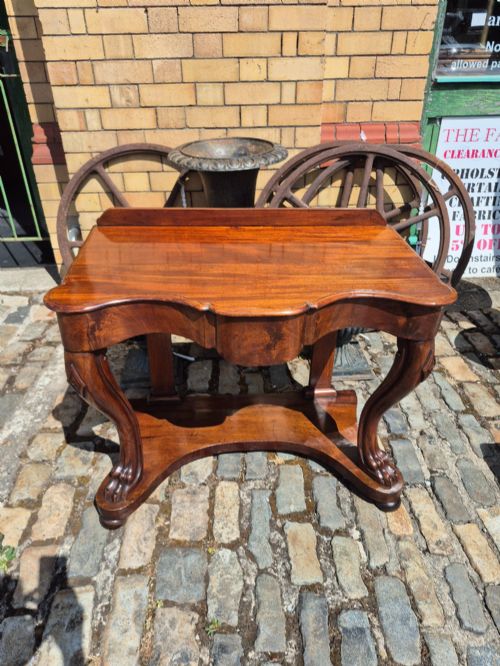
Carved Leg Console
These carved leg console pieces span centuries of cabinetmaking, offering sturdy surfaces and sculptural timber work for hallways and living spaces.
Carved Leg Console
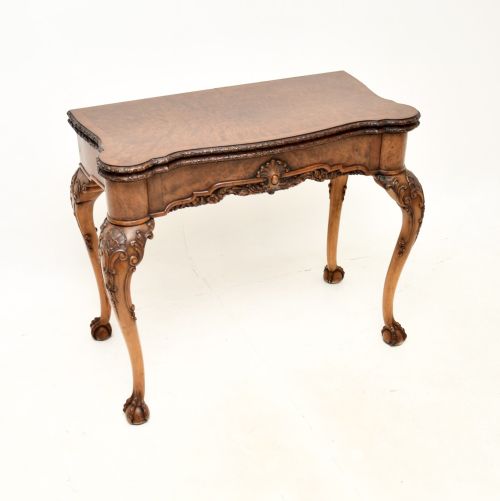
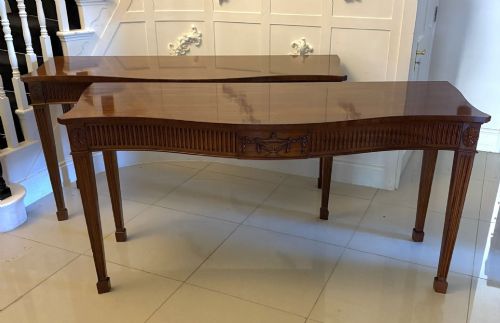
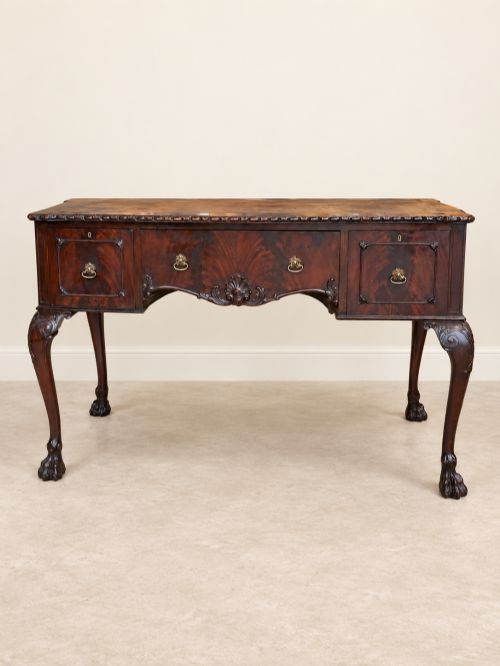
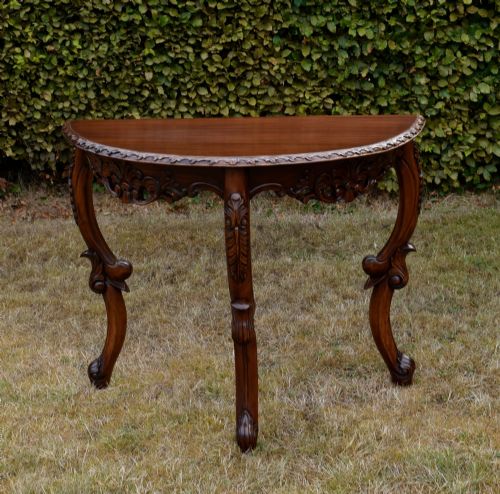
A carved leg console table serves as a structural surface against a wall, frequently appearing in forms like demi-lune shapes, serving tables, and narrow side tables. These pieces emerge across varied periods from the seventeenth century through to the 1930s, spanning Georgian, Victorian, and Edwardian eras.
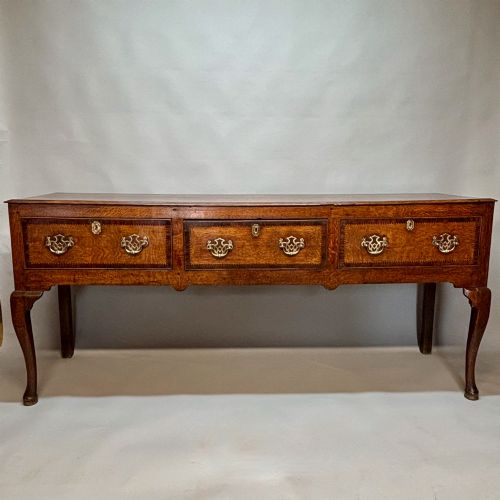
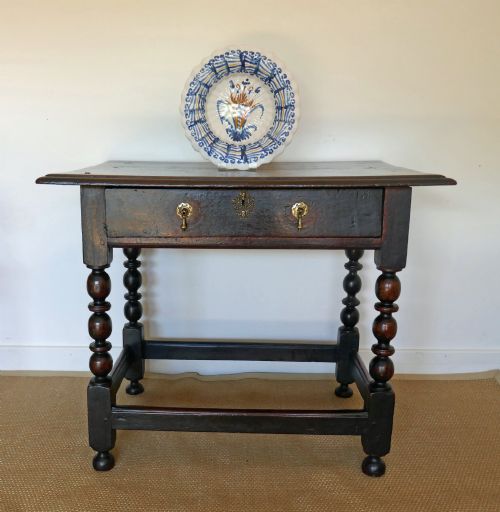
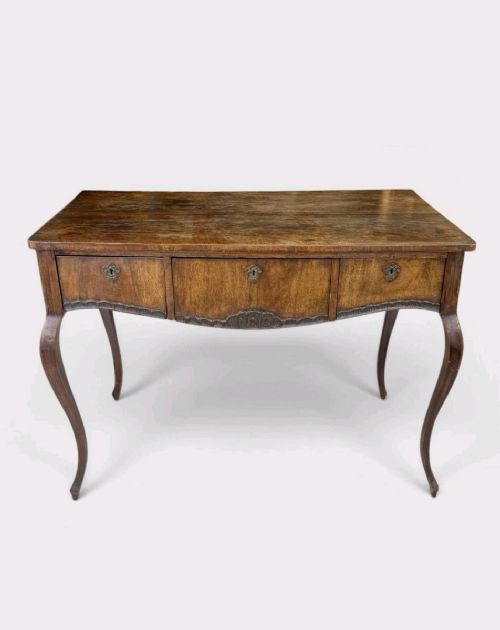
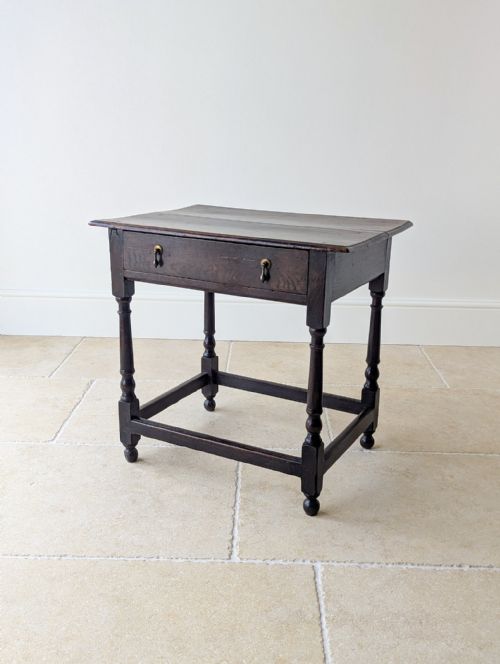
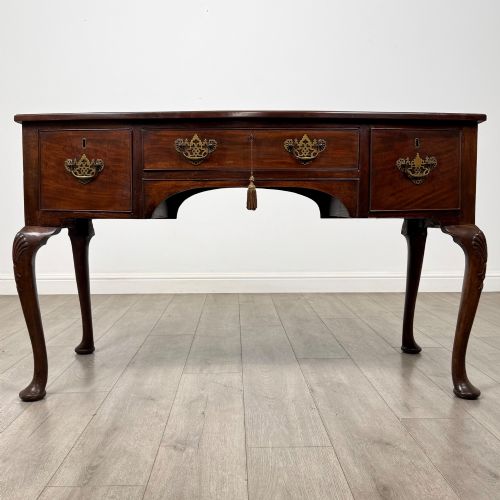
Buyers will encounter multiple wood types and revival styles, including Jacobean Revival oak and Queen Anne style walnut, alongside marble top designs. The selection encompasses console tables, side tables, writing desks, and dresser bases sharing sculptural leg details.
Materials and Technique
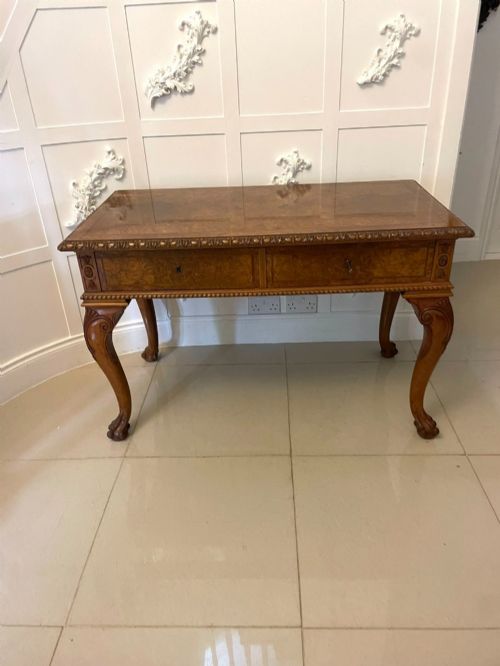
Cabinetmakers utilised dense hardwoods like mahogany, oak, and walnut, frequently selecting burr or figured veneers for visual depth on tabletops and friezes. Giltwood and painted surfaces also appear, alongside contrasting inserts of marble.
Carving was executed directly into the solid timber frames or applied to separate components, creating ornamental motifs such as neoclassical details and scroll ends. Joinery methods relied on traditional pegging, mortise and tenon joints, and dovetails appropriate to each period.
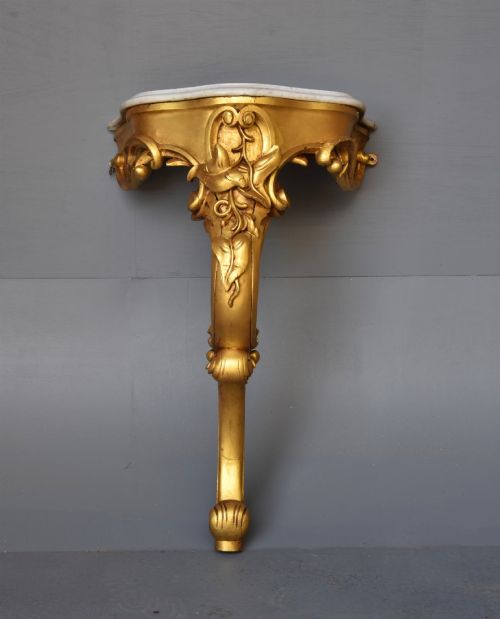
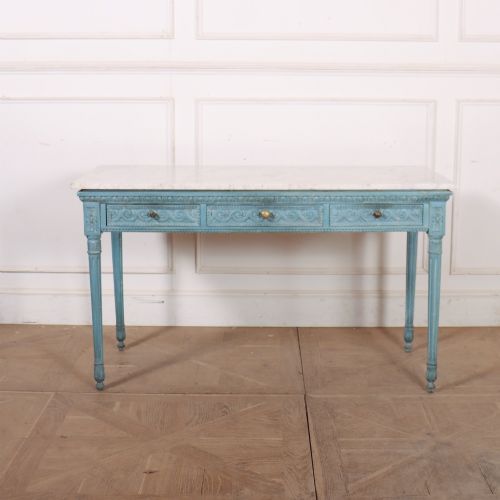
Marble tops appear paired with walnut, mahogany, and giltwood frames across multiple centuries.
Craftsmanship and Proportion
The standard of a carved leg console depends on the crispness and depth of the timber carving, where hand-tooled execution displays sharper definition than mass-produced or later recut ornament. Timber selection likewise dictates distinction, with finely figured walnut or dense old-growth mahogany elevating the piece above plain utility boards.
Structural integrity and proportion separate superior examples, noting how well the legs bear the weight of heavy marble slabs or solid wood tops. Original surfaces, patination earned through age, and minimal replacement of structural elements preserve the historical integrity of the piece.
Beresford and Hicks·Giles Grendey
The Carved Leg Console Glossary
- Cabriole leg
- A furniture leg that curves outward at the knee and tapers inward toward the ankle, often ending in a pad or claw foot. This form derives from animal limbs and gained prominence during the Queen Anne and Georgian periods.
- Demi lune
- A half-moon shape used for tabletops and console frames designed to sit flush against a wall. Such tables conserve floor space while providing a decorative surface.
- Giltwood
- Timber that has been coated with a thin layer of gold leaf or gesso and gold paint. This finish creates a luminous metallic surface typical of formal console tables.
- Frieze
- The horizontal band running directly beneath the tabletop, frequently decorated with carvings, mouldings, or drawers. It provides structural rigidity between the legs.
- Dresser base
- A low wooden unit featuring drawers and sometimes cupboards beneath a broad top surface. These sturdy items function effectively as serving tables or console surfaces.
Carved Leg Console: Frequently Asked Questions
Where should I place a console table?
These tables fit naturally in entrance halls, living rooms, or along long corridors where floor space is limited. Their shallow depth allows them to sit against walls without obstructing pathways.
They also function effectively beneath mirrors or artwork, providing a stable surface for lamps, decorative objects, or correspondence.
How do I care for a marble top?
Marble surfaces require gentle cleaning with a damp cloth and mild, neutral soap to avoid etching the stone. Acidic substances like citrus juice or vinegar should be kept away from the polished surface.
Using coasters and placemats protects the stone from rings and scratches during daily use.
Are these tables sturdy enough for daily use?
Solid timber construction and heavy hardwood frames provide the structural strength needed for everyday placement of lamps and decorative items. Tables with marble tops rely on robust underframing to support the stone weight safely.
Checking that the leg joints remain firm ensures the piece handles routine weight without shifting.
How do I identify the period of a table?
Period identification relies on observing the combination of timber species, construction joinery, and stylistic carving motifs. For instance, seventeenth century pieces often feature heavy oak construction with linear geometric mouldings.
Later Victorian and Edwardian examples incorporate softer walnut veneers, machine-assisted dovetails, or revival styling drawn from earlier centuries.