

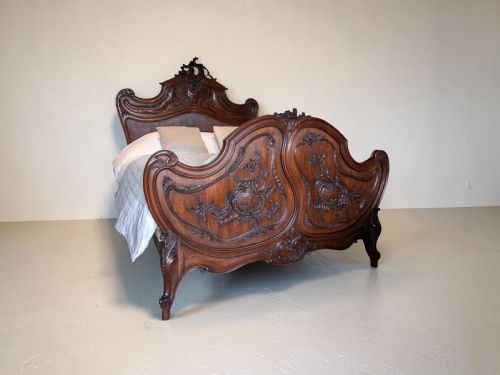


Carved Footboard Bed
When you search for a carved footboard bed, you find substantial sleeping frames spanning the nineteenth and twentieth centuries.
Carved Footboard Bed
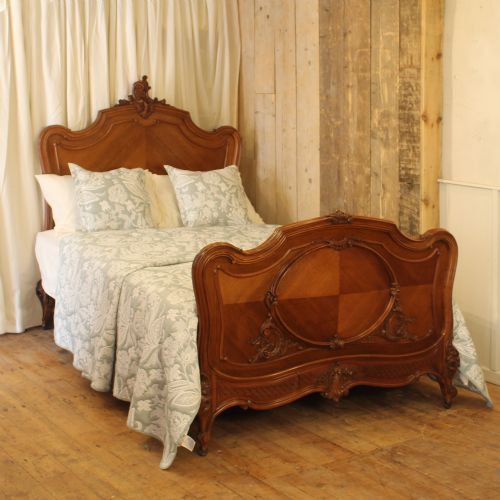
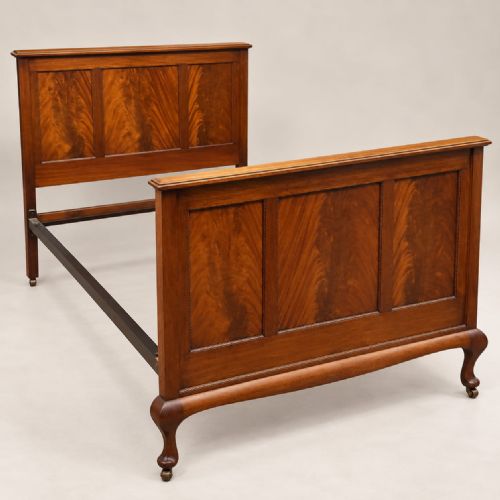
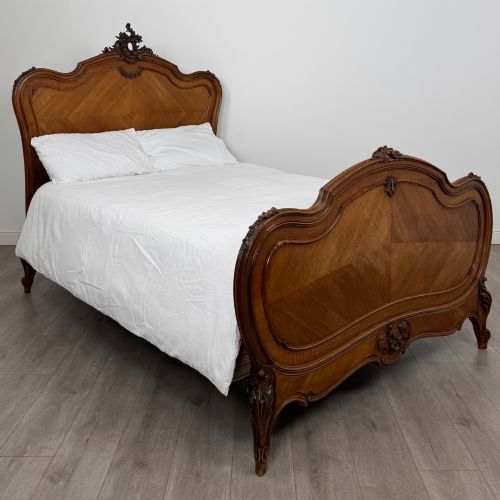
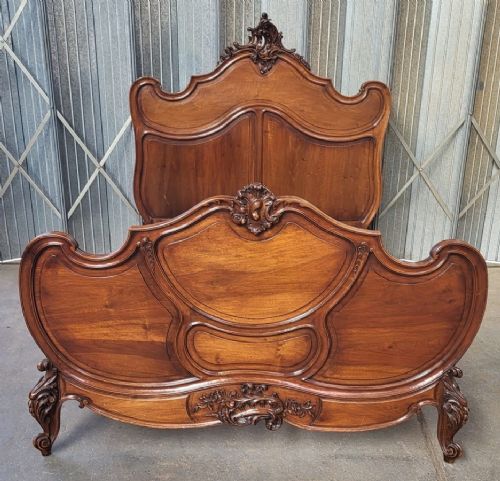
A carved footboard bed is a substantial sleeping frame featuring decorative woodwork at the lower end, distinguishing it from simpler modern frames. When exploring a carved footboard bed on this page, buyers encounter walnut, mahogany, oak, and painted timber structures shaped in French Provincial, Louis XVI, and Victorian styles.
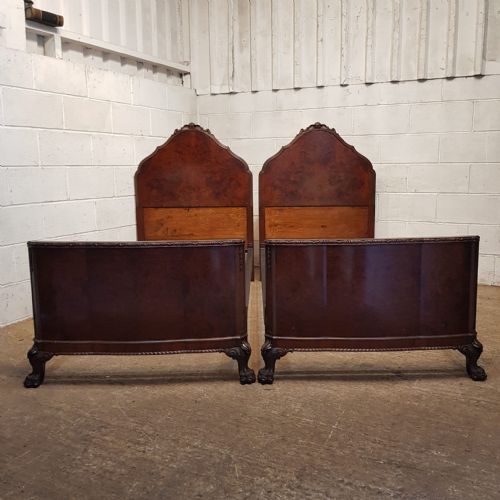
The selection ranges from nineteenth-century walnut pieces to Edwardian and Art Deco examples in mahogany and satinwood. Many items originate from French workshops, offering double, king, and single proportions alongside occasional benches and footboard stools.
Materials and construction
Cabinetmakers utilised dense timbers including walnut, mahogany, and oak to build these frames, applying hand-carving directly to the solid wood. Figures emerge from the grain on headboards and low-end panels through relief carving and moulded shaping.
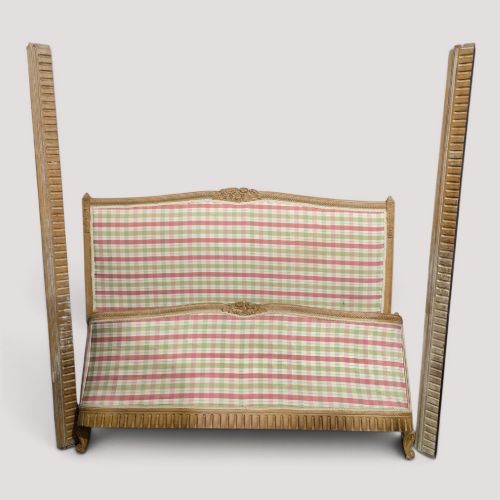
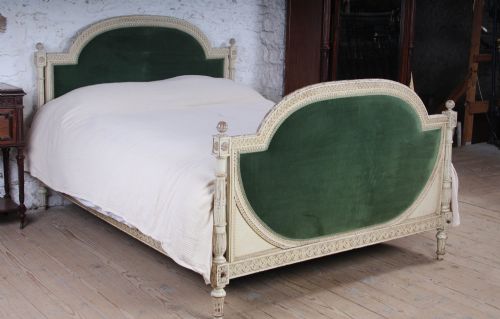
Secondary materials such as brass, cane, and painted finishes appear across various pieces, complemented by modern fabric upholstery on padded panels. Frames incorporate sturdy timber joints and bolt-together rails to support substantial mattress sizes.
One unexpected item is a sturdy footboard stool designed specifically to match the height of a towering antique bed.
Distinctions in quality
Quality rests in the depth and crispness of the hand-carving on the woodwork, separating finely detailed sculptural work from flat, mechanical moulding. Timber selection also defines the tier, with figured walnut, rich mahogany, and carefully selected oak sitting above plain painted timber.
Proportion and structural integrity dictate the standing of a piece, ensuring that grand king-size frameworks remain balanced and rigid. Original hardware, intact cane panels, and sympathetic upholstery choices further distinguish superior examples from standard production.
The Carved Footboard Bed Glossary
- Bedstead
- A framework of a bed consisting of posts, rails, and head and foot boards without the mattress and bedding. It supports the sleeping surface.
- Footboard
- The vertical wooden or upholstered barrier at the lower end of a bedstead. It anchors the design symmetry opposite the headboard.
- Corbeille
- A French style of bed featuring a rounded, basket-like curved shape enclosing the sleeper. This form frequently appears in painted or polished walnut.
- Louis XVI Style
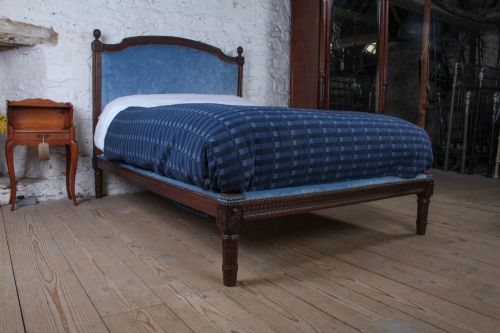
- A neoclassical design aesthetic characterised by straight tapered legs, geometric symmetry, and restrained classical carving. It draws inspiration from eighteenth-century French royal aesthetics.
Carved Footboard Bed: Frequently Asked Questions
What periods do these beds come from?
The inventory spans the nineteenth century through the Edwardian era up to the Art Deco period of the 1930s. Pieces frequently reflect Victorian and early twentieth-century manufacturing.
French stylistic revivals dominate the selection, including Louis XV, Louis XVI, and provincial designs executed in walnut and mahogany.
Are modern mattresses suitable for these antique beds?
Many listings offer standard double and king sizes that accommodate contemporary mattress dimensions. Buyers should verify the exact internal rail measurements before purchasing.
Some older European frames vary slightly from modern standard sizing and may require bespoke mattress commissions.
How do I distinguish French styles in these beds?
Louis XV pieces typically display asymmetrical curves, floral motifs, and cabriole legs. Louis XVI items feature straight lines, fluted columns, and geometric symmetry.
Provincial variants offer simpler, rustic interpretations of these courtly aesthetics, executed in local timbers with less ornate detailing.
What wood types are most common?
Walnut is the predominant timber, appearing in both figured grain and plain polished surfaces. Mahogany and oak also feature prominently across various regional designs.
Selected items utilise painted timber, satinwood, or brass frameworks to achieve alternative decorative finishes.