


Vintage Wooden Bed Frame
A vintage wooden bed frame anchors a bedroom with grain and proportion, bringing period character and solid timber construction to a modern interior.
Vintage Wooden Bed Frame
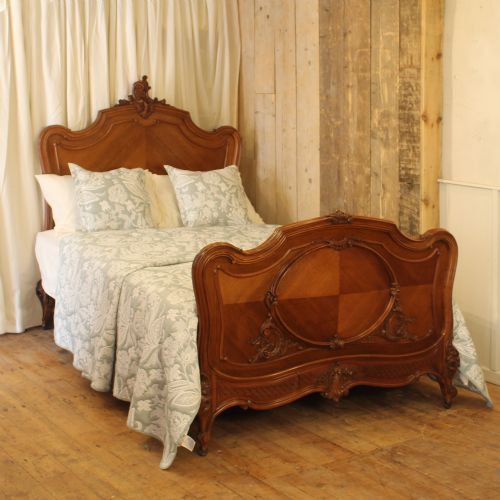
A vintage wooden bed frame combines period craftsmanship with practical sleeping proportions, drawing from eras spanning the Victorian decades through the Edwardian years and into the 1930s. Buyers searching for a vintage wooden bed frame encounter forms ranging from single and double sizes to king and super king dimensions, often shaped by French regional designs or British cabinetmaking traditions.
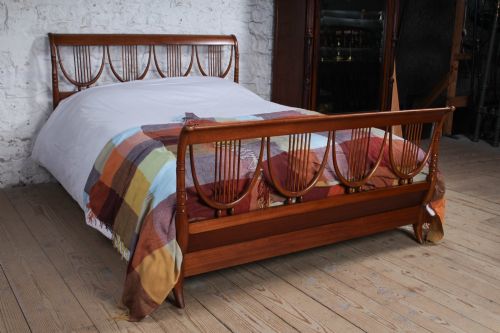
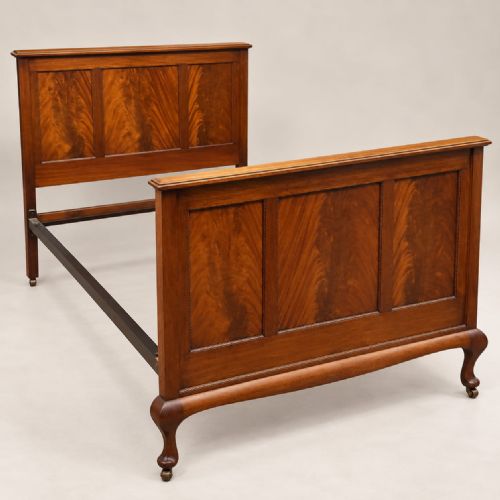
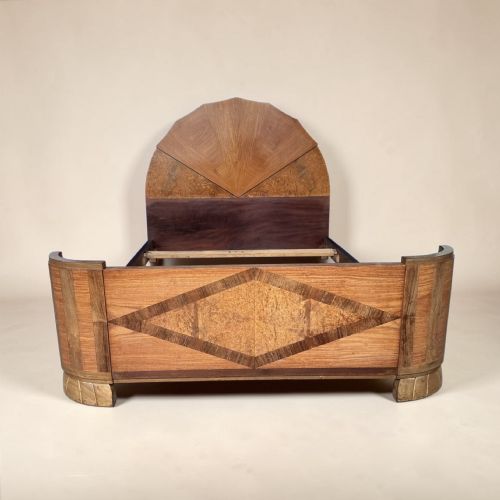
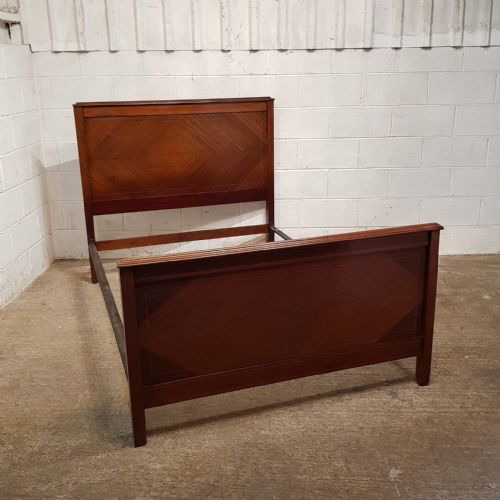
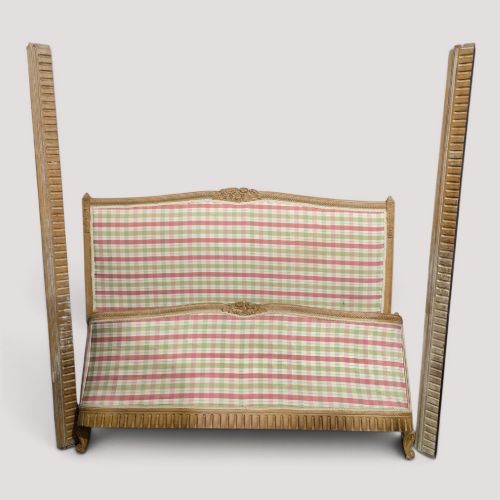
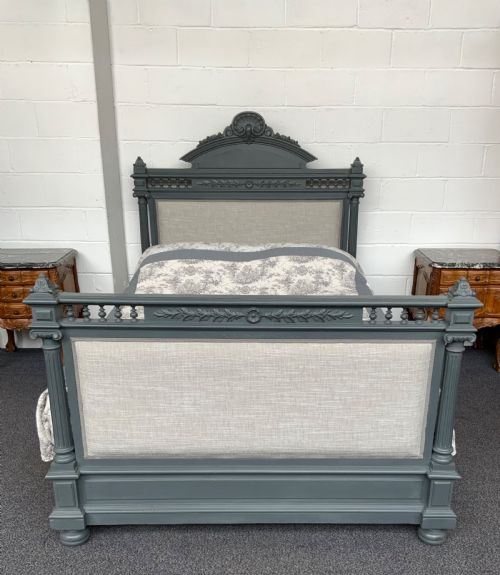
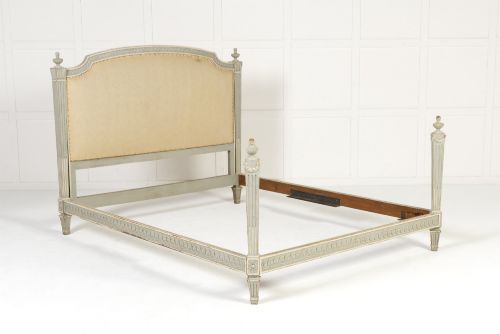
The selection on this page leans heavily toward Edwardian mahogany and oak constructions alongside 1930s Art Deco burr walnut and bird's eye maple frameworks. French influence appears frequently through painted finishes, Louis styles, and curved or limed woodwork, offering alternatives to rectilinear British designs.
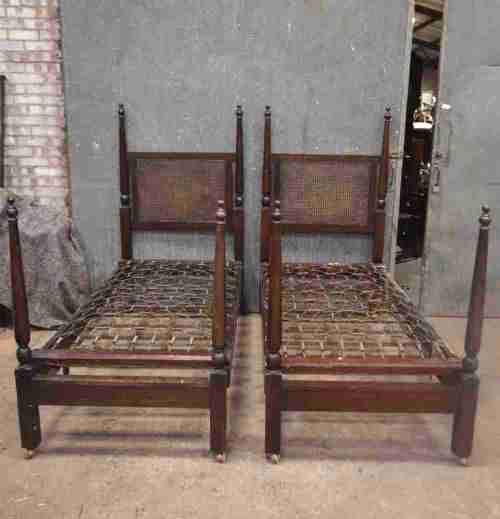
Formats include standard bedsteads, four poster configurations, and bergere panelled beds that utilise cane work and carved details. Each piece provides a structural core intended to support modern mattresses while retaining original headboards and footboards.
Materials and construction
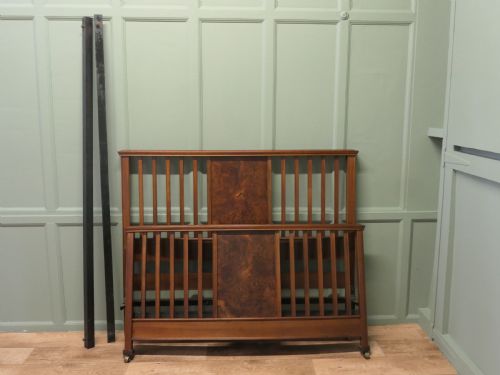
Cabinetmakers utilised hardwoods such as mahogany, oak, and walnut, frequently selecting burr walnut, satinwood, and fruitwood veneers to display complex grain patterns on headboards and footboards. Solid timber sections provide structural integrity, while contrasting inlays, faux bamboo turnings, and brass detailing complete the decorative surface.
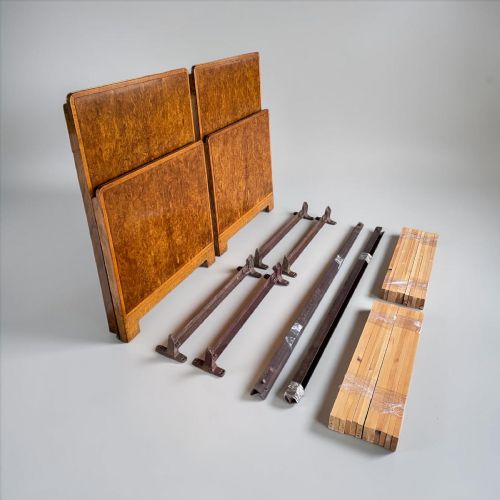
Joinery methods rely on traditional tenon and mortise joints alongside bolted side rails that allow the frame to dismantle for transport. Carved elements, whether geometric Art Deco curves or intricate Edwardian and French provincial motifs, are worked directly into the solid wood or applied as moulded details.
Vintage Wooden Bed Frame Retail Price Guide 2026
Typical asking prices for vintage wooden bed frame among the pieces listed under this phrase on Sellingantiques today, from the lower quarter to the upper quarter. They describe what is for sale here now, not the wider market.
One unexpected variation mimics natural bamboo using carved wood, proving that Victorian makers loved botanical mimicry just as much as grand veneers.
Distinctions in quality
Quality rests in the selection of timber veneers and the depth of natural figuring across large surfaces like headboards. Superior examples display book-matched burr walnut or figured maple grain that flows symmetrically across the width of the frame.
Construction resilience separates standard joinery from exceptional craftsmanship, visible in the weight of the timber and the precision of carved mouldings rather than applied resin ornaments. Maker attribution and original labels add documented provenance to pieces built by notable firms.
Stanley Webb Davies·Oliver Morel·Waring & Gillow·Heals
The Vintage Wooden Bed Frame Glossary
- Bedstead
- A framework of wood or metal that supports a mattress and stands independently without requiring a separate divan base. These pieces often feature integrated headboards and footboards.
- Bergere
- A traditional upholstered French chair style whose technique translates here to wooden bed frames incorporating woven cane panels in headboards or footboards. The cane work provides lightweight visual texture.
- Burr Walnut
- A distinct wood cut from the abnormal growth or burl of a walnut tree, yielding highly swirled and mottled grain patterns. Cabinetmakers prize this material for decorative veneer panels.
- Art Deco
- A design style dominant in the 1930s characterised by sleek geometric lines, stylised curves, and smooth polished surfaces. Frames from this period favour blonde maples, satinwood, and figured walnut.
- Four Poster
- A bed featuring four vertical columns that support an upper canopy framework or simply frame the height of the sleeping quarters. Edwardian interpretations often adapt Georgian revival proportions.
Vintage Wooden Bed Frame: Frequently Asked Questions
Will a vintage wooden bed fit a modern mattress?
Most antique and vintage bed frames accommodate standard modern mattress sizes, though exact dimensions can vary slightly from contemporary manufacturing standards. It remains sensible to check the internal length and width specifications of the rails before purchase.
Older British and French frames were often built to specific regional sizing conventions rather than today's universal standards. Slatted wooden bases can be adjusted or replaced to sit securely within the side rails while supporting modern mattress depths.
How do I assemble a vintage wooden bed frame?
Assembly typically involves connecting the headboard and footboard to two side rails using metal bolts, bed bolts, or traditional slot-in brackets. Two people make the process straightforward by holding the vertical posts stable while tightening the fixings.
Care should be taken not to overtighten bolts into aged timber threads. Ensuring the frame is squared on a level floor before placing slats and mattresses prevents undue strain on the antique joints.
How do I care for polished wood surfaces?
Maintaining polished mahogany, walnut, or oak requires regular dusting with a soft, dry cloth and occasional application of appropriate beeswax or furniture polish. Avoid placing wooden frames near direct heat sources or strong sunlight, which can dry out timber and fade veneers.
Moisture should be kept away from antique finishes; use coasters or pads if placing items near the headboard. Gentle cleaning preserves the natural patina built up over decades of use.
How can I tell an Edwardian bed from a 1930s Art Deco bed?
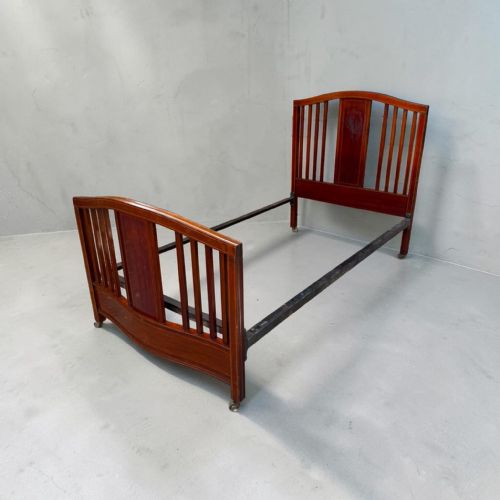
Edwardian beds, dating around 1900 to 1910, frequently display mahogany or oak timbers with classical revival details, string inlay, or carved panelling. Their silhouettes lean toward traditional proportions and architectural pediments.
By contrast, 1930s Art Deco frames showcase streamlined curves, blonde woods like bird's eye maple, and heavily figured burr walnut without traditional ornamentation. The emphasis shifts from historical revival styles to smooth, symmetrical, and theatrical grain displays.