

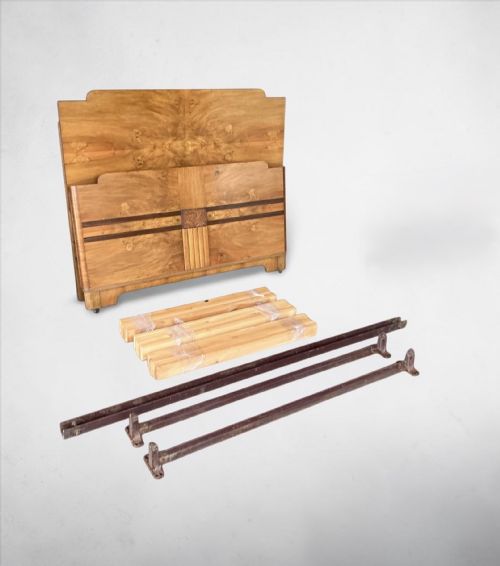


1930s Double Bed
A 1930s double bed anchors a bedroom with bold geometric lines and rich wood grains, offering genuine period character.
1930s Double Bed
When searching for a 1930s double bed, you encounter substantial furniture defined primarily by the Art Deco style, alongside occasional Arts and Crafts examples. These pieces typically take the form of beds and bedsteads designed to serve as the sculptural centrepiece of a bedroom.
The version you are most likely to meet on this page is an Art Deco walnut double bed, frequently featuring figured veneers or burr walnut. Such pieces often display characteristic geometric shapes, curved silhouettes, or integrated bedside cabinets.
Originating predominantly from the 1930 period, with occasional examples from the 1920s, these frames combine architectural presence with practical sleeping arrangements. French regional variations and British workshops both contribute to the selection available.
How they were made
Cabinet makers utilised timber frameworks overlaid with decorative veneers including walnut, burr walnut, maple, satinwood, and macassar. These veneers were carefully laid to create symmetrical grain patterns across large headboards and footboards.
Construction frequently combined solid timber for structural integrity with specialised metal or iron internal brackets to support the mattress frame. Selected pieces incorporated integral bedside cabinets directly into the headboard structure.
Surface finishing relied on polishing techniques that accentuated the natural figure of the wood, whether dealing with dark walnut or blonde birds eye maple.
1930s Double Bed Retail Price Guide 2026
Typical asking prices for 1930s double bed among the pieces listed under this phrase on Sellingantiques today, from the lower quarter to the upper quarter. They describe what is for sale here now, not the wider market.
Listings feature walnut, maple, oak, and iron across the Art Deco and Arts and Crafts styles.
What varies in quality
The visual impact of the wood grain separates standard examples from exceptional ones, particularly where heavily figured walnut, burr walnut, or exotic veneers like macassar are deployed symmetrically. The ambition of the design, such as sweeping fan shapes, skyscraper steps, or Odeon architectural curves, dictates the aesthetic tier.
Integration of auxiliary furniture defines the upper range, where headboards incorporate matching attached bedside cabinets or shelving units as a unified composition. The precision of the joinery and the preservation of the original polish finish determine the lasting integrity of each piece.
Stanley Webb Davies·H.L. Epstein Brothers
The 1930s Double Bed Glossary
- Art Deco
- A design style characterised by sleek geometric shapes, streamlined forms, and modern industrial motifs. It dominated decorative arts throughout the interwar period.
- Burr Walnut
- A specialised wood cut from walnut tree growths, yielding intricate, swirling grain patterns. Cabinet makers prized this timber for high-status veneering.
- Veneer
- A thin layer of superior wood adhered to a secondary timber base. This technique allowed craftsmen to display dramatic grain patterns across large surfaces.
- Odeon
- An architectural style descriptor in furniture design invoking cinema curves and stepped skyscraper profiles. Beds of this type mirror the grand public architecture of the era.
- Bedstead
- A framework of a bed supporting the springs and mattress. In this period, the bedstead often included substantial headboards and footboards as a single unit.
1930s Double Bed: Frequently Asked Questions
Will a standard modern mattress fit these beds?
Many 1930s double beds measure to traditional UK or French double dimensions, though older French proportions can occasionally vary slightly from contemporary sizing standards.
It is advisable to check the internal width and length dimensions of the specific bedstead carefully before sourcing a mattress.
How do I care for walnut veneer surfaces?
Walnut veneer benefits from regular dusting with a soft, dry cloth and protection from direct sunlight to prevent fading of the polished finish.
Avoid using silicone-based polishes or excessive moisture, opting instead for traditional beeswax applied sparingly when the wood appears dry.
Are these beds easy to assemble?
Most period bedsteads utilise traditional iron bolt connections and interlocking side rails that dismantle into manageable components for transport.
Assembly typically requires basic hand tools to secure the headboard, footboard, and side rails together square and firm.
How do I distinguish Art Deco from Arts and Crafts pieces?
Art Deco pieces display symmetrical grain patterns, curved or stepped architectural profiles, and exotic blonde or dark veneers. Arts and Crafts examples prioritise visible construction in solid timbers like sweet chestnut or oak with simpler lines.