



1930s Walnut Bedstead
A 1930s walnut bedstead anchors an Art Deco bedroom with warm grain and bold geometric lines.
1930s Walnut Bedstead
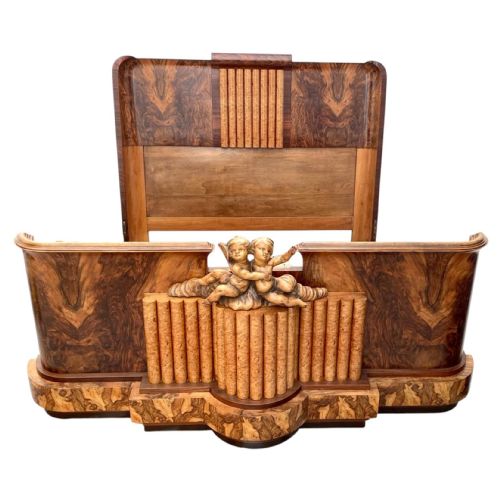
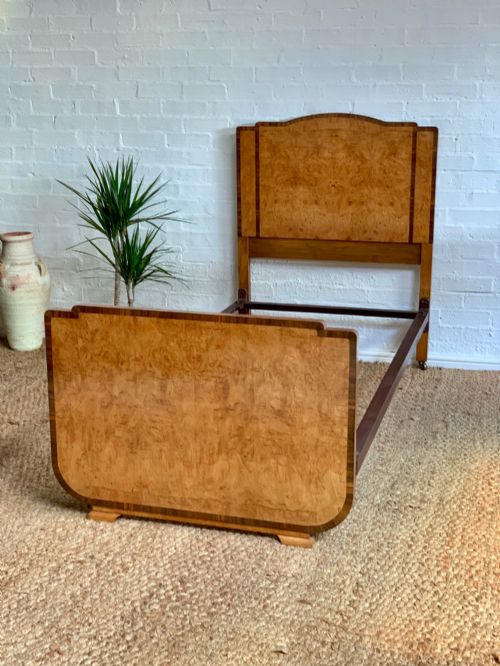
A 1930s walnut bedstead represents the distinct geometric and curvaceous forms of the Art Deco period. These frames bring period character to a modern interior through rich timber tones.
The double bed is the most common format you will encounter in this search, alongside single beds, pairs of single beds, and occasional king size variations. Many originate from French workshops or English makers.
Makers utilised the architectural shapes of the decade, producing fan-shaped headboards and streamlined silhouettes. The aesthetic relies entirely on the natural decorative qualities of the wood.
Materials and construction
Cabinet makers applied walnut veneers, burr walnut, and burl walnut over timber carcases to create striking surface patterns. Some examples incorporate contrasting blonde satinwood details.
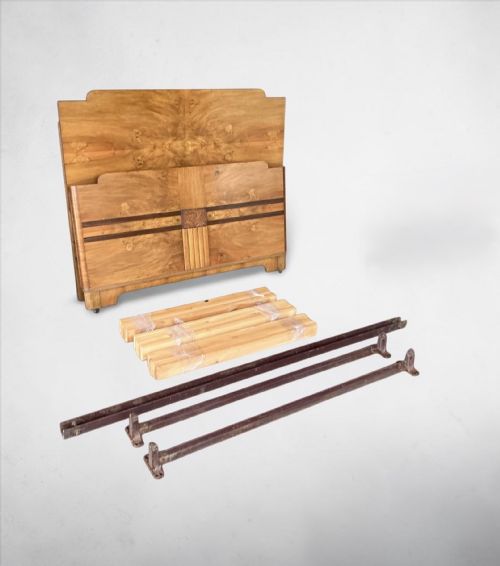
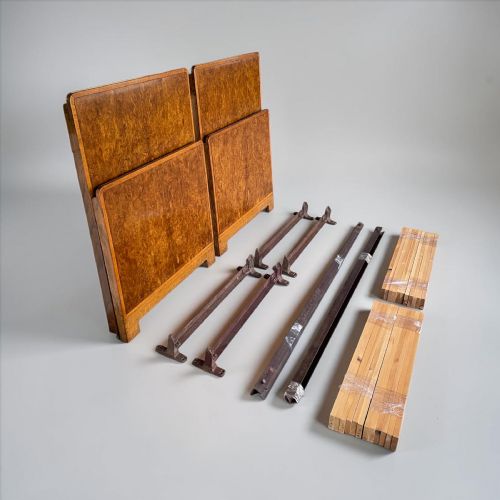
Iron components appear in the underlying structural frames to provide the necessary support for modern mattresses. Carved elements remain relatively restrained, allowing the figured grain to dominate.
1930s Walnut Bedstead Retail Price Guide 2026
Typical asking prices for 1930s walnut bedstead among the pieces listed under this phrase on Sellingantiques today, from the lower quarter to the upper quarter. They describe what is for sale here now, not the wider market.
Listings span the 1920 and 1930 periods, focusing almost exclusively on Art Deco walnut and burr walnut veneer.
Assessing quality
The visual strength of a 1930s walnut bedstead depends on the choice of veneer. Heavily figured timber, burr walnut, and symmetrical grain matching elevate the presence of the piece.
Construction methods range from straightforward geometric framing to more complex curvaceous designs and fan-shaped crests. The precision of the cabinet work defines the upper tier of production.
Waring & Gillow England
The 1930s Walnut Bedstead Glossary
- Burr walnut
- A prized veneer taken from the growth excrescence on a walnut tree. It yields highly intricate, swirling patterns across the headboard.
- Art Deco
- The dominant design style of the 1920s and 1930s. It favours streamlined forms, geometric symmetry, and luxurious materials.
- Veneer
- A thin slice of superior wood applied over a secondary timber base. This technique allowed makers to display dramatic grain patterns economically.
- Bedstead
- A framework of a bed supporting the spring and mattress. These pieces include both the headboard and footboard assemblies.
- Satinwood
- A durable hardwood with a lustrous yellowish grain. Makers used it alongside walnut for contrast in lighter decorative schemes.
1930s Walnut Bedstead: Frequently Asked Questions
Will a standard mattress fit a 1930s bedstead?
Many older European and British frames vary slightly from modern standard sizing. You should check the internal dimensions of the specific frame carefully.
Custom mattress makers can easily supply a bespoke size to fit historical dimensions precisely without altering the antique frame.
How do I care for walnut veneer?
Walnut is sensitive to direct sunlight and excessive dryness, which can cause the veneer to fade or lift. Keep the wood polished with appropriate wax.
Avoid placing these beds near active heat sources or in damp environments to preserve the integrity of the historical timber.
Are these beds easy to assemble?
Most frames utilise traditional bolt-together side rails that connect the headboard and footboard securely. You will typically need basic spanners for setup.
Having two people assemble the structure ensures the heavy walnut and iron components align correctly without straining the joints.
What is the difference between single and double sizes?
Single beds from this era often appear as matched pairs, making them suitable for twin guest rooms. Double and king size variants serve as focal points for main bedrooms.
Proportions scale up accordingly, with larger frames frequently featuring more elaborate fan-shaped or curvaceous walnut headboards.