
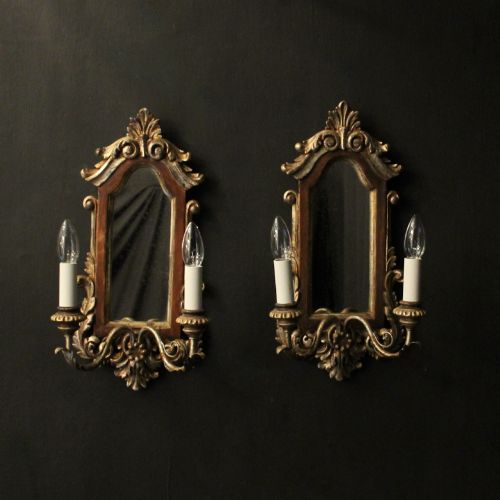
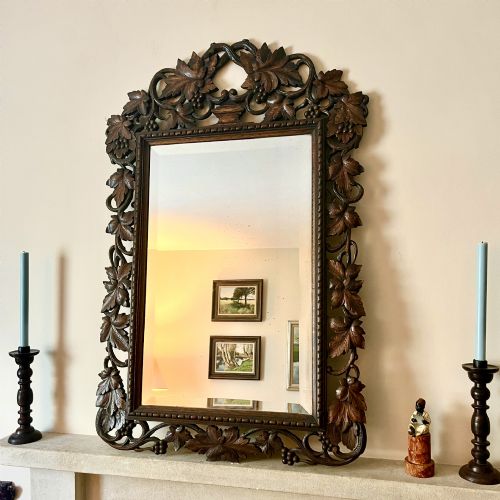
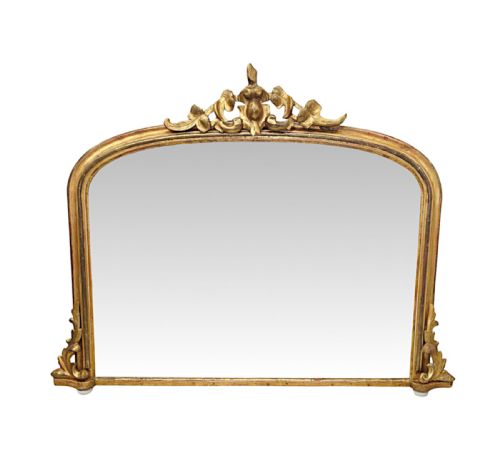


Carved Foliage Mirror
A carved foliage mirror brings organic depth into a room through botanical motifs worked directly into timber or gilded surfaces.
Carved Foliage Mirror
A carved foliage mirror incorporates botanical decoration into its frame, drawing upon styles such as French Rococo, Florentine Baroque, and Victorian Arts & Crafts. These pieces function primarily as wall mirrors and overmantel mirrors, bringing ornamental wooden or gilt frames into domestic spaces.
The selection ranges from an 18th century Florentine giltwood oval mirror to later 19th century carved oak and mahogany examples. Walnut and pine also appear alongside painted finishes and original giltwood surfaces.
Overmantel mirrors and girandoles provide larger vertical or horizontal formats designed for specific architectural settings. Smaller wall-hung options populate the lower end of the scale, often featuring simpler carved surrounds.
Materials and construction methods
Carved foliage mirrors rely on substrates of oak, mahogany, walnut, or softer woods that receive hand-carved botanical detail. Giltwood and gesso applications often build up the decorative relief before receiving gold leaf or paint.
The mirror glass itself sits within shaped or archtop frames, sometimes retained as original plates showing the subtle distortions of age. Joinery techniques secure heavy timber frames designed to bear the weight of glass and ornate crestings.
Check behind the frame for old newspaper scraps used as shims by past carpenters to level the glass.
Distinctions in craftsmanship
Quality rests in the depth and crispness of the hand-carved foliage, where undercut leaves and defined tendrils demonstrate superior artisan control over flat or mechanical stamping. The handling of the gesso and gold leaf determines whether the surface retains its warm, layered reflection or appears flat and uniform.
The integrity of the original mirror glass and the stability of the structural joints separate well-preserved examples from those with extensive timber shrinkage or replaced components.
The Carved Foliage Mirror Glossary
- Giltwood
- Timber coated with gold leaf over a prepared gesso ground. This finish catches the light and softens with age.
- Gesso
- A plaster-like mixture applied to wood frames to create a smooth base for gilding and fine carving work.
- Girandole
- A decorative wall mirror featuring attached candle branches or sconces. These fixtures amplify candlelight within a room.
- Overmantel mirror
- A large horizontal mirror designed specifically to hang above a fireplace mantelpiece. Their scale often dictates the proportions of the surrounding room.
- Archtop
- A mirror frame featuring an arched upper section. This curved silhouette softens rigid rectangular room geometry.
Carved Foliage Mirror: Frequently Asked Questions
How do I clean a giltwood frame?
Dust giltwood frames gently with a dry, soft-bristled brush to remove surface particles without disturbing the delicate gold leaf or gesso.
Avoid using water, liquid cleaners, or chemical solvents, as moisture quickly strips the historic gilding from the carved wooden surface.
Can these mirrors hang safely on plaster walls?
Hanging heavy carved foliage mirrors requires locating solid wall studs or using heavy-duty wall anchors rated for the specific weight of the frame.
Many older mirrors feature substantial timber and glass weights that demand professional installation to prevent structural failure.
Are original mirror plates usually flawed?
Original mirror glass frequently displays foxing, dark spots, and minor silvering losses caused by decades of oxidation behind the glass plate.
These optical imperfections are characteristic of antique mirrors and confirm the age of the glass rather than diminishing its historical value.
How do I identify a Florentine frame?
Florentine frames typically showcase elaborate carved foliage, scrolls, and pierced work finished in bright or burnished gold leaf.
Originating from Italian workshops, these pieces emphasise ornate botanical abundance rather than restrained structural geometry.