


Pierced Giltwood Mirror
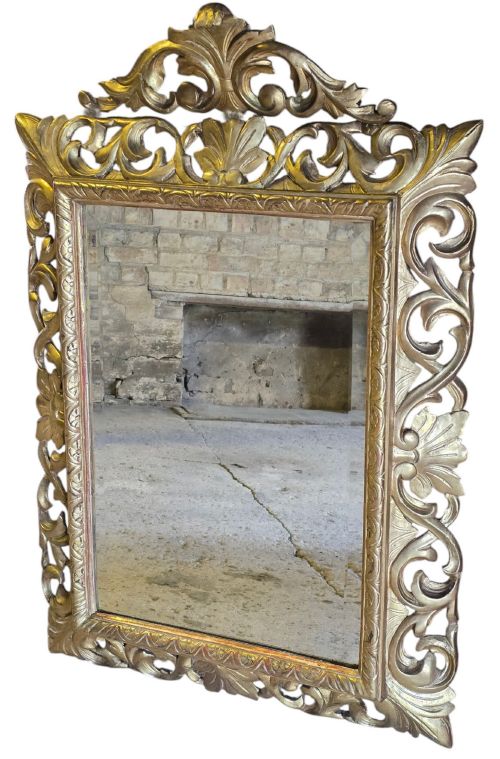
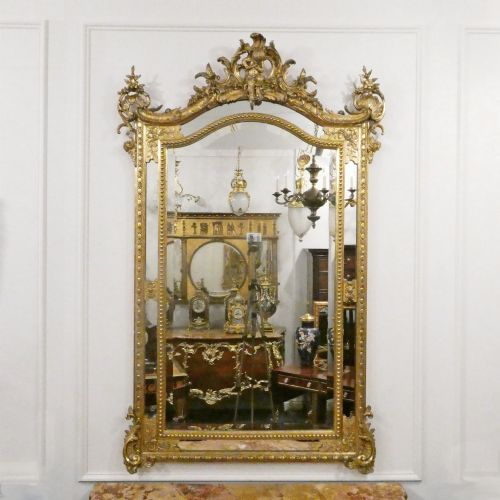
A pierced giltwood mirror brings warmth and reflective depth to a room through intricate openwork frame carving and gold leaf.
Pierced Giltwood Mirror
The versions most commonly met on this page include eighteenth-century Georgian and Chippendale Rococo designs alongside nineteenth-century Florentine and Louis XVI style interpretations. They serve as primary decorative focal points in domestic interiors, combining functional glass with sculptural woodwork.
Originating from British and continental workshops, these mirrors display distinct regional characteristics in their carving styles. Florentine examples lean towards ornate foliage and scrollwork, while Georgian and Chippendale pieces showcase symmetrical or asymmetrical Rococo vitality.
How they were made
The construction of these frames relies on carved wood or timber foundations, shaped by hand to create the intricate openwork characteristic of the pierced style. Artisans then applied layers of gesso to the carved surface to provide a smooth, responsive base for subsequent gilding.
Gold leaf was meticulously laid over the prepared gesso ground, adhering to traditional techniques that produced a brilliant metallic sheen. This delicate surface treatment highlights every nuance of the underlying woodcarving, capturing and reflecting light across the room.
Each of these frames required artisans to painstakingly apply wafer-thin gold leaf, ensuring that centuries later, they still catch every stray beam of sunlight.
What varies in quality
Quality in a pierced giltwood mirror rests primarily on the depth and crispness of the hand carving within the timber frame. Superior examples exhibit fluid, undercut foliage and scrolls that retain their sharpness beneath the layers of gesso and gold leaf.
The skill of the gilder also dictates the overall success of the piece, with finer works showing a nuanced balance of burnished and matte surfaces. The integrity of the original wood structure and the preservation of the gold leaf further distinguish the upper tier of pieces.
The Pierced Giltwood Mirror Glossary
- Giltwood
- Wood that has been coated with gold leaf. This material forms the gleaming surface characteristic of these decorative mirrors.
- Gesso
- A plaster mixture applied to the carved wooden frame. It creates a smooth preparation layer that receives and holds the gold leaf.
- Rococo
- An artistic style marked by elaborate ornamentation, asymmetrical scrollwork, and naturalistic motifs. It heavily influences eighteenth-century frame designs.
- Overmantle
- A large wall mirror specifically designed to hang above a fireplace mantel. These pieces anchor the visual weight of a reception room.
- Chippendale
- A cabinetmaking style from the eighteenth century named after Thomas Chippendale. It frequently incorporates Gothic, Chinese, and Rococo pierced motifs.
Pierced Giltwood Mirror: Frequently Asked Questions
Where should I hang a pierced giltwood mirror?
These mirrors traditionally find their place above a fireplace mantel or serving as a focal point on a principal reception room wall. Their reflective glass and ornate frames naturally draw the eye and amplify natural light within the space.
Ensure the wall structure can support the combined weight of the timber frame and glass. Pairing them with traditional room proportions allows the intricate carved details to read clearly against the wall.
How do I clean a giltwood frame?
Dust the delicate carved surfaces gently with a soft, dry brush to remove particulate matter without disturbing the gold leaf. Avoid liquid cleaners, chemical sprays, or abrasive cloths that can strip the historic gesso and gilding.
Professional conservation is recommended for any deeper cleaning or stabilization required over time. Gentle maintenance preserves the fragile metallic finish for future generations.
How can I tell an eighteenth-century mirror from a nineteenth-century copy?
Eighteenth-century examples typically display the hand-tool marks and wood shrinkage consistent with age-old timber preparation. The execution of the carving often possesses an organic fluidity inherent to period craftsmanship.
Nineteenth-century revival pieces, such as those in the Louis XVI or Florentine styles, frequently reveal different timber usage and mechanical aids in their construction. Comparing the backboards and joining techniques helps clarify the period of manufacture.
What is the difference between Rococo and Louis XVI styles?
Rococo frames embrace asymmetry, sweeping C-scrolls, and exuberant naturalistic foliage that creates a sense of dynamic movement. The style shuns rigid geometry in favour of playful, flowing lines.
Louis XVI style pieces pivot towards neoclassical symmetry, incorporating straight lines, urns, ribbons, and restrained architectural motifs. This later approach offers a more orderly aesthetic while retaining ornate carved details.