



Large Gilt Hanging Mirror
A large gilt hanging mirror brings warmth and depth to a room through gilded surfaces and generous proportions.
Large Gilt Hanging Mirror
A large gilt hanging mirror functions primarily as a statement wall piece, drawing light into a room while filling significant vertical space. These pieces span several centuries of design, with nineteenth-century examples appearing most frequently across the selection.
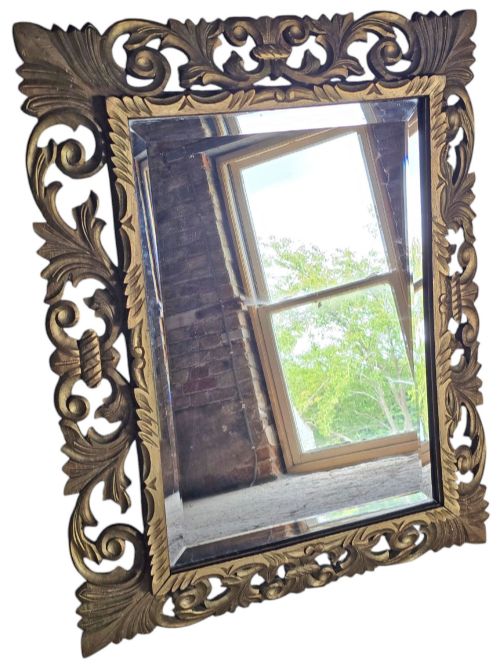
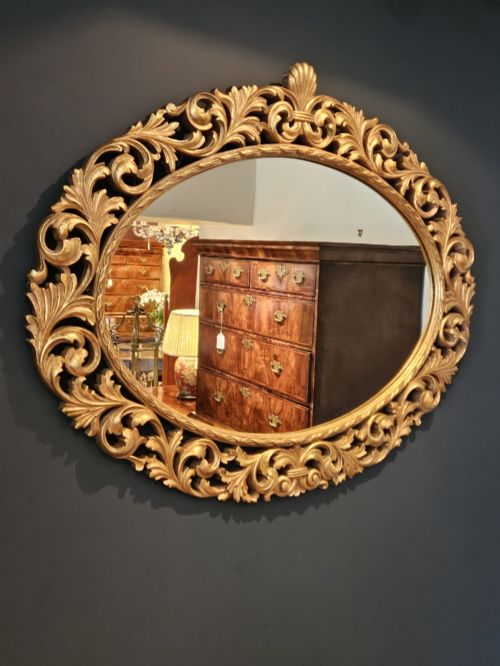
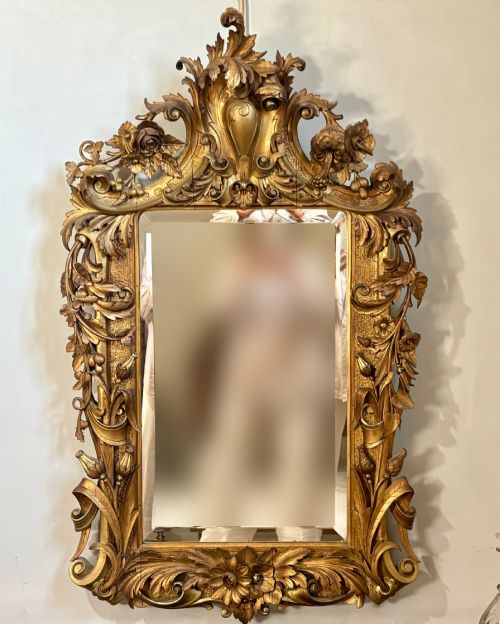
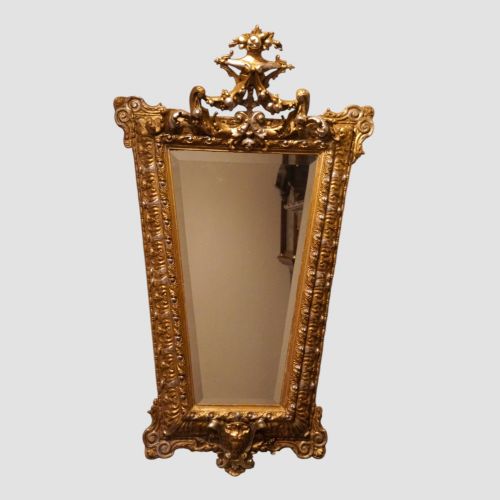
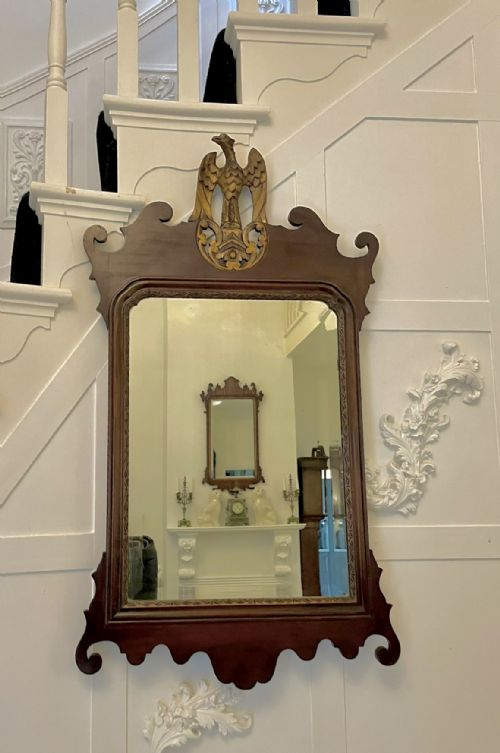
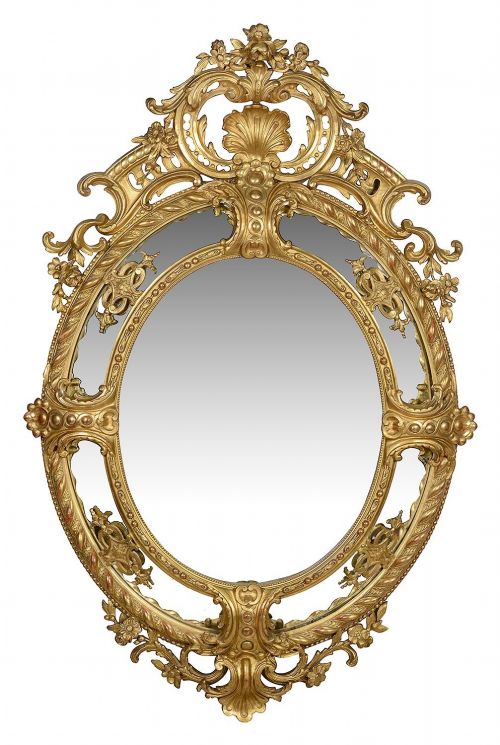
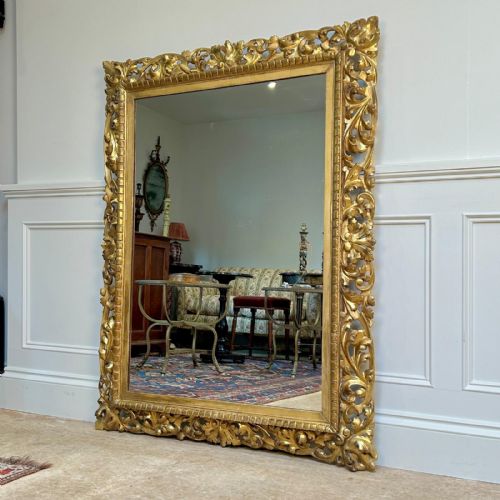
The assortment encompasses distinct regional and period styles, including ornate Florentine carvings, robust Victorian overmantels, and restrained Georgian proportions. Wall mirrors and overmantel variants dominate the physical forms available to a collector.
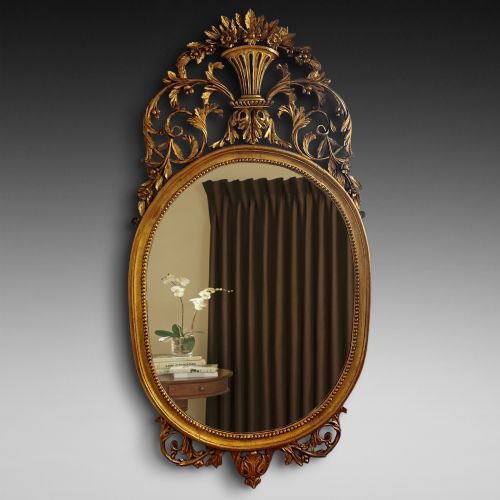
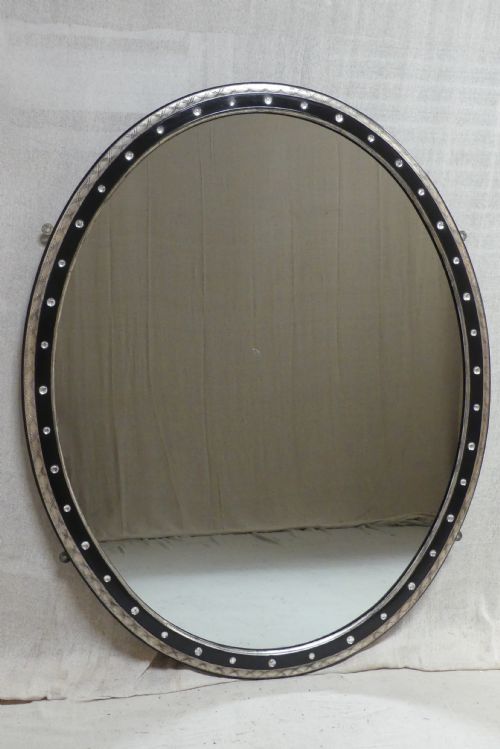
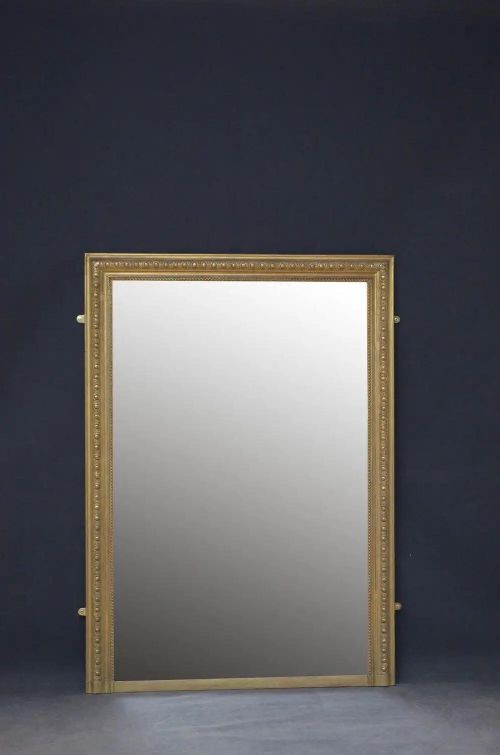
Makers utilised timber, gesso, and gold leaf to create surfaces that reflect historical tastes from the baroque revival to French chateau aesthetics. Oval, rectangular, and trapezoidal frames provide varied geometry suitable for diverse architectural settings.
How they were made
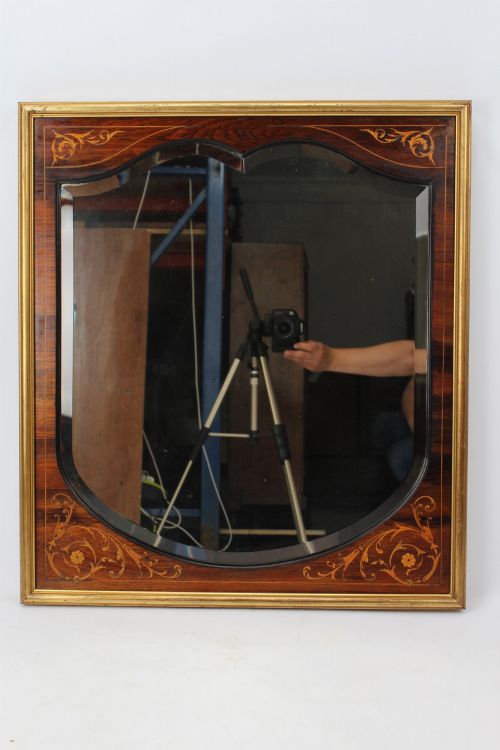
Carpenters carved timber frames from woods such as mahogany, walnut, and rosewood, sometimes applying layers of gesso to build up intricate relief decoration. Gilding was then achieved using gold leaf or liquid gold applications over the prepared surfaces.
Glass plates were silvered and fitted into the timber frames, occasionally replaced in later restorations while retaining the primary antique structure. Composition material was also pressed into moulds for repetitive decorative motifs on nineteenth-century and twentieth-century frames.
Several mirrors include fierce lions' heads and mythical dragons peering out from the gilded frames.
What varies in quality
The depth and crispness of the hand-carved wood relief separate superior frames from mass-produced moulded alternatives. Skilled craftsmanship shows in the seamless joining of frame corners and the preservation of original gilding layers.
The optical quality of the mirrored glass plate influences desirability, particularly when original historic glass survives with minimal degradation. Superior examples balance substantial physical scale with proportional delicacy in the decorative framing elements.
The Large Gilt Hanging Mirror Glossary
- Giltwood
- Wood that has been coated with gold leaf or gold paint. This technique provides a luminous metallic surface that defines the aesthetic of these mirrors.
- Gesso
- A plaster mixture applied to wood frames as a base for carving or gilding. It allows craftsmen to model fine relief details before applying gold leaf.
- Overmantel
- A large mirror designed to hang specifically above a fireplace mantelpiece. These pieces frequently feature extended horizontal or vertical proportions.
- Parcel gilt
- Woodwork that is partially gilded while exposing areas of natural wood grain beneath. This finish highlights specific carved details rather than covering the entire frame.
- Rococo
- An ornate artistic style characterised by asymmetry, scrollwork, and natural motifs. Mirrors in this style exhibit elaborate, flowing frame designs.
Large Gilt Hanging Mirror: Frequently Asked Questions
Where should I hang a large overmantel mirror?
An overmantel mirror traditionally hangs directly above a fireplace mantelpiece to anchor the room's central hearth.
They also function effectively on large expanse walls in reception rooms to reflect natural light and create spatial depth.
How do I date a gilt wooden frame?
Dating relies on identifying the underlying construction woods, joinery methods, and stylistic decorative motifs.
Nineteenth-century pieces often utilise gesso mouldings and distinct revival styles, whereas eighteenth-century examples display hand-carved timber construction.
Are mirror glass plates original?
Many antique frames have received replacement mirror plates over the decades due to historical silvering decay.
Inspectors look for subtle foxing, distortion, or edge beveling to determine if the glass dates to the period of the frame.
What is the difference between gesso and carved wood?
Carved wood involves shaping the solid timber frame using chisels and gouges to create permanent three-dimensional relief.
Gesso is a plaster paste applied over a simpler wooden base to mould intricate decorative details and floral scrolls.