


Empire Style Gilt Mirror
An empire style gilt mirror brings neoclassical discipline and heavy metallic brilliance to a room, framing reflections with classical architectural authority.
Empire Style Gilt Mirror
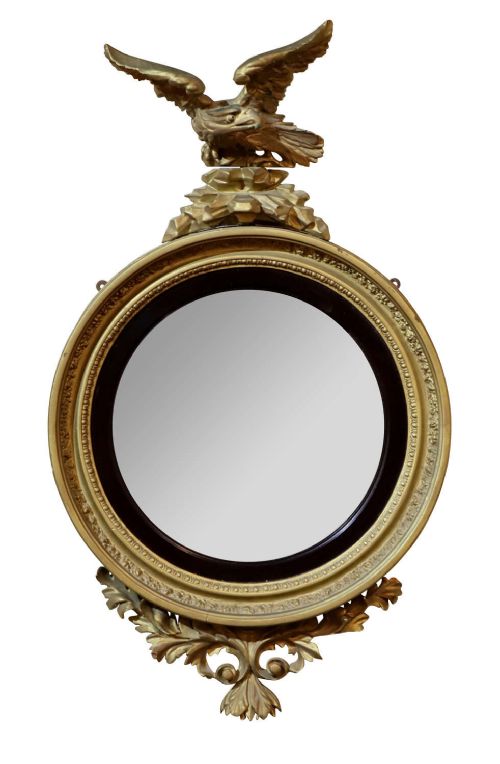
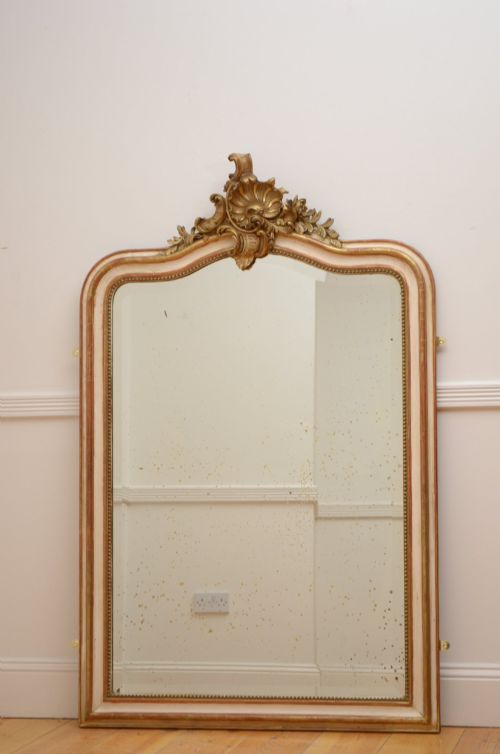
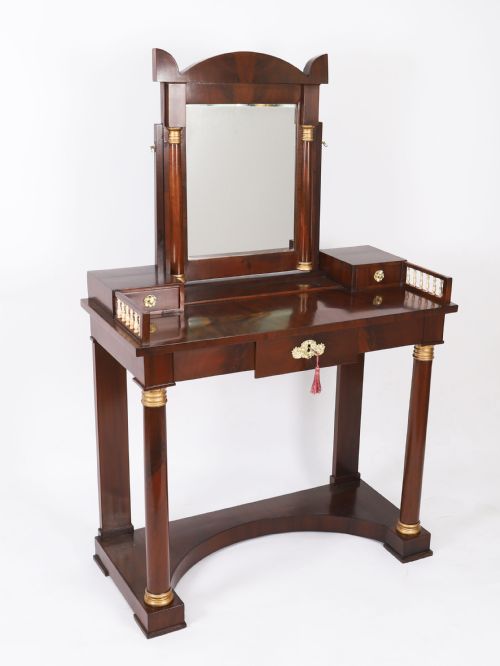
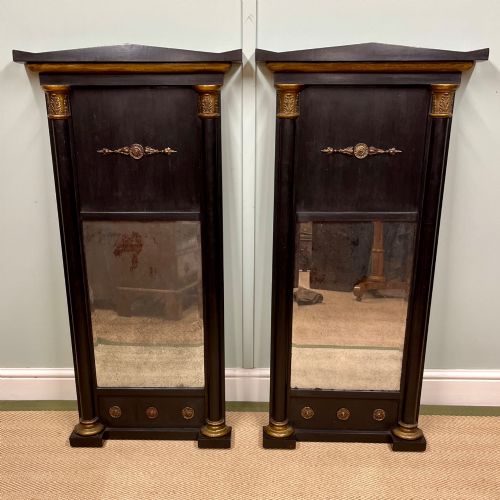
An empire style gilt mirror combines the heavy architectural lines of the classical revival with reflective surfaces designed to amplify light in a room. These pieces emerge from the nineteenth century across periods including the Regency, Victorian, and Napoleon III eras, drawing on French Empire and Neoclassical design vocabularies.
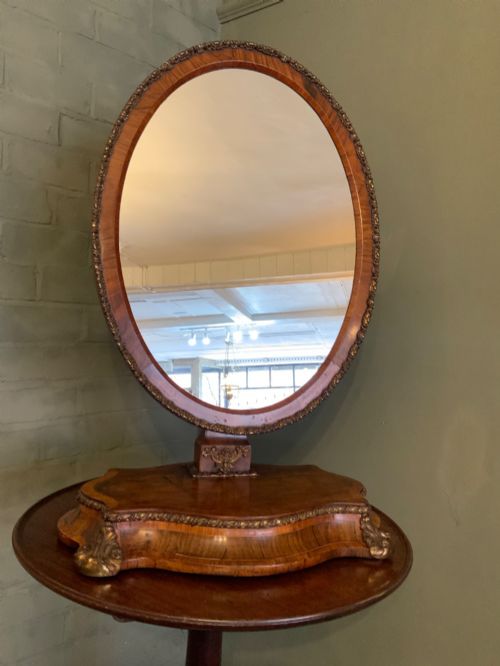
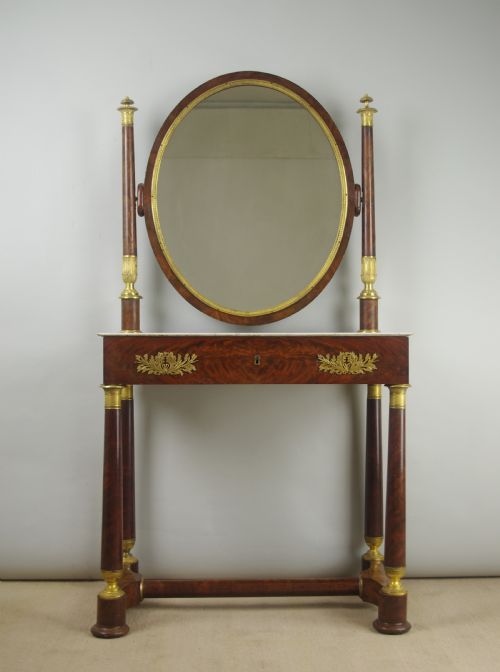
Buyers encounter forms ranging from large wall mirrors and overmantels to tall pier mirrors, cheval mirrors, and dressing table mirrors. Construction involves woods such as mahogany, walnut, and ebonised timber paired with giltwood, gesso, ormolu, and gilt bronze.
Origin points span England, France, and Italy, reflecting a broad European appetite for grand domestic decor. The typical piece relies on architectural symmetry, classical motifs, and prominent gilded surfaces to establish its period character.
Materials and construction methods
Frames rely on sturdy core timbers including mahogany, walnut, and ebonised wood, which provide the structural weight necessary for large overmantel and pier formats. Carved details and moulded sections are built up using gesso over wood substrates, allowing crisp execution of classical ornamentation before the application of gold leaf.
Decorative metalwork incorporates ormolu and gilt bronze mounts, casting classical motifs that are secured directly to the wooden frames or dressing table structures. Glass plates are set within these heavy surrounds, sometimes featuring triple plate configurations or convex surfaces depending on the specific nineteenth-century form.
The inventory records wall mirrors, overmantels, pier mirrors, and dressing tables spanning French, English, Italian, and Swedish origins.
Distinctions in execution and finish
Quality reveals itself in the crispness of the gesso carving and the depth of the gilding, where hand-applied gold leaf retains a warmer, more nuanced luminescence than later metallic paints. The precision of cast ormolu mounts and the integration of secondary woods like mahogany and walnut signal superior workshop standards.
Proportion and structural integrity define the higher tiers of surviving examples, particularly in large overmantel and pier formats where heavy glass plates demand robust joinery. Pieces that retain their original mercury glass and uncompromised structural frames command stronger interest from collectors.
The Empire Style Gilt Mirror Glossary
- Giltwood
- Timber that has been coated with gold leaf or powder over a prepared gesso ground. This finish provides the bright, reflective surface characteristic of formal nineteenth-century frames.
- Gesso
- A plaster-like mixture applied to wood frames and carved to create sharp decorative details before gilding. It forms the smooth base layer for gold leaf application.
- Ormolu
- Finely chased gilt bronze applied as decorative mounts on furniture and mirror frames. The technique involves coating bronze with a mercury and gold amalgam.
- Pier Mirror
- A tall mirror designed specifically to hang on the narrow wall space between windows. These pieces often sit above console tables to maximise light reflection.
- Overmantel Mirror
- A wide mirror intended to be hung directly above a fireplace mantel. They frequently feature landscape proportions and elaborate neoclassical reliefs.
Empire Style Gilt Mirror: Frequently Asked Questions
How do I hang a heavy overmantel mirror?
These substantial frames require professional wall anchoring into structural studs or masonry to support their considerable weight safely. The heavy timber and glass construction demands robust hardware distributed across multiple fixing points.
Positioning the piece at the correct height above the mantelpiece ensures the architectural proportions of the room remain balanced and secure.
Are these mirrors made of solid mahogany?
Makers typically used mahogany or walnut for the primary structural frame, often combining solid sections with selected veneers. Secondary woods provide stability for large overmantel and pier mirror formats.
Metal mounts in ormolu or gilt brass are then applied alongside gesso mouldings to complete the decorative scheme.
What is the difference between pier and wall mirrors?
Pier mirrors are specifically proportioned to fit the narrow expanse of wall between two windows, frequently paired with a console table below. Standard wall mirrors follow broader rectangular, oval, or circular formats suited to general room placement.
Both types share the characteristic gilding and classical motifs of the nineteenth-century neoclassical revival.
How should I clean a gilded wood frame?
Dust the surface gently with a soft, dry brush to prevent any abrasion to the delicate gold leaf layer. Moisture and chemical cleaners must be avoided entirely to protect the underlying gesso and historical gilding.
Glass plates can be cleaned with a minimal amount of glass cleaner applied to a cloth rather than sprayed directly onto the frame.