


Carved Crest Oval Mirror
A carved crest oval mirror brings elegance to a room, offering graceful curves and detailed woodwork suited to both traditional and modern spaces.
Carved Crest Oval Mirror
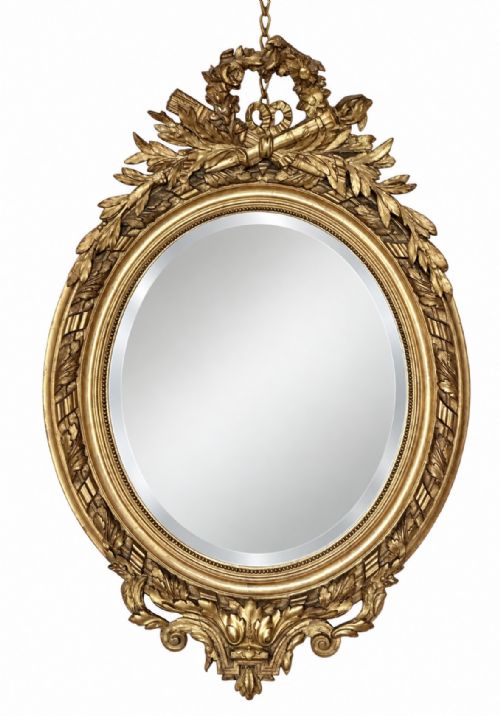
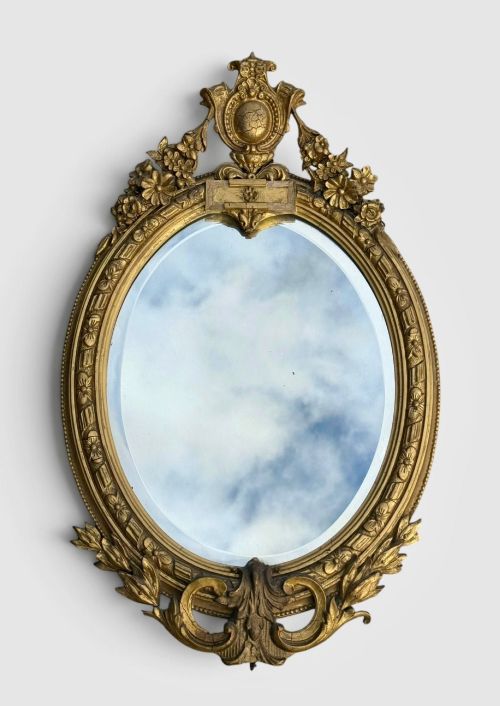
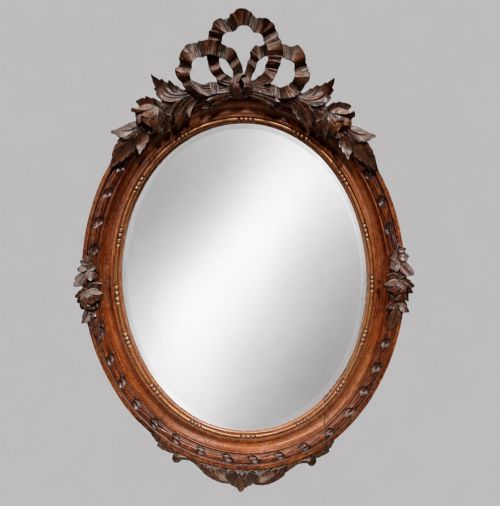
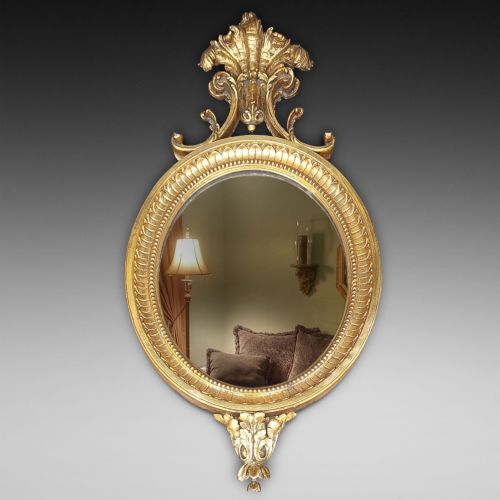
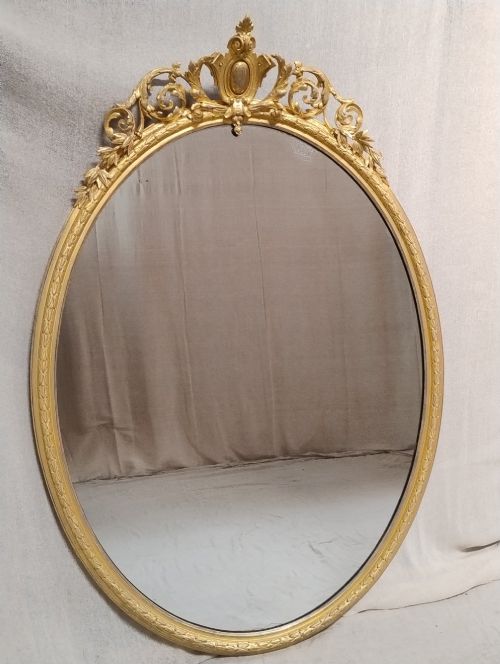
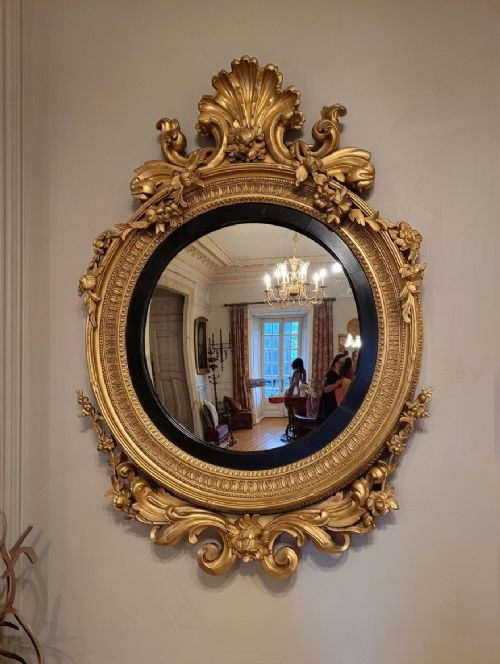
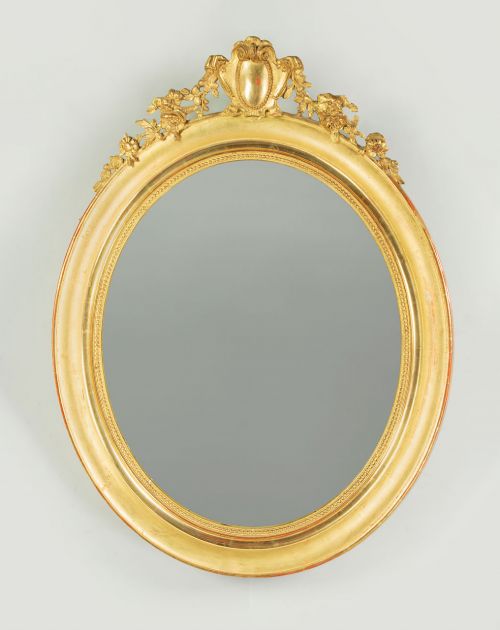
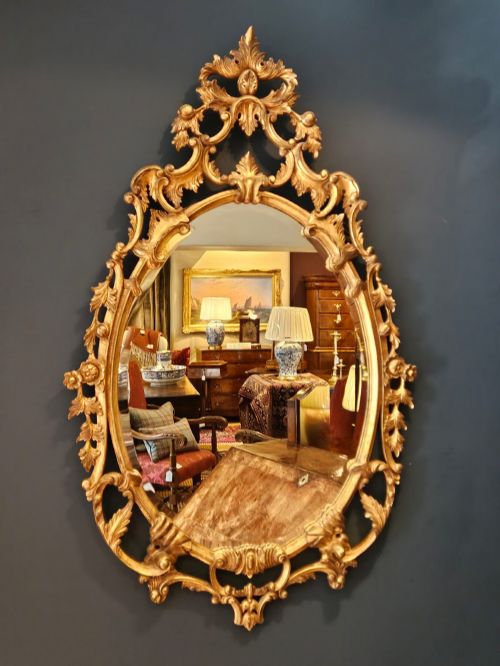
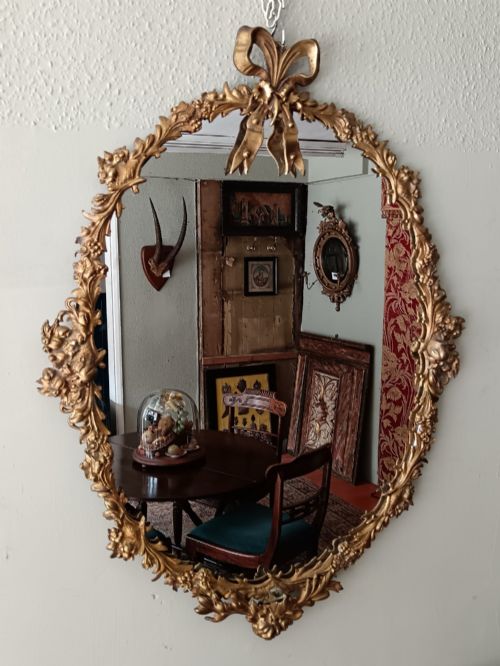
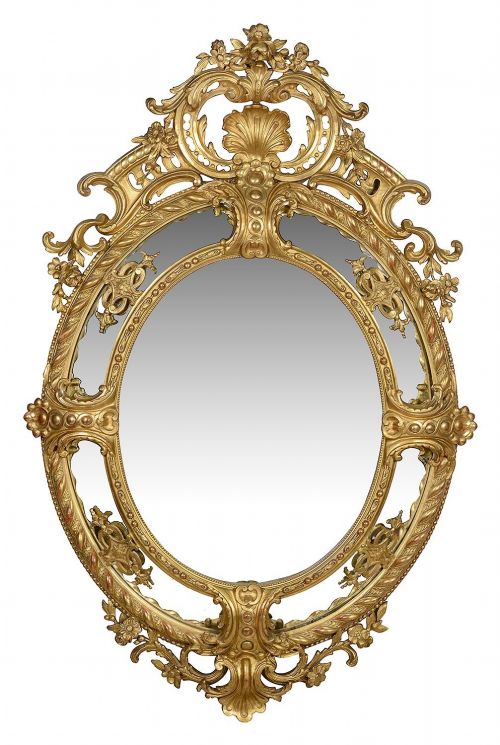
A carved crest oval mirror is an interior wall hanging designed with a curved frame and a decorative top ornament. Buyers searching for a carved crest oval mirror generally encounter pieces originating from the nineteenth century, including the Victorian era and the Regency period.
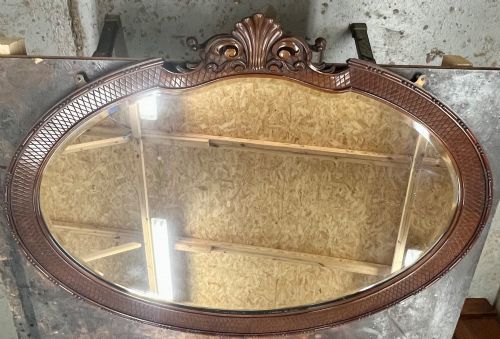
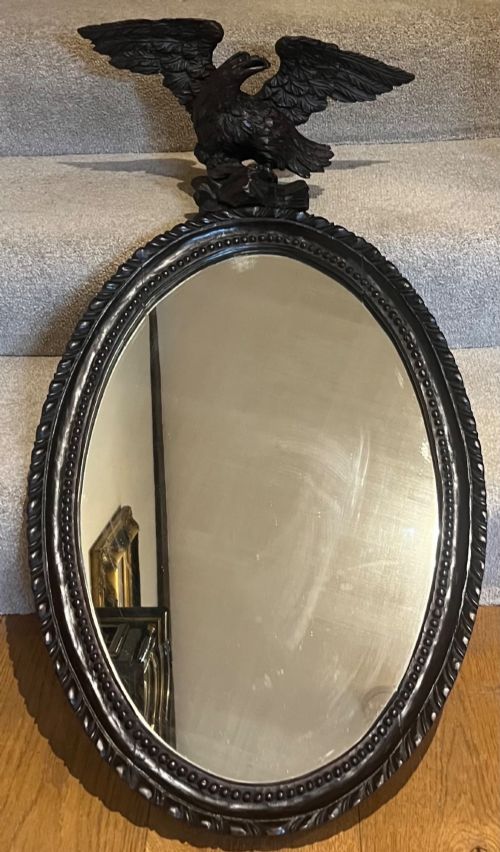
The objects listed take the form of wall mirrors and hall or pier mirrors. These items frequently display giltwood, gesso, mahogany, and painted finishes reflecting styles such as Rococo Revival, French Neoclassical, and Adam Revival.
Most examples rely on wooden frames shaped into vertical oval proportions. The decorative crests often incorporate architectural motifs, floral carvings, ribbons, bows, or birds such as eagles.
Materials and construction methods
Makers shaped the foundational frames from timber such as mahogany and carved wood, applying layers of gesso to build up intricate relief patterns. Gilding was then achieved using gold leaf or gold paint over the prepared surfaces.
Mirror plates of the period frequently consisted of mercury plate or early float glass secured within the wooden rebate. Backboards constructed from solid timber planks protected the silvered glass from environmental damage.
Materials recorded across the selection include giltwood, gesso, mahogany, composition, and mercury plate glass.
Distinctions in quality
Quality rests upon the crispness and depth of the hand-carved ornament on the crest. Skilled artisans produced undercut foliage and balanced symmetry that outlasts the shallow moulding found on lesser commercial items.
The preservation of the original mercury glass plate and the integrity of the antique gilding contribute heavily to the standing of a piece. Original parcel-gilt and ebonised surfaces retain greater visual depth than later repainted examples.
The Carved Crest Oval Mirror Glossary
- Giltwood
- Timber that has been coated with gold leaf. This finish gives the frame a bright metallic sheen.
- Gesso
- A plaster mixture applied to wood frames before gilding. It provides a smooth surface for carving fine details.
- Mercury plate
- An early type of mirror glass backed with a tin-mercury amalgam. It produces a characteristic mottled reflection.
- Parcel-gilt
- Woodwork that is partially gilded with gold leaf while other areas show the natural or painted wood beneath.
- Overmantel mirror
- A large mirror designed to hang above a fireplace mantel. These pieces often feature extended proportions to fill the wall space.
Carved Crest Oval Mirror: Frequently Asked Questions
How do I hang a heavy antique oval mirror?
Heavy frames require sturdy fixings screwed directly into wall studs or masonry using appropriate wall anchors. Professional mirror hangers utilise D-rings and steel wire rated well above the weight of the timber and glass.
Position the mirror at eye level to ensure proper balance within the room. Secure the bottom edge with discrete brackets if the piece lacks lower hanging points.
What is the difference between Victorian and Regency mirrors?
Regency mirrors tend to follow restrained neoclassical lines with symmetrical motifs and architectural restraint. Victorian examples often embrace heavier ornamentation, incorporating elaborate Rococo Revival scrolls and deep gesso mouldings.
Examining the underlying timber and the construction of the frame back helps distinguish between the two periods. Regency pieces date from the early nineteenth century, whereas Victorian items emerge from the middle to late decades.
Can I clean the antique mirror glass safely?
Clean the glass using a soft microfibre cloth slightly dampened with distilled water or mild glass cleaner. Avoid spraying liquid directly onto the glass surface to prevent moisture seeping behind the silvering.
Keep cleaning solutions away from the antique giltwood or gesso frame. Moisture can soften the historic gesso and cause the gold leaf to flake off.
Where should I place an oval wall mirror?
An oval mirror works effectively above a hall console table, a mantelpiece, or a bedroom dressing chest. The curved top softens the linear geometry of doorways and picture frames.
Positioning the mirror opposite a window helps reflect natural light deeper into smaller rooms. Ensure the surrounding wall space allows the decorative crest to remain fully visible.