
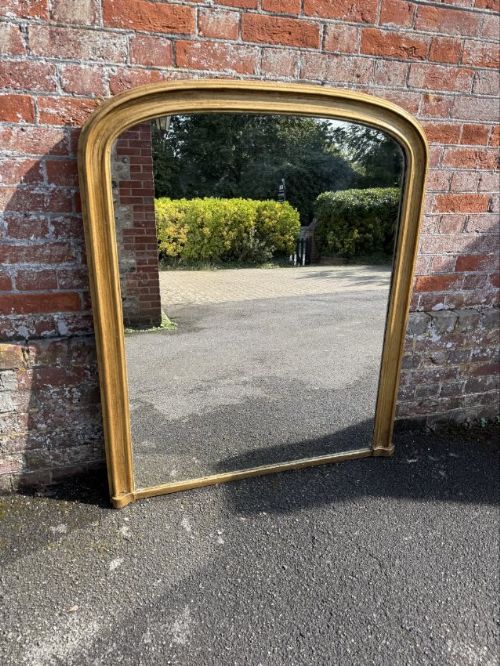
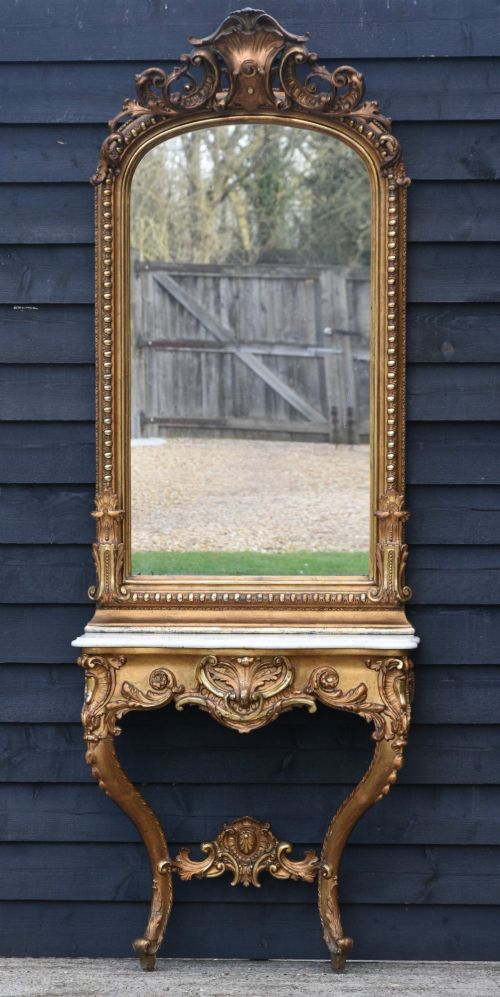
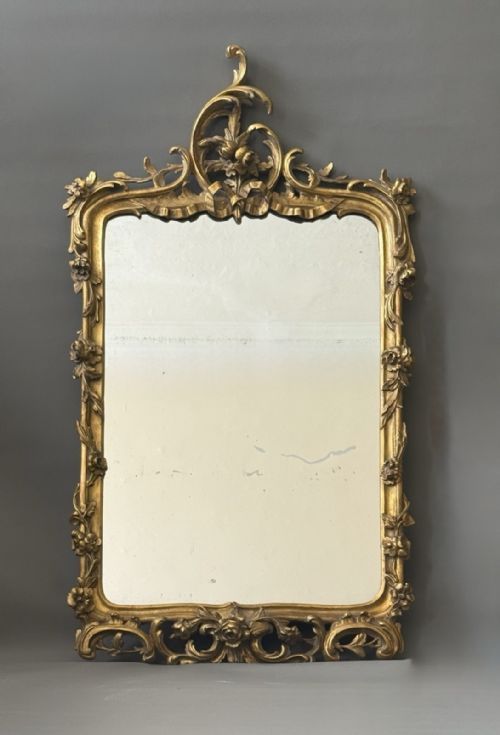
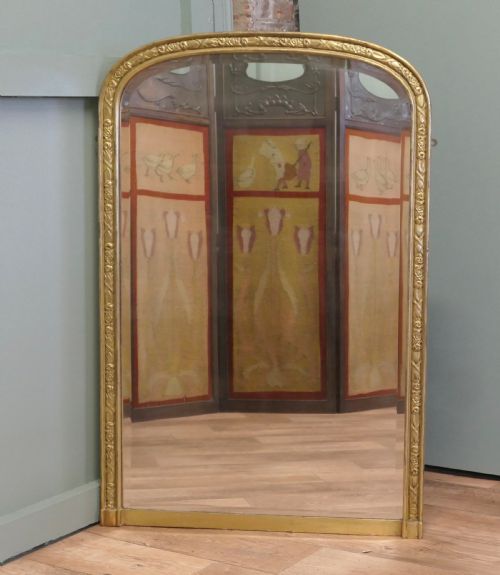
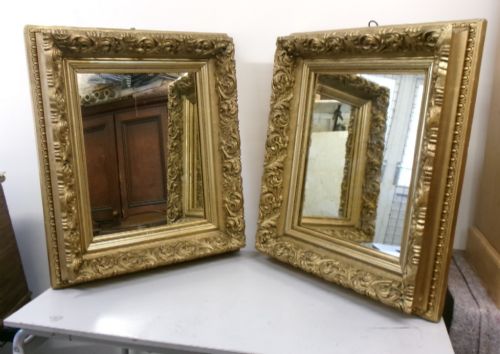


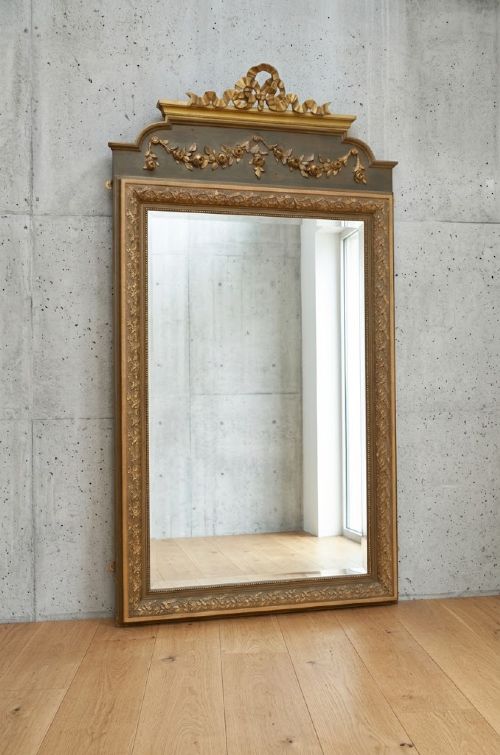
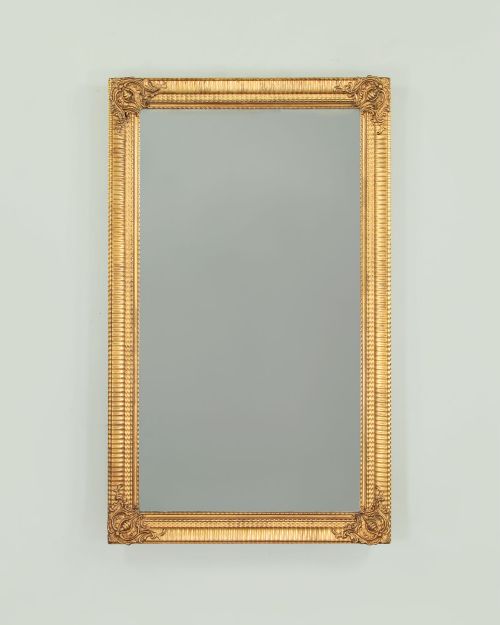
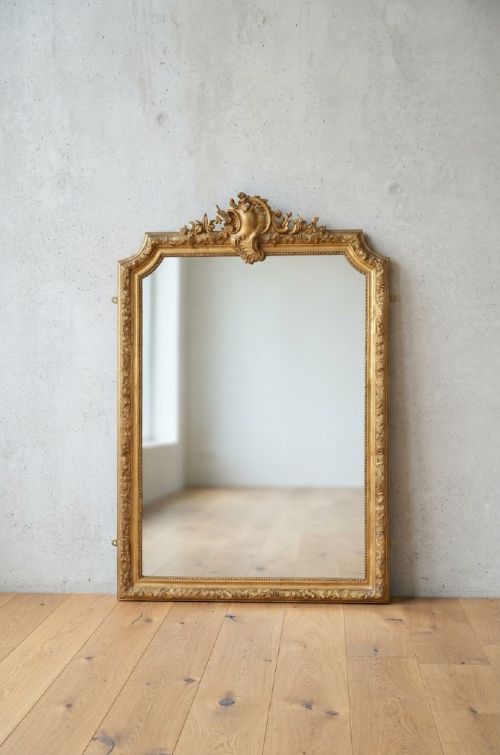
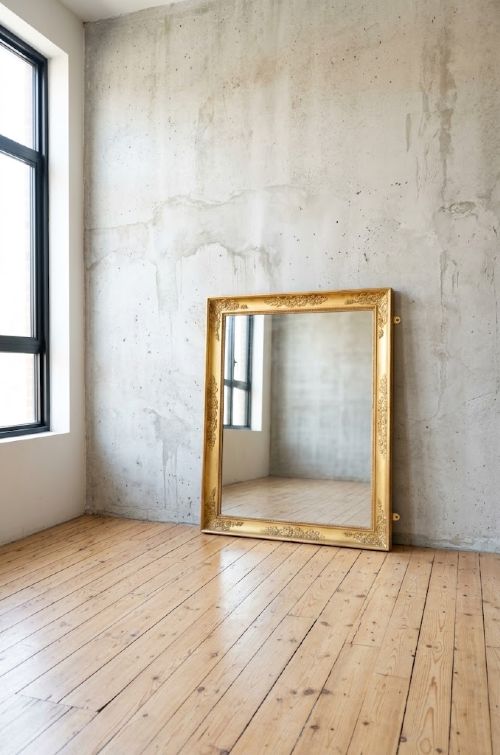
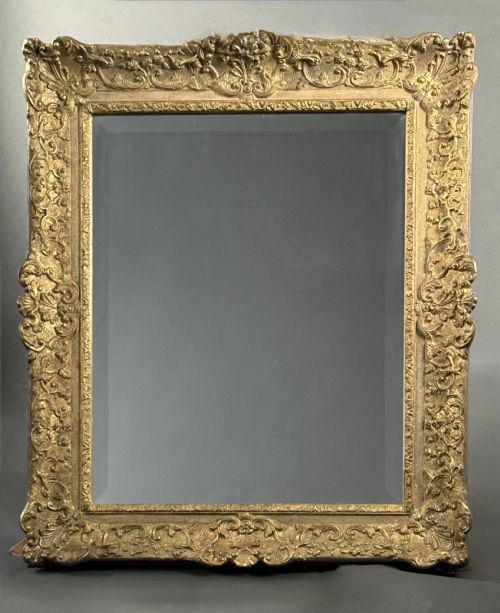
French Gilded Wall Mirror
A french gilded wall mirror brings brilliant light and ornamental presence to any room through centuries-old craftsmanship.
What these french gilded wall mirrors are
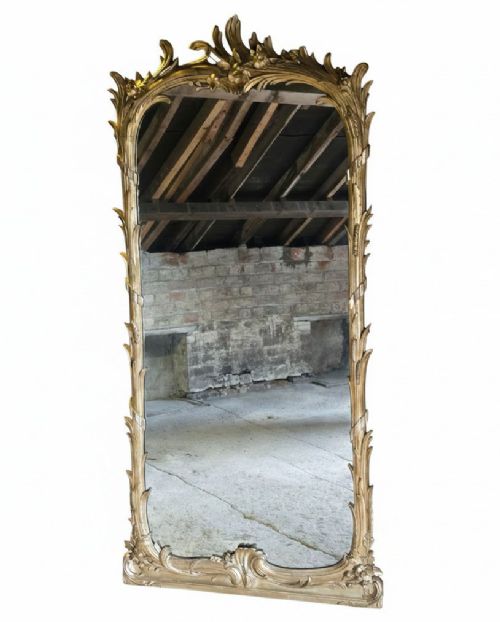
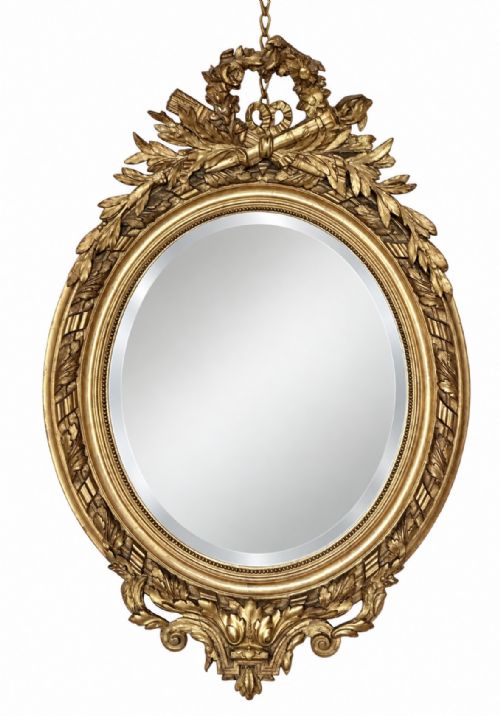
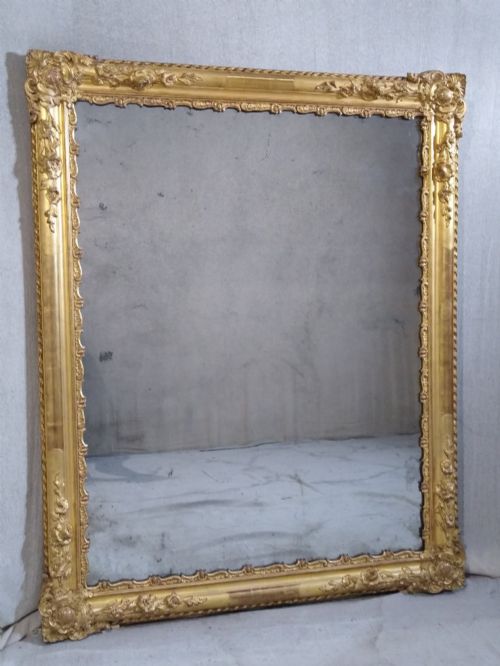
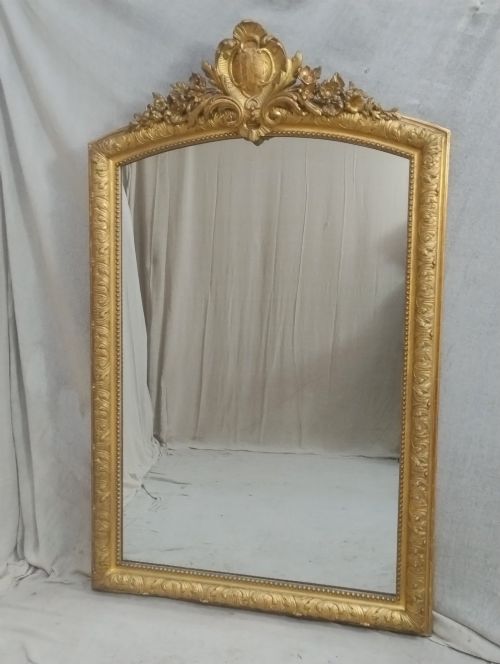
A french gilded wall mirror is a decorative looking glass designed for hanging, created in styles such as Rococo, French Louis XV, French Rococo Revival, and French Empire. These pieces range from substantial 18th-century examples to later 19th-century interpretations from periods like 1850 and 1870.
The selections available here include large oval wall mirrors, twin arm mirror wall lights, and pieces featuring foliate cresting or dragon crests. Buyers frequently encounter carved walnut frames alongside giltwood and painted finishes.
Most examples originate from France, showcasing traditional forms designed to reflect interior light and enhance grand spaces. The variety spans simple decorative frames to elaborate carved statement pieces.
How they were made
Frames are constructed from materials including giltwood, gesso, walnut, and ebonised wood, often combining carved wooden substrates with delicate surface gilding. Master artisans shaped the timber and applied gesso layers to build up intricate relief details before finishing.
Mirror glass is set within these ornate surrounds, accompanied by specialised elements like parcel-gilt highlights and structural hardware for wall mounting. Twin arm configurations incorporate metal or wooden sconce fixtures directly into the mirror design.
Retail Price Guide 2026
Typical UK retail prices for french gilded wall mirror, calculated from the Sellingantiques database of over a million retail prices indexed since 2003. This retail price guide relies exclusively on Sellingantiques data; no external sources or auction records are used, so the figures do not describe the wider market.
The listings span the 18th century, 1850, and 1870, utilising materials such as giltwood, gesso, ebonised wood, and walnut.
What varies in quality
The standard of carving determines visual depth, with deeply undercut foliate crests and crisply rendered Rococo motifs representing the highest tier of craftsmanship. Simpler or more mechanically produced frames lack this sculptural vitality.
Surface treatment also defines the upper range, where traditional gilding techniques create a warmer, more nuanced metallic reflection than flat modern paints. The integrity of the original mirror glass and timber substrate further distinguishes exceptional pieces from standard ones.
The French Gilded Wall Mirror Glossary
- Giltwood
- Wood that has been coated with gold leaf or a gold-coloured metallic finish. This technique provides a durable and radiant surface characteristic of fine antique mirrors.
- Gesso
- A plaster-like mixture applied to wooden frames as a base for gilding and intricate relief moulding. It allows artisans to carve subtle details before applying gold leaf.
- Foliate cresting
- Ornamental carved foliage atop the mirror frame, often featuring naturalistic leaf and scroll motifs. This detail draws the eye upward and defines the silhouette of Louis XV and Rococo styles.
- Parcel-gilt
- A decorative treatment where only specific parts of a wooden frame are gilded, leaving the underlying ebonised or natural wood visible. This creates a striking contrast between dark timber and bright gold.
Frequently Asked Questions
Where should I hang a french gilded wall mirror?
These mirrors suit principal reception rooms, above mantelpieces, or in entrance halls where they can amplify natural light. Their decorative frames make them natural focal points in traditional or eclectic interiors.
Ensure the wall structure can support the weight of substantial giltwood and carved wooden frames. Positioning the glass opposite a window maximises the reflection of daylight.
How do I identify an 18th-century piece?
Eighteenth-century examples typically exhibit hand-carved wooden construction with deep gesso relief and period-specific Rococo or Louis XV styling. The joinery and timber characteristics reflect pre-industrial handcraft methods.
Examine the backboards, fixings, and the composition of the glass for signs of age. Archival records and historical stylistic markers also help confirm the era of manufacture.
What is the difference between Rococo and Empire styles?
Rococo mirrors feature asymmetric scrolls, naturalistic foliate cresting, and elaborate C-curves designed to create a sense of fluid movement. These pieces feel ornate and whimsical.
Empire style frames are characterised by classical symmetry, martial motifs, and heavier architectural proportions inspired by antiquity. This creates a more formal and structured appearance.
How do I care for antique gilding?
Dust the frame gently with a soft, dry brush to prevent accumulation in the carved crevices of the gesso and gold leaf. Avoid liquid cleaners or chemical polishes that can strip the delicate metallic surface.
Keep the mirror away from direct heat sources and high humidity to protect the wooden substrate and prevent the gilding from flaking over time.