


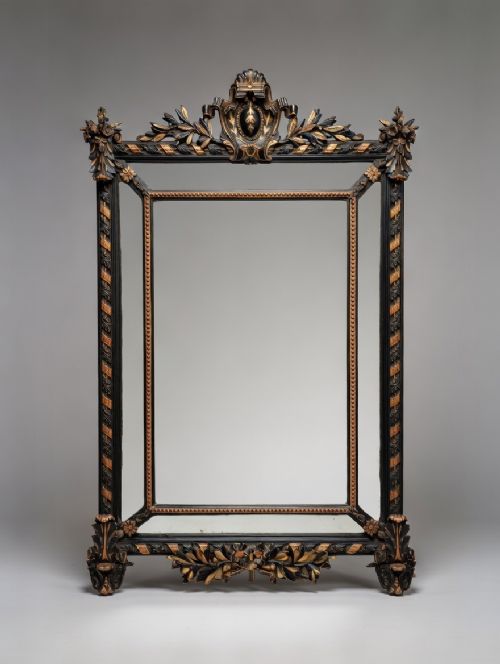
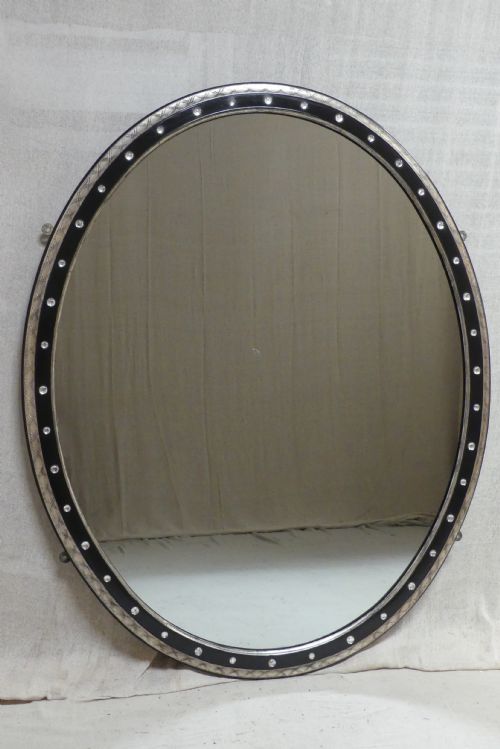


Ebonised Parcel Gilt Mirror
An ebonised parcel gilt mirror brings sharp contrast and warm metallic highlights to a room.
Ebonised Parcel Gilt Mirror
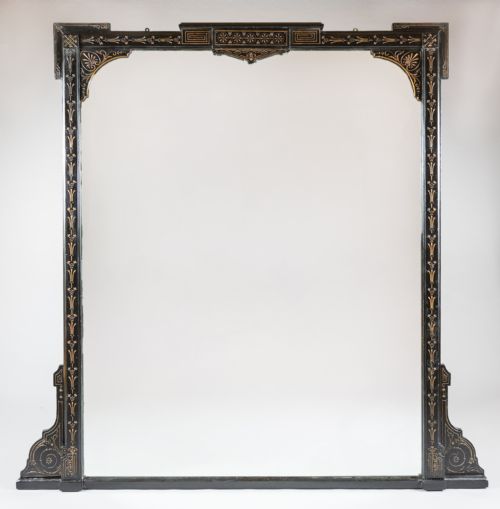
An ebonised parcel gilt mirror combines a dark, blackened wooden ground with selective bright gilding. When searching for an ebonised parcel gilt mirror, buyers encounter grand overmantel pieces and substantial wall mirrors primarily from the nineteenth century. These objects date across the Victorian era, including the Aesthetic Movement and Regency periods.
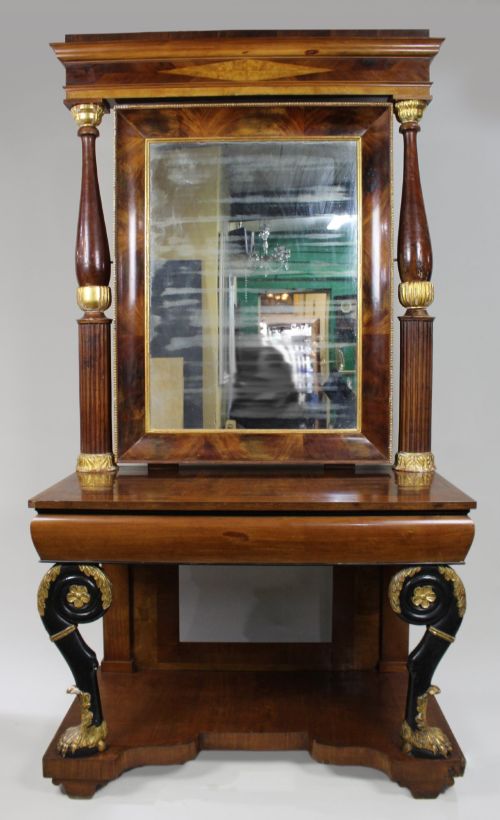
The domestic interior of the nineteenth century favoured the strong visual punch of black timber warmed by gold leaf. Most examples on offer take the form of large overmantel mirrors designed to sit above a fireplace, alongside oval wall mirrors and occasional console tables. Their origins span English workshops and French cabinet makers, with distinct Irish interpretations appearing in the archive.
Proportion defines these pieces, ranging from compact oval wall frames to wide, architectural overmantels that command an entire wall. The dark finish absorbs ambient light while the gilded portions catch the flicker of gas lamps or candles. Surviving examples demonstrate how nineteenth-century makers balanced heavy timber frames with delicate carved ornament.
Materials and Construction
Makers constructed these frames from solid wood and applied gesso to build up intricate mouldings and carved details. The dark finish relies on ebonising, a chemical treatment or pigmented coating applied to timber to simulate genuine ebony. Artisans then laid gold leaf onto specific raised areas, creating the parcel gilt effect that contrasts sharply with the blackened background.
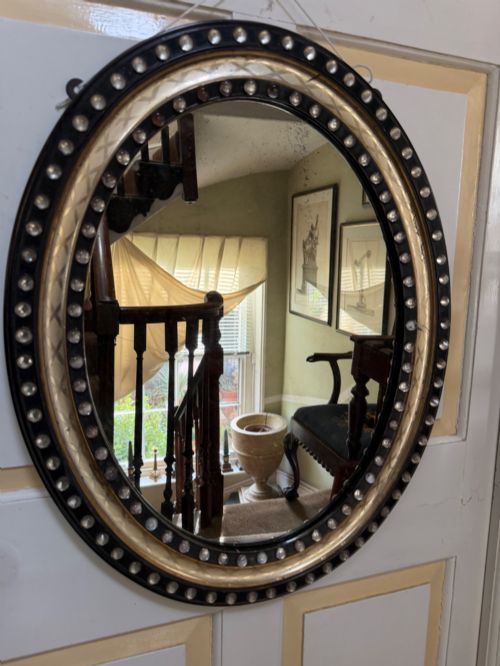
Mirror glass of the nineteenth century frequently displays subtle imperfections and heavy bevelling held within rebated frames. Frames incorporate carved wood details, paint layers, and occasionally applied glass cabochons set into moulded profiles. The combination of gesso and gold leaf requires meticulous application over prepared wooden foundations to ensure the metallic elements adhere securely.
Ebonised Parcel Gilt Mirror Retail Price Guide 2026
Typical asking prices for ebonised parcel gilt mirror among the pieces listed under this phrase on Sellingantiques today, from the lower quarter to the upper quarter. They describe what is for sale here now, not the wider market.
The listings span the Victorian period, including the Aesthetic Movement, along with Regency and French Rococo Revival styles.
Assessing Quality and Execution
The crispness of the carved ornament and the depth of the gesso mouldings separate standard production from superior craftsmanship. Master carvers produced sharp, deep relief work that retains its definition beneath layers of finish, whereas lesser examples show softened edges in the plasterwork. The precision of the parcel gilding determines how effectively the gold highlights draw the eye across the ebonised surface.
The stability of the underlying wooden frame and the quality of the original mirror glass indicate the standard of the piece. Superior mirrors utilise thick timber joinery that prevents warping in large overmantel formats. Furthermore, the integration of decorative elements, such as applied glass cabochons or detailed Adam style motifs, reflects the original ambition of the workshop.
The Ebonised Parcel Gilt Mirror Glossary
- Ebonised
- Wood treated with stain, paint, or chemical processes to imitate costly ebony timber. This dark finish provides a stark background for gilded highlights.
- Parcel Gilt
- A method of gilding only specific portions of an object rather than the entire surface. This technique highlights carved details against a contrasting background.
- Overmantel Mirror
- A large mirror specifically proportioned to hang on the wall directly above a fireplace mantelpiece. These frames often incorporate architectural arches or wide cornices.
- Gesso
- A plaster-like mixture applied to wood surfaces and carved to form raised decorative motifs before gilding. It provides a smooth base for gold leaf application.
- Cabochon
- A convex, polished gemstone or moulded glass piece lacking facets, frequently set into nineteenth-century frames. They add textural depth to the moulded wooden profile.
Ebonised Parcel Gilt Mirror: Frequently Asked Questions
Where should an overmantel mirror hang?
These large mirrors traditionally anchor the wall space directly above a fireplace mantelpiece, reflecting light across the room. They also function effectively on principal walls in reception rooms to add a sense of architectural scale.
Because nineteenth-century overmantel frames carry substantial weight, secure wall fixings into masonry or heavy studwork are essential. Positioning them opposite a window maximises the reflection of natural daylight.
How do I clean an antique mirror?
Dust the carved wooden frame gently with a dry, soft brush to protect the delicate ebonised and gilded surfaces. Avoid commercial liquid cleaners on the frame, as moisture damages old gesso and gold leaf.
Clean the mirror glass sparingly using a cloth slightly dampened with water or a mild glass cleaner, ensuring no liquid seeps behind the frame rebate. Old mirror glass often has fragile silvering that requires a gentle touch.
What defines the Aesthetic Movement style?
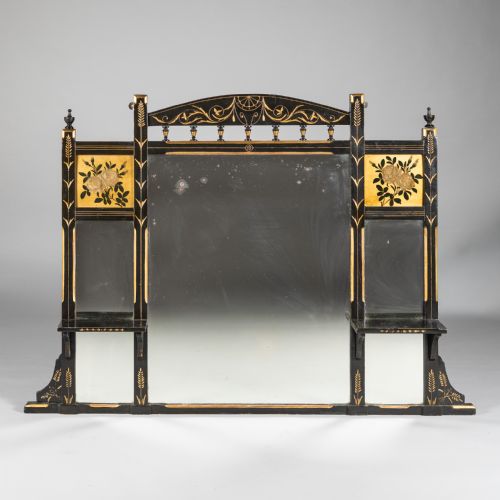
The Aesthetic Movement emerged in the late nineteenth century, championing art for art's sake and drawing inspiration from Japanese design. Ebonised finishes became particularly popular during this period for their stark, modern silhouette.
Mirrors from this era often feature clean geometric lines combined with selective gilding and restrained, elegant carving. They represent a deliberate departure from heavy Victorian ornamentation.
Are Irish mirrors different from English ones?
Irish mirrors from the nineteenth century frequently incorporate distinctive decorative elements such as double bands of faceted cut-glass cabochons. These regional pieces often appear in smaller scale oval formats with unique moulded profiles.
Cabinet makers in Ireland utilised local timbers and distinct framing techniques that set their output apart from standard English production. These regional variations make such pieces sought after by collectors.