
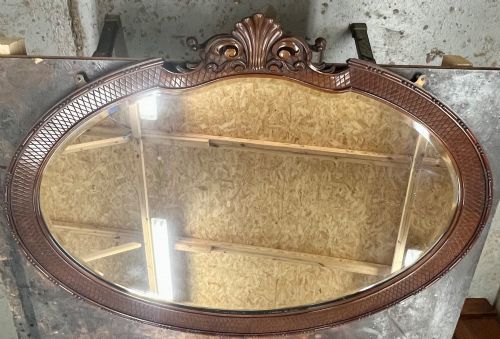


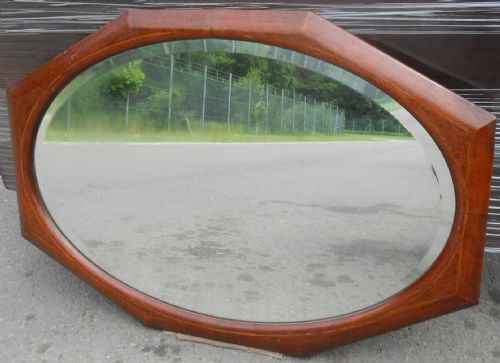


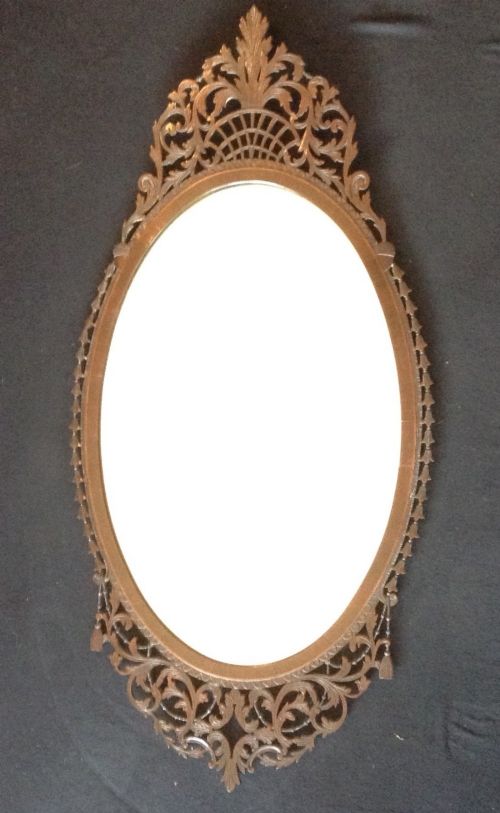
Mahogany Oval Wall Mirror
A mahogany oval wall mirror brings warmth and a soft curving line to a room, reflecting light while anchoring a wall with timber depth.
Mahogany Oval Wall Mirror
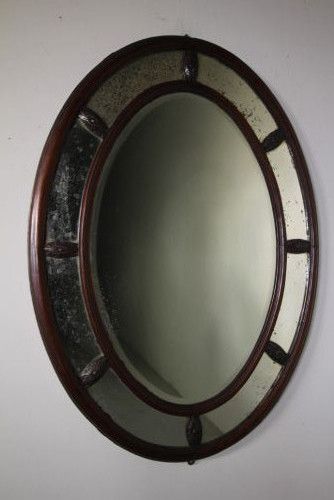
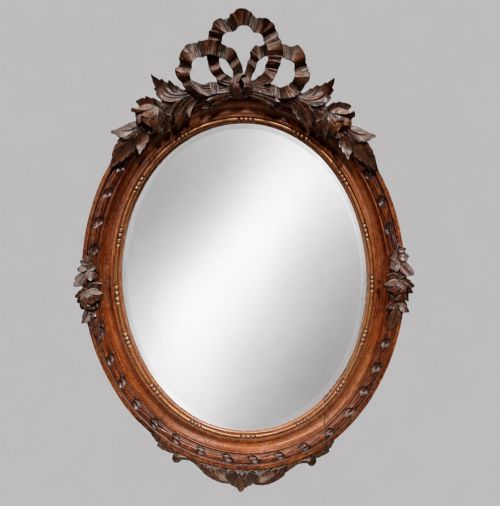
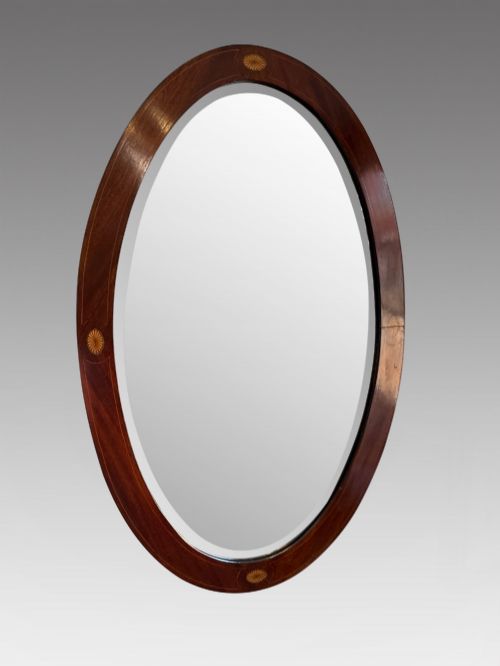
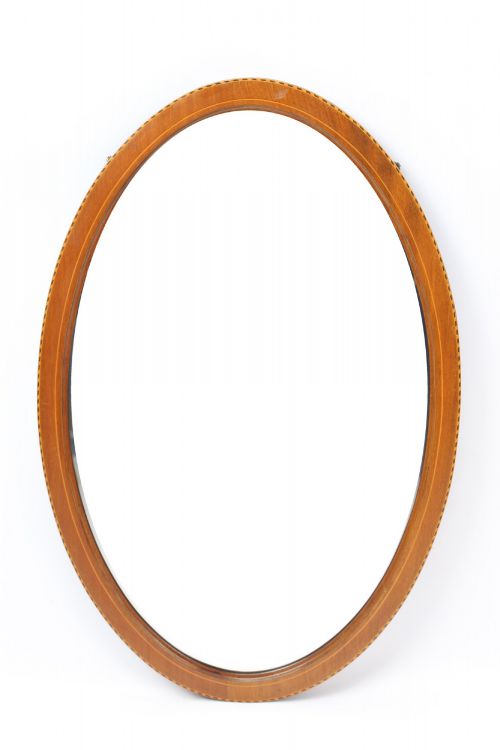
When you search for a mahogany oval wall mirror, you find pieces spanning the Georgian era through the Edwardian period and into nineteen-hundred, combining deep reddish-brown timber frames with curved perimeters. The domestic wall mirror serves both a practical purpose and a decorative function, breaking up flat expanses of wallpaper with organic timber tones.
The Edwardian examples and nineteen-hundred variants dominate the selections, often featuring satinwood inlay, delicate stringing, or simple moulded frames. Earlier nineteenth-century iterations lean toward country house proportions, fretwork carvings, or parcel gilt accents that catch the candlelight.
Most pieces hang vertically by means of original brass rings or later chain systems, designed to sit comfortably above a mantelpiece, sideboard, or hall table. The proportion of the oval shape softens rectilinear interiors, drawing the eye smoothly around the perimeter without sharp corners.
How they were made
Cabinetmakers constructed these frames using solid mahogany or dense pine carcases faced with figured mahogany veneers, shaped on bodgers' benches or in urban workshops using hand saws and rasps. The timber was frequently selected for its rich grain patterns, then polished with shellac to achieve a deep, warm lustre.
Inlaid versions incorporate contrasting strips of satinwood, ebony, and boxwood set into precise channels cut directly into the mahogany surface. Many later nineteenth-century and Edwardian examples utilise bevelled mirror glass, which required skilled hand-grinding along the extreme edges to create an angled prism effect.
Several mirrors include carved eagles keeping a silent, wooden watch over the hallway.
What varies in quality
The distinction between ordinary production and superior craftsmanship lies in the crispness of the timber carving, the depth of the mahogany veneer selection, and the subtlety of any inlay work. Finer frames display hand-cut fretwork or precise satinwood banding rather than printed substitutes or clumsy joins.
Glass condition also dictates standing, with original silvering showing authentic patination, foxing, or light clouding that confirms age, as opposed to modern plate replacements. The structural integrity of the internal pine backing board and the original hanging loops determine whether the piece retains its authentic integrity.
The Mahogany Oval Wall Mirror Glossary
- Satinwood Inlay
- A decorative technique where pale, yellow-toned satinwood is let into recesses in the darker mahogany surface. This creates sharp geometric or floral contrasts popular during the Edwardian period.
- Bevelled Glass
- Mirror glass featuring a hand-ground and polished slope around the outer perimeter. This edge catches light and adds depth to the reflection.
- Parcel Gilt
- A finish where selected portions of the wooden frame are partially gilded with gold leaf, often highlighting carved details like eagles or scrollwork.
- Fretwork
- Openwork patterns cut into thin boards using a fretsaw, frequently seen on the crests and sides of Chippendale Revival or Scottish mirrors.
- Overmantle
- A large mirror designed specifically to hang on the wall directly above a fireplace mantel. These pieces usually span greater widths to balance the hearth below.
Mahogany Oval Wall Mirror: Frequently Asked Questions
How do I hang a heavy mahogany oval wall mirror safely?
Check the weight distribution against the original brass loops or sturdy wire secured to the reverse of the frame. Anchor directly into wall studs or utilise heavy-duty wall plugs rated for the timber mass.
Ensure the hanging wire or chain has minimal slack so the mirror tilts slightly downward toward the room, distributing the load evenly across two wall hooks rather than one.
How can I tell an Edwardian mirror from a Georgian one?
Edwardian mirrors often feature lighter mahogany veneers combined with delicate satinwood stringing and machine-bevelled glass plates. They reflect the revival styles popular at the turn of the twentieth century.
Georgian and earlier nineteenth-century pieces typically display heavier solid timber construction, deeper hand-carved mouldings, and occasionally mercury silvering with distinct natural foxing spots.
Can I clean the original mirror glass safely?
Use a soft microfiber cloth and a mild solution of distilled water and vinegar applied to the cloth rather than directly onto the glass. This prevents moisture from seeping behind the silvering.
Avoid commercial ammonia-based cleaners, which can attack the fragile backing paints and corrode the antique edges where the silver layer is most vulnerable.
Where should I place an oval mirror in a room?
Position the piece opposite a window or light source to bounce natural daylight back into darker corners, making smaller reception spaces feel considerably more open. Hallways and landings also benefit from the curving profile.
Avoid hanging the mirror where direct midday sunlight hits the glass constantly, as intense UV rays can fade polished mahogany veneers and dry out historic timber over decades.