




Oval Mantle Mirror
An oval mantle mirror brings an immediate sense of scale and light to a room, drawing the eye with its curved frame.
Oval Mantle Mirror
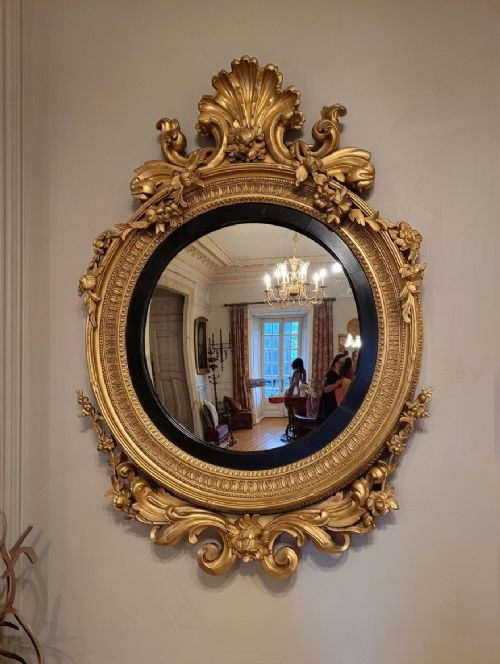
When you search for an oval mantle mirror, you encounter pieces designed to anchor the space above a fireplace or adorn a principal wall. The selection spans the Georgian, Regency, Victorian, and Edwardian periods, stretching from the late eighteenth century into the early twentieth century.
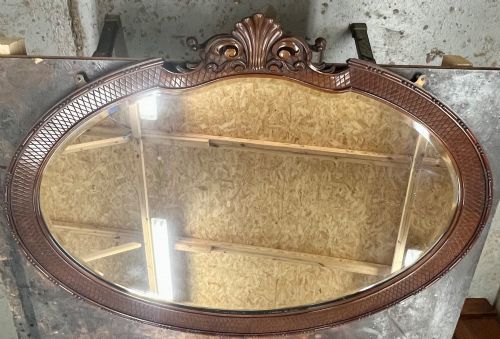
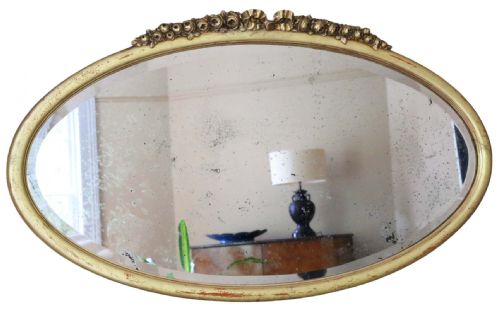
The most common versions met on this page are nineteenth-century giltwood and gesso overmantel mirrors alongside Edwardian and later mahogany wall-hanging variants. These objects function simultaneously as practical reflective surfaces and architectural focal points within domestic interiors.
Materials and Construction
Craftsmen utilised timber foundations of mahogany, oak, or pine, building up decorative relief details using gesso or composition moulded over the wooden core. Gilding was applied using gold leaf or metallic paint, sometimes complemented by parcel-gilt highlights, ebonised sections, or cream-painted surfaces.
Mirror glass was set into the frames either as a single large plate or occasionally bordered by marginal plates, with backs boarded in timber planks that often show age-appropriate patination and original fixings.
Listings feature periods ranging from the 18th century through Regency and Victorian eras up to Edwardian and 1920s examples.
Judging the Workmanship
The distinction between standard examples and finer pieces lies in the crispness of the moulded ornament, such as laurel wreaths, griffin friezes, or Adam-style husks. Superior frames exhibit deeply carved or cleanly pressed composition relief where details remain sharp rather than softened by excessive layers of later paint or over-gilding.
The depth and clarity of the mirror glass itself, along with the structural integrity of the heavy timber framing required to support a large overmantel scale, determine the overall substance of the piece.
The Oval Mantle Mirror Glossary
- Overmantel mirror
- A large glass specifically proportioned to sit on the mantle shelf above a fireplace, or to be mounted to the wall directly above it.
- Gesso
- A plaster-like mixture applied to wood frames and carved or moulded into intricate decorative motifs before gilding.
- Composition
- A mouldable mixture of whiting, resin, glue, and linseed oil used to create ornamental details on picture and mirror frames.
- Parcel-gilt
- A decorative treatment where only specific raised portions of a frame are gilded, leaving the underlying wood or paint exposed elsewhere.
- Marginal plate
- Smaller, bevelled strips of mirror glass fitted around the perimeter of the main central glass plate.
Oval Mantle Mirror: Frequently Asked Questions
How do I hang a heavy overmantel mirror?
Due to their substantial weight, these mirrors require secure fixing directly into masonry or robust wall studs using appropriate heavy-duty brackets.
Professional installation ensures the substantial load of the wood and glass frame is safely supported against the wall.
Can these mirrors be placed on a mantle shelf?
Many examples are designed to rest directly upon the mantle shelf while being secured to the wall with anchor fixings for safety.
Checking the base of the frame and the depth of the shelf ensures the mirror sits stable and level.
How do I date a nineteenth-century mirror?
Dating relies on examining the construction methods of the timber backing, the composition of the gesso ornaments, and the characteristics of the glass plate.
Stylistic cues such as Regency classical motifs or Victorian proportions also provide clear indicators of the period of manufacture.
Are original mirror plates common?
Surviving examples frequently retain their original mirror plates, which often display characteristic foxing, light oxidation, and minor silvering losses.
These signs of age confirm the authenticity of the glass within the period frame.