
Crest Mirror Gilt
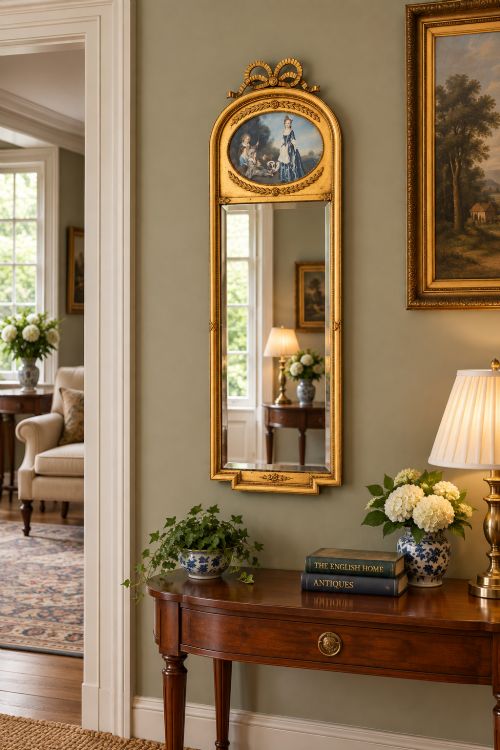
When you search for a crest mirror gilt, you are looking for an ornate looking-glass finished in gold leaf or gesso, topped with a carved motif that draws the eye upward.
Crest Mirror Gilt
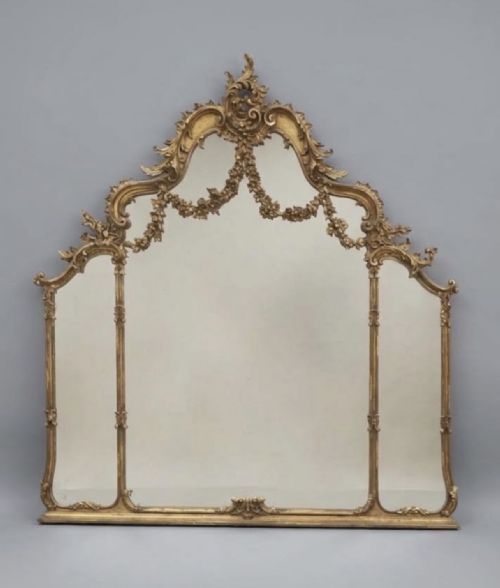
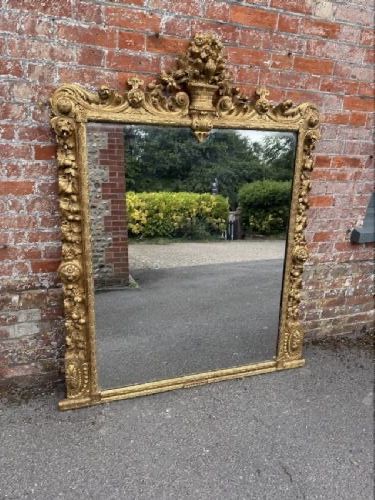
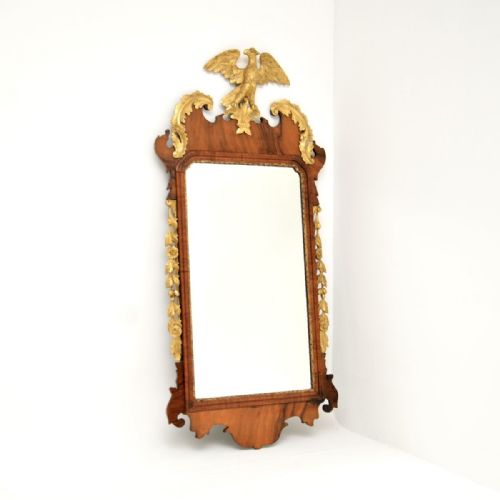
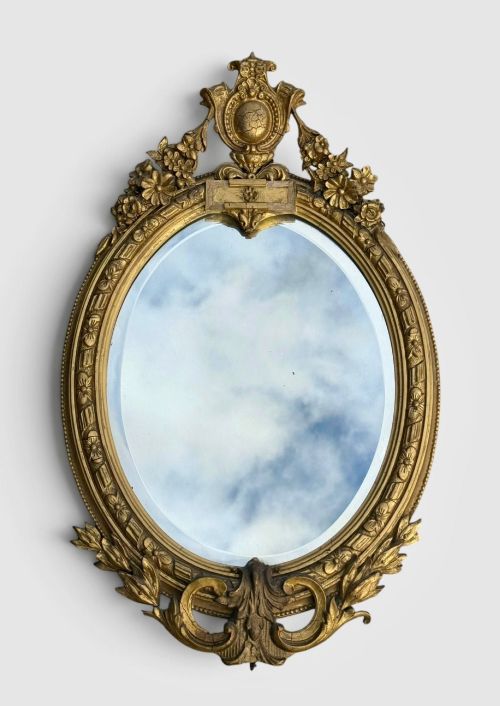
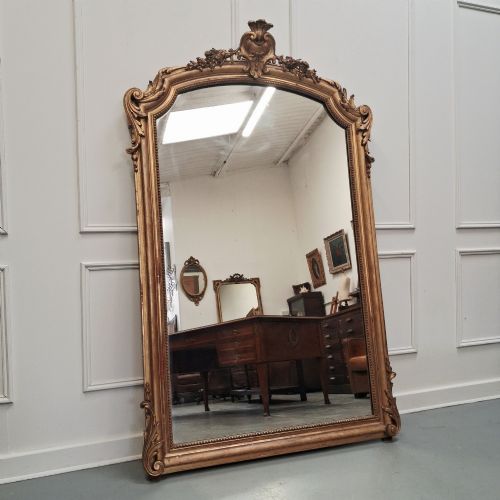
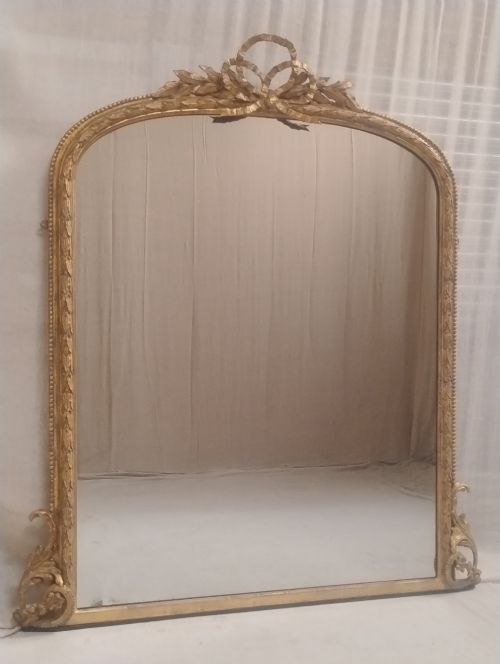
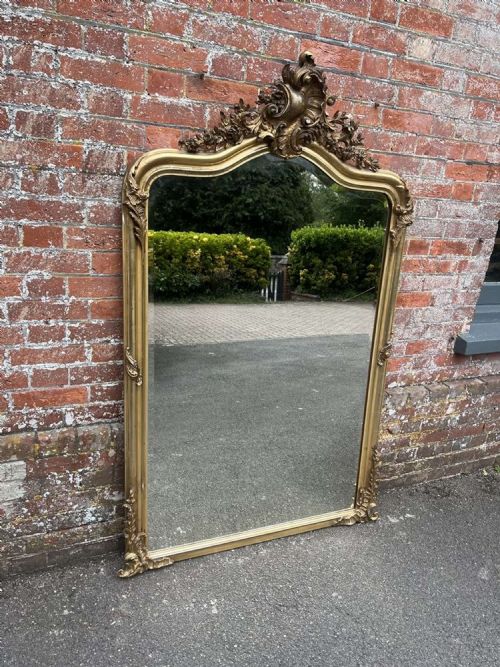
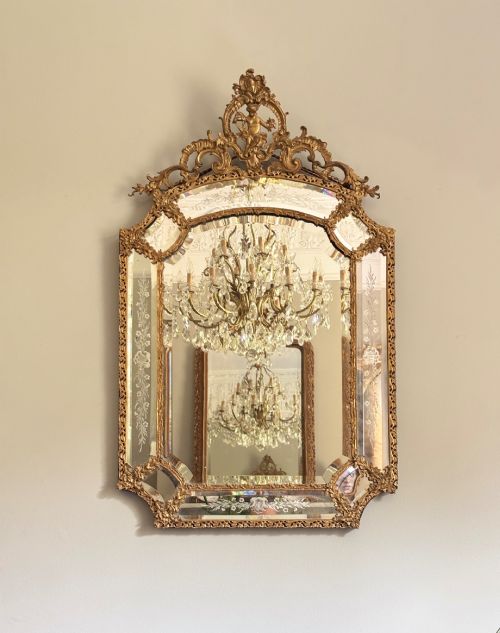
A crest mirror gilt brings together reflective glass and a decorative upper cartouche, ranging from substantial overmantels to smaller wall-hanging pieces. The category covers 18th century Georgian fretwork styles through to elaborate 19th century French and Victorian designs.
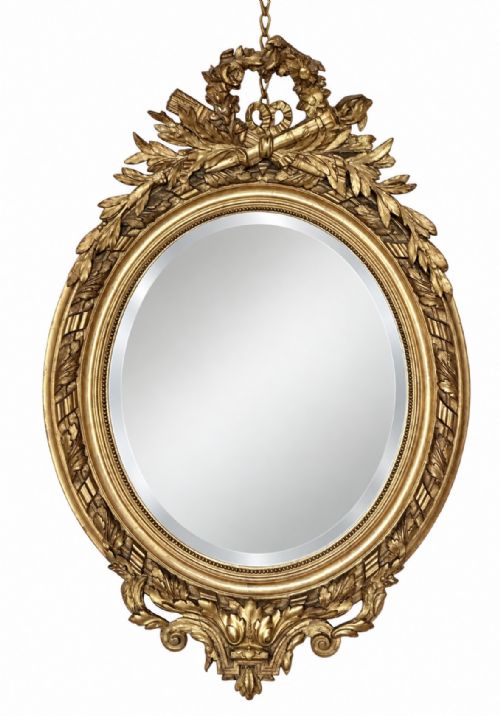
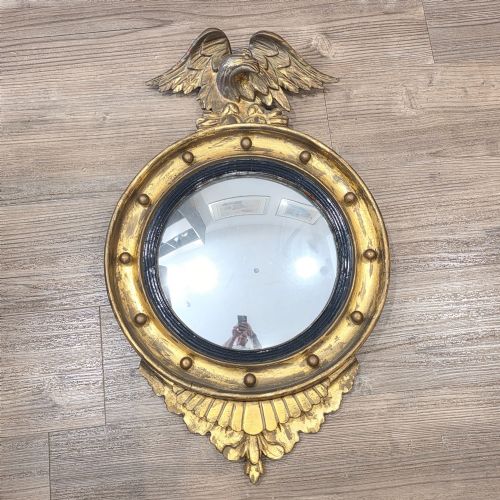
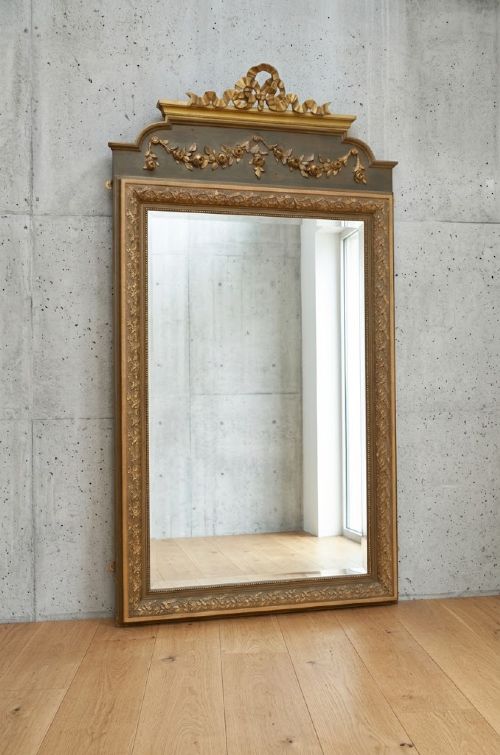
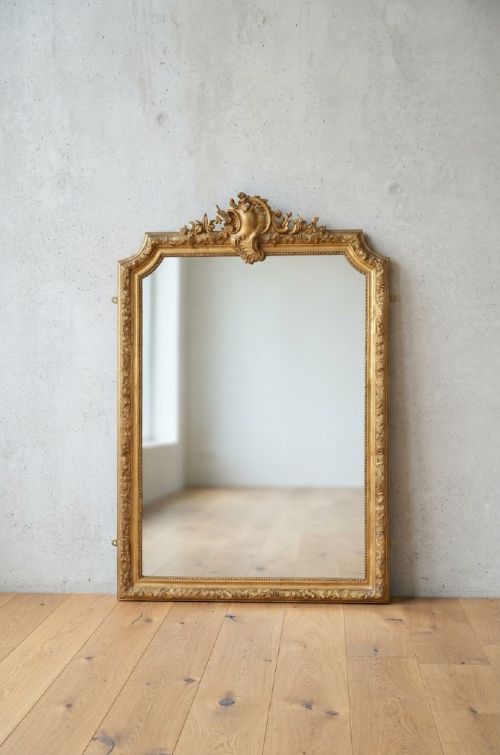
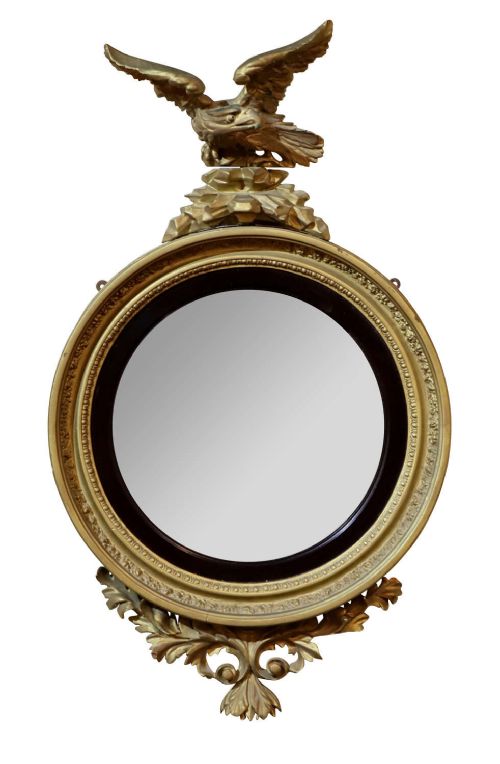
You will frequently encounter convex round mirrors featuring eagle or animal crests from the Regency period, alongside tall Napoleon III and Louis XV style pieces bearing ribbon, cherub, or bird crestings.
These items served primarily to bounce natural light around grand reception rooms and parlours while signalling the social standing of the household through their elaborate top ornaments.
What varies in quality
The crispness and depth of the carved cresting separate standard production pieces from exceptional ones, with hand-carved birds, putti, and urns showing distinct individuality compared to mass-moulded composition ornament.
The retention of original gilding and the undisturbed state of the mirror plate heavily influence desirability, as later re-gilding or replaced glass alters the historic character of the object.
Proportion and structural integrity of the frame matter greatly, particularly where heavy crests meet the main glass housing over centuries of hanging.
Listings feature 18th century, Regency, Victorian, and 19th century periods, utilising materials including gesso, giltwood, mahogany, and mercury glass.
The Crest Mirror Gilt Glossary
- Gesso
- A plaster-like preparation applied to wood frames to provide a smooth surface for gilding. It accepts fine carving and moulding detail exceptionally well.
- Giltwood
- Timber that has been coated in gold leaf or metallic powder. It provides the characteristic warm reflective sheen seen on period frames.
- Crest
- The decorative ornament mounted at the top of a mirror frame. These often take the form of birds, ribbons, urns, or sculptural figures.
- Convex mirror
- A round looking-glass with a curved outward-bulging plate that provides a wide-angle reflection of the room. They frequently feature eagle or animal surmounts.
- Overmantel mirror
- A wide looking-glass designed specifically to be hung above a fireplace mantelpiece. They often feature architectural frames and elaborate cresting.
- Parcel gilt
- A finishing technique where parts of a wooden or ebonised frame are highlighted with gold leaf while other areas remain exposed timber.
Crest Mirror Gilt: Frequently Asked Questions
What is a crest mirror gilt?
A crest mirror gilt is a decorative looking-glass featuring a prominent carved or moulded ornament at the top of the frame, finished in gold leaf or metallic paint.
These pieces span several centuries of design, encompassing Georgian mahogany fretwork, Regency convex glasses with animal surmounts, and ornate French Napoleon III overmantels.
Where were these mirrors placed historically?
Historically, these mirrors were hung in principal reception rooms, above fireplace mantelpieces, or between windows as pier glasses to amplify natural daylight.
Their commanding upper crests were intentionally designed to draw the eye upward toward high ceilings in formal domestic interiors.
How do I identify the period of a gilt mirror?
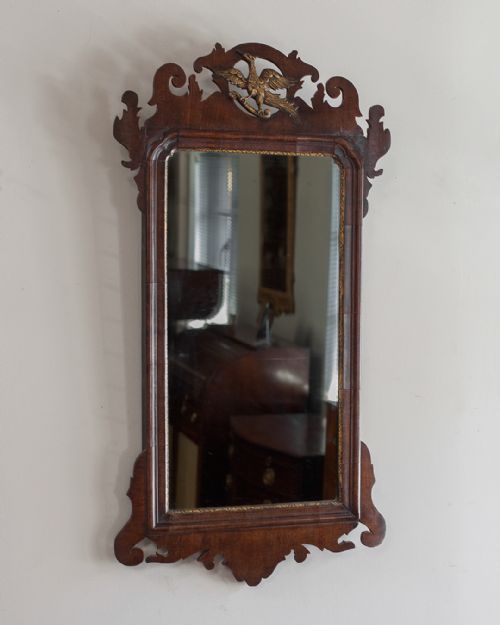
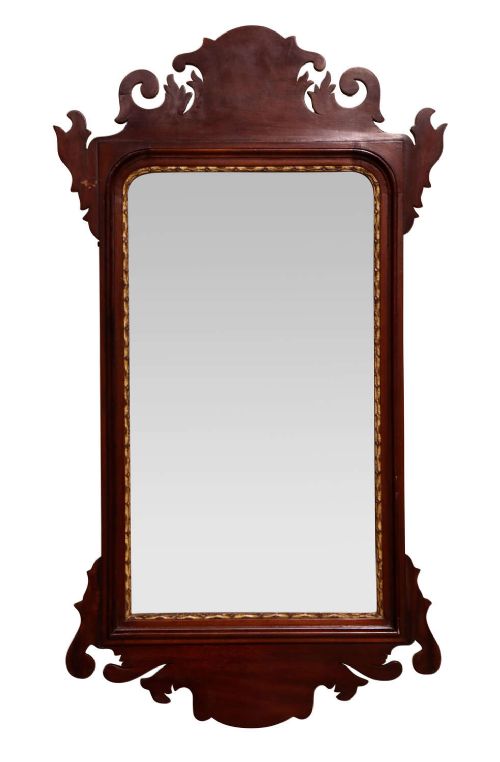
Dating relies on examining the framing style, the timber beneath the gold leaf, and the construction of the mirror plate itself. Georgian pieces often show mahogany fretwork with bird crests, while Regency examples favour circular convex forms with eagle mounts, and Victorian items lean toward heavy gesso overmantels.
The backing boards, fixing methods, and characteristics of the glass - such as hand-bevelling or foxing - provide further confirmation of age.
How should I care for an antique gilt mirror?
Maintain these pieces by keeping them away from direct sunlight and excessive moisture, which can damage fragile gesso and gold leaf. Dust gently with a soft, dry brush rather than liquid cleaners.
Check the hanging wire and wall fixings periodically, as heavy carved crests can place unusual strain on the frame structure.