
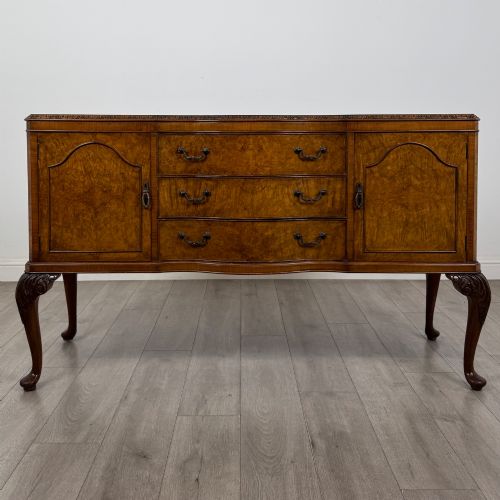
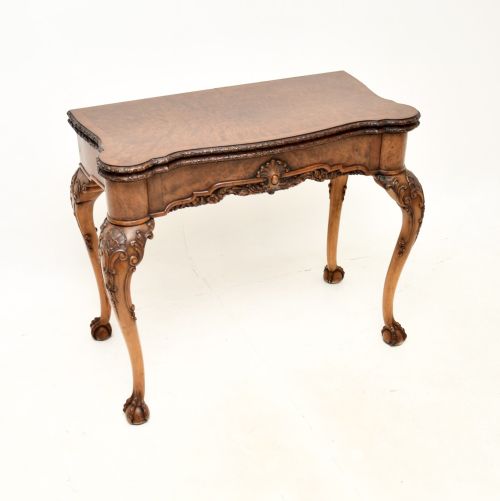
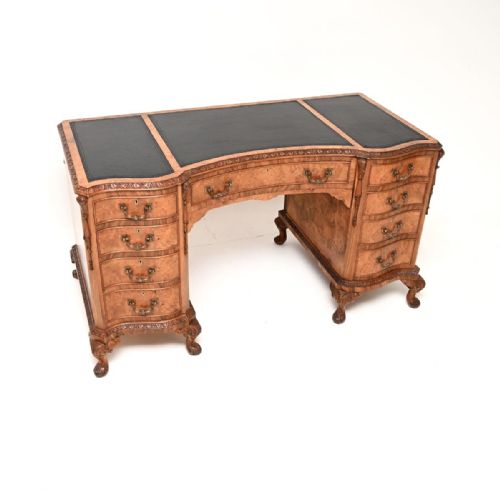
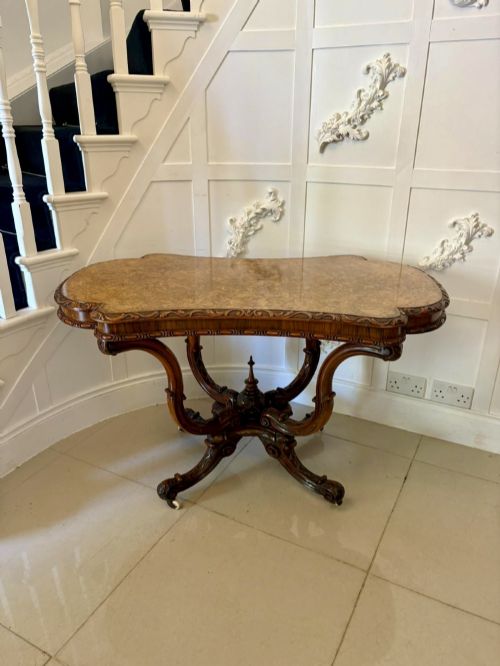
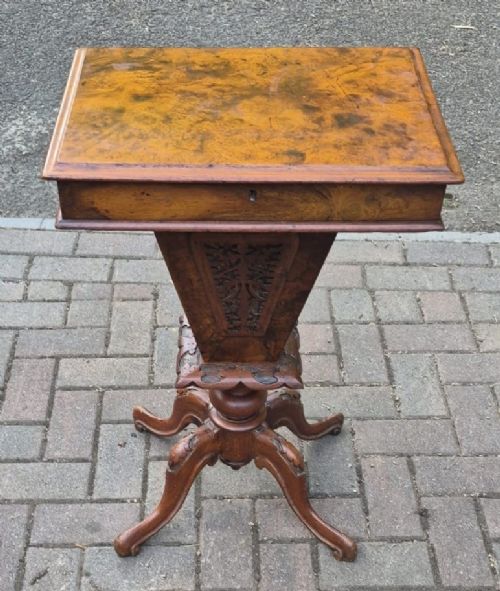
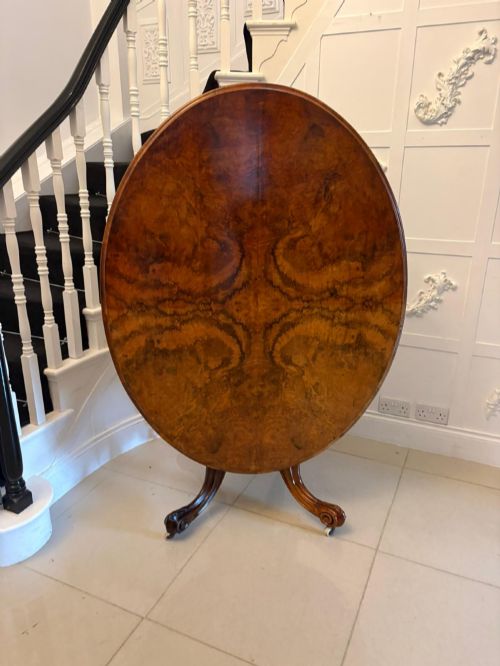


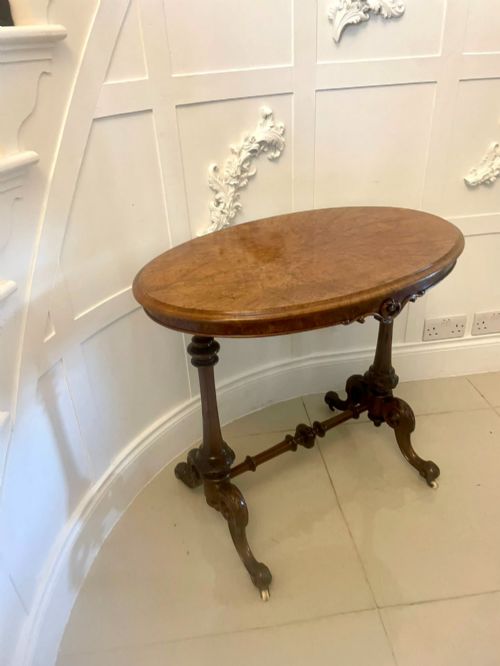
Carved Burr Walnut Table
A carved burr walnut table brings tactile warmth and intricate grain patterns into a room, offering both formal presence and daily utility.
Carved Burr Walnut Table
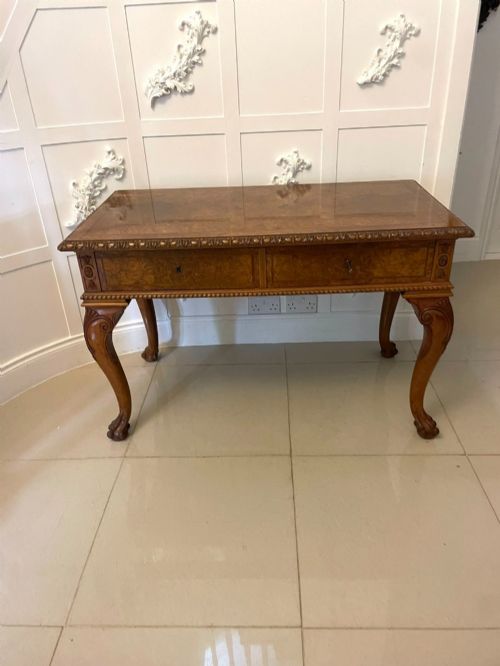
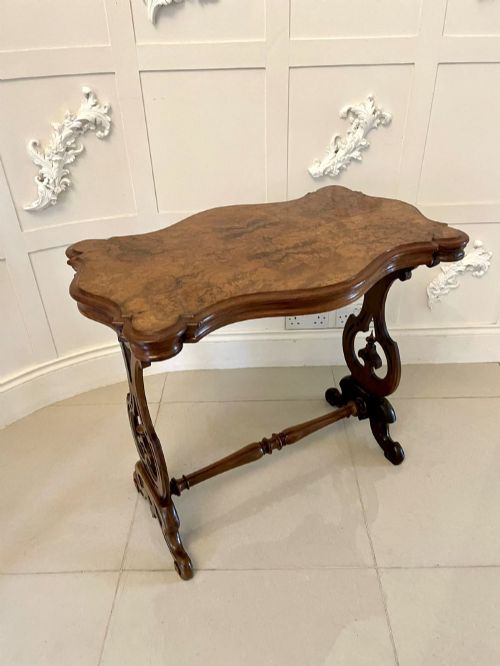
When you examine a carved burr walnut table, you are looking at nineteenth and early twentieth-century craftsmanship where distinctive timber meets sculptural woodwork. These pieces span working furniture, such as desks and sewing tables, alongside grander items designed for display and entertainment.
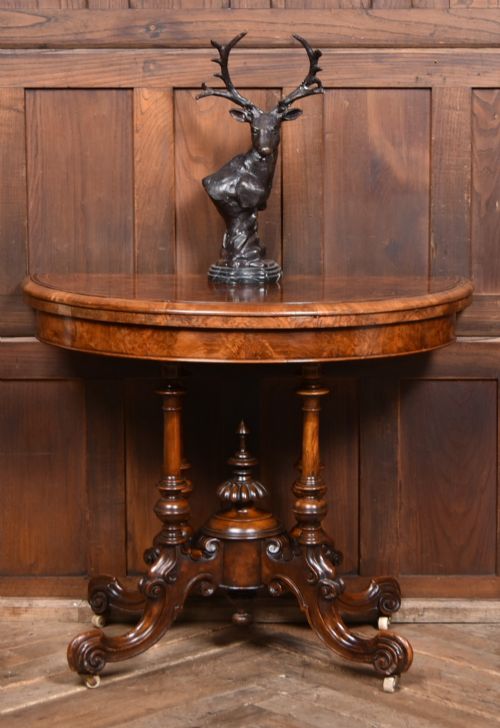
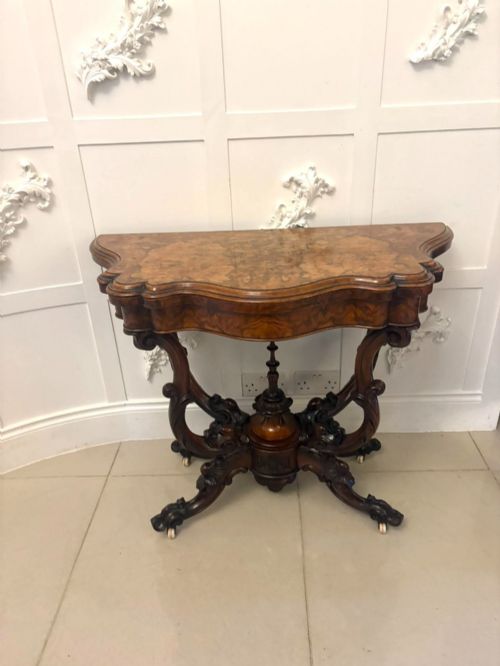
The most common examples on this page are Victorian centre tables and card tables, often featuring shaped tops and carved pedestals. Later twentieth-century interpretations lean towards Queen Anne style coffee tables and console tables.
Originating largely from British workshops and drawing rooms, these tables utilise rich wood veneers shaped into occasional, lamp, and loo formats. They combine practical surfaces with ornamental bases that reflect the aesthetic shifts of their respective eras.
How They Were Made
Cabinet makers constructed these tables by applying thin slices of burr walnut veneer over a stable secondary timber, laying out the irregular, knotty grain patterns to create symmetrical designs on the surface. Solid walnut and mahogany frequently formed the structural frames, legs, and internal components.
Carved elements, including cabriole legs, floral motifs, and pedestal bases, were shaped by hand from solid sections of wood and joined securely to the main body. Details like boxwood inlay, brass fittings, and leather inserts were integrated to finish the pieces.
Carved Burr Walnut Table Retail Price Guide 2026
Typical asking prices for carved burr walnut table among the pieces listed under this phrase on Sellingantiques today, from the lower quarter to the upper quarter. They describe what is for sale here now, not the wider market.
Some Victorian sewing tables secretly housed woven silk work baskets beneath their polished walnut tops.
What Varies in Quality
The distinction between ordinary and exceptional tables rests primarily on the choice and arrangement of the veneer, where dense, unbroken burr patterns demonstrate superior selection by the maker. Finer examples display meticulous book-matching across the top, creating mirrored grain patterns that demand expert handling.
Carving depth and crispness further separate standard production from master craftsmanship, as hand-chiselled acanthus leaves or floral scrolls retain sharp relief rather than soft edges. Structural integrity, seen in the solidity of the pedestal and the smooth movement of fold-over mechanisms, completes the hierarchy.
Maple and Co
The Carved Burr Walnut Table Glossary
- Burr walnut
- A figured wood grain obtained from the excrescences or burls of walnut trees, prized for its swirling, organic patterns. It provides a highly decorative surface for table tops.
- Centre table
- A freestanding table finished on all sides, historically placed in the middle of a Victorian drawing room. It allows access from any angle.
- Loo table
- A large, round or oval tilt-top table originating in the Georgian period and popular through the Victorian era. The top pivots vertically for storage when not in use.
- Marquetry
- The art of applying pieces of veneer to a structure to form decorative patterns and pictures. It often incorporates lighter woods like boxwood against walnut.
- Cabriole leg
- A furniture leg that curves out and then in, resembling the leg of an animal. It typically terminates in a carved foot.
Carved Burr Walnut Table: Frequently Asked Questions
What is a burr walnut table?
A burr walnut table is a piece of furniture surfaced with timber taken from the growth knots of a walnut tree, creating a dense and swirling grain pattern. These tables were constructed during the nineteenth and early twentieth centuries in various forms, including centre tables, card tables, and desks.
Cabinet makers used this decorative veneer to draw the eye, framing the figured top with solid walnut borders or delicate boxwood inlay. They serve as both functional surfaces and focal points within a room.
How do I tell Victorian from Edwardian tables?
Victorian tables, generally produced between eighteen-thirty and nineteen hundred, tend to feature heavier proportions, rich dark tones, and elaborate carved details such as quadrapod bases or serpentine edges. Burr walnut veneers from this era are often highly figured and paired with intricate marquetry.
Edwardian and later twentieth-century pieces, including those in the Queen Anne revival style, frequently exhibit lighter construction, simpler cabriole legs, and cleaner lines. The wood finishes can appear slightly brighter, reflecting changing domestic tastes.
How do I care for antique walnut?
Antique walnut requires protection from direct sunlight and extreme humidity shifts, which can cause the delicate veneer to dry out or lift from its base. Regular dusting with a soft, dry cloth maintains the surface without the buildup of heavy silicone polishes.
Applying a traditional beeswax occasionally helps nourish the wood and preserves the natural lustre of the grain. Avoid placing hot or wet items directly on the polished surface to protect the historic finish.