
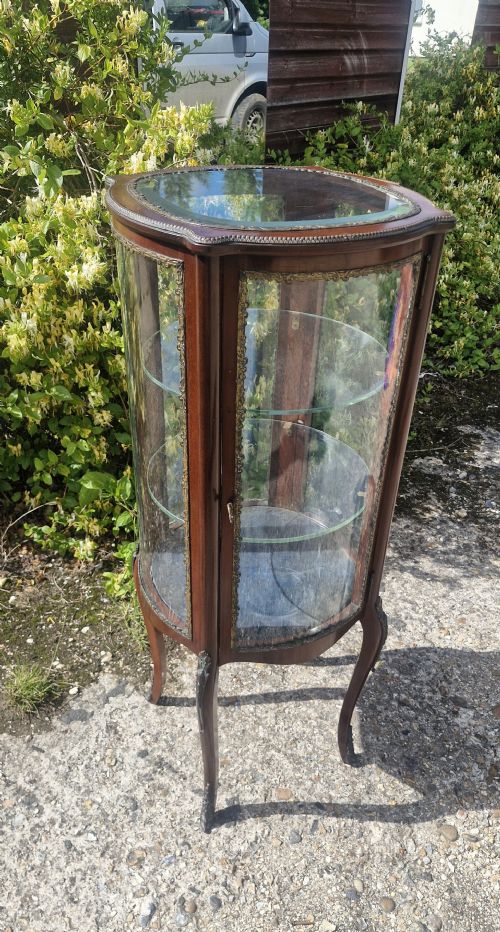


Cabriole Leg Vitrine
A cabriole leg vitrine brings together glass, fine timbers and curved supports to hold small treasures in plain view.
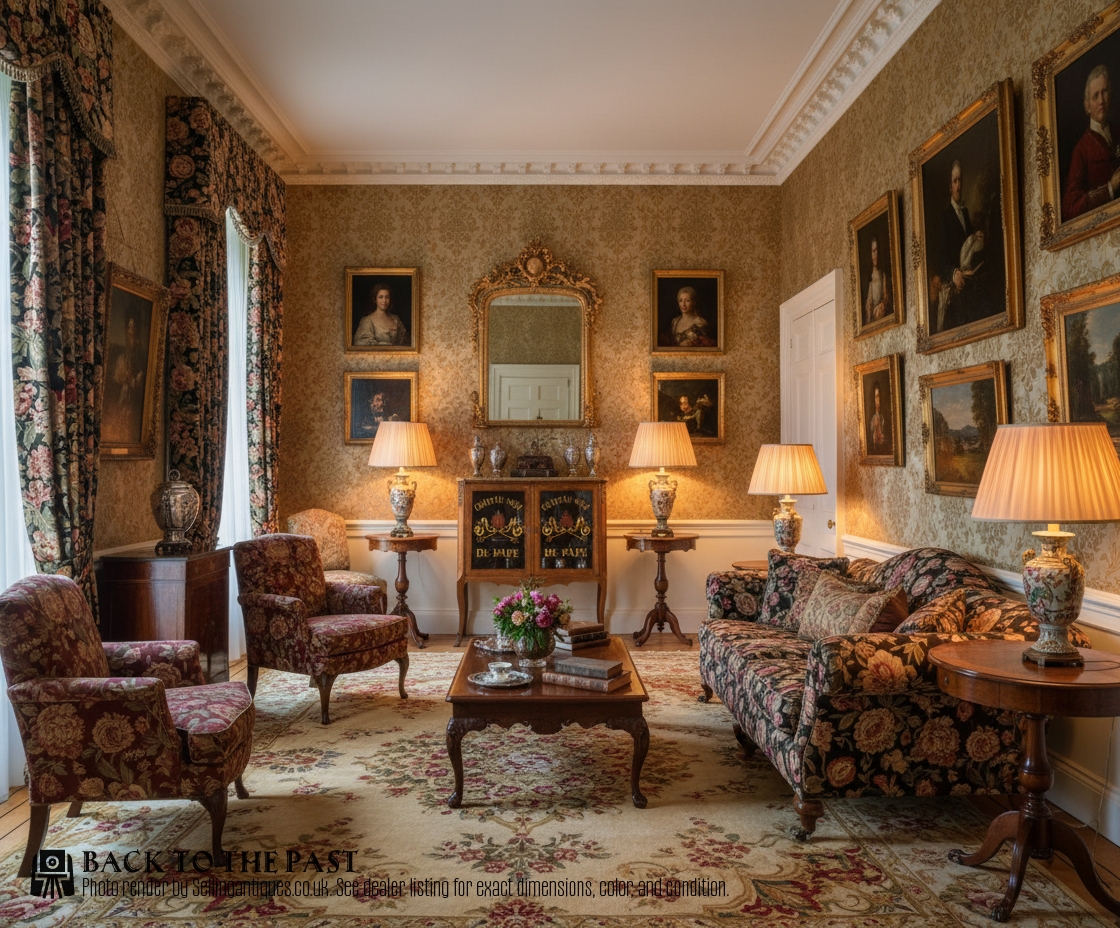
Cabriole Leg Vitrine
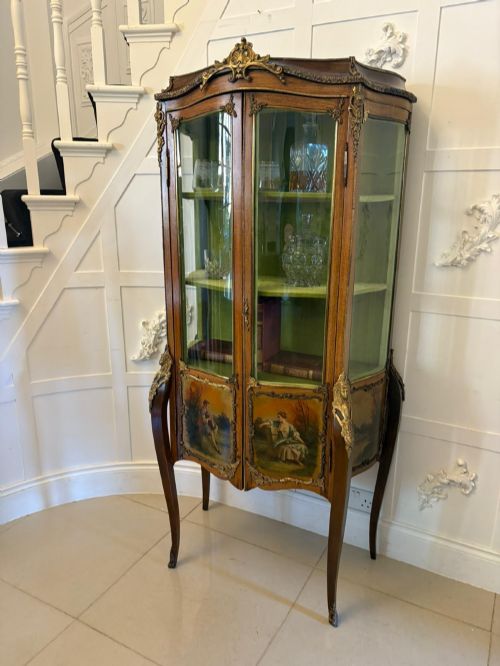
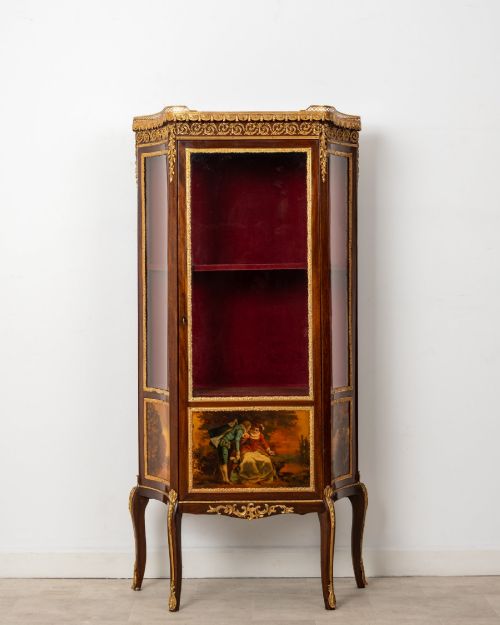
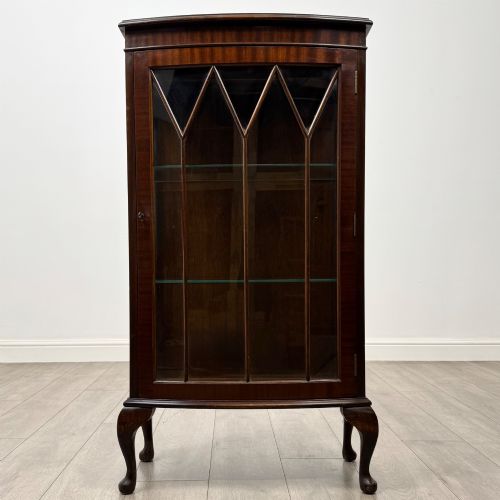
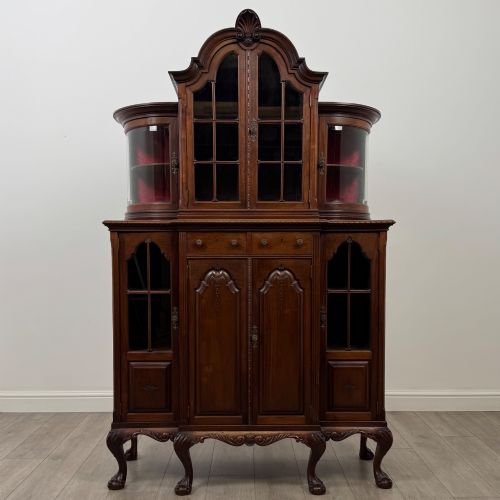
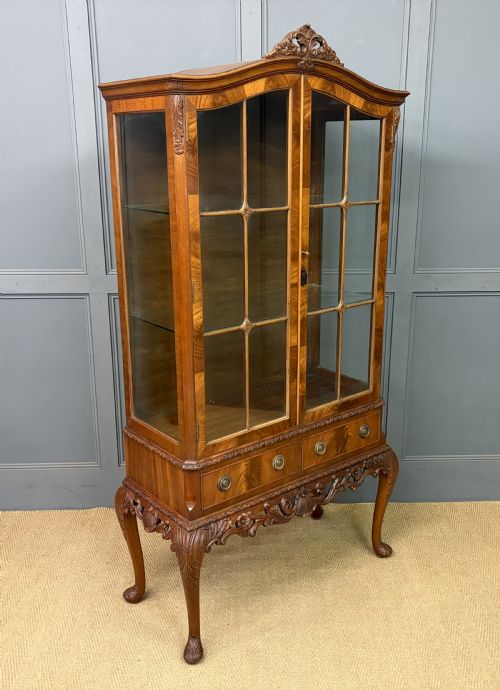
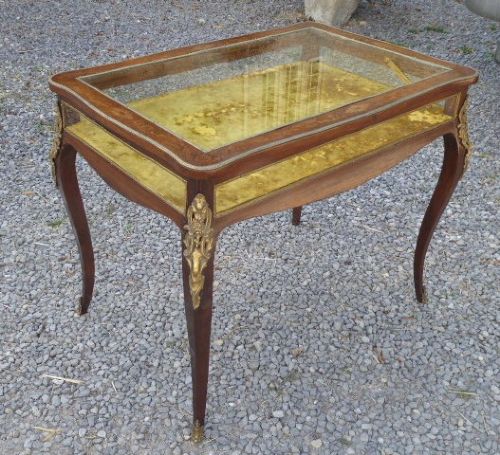
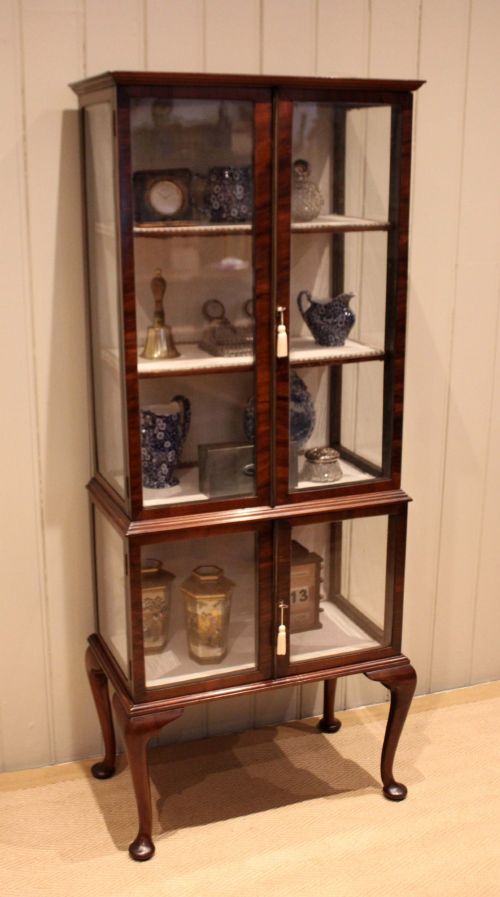
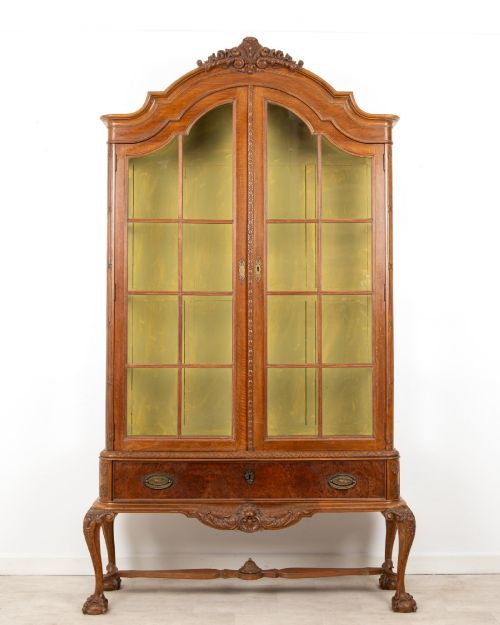
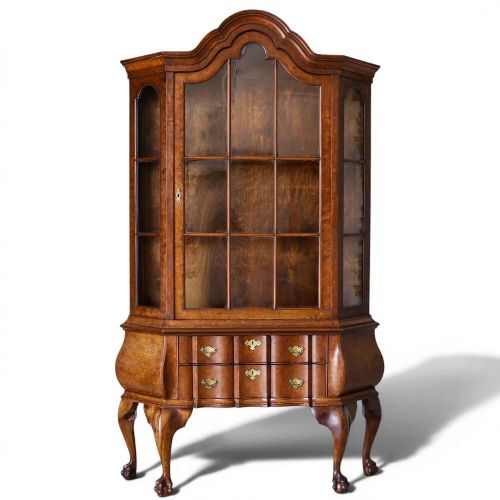
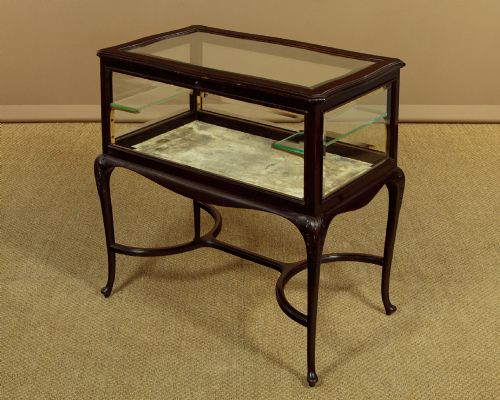
A cabriole leg vitrine is a glazed display cabinet or bijouterie table supported on curved legs that sweep outward at the knee and inward at the ankle. These pieces are designed to showcase porcelain, silver and small curiosities behind glass panels or upon glazed tabletops.
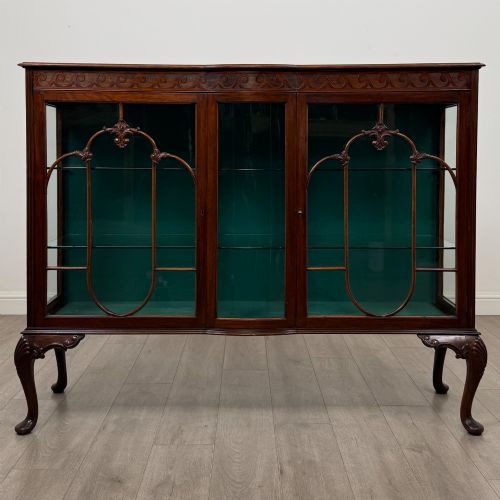
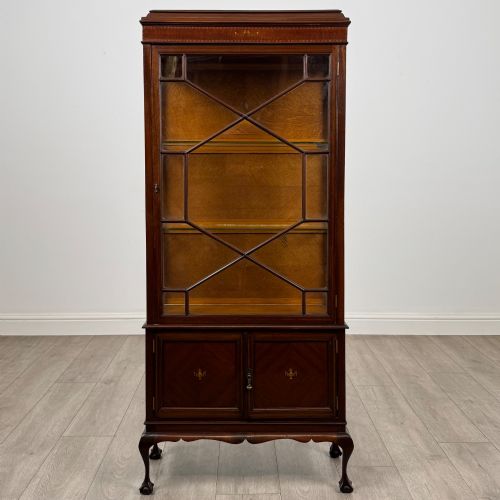
Buyers meet varied forms on this page, spanning tall display cabinets, bookcase hybrids and low flat-topped bijouterie tables. The selection includes pieces from the Victorian era, the Edwardian period and the early twentieth century.
Stylistic influences lean heavily toward French revivals, notably Louis XV and Rococo motifs, alongside English Queen Anne revivals. Mahogany and walnut dominate the timber choices, frequently paired with glazed viewing areas.
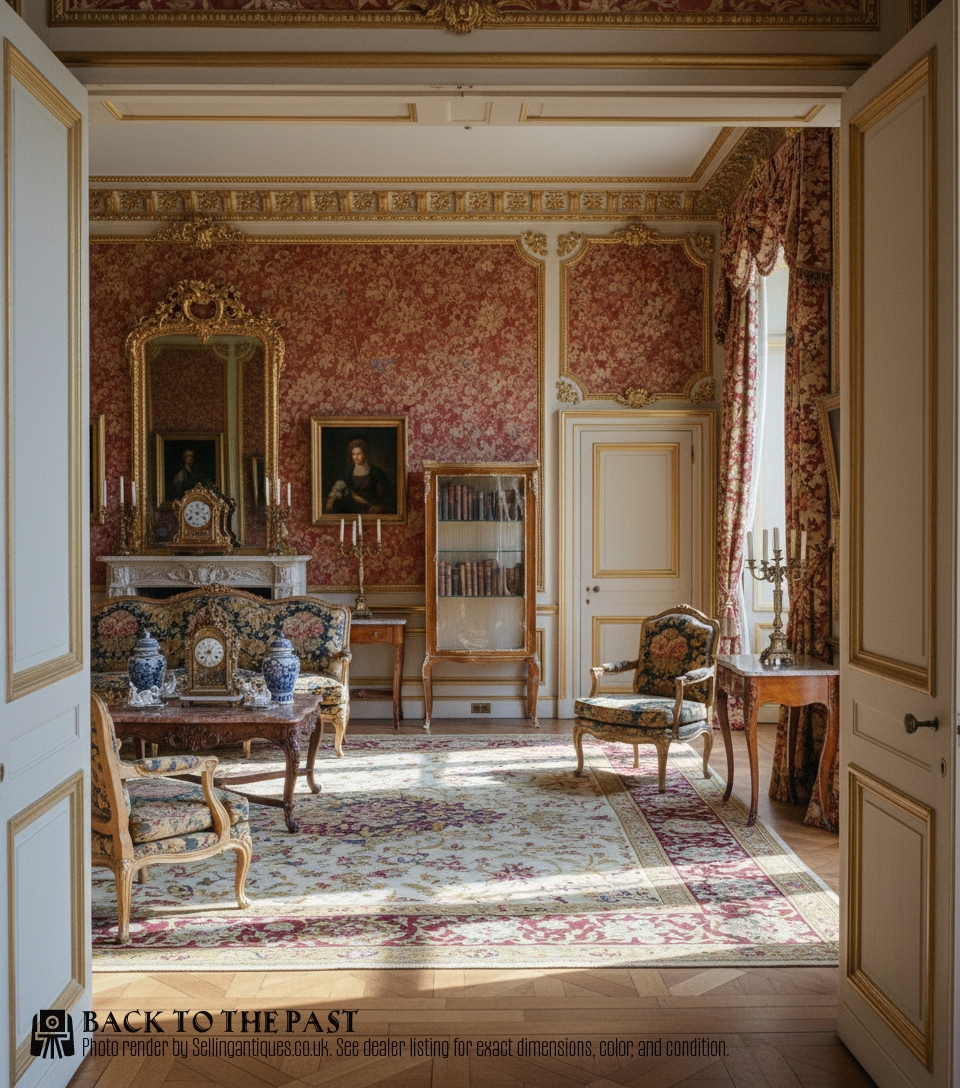
How they were made
Cabinetmakers constructed these frames using solid hardwoods like mahogany and walnut, often applying decorative veneers such as kingwood and burr walnut across the surfaces. Marquetry inlay and applied gilt bronze or ormolu mounts punctuate the timber frames.
Glazing techniques required secure framing to hold large glass panels safely within doors and lids. Brass hinges, velvet linings and fitted fabric interiors completed the fabrication of display surfaces intended to protect delicate items.
Cabriole Leg Vitrine Retail Price Guide 2026
Typical asking prices for cabriole leg vitrine among the pieces listed under this phrase on Sellingantiques today, from the lower quarter to the upper quarter. They describe what is for sale here now, not the wider market.
Listings feature Edwardian and Victorian display cabinets alongside walnut and mahogany bijouterie tables.
What varies in quality
The sophistication of the timber work and the crispness of the carving dictate the standing of a piece. Finer examples display carefully matched veneer grains and hand-chased ormolu mounts rather than mass-produced cast metal.
Proportion and structural integrity separate standard utility pieces from exceptional cabinetmaking. A successful vitrine balances the outward curve of the cabriole legs with the weight of the glazed upper cabinet without appearing ungainly.
Maple & Co.·Paul Sormani·Epstein
The Cabriole Leg Vitrine Glossary
- Cabriole leg
- A furniture leg that bends outward in a convex curve at the knee and inward in a concave curve at the ankle, ending in a pad or foot. This form derives from ancient animal leg motifs and gained prominence during the eighteenth-century revival periods.
- Vitrine
- A glass-fronted cabinet or case used for displaying fine objects and curiosities. The term originates from the French word for glass.
- Bijouterie table
- A low display table with a glazed top and shallow compartment designed for holding jewellery and small ornaments. These tables frequently stand on slender cabriole legs.
- Ormolu
- Gilded bronze ornamentation applied to the mounts, feet and corners of fine furniture. The technique involves coating metal in a mixture of gold and mercury.
- Vernis Martin
- A type of simulated Japanese lacquer developed by the Martin brothers in eighteenth-century France. Cabinetmakers later imitated this polished finish on revival display cabinets.
Cabriole Leg Vitrine: Frequently Asked Questions
What is the difference between a vitrine and a bijouterie table?
A vitrine is an upright display cabinet featuring glazed doors and vertical shelving for porcelain and figures. It stands tall to occupy a prominent position in a room.
By contrast, a bijouterie table is low with a glazed horizontal top designed for viewing small items laid out flat inside a shallow compartment.
How do I care for the wood and glass?
Dust the timber regularly with a dry cloth and avoid chemical polishes that build up residue over time. Keep the cabinet away from direct sunlight to protect interior velvet linings and delicate veneers from fading.
Clean the glass panels with a mild glass cleaner applied to a cloth rather than sprayed directly onto the surface, preventing moisture from seeping into wooden joints.
Where should I place a cabriole leg vitrine?
These cabinets suit drawing rooms, studies or hallways where natural light can illuminate the glass panels. Ensure the floor is level so the curved legs bear the weight evenly without straining the joints.
Position the piece away from radiators and heating vents, as fluctuations in temperature cause old hardwoods and veneers to warp or crack.
How can I tell a Victorian piece from an Edwardian one?
Victorian examples often employ heavier rosewood or dark mahogany timbers with rich ormolu mounts and deep velvet linings. They tend toward ornate proportions and dense carving.
Edwardian pieces generally present a lighter aesthetic in mahogany or inlaid satinwood, reflecting a refined revival style with slender cabriole legs and restrained decoration.