
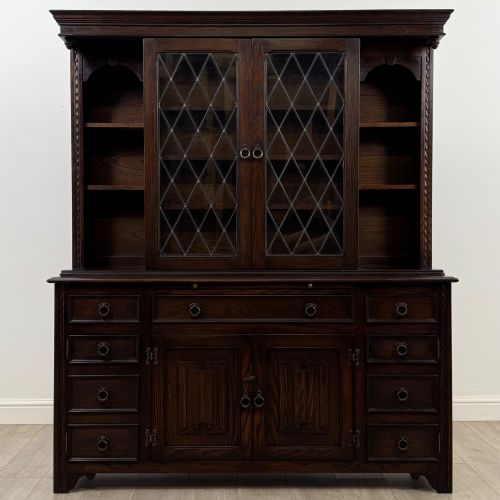
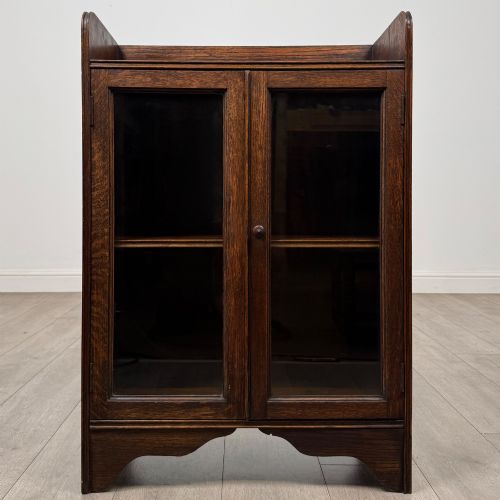
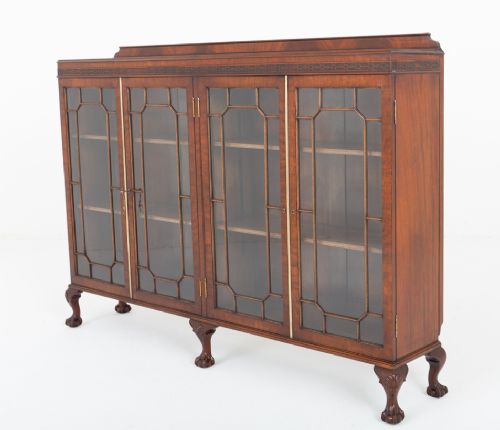
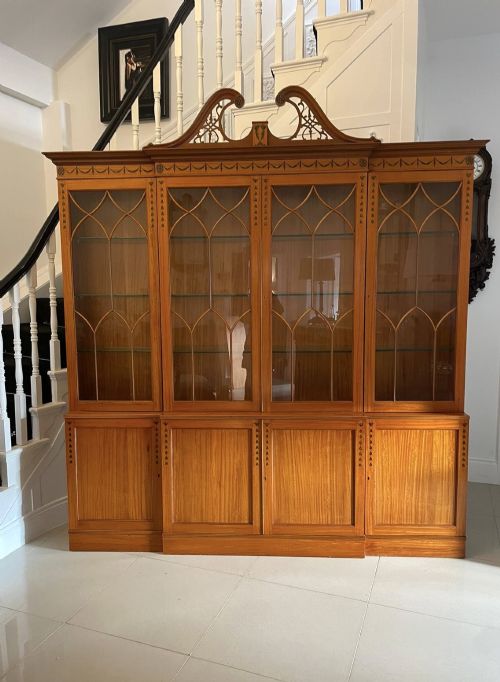
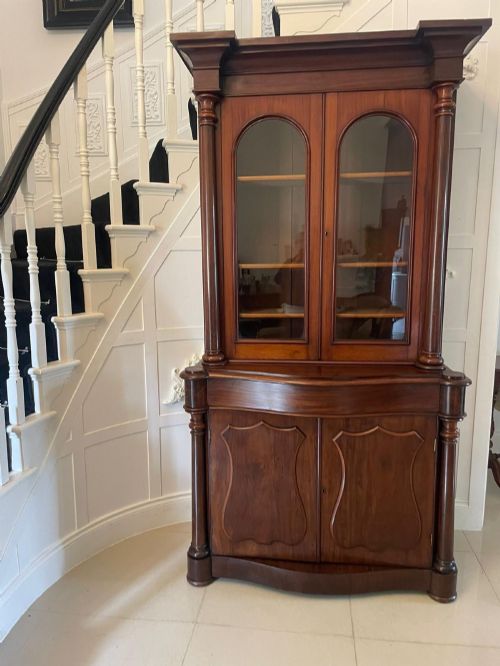
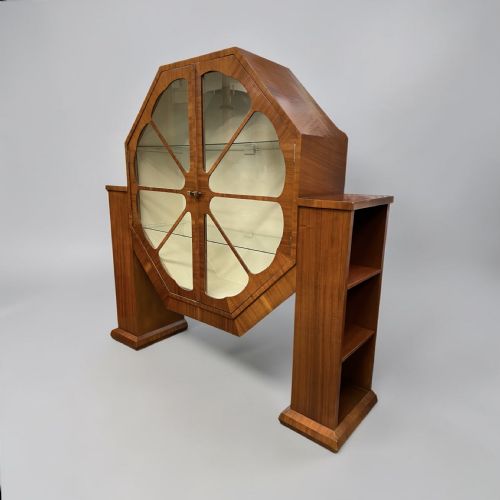
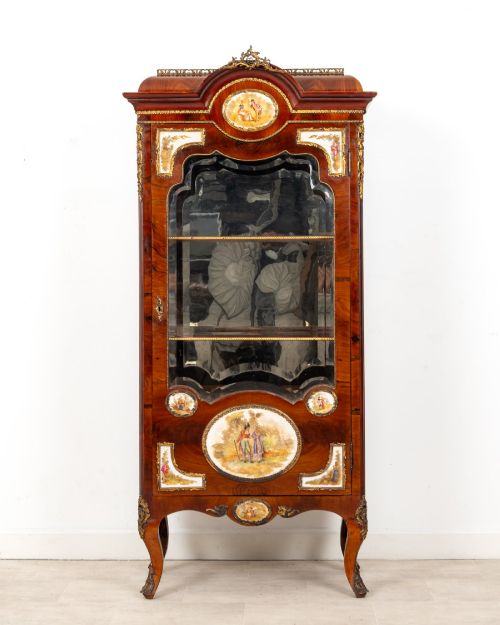
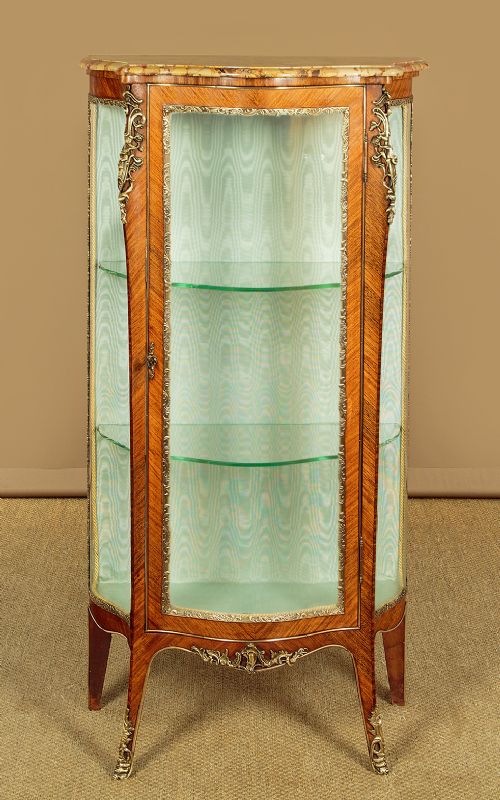
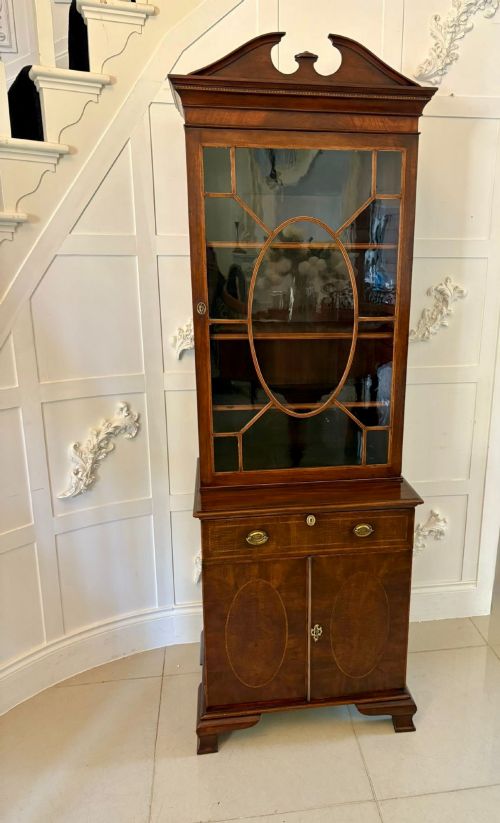
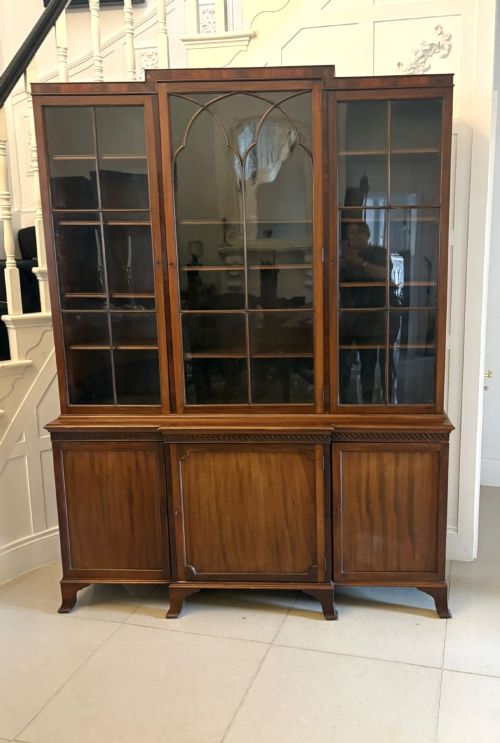
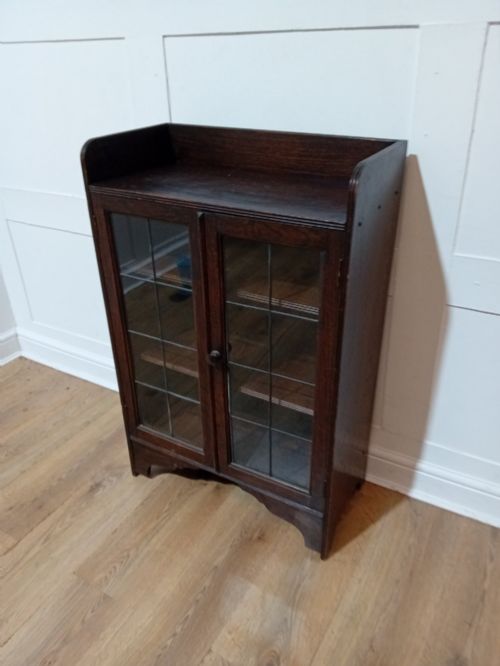
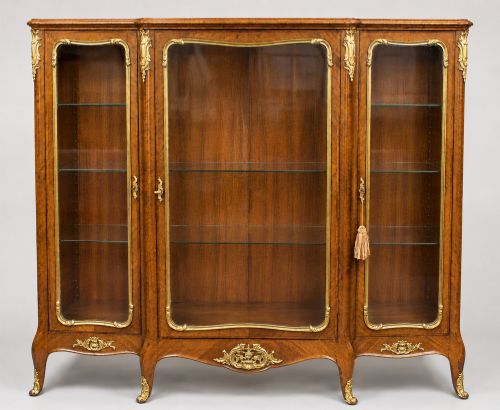
Glass Display Bookcase
A glass display bookcase combines shelves for books with glazed doors for prized objects, bringing together library storage and cabinet display.
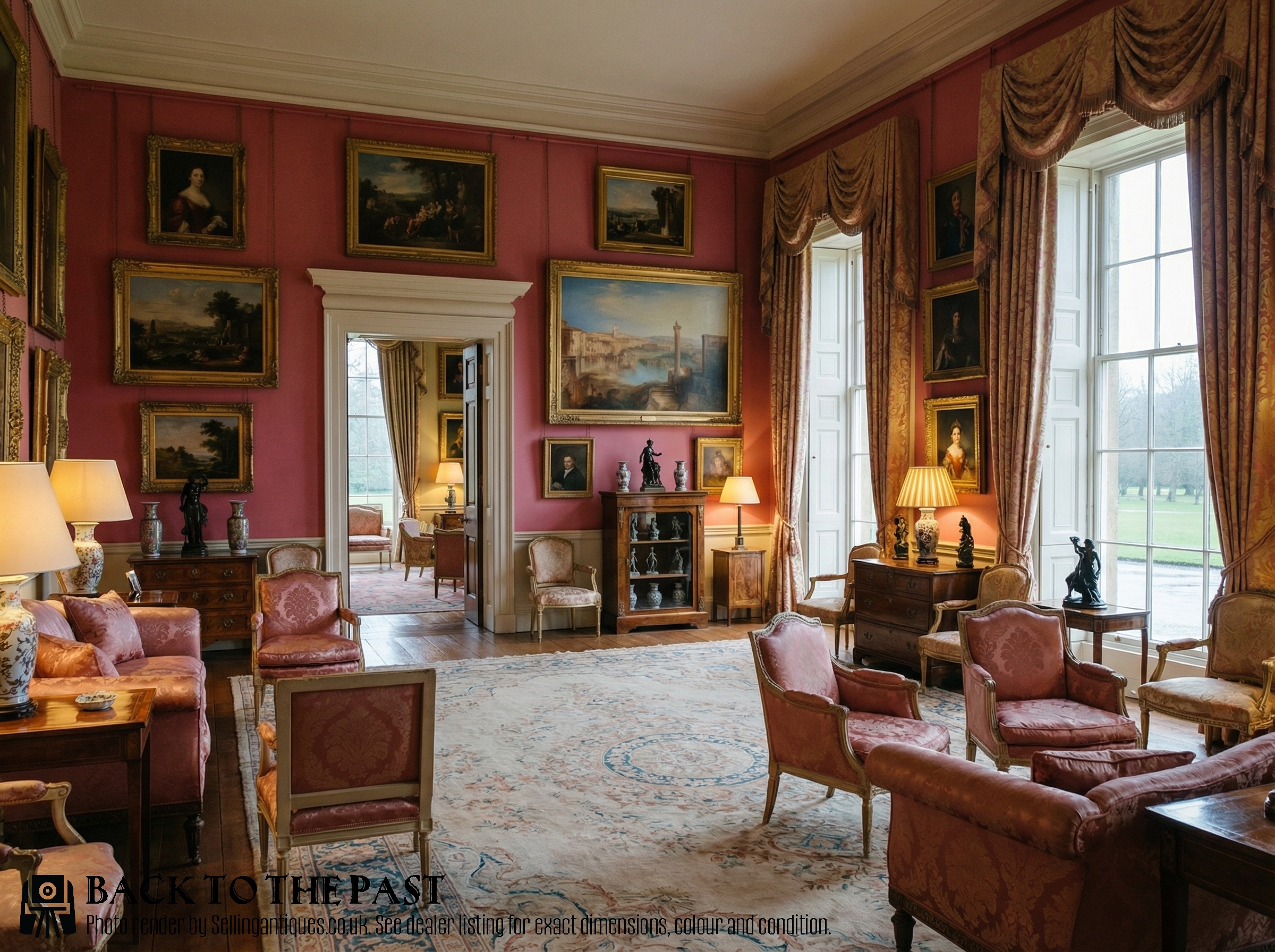
Glass Display Bookcase
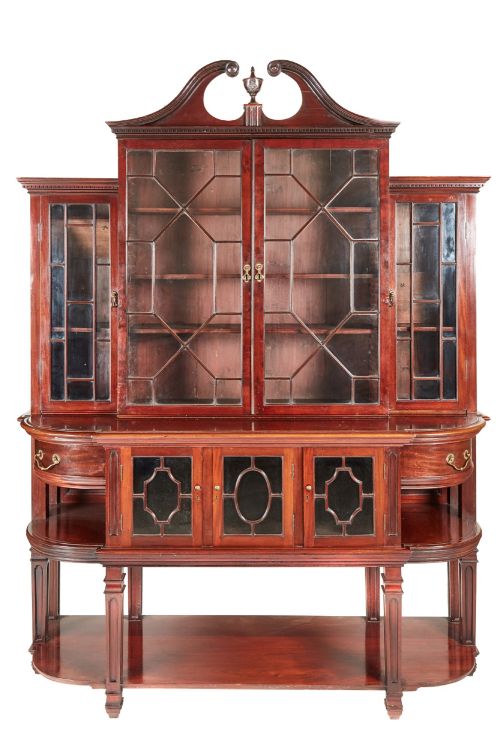
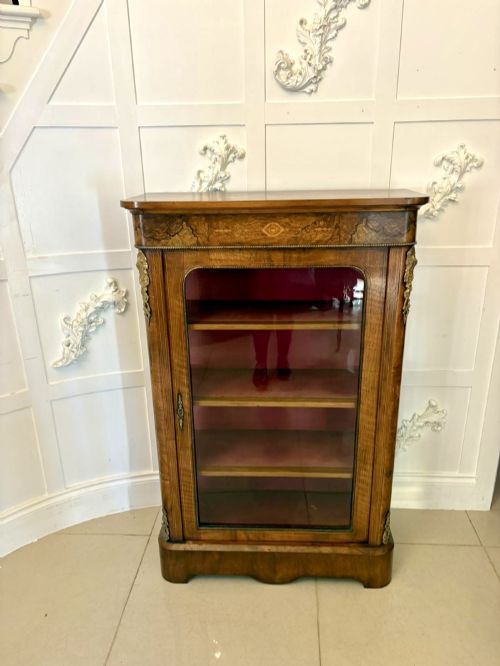
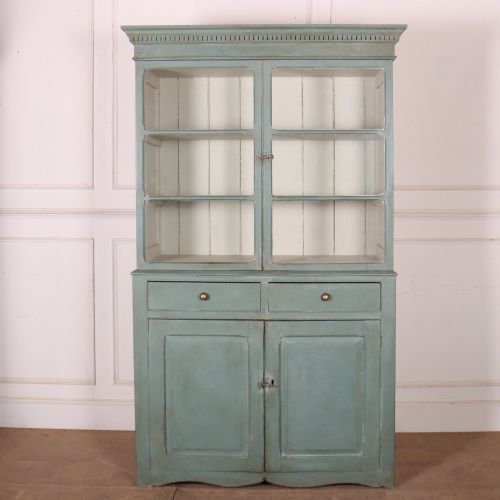
When you search for a glass display bookcase, you encounter hybrid pieces that merge the functions of a bookcase and a display cabinet. These items appear across periods from the nineteenth century into the twentieth century, taking forms such as breakfront bookcases, tall library cabinets, and side cabinets.
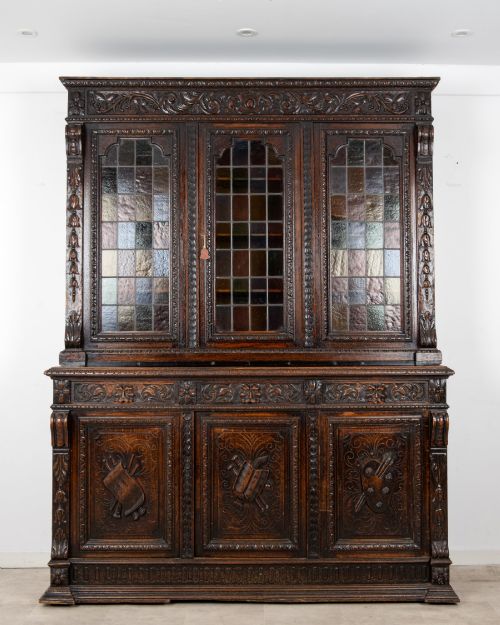
The most common examples on this page date from the Victorian and Edwardian eras, constructed in oak or mahogany. Many feature glazed doors or astragal glazing bars that protect books while keeping them visible.
Makers and workshops of the nineteenth and twentieth centuries also produced pieces in walnut, satinwood, and kingwood, incorporating styles ranging from Sheraton Revival to Art Deco.
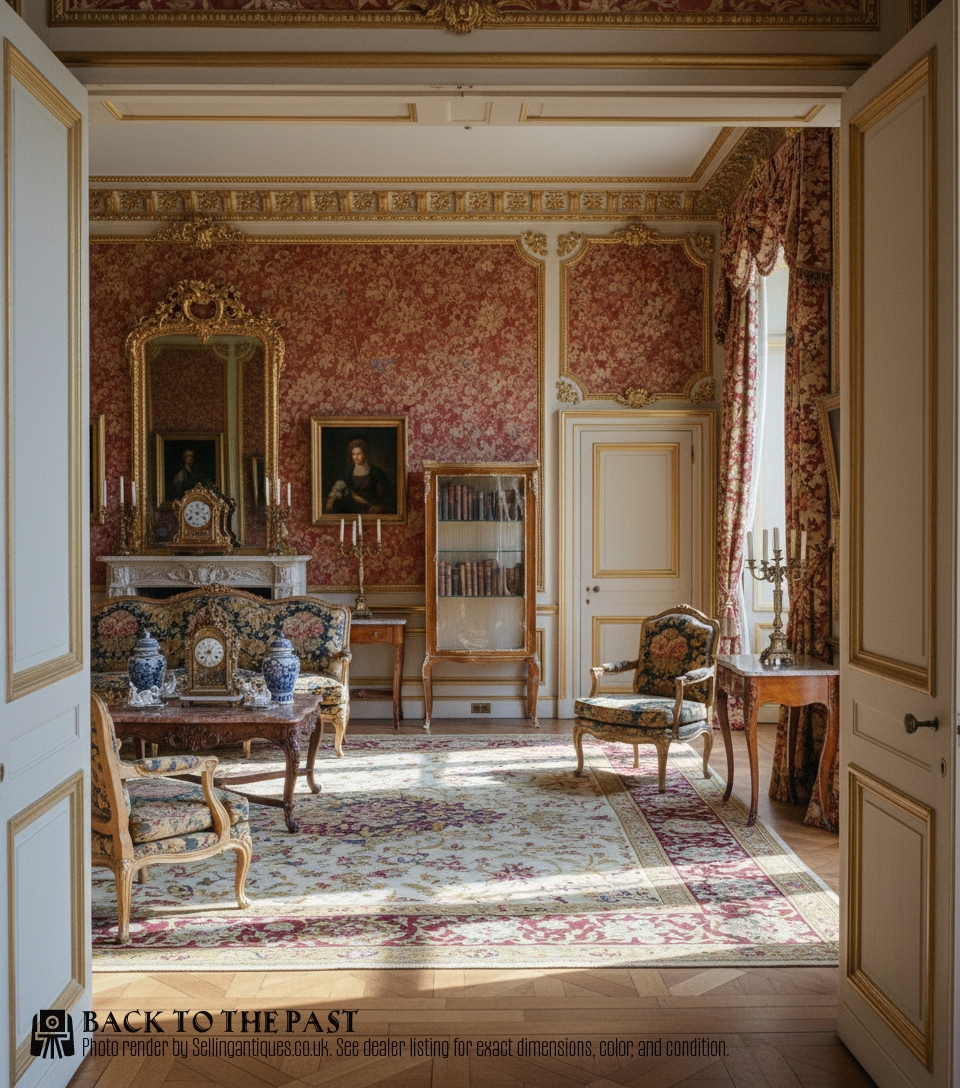
How they were made
Cabinet makers utilised dense timbers including mahogany, oak, and walnut, often applying veneers of burr walnut, satinwood, or kingwood to prominent surfaces. Structural integrity relied on solid joinery, while decorative elements involved marquetry inlay and hand-carved details.
Glazing required lead or timber astragal bars to hold the glass panes securely in doors and side panels. Higher specification items added ormolu mounts, brass hardware, and painted decoration to enrich the timber framework.
Glass Display Bookcase Retail Price Guide 2026
Typical asking prices for glass display bookcase among the pieces listed under this phrase on Sellingantiques today, from the lower quarter to the upper quarter. They describe what is for sale here now, not the wider market.
Materials represented across the inventory include oak, mahogany, walnut, satinwood, kingwood, brass, lead, and fabric.
What varies in quality
The distinction between standard utility furniture and fine cabinetwork lies in the selection of timber and the execution of decorative details. Finer examples display carefully matched veneer grains, intricate marquetry, and original painted decoration rather than plain surfaces.
Construction methods also set pieces apart, seen in the precision of the glazing bars, the weight of the brass or ormolu mounts, and the integration of specialised elements such as leaded glass or fitted drawers.
Jas Shoolbred·Gabriel Viardot·Hampton & Sons·Edwards & Roberts
The Glass Display Bookcase Glossary
- Astragal glazed
- A method of dividing glass panes using narrow wooden mouldings called astragals. This technique creates a grid pattern across the door of a bookcase or cabinet.
- Breakfront
- A piece of furniture having a central section that projects forward from the flanking sections. This configuration adds architectural depth to large bookcases.
- Vitrine
- A glass-fronted cabinet designed specifically for the display of porcelain, curiosities, or decorative objects. They often feature glass on the sides as well as the doors.
- Marquetry
- The art of applying decorative pieces of veneer to a structure to form ornamental designs. Craftsmen use various coloured woods to create pictorial or geometric patterns.
- Ormolu
- Gilt bronze mounts applied to furniture as decorative hardware or feet. This French technique was favoured on high-status cabinets and vitrines.
Glass Display Bookcase: Frequently Asked Questions
What is a glass display bookcase?
A glass display bookcase is a dual-purpose piece of furniture featuring enclosed shelving behind glass doors. It serves to store books while simultaneously exhibiting decorative objects.
These pieces range from tall library bookcases to smaller cabinets with glazed fronts, produced across the nineteenth and twentieth centuries.
How do I date a glass display bookcase?
Dating relies on examining the timber, construction methods, and stylistic influences present in the piece. Victorian examples often utilise heavy mahogany or burr walnut with elaborate carvings.
Edwardian and later twentieth-century pieces frequently show lighter satinwood, simpler oak forms, or geometric Art Deco lines.
What woods were used in these cabinets?
Cabinet makers predominantly used mahogany, oak, and walnut for the primary structure of these bookcases. These durable timbers provided a stable frame for heavy glass doors.
Finer examples incorporate decorative veneers such as satinwood, kingwood, and burr walnut, sometimes enhanced with marquetry inlay.
Where were these bookcases used?
Historically, these combination bookcases stood in libraries, studies, and formal drawing rooms of large houses. They allowed owners to keep reference volumes close at hand while displaying collections.
Today, they function well in living spaces and home offices for organising books and showcasing personal collections safely.