


Burr Walnut Floor Clock
A burr walnut floor clock commands any room with its mesmerising grain and stately height, offering a masterclass in period joinery and precision horology.
Burr Walnut Floor Clock
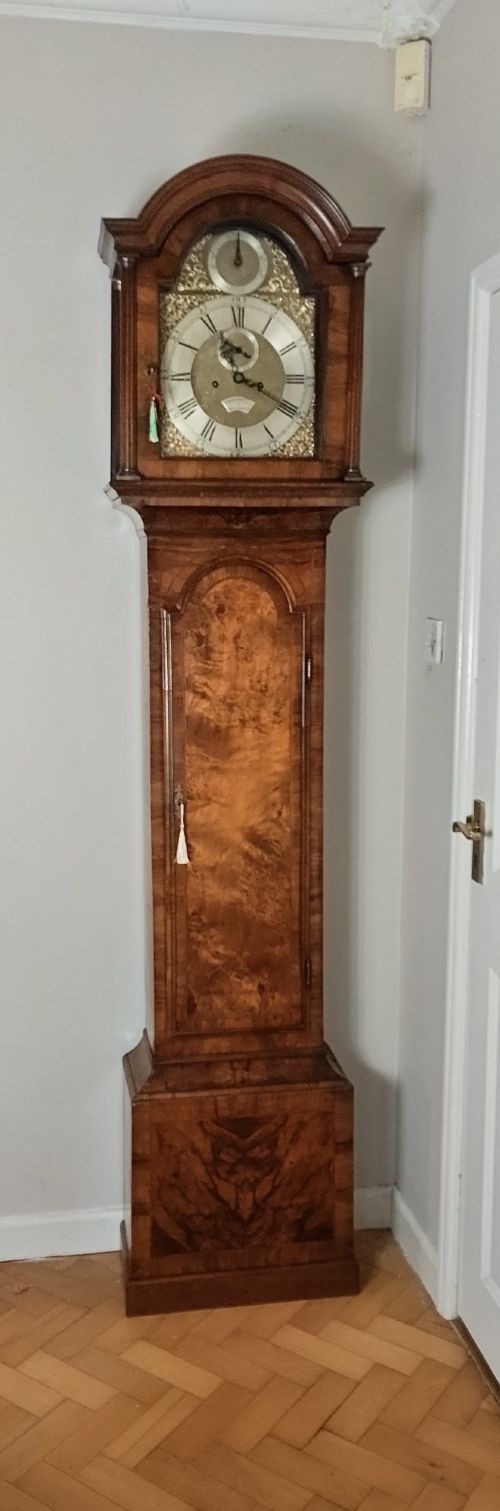
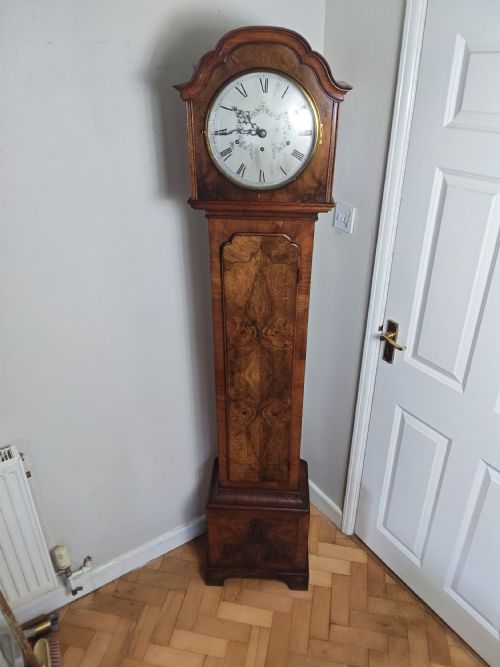
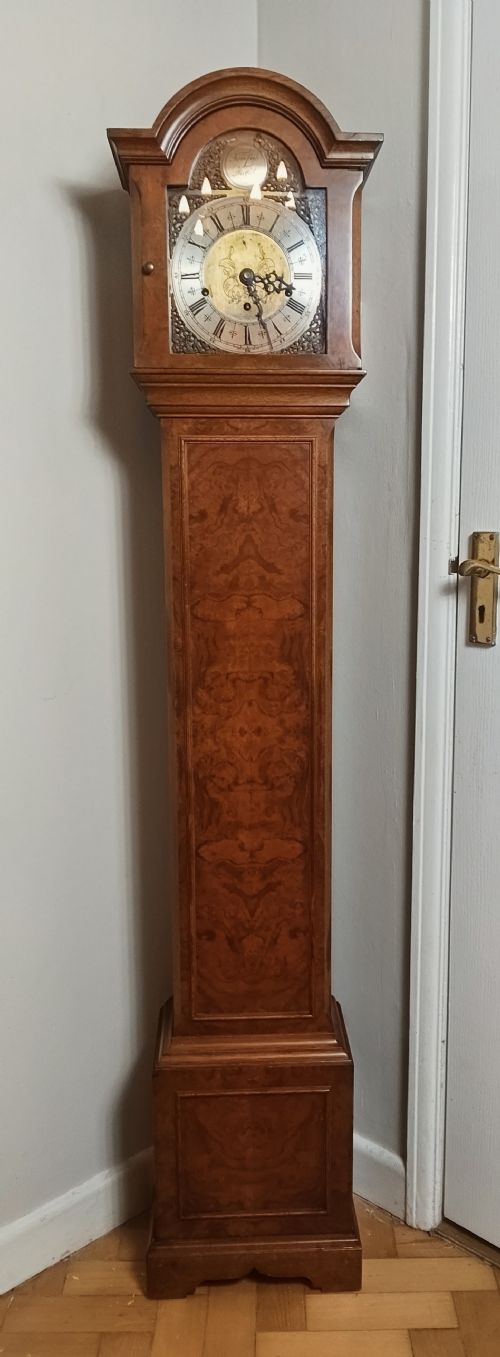
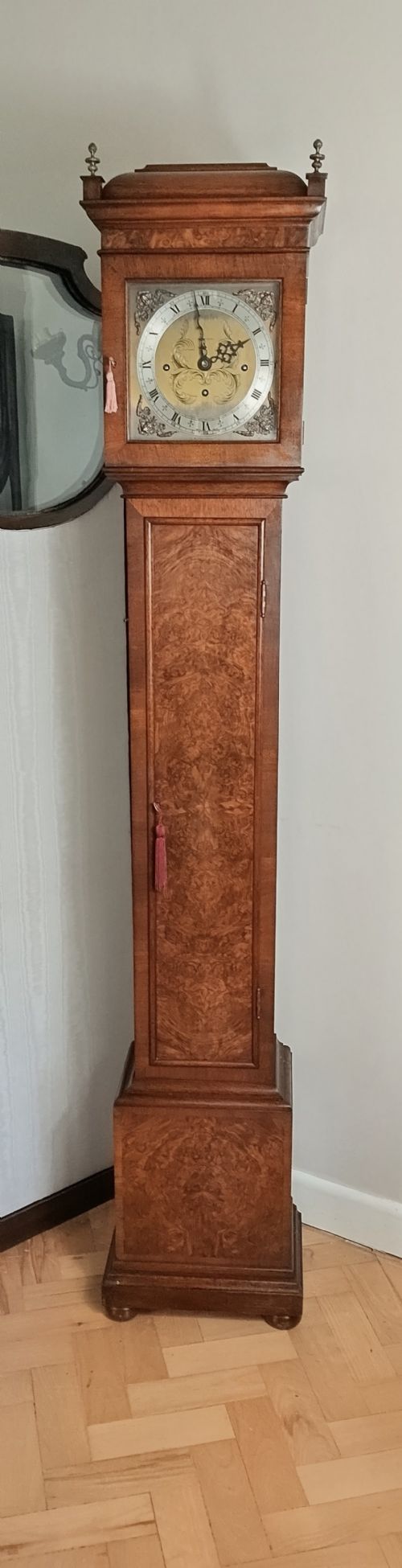
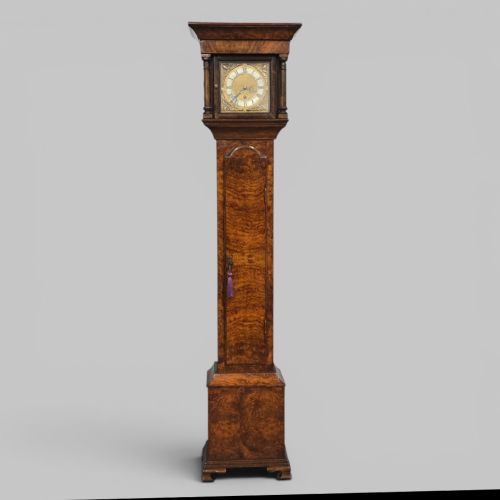
A burr walnut floor clock represents the pinnacle of tallcase timekeeping, combining impressive height with the richly figured timber that collectors covet. You will encounter grander examples from the seventeenth and eighteenth centuries alongside smaller twentieth-century grandmother and granddaughter iterations.
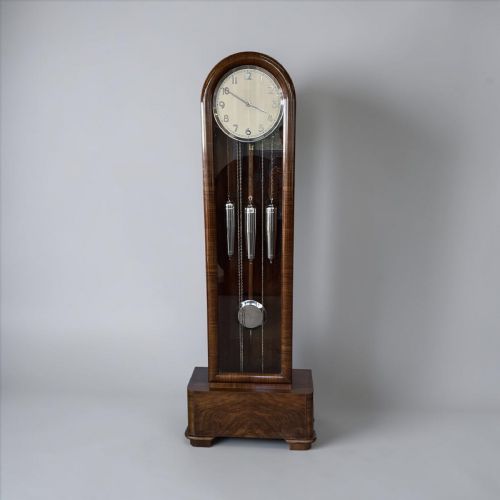
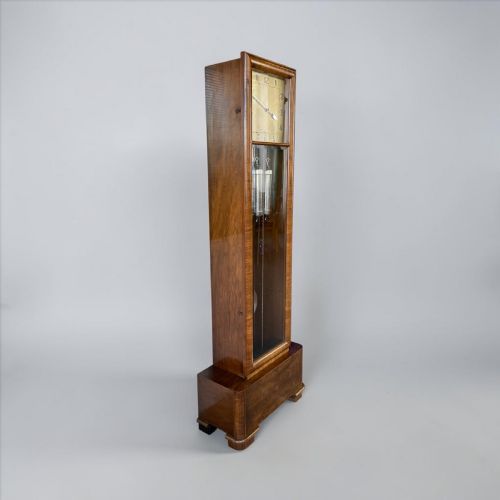
The selections span from early Georgian masterpieces to Art Deco interpretations and later twentieth-century pieces by makers such as Elliott. Forms range from full-sized longcase clocks to miniature and quarter-chiming variations housed in walnut and burr walnut veneers.
Materials and Construction
Cabinetmakers utilised highly figured burr walnut veneers applied over solid carcases of oak or pine, creating intricate repeating patterns across the trunk and hood. Brass dials, often featuring silvered chapter rings and cast spandrels, house complex mechanical movements driven by weights.
Makers integrated glass panels within the trunk door and hood to protect the dial whilst revealing the swinging pendulum and weights. Secondary timbers like oak provide structural stability beneath the decorative walnut exteriors.
Several clocks arrive complete with their original brass winding keys, waiting patiently to be given their weekly turn.
Judging Quality
Quality rests in the rhythm of the grain matching across the door panels and the depth of the quarter-veneering on the trunk. Superior examples display crisp brass dial work and original movement components that demonstrate the maker's hand.
The integration of the hood and the proportion of the waist dictate the visual balance of the piece. Master clockmakers of the seventeenth and eighteenth centuries achieved a harmony of form that lesser revival pieces occasionally miss.
Thomas Vernon·Henry Massy·Edin Burgis·Langley Bradley·Edward East·Edward Stanton·Joseph Saer·Joseph Windmills·Bentley London·Joseph Oxley
The Burr Walnut Floor Clock Glossary
- Burr walnut
- A veneer sliced from the knotty growths of walnut trees, prized for its swirling, highly decorative grain patterns. It forms the primary decorative surface on the finest clock cases.
- Longcase clock
- A tall pendulum clock enclosed in a wooden case, commonly known as a grandfather clock. These floor-standing timepieces measure well over six feet in height.
- Grandmother clock
- A slender, shorter version of the traditional longcase clock, typically standing between five and six feet tall. They gained popularity during the twentieth century.
- Quarter chiming
- A movement mechanism that strikes the bells every fifteen minutes to announce the passing time. Such clocks often feature multiple weights or springs.
- Spandrel
- The decorative corner ornamentation flanking the dial face on tallcase clocks. These cast brass motifs evolved in style across different decades and reigns.
Burr Walnut Floor Clock: Frequently Asked Questions
How do I wind a floor clock?
Winding requires raising the weights gently using the crank key provided with the movement, taking care not to over-wind the striking or time trains.
Consult the specific instructions for your clock's weight arrangement to ensure the mechanism remains balanced and accurate.
Where should I place a burr walnut clock?
Position your clock on an interior wall away from direct sunlight, heating vents, and damp areas to protect the delicate walnut veneer and internal wood movement components.
Ensure the floor beneath the clock is level so the pendulum swings evenly and the case stands secure without leaning.
How do I tell an 18th-century clock from a revival piece?
Examine the construction of the interior carcase timbers, the wear patterns around the keyholes, and the hand-engraving style on the brass dial face.
Early seventeenth and eighteenth-century examples exhibit traditional joinery techniques and patination that twentieth-century revival models cannot replicate.
What is the difference between a grandfather and grandmother clock?
Grandfather clocks are the standard full-size longcase clocks standing over six feet tall, designed with substantial weights and tall proportions.
Grandmother clocks are scaled-down versions produced predominantly in the twentieth century, fitting lower ceiling heights whilst retaining full mechanical chiming functions.