





Burgundy Tribal Textile
A burgundy tribal textile brings rich Central Asian history into a room through deeply saturated reds and geometric nomad weaving.
Burgundy Tribal Textile
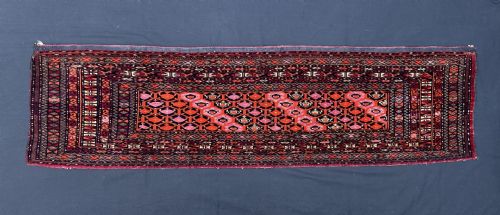
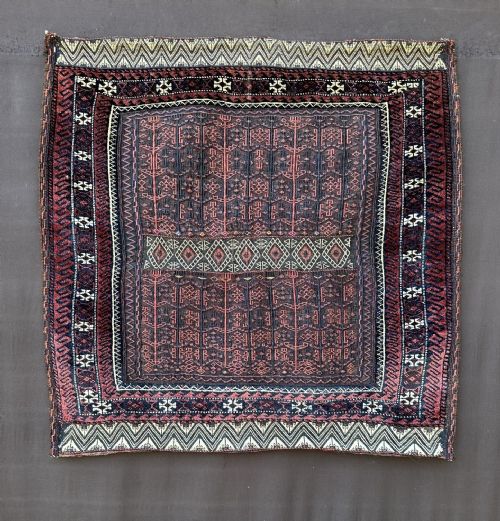
A burgundy tribal textile typically takes the form of utilitarian bags, tent trappings, and wall hangings produced by nomadic groups across Central Asia. Buyers searching for a burgundy tribal textile will frequently encounter bags, torbas, and chuvals originating from Turkmen, Yomut, and Tekke tribes dating from the mid-nineteenth century to the early twentieth century.
The selections span from smaller Yomut azmalyks and Timuri bread sofrehs to larger Uzbek suzanis and tent bands. These pieces reflect specific regional traditions in Turkmenistan, Afghanistan, and surrounding territories, captured through distinct tribal motifs and format types.
Dating across the inventory generally clusters around the latter half of the nineteenth century, particularly the 1850s to 1880s, alongside examples from the turn of the twentieth century. Forms range from complete torba faces with plain weave backs to larger rugs and wall hangings.
Materials and construction
Weavers relied principally on wool and hand-spun wool, occasionally incorporating cotton and silk to create durable, textured surfaces. These foundational materials supported intricate piled or flat-woven structures designed to withstand the rigours of nomadic life.
Natural dyes provided the deep red and burgundy colourways characteristic of these rugs and textiles, interacting with hand-spun fibres to absorb light unevenly. Technical precision is evident in fine weaves and structured tribal layouts such as gul designs, curled leaves, and ikat patterns.
Burgundy Tribal Textile Retail Price Guide 2026
Typical asking prices for burgundy tribal textile among the pieces listed under this phrase on Sellingantiques today, from the lower quarter to the upper quarter. They describe what is for sale here now, not the wider market.
Listings feature pieces spanning from 1850 to 1920, utilising wool, cotton, silk, and natural dyes across Turkmen, Uzbek, and Afghan traditions.
Assessing quality
Quality rests upon the fineness of the weave and the clarity of the tribal motifs, such as guls, turreted elements, and curled leaf patterns. Denser knotting and precise execution distinguish superior weaving from coarser commercial production.
The depth and variation of natural dyes influence visual impact, alongside the completeness of original elements like plain weave backs on torbas. Condition and structural integrity further separate standard examples from finer tribal works.
The Burgundy Tribal Textile Glossary
- Torba
- A small storage bag produced by nomadic tribes for domestic use inside a tent. These pieces often feature prominent guls and were traditionally used for household storage.
- Chuval
- A large tent bag utilised by Turkmen groups for storing bedding and household belongings. They frequently display multiple major guls across the face.
- Gul
- A repeating medallion motif used extensively in Turkmen and Central Asian carpet design. Each tribal group typically utilised distinct, recognisable gul patterns.
- Azmalyk
- A camel trapping produced for wedding processions among Yomut and other Turkmen tribes. These pentagonal hangings are richly decorated with characteristic tribal symbols.
- Suzani
- An embroidered textile originating from Uzbekistan, worked in silk or cotton on a lighter ground. They served as decorative wall hangings or dowry items.
Burgundy Tribal Textile: Frequently Asked Questions
What is a tribal torba used for?
A torba served as a practical storage pouch inside a nomadic tent, holding domestic items or personal possessions.
Over time, these pieces functioned both as utility items and as displays of tribal identity and weaving skill.
How do I care for a textile wall hanging?
Protect antique textiles from direct sunlight to preserve natural dyes, and mount them carefully to distribute weight evenly.
Gentle vacuuming with a mesh screen prevents dust accumulation without stressing fragile wool or silk fibres.
How do I identify a Yomut weaving?
Yomut weavings often feature distinct hook motifs, dark red or burgundy palettes, and specific diamond-shaped gul formations.
Comparing structural layouts and border patterns helps separate Yomut pieces from Tekke or Ersari work.