
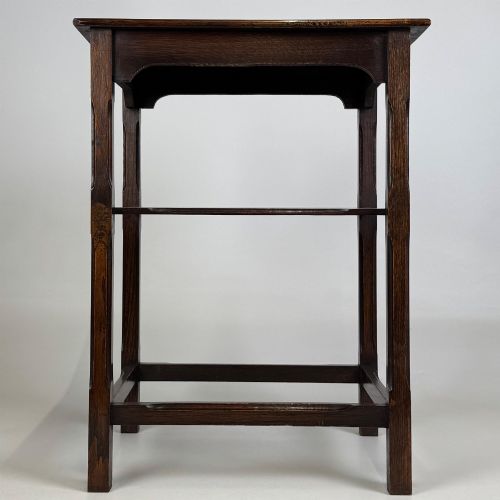
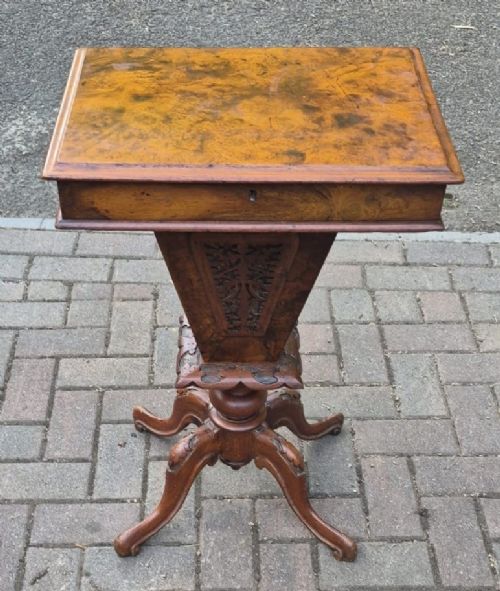

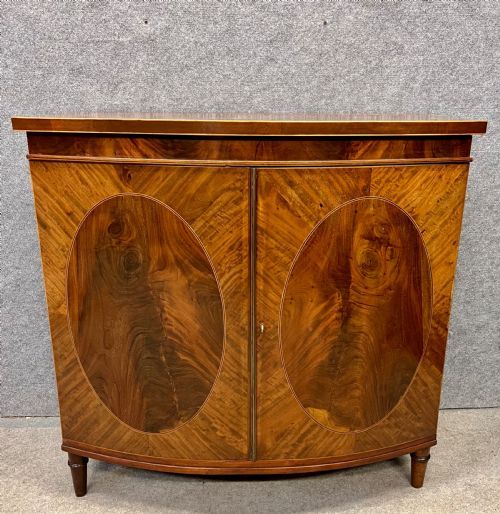
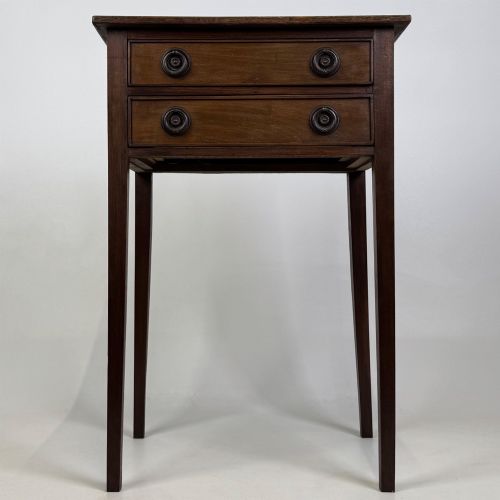
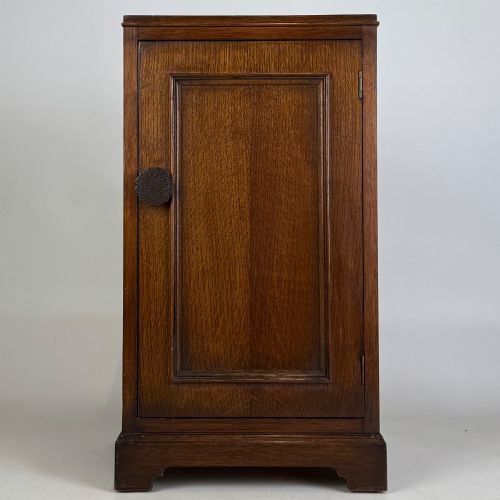
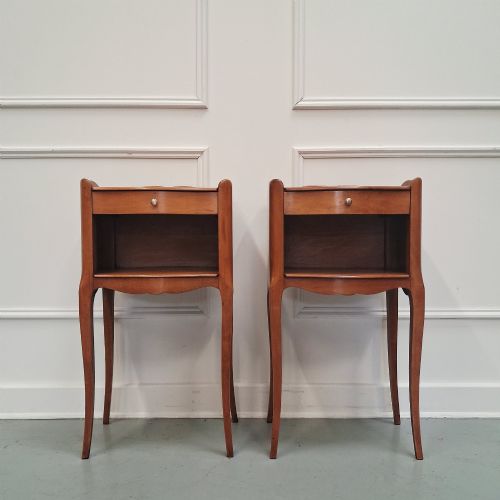
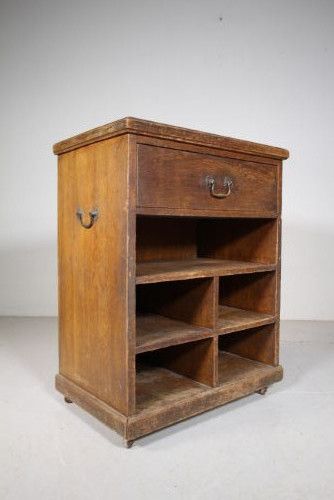
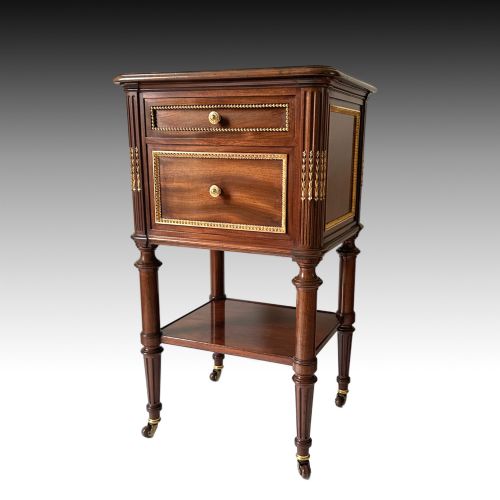
Brown Wooden Table Cabinet
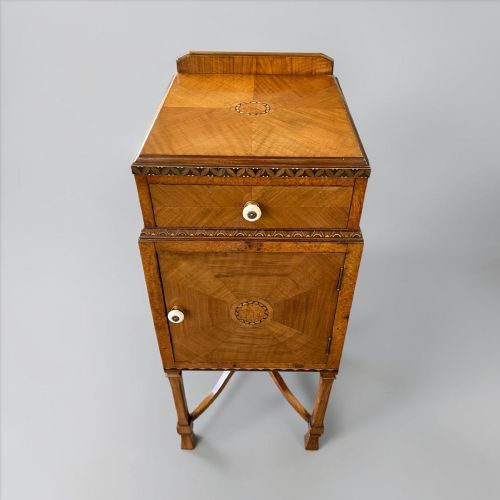
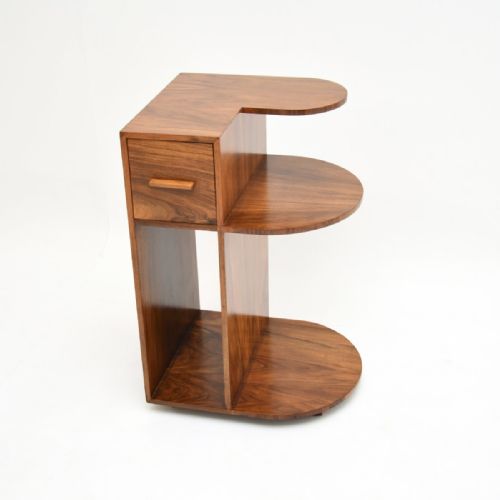
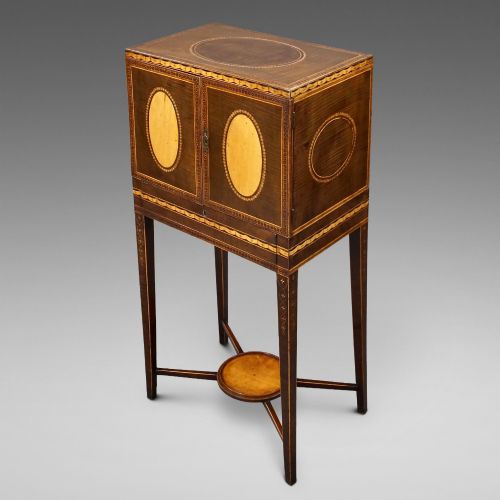
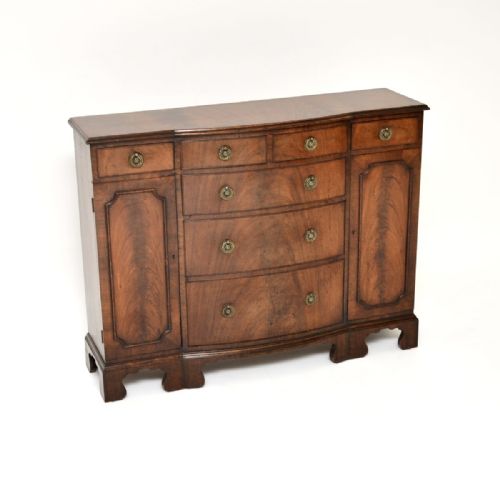
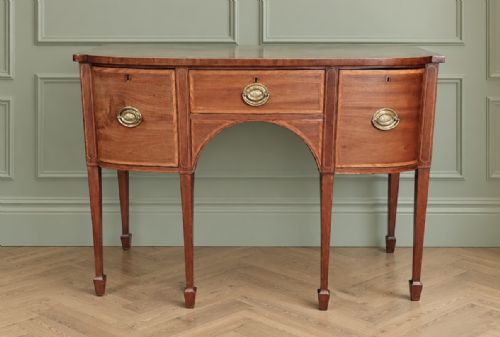
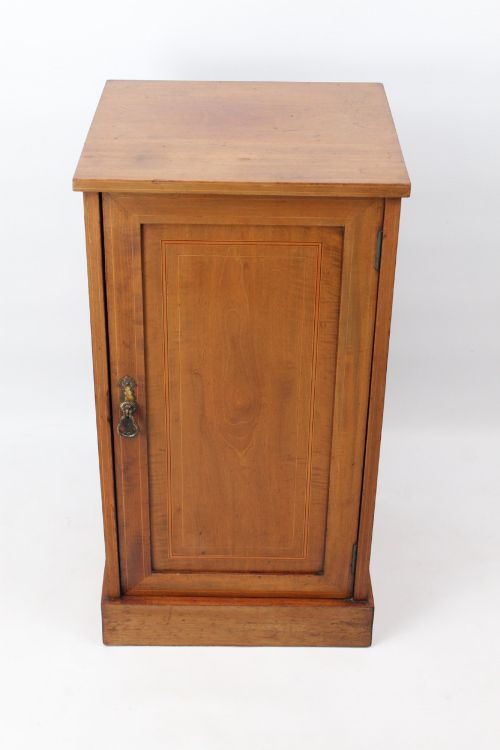
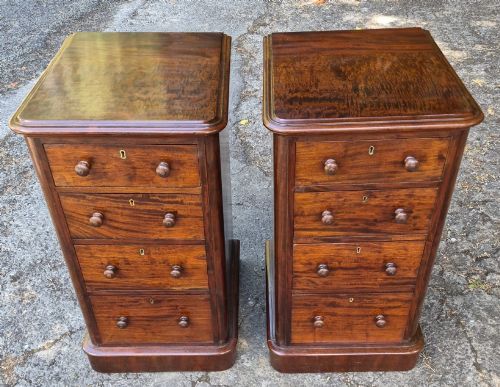
A brown wooden table cabinet brings period timber and practical storage into a room, serving as a compact surface and enclosed unit combined.
Brown Wooden Table Cabinet
When you search for a brown wooden table cabinet, you encounter a variety of forms including bedside chests, pot cupboards, and compact side units designed for domestic utility. These pieces bridge the gap between open table surfaces and hidden storage, offering small doors or drawers set beneath a flat top.
The selections span multiple centuries, with Victorian and Edwardian examples appearing frequently alongside earlier Georgian forms and later Art Deco designs. Oak and mahogany dominate the timber choices, shaping functional items that served bedrooms, living spaces, and dressing rooms in past interiors.
Materials and construction methods
Cabinet makers relied primarily on solid mahogany, oak, and walnut, often applying burr walnut, harewood, or satinwood veneers to create contrasting surfaces on door panels and drawer fronts. Boxwood stringing and brass handles or mounts complete the construction of finer examples.
Joinery techniques reflect the period of origin, utilising dovetailed drawer construction and turned legs alongside framed panels for cupboards. Pine and cherrywood also appear in regional or vernacular pieces, showing straightforward carpentry geared towards daily use.
A few clever close stools disguised as small bedside chests prove that Georgian cabinet makers enjoyed a quiet joke at the user's expense.
Evaluating the standard of execution
Quality reveals itself in the selection of timber figures, such as highly grained walnut or richly patinated mahogany, paired with restrained inlay work like boxwood lines. Finer items exhibit precise matching of veneers across drawer banks and cabinet doors.
Structural integrity and original hardware distinguish superior examples from standard utility items. Smoothly operating drawers and well-fitted cupboard doors indicate careful workshop execution during the initial period of manufacture.
The Brown Wooden Table Cabinet Glossary
- Pot cupboard
- A small enclosed bedside cabinet historically designed to house a chamber pot. These pieces usually feature a single door above or beside a small shelf.
- Inlay
- A decorative technique where contrasting woods such as boxwood or satinwood are inserted into recesses within the primary timber surface. This creates geometric patterns or borders.
- Breakfront
- A furniture facade where the central section projects forward from the flanking wings. This architectural arrangement adds depth to sideboards and larger cabinets.
- Ormolu
- Gilt bronze mounts applied to furniture, particularly prevalent on French pieces from the nineteenth century. The metalwork provides metallic contrast against dark mahogany or walnut.
- Dovetail
- A traditional joint formed by interlocking wedge-shaped fingers, securing drawer corners together with high tensile strength. Its presence indicates skilled cabinet making.
Brown Wooden Table Cabinet: Frequently Asked Questions
What is a brown wooden table cabinet used for?
These compact units function as bedside storage, lamp tables, or small sideboards depending on their original purpose and proportions. They hold small items behind closed doors while providing a surface for lighting or ornaments.
Their versatile scale allows them to fit easily beside seating or beds in modern interiors without dominating the floor space.
How do I identify an Edwardian cabinet?
Edwardian pieces often feature lighter mahogany timbers decorated with delicate boxwood inlay or satinwood banding. The forms tend to look bright and refined, reflecting early twentieth-century tastes.
They frequently appear as bedside cabinets or small side tables with tapered legs and subtle decorative motifs.
Are these cabinets made from solid wood?
Many pieces utilise solid oak, mahogany, or walnut throughout their primary framework and drawer construction. Finer decorative surfaces often employ veneers over a stable secondary timber base to display rich wood grains.
Examining the edges and interior surfaces helps reveal the underlying construction methods used by the maker.
How do I care for a antique wooden cabinet?
Maintain the finish by keeping the timber away from direct heat sources and strong sunlight, which can dry out old polish. Occasional application of appropriate wax preserves the sheen and nourishes the wood.
Avoid using modern liquid polishes that contain silicone, as they build up a residue over time and dull the natural patina.