
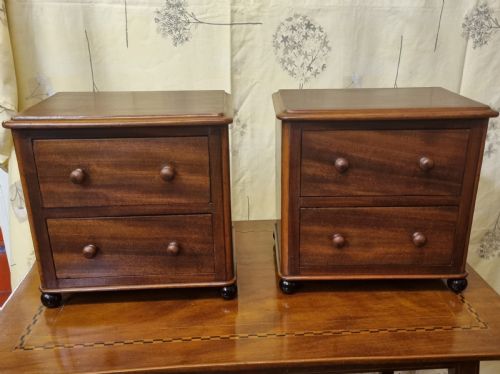
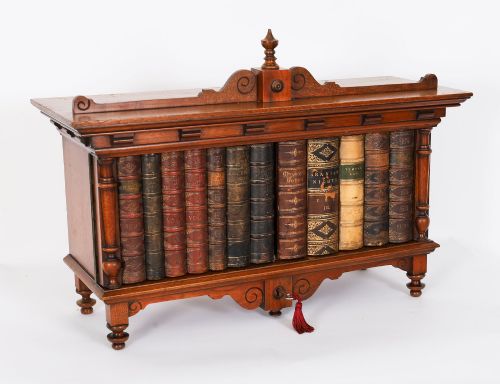
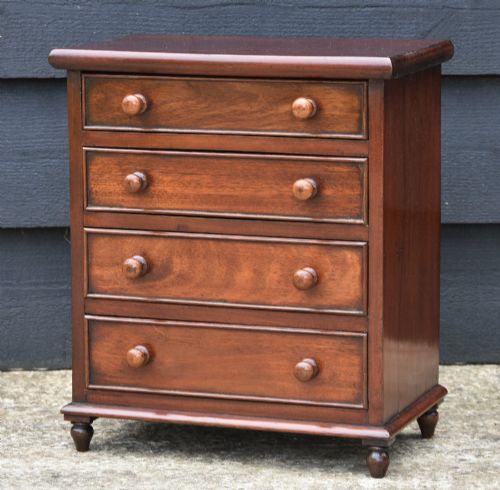
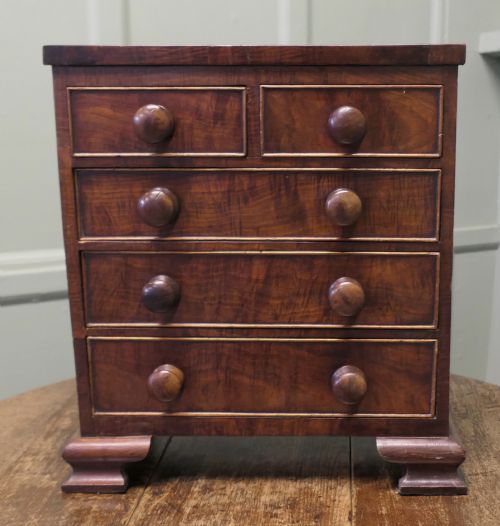
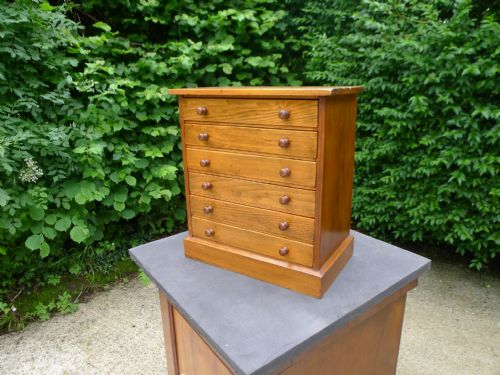
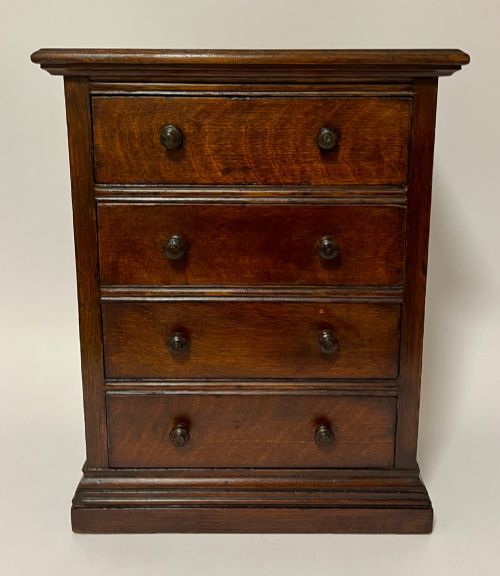
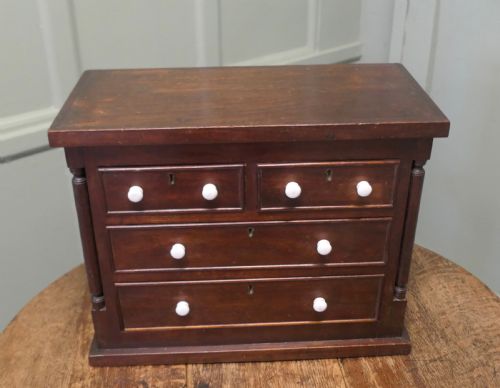
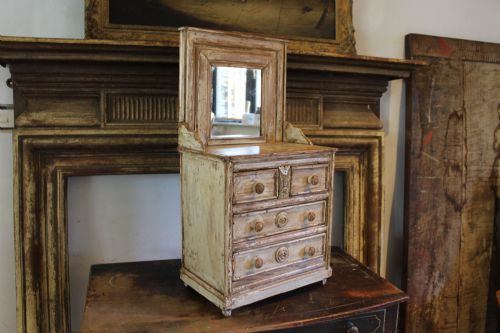
Victorian Miniature Cabinet
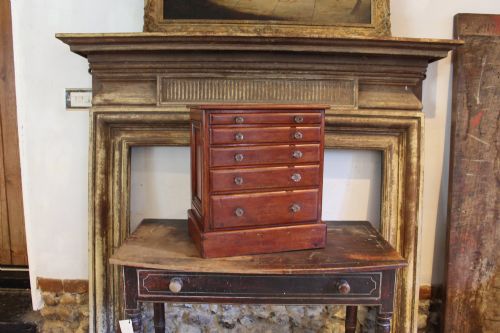
When you handle a victorian miniature cabinet, you hold compact domestic craftsmanship designed to house specimens, papers or precious small objects.
Victorian Miniature Cabinet
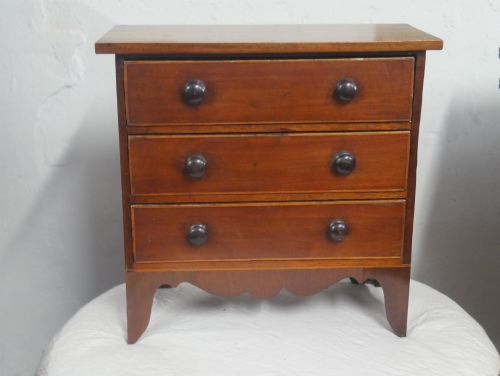
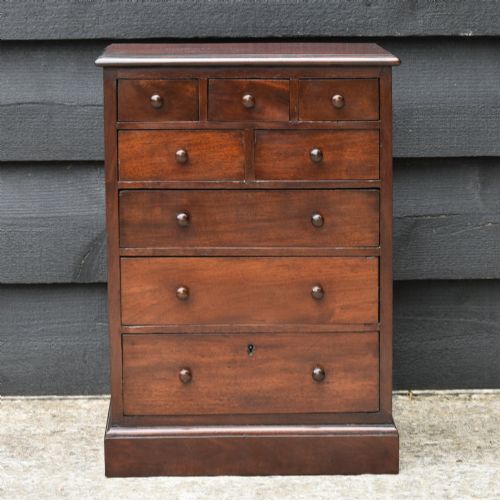
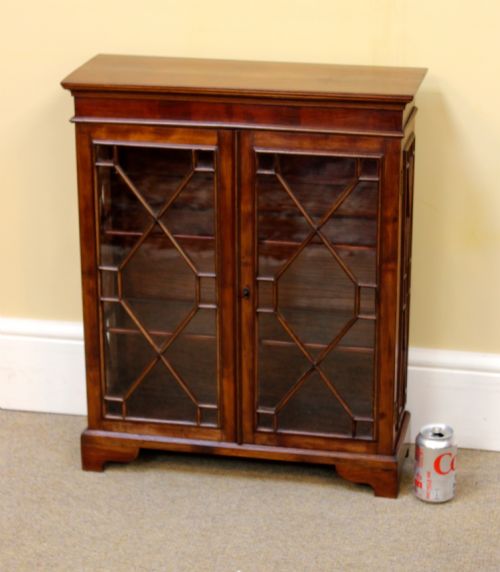
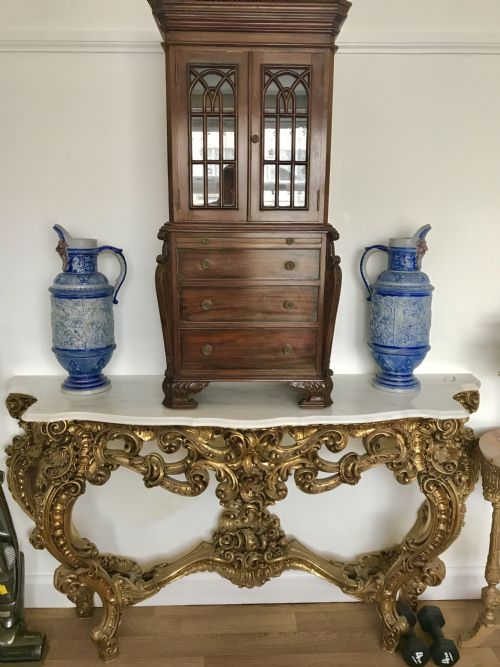
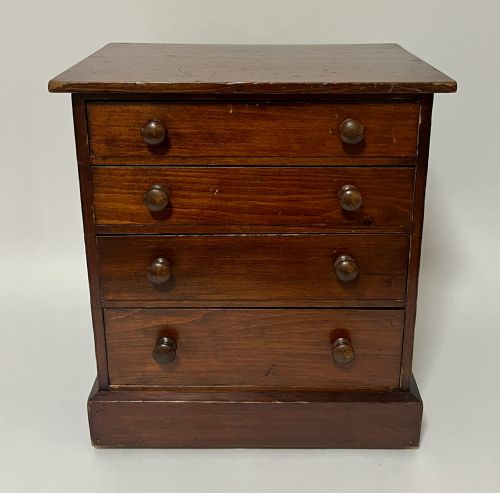
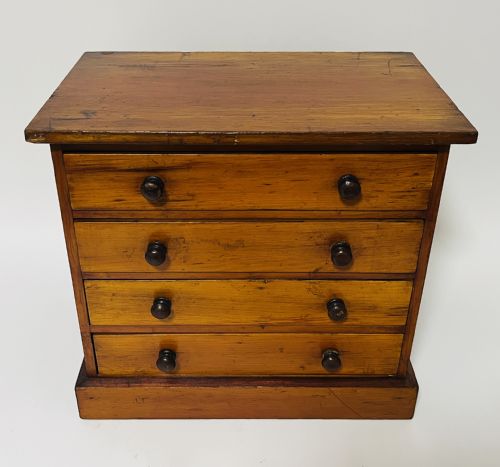
A victorian miniature cabinet spans several distinct forms including small chests of drawers, table top cupboards, specimen cases and collector cabinets. Most examples found on this page date from the nineteenth century, reflecting an era of meticulous scaled-down cabinet making.
Makers produced these pieces as salesman samples, apprentice pieces or bespoke items for domestic interiors. Buyers encounter numerous variations ranging from simple pine spice drawers to elaborate walnut and mahogany chests with secret compartments.
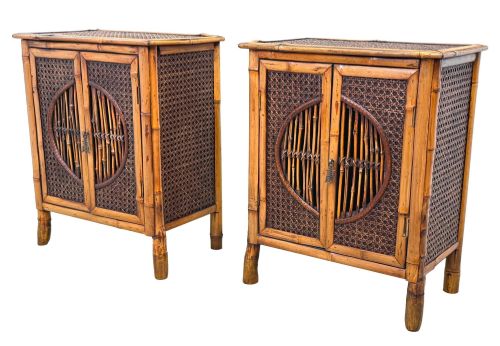
The regional styles visible in the evidence range from Scottish apprentice chests and bowfront designs to French provincial pieces and bamboo aesthetic cupboards. Each form serves a specific function, whether organising botanical slides, stationery or jewellery.
Materials and Construction
Cabinet makers utilised dense hardwoods such as mahogany, walnut, burr walnut and oak to ensure durability at a reduced scale. Pine and fruitwood appear frequently in utilitarian pieces like spice drawers and regional chests.
Surface treatments involved French polishing, inlay work, ebonised moulding and brass hardware. Joinery techniques mirrored full-sized furniture production, employing dovetail joints for drawers and fitted panel doors.
Object forms span chests of drawers, spice drawers, bureau bookcases, dresser bases and microscope slide cabinets.
Judging Quality
The standard of a victorian miniature cabinet depends on the choice of timber figure and the precision of the joinery. Burr walnut, amboyna and figured mahogany indicate higher ambition from the maker.
Superior pieces display thoughtful interior fittings such as secret drawers, numerous small compartments or dedicated slots for microscope slides. Refined handling of edge moulding and flush-fitting doors separate standard workshop output from exceptional examples.
The Victorian Miniature Cabinet Glossary
- Apprentice piece
- A small item of furniture created by a trainee craftsman to demonstrate mastery of joinery techniques before gaining professional status.
- Specimen cabinet
- A specialised piece of small furniture containing multiple shallow drawers designed for housing natural history collections or botanical slides.
- Wellington chest
- A tall, narrow chest of drawers secured by a hinged vertical locking bar on one side, scaled down in these instances for tabletop use.
- Pier cabinet
- A slender display or storage cabinet intended to stand against a narrow wall space between windows, often featuring glass doors.
- Parquetry
- A geometric mosaic of wood pieces used for decorative surface inlay on tabletops and cabinet fronts.
Victorian Miniature Cabinet: Frequently Asked Questions
What were miniature cabinets actually used for?
These small cabinets served multiple practical purposes in nineteenth-century homes and offices. Owners stored small valuables, letters, stationery, jewellery or scientific specimens within their fitted drawers.
Craftsmen also made them as salesman samples to demonstrate furniture styles to prospective clients without transporting full-sized pieces.
How do I distinguish an apprentice piece from a doll's piece?
Apprentice pieces generally exhibit the exact same complex construction methods, heavy timbers and formal joinery as standard furniture. They showcase serious technical skill in dovetailing and wood selection.
Doll's furniture tends toward simpler construction and lighter everyday use materials, though the boundary between miniature furniture types remains fluid.
Are all miniature cabinets from the Victorian period?
While the majority of pieces date from the Victorian era and the broader nineteenth century, production spans slightly beyond this timeframe. Edwardian examples and pieces dated into the early twentieth century also appear.
Construction details, timber choices and hardware styles help clarify the approximate manufacturing era of each piece.
Where should I place a table top cabinet at home?
These compact cabinets suit placement on sturdy sideboards, desks, chests of drawers or console tables where their detailed craftsmanship can be examined closely. Because many feature lockable doors or small drawers, they remain functional for organising modern trinkets.
Keep them away from direct sunlight and fluctuating heat sources to protect sensitive wood veneers and French polished finishes.