
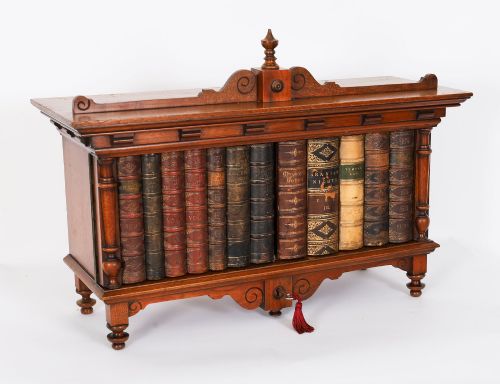
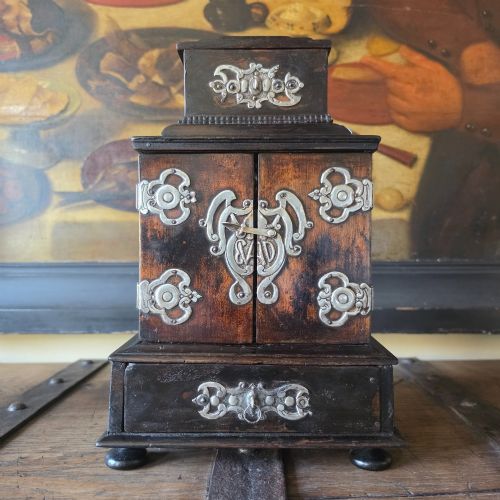
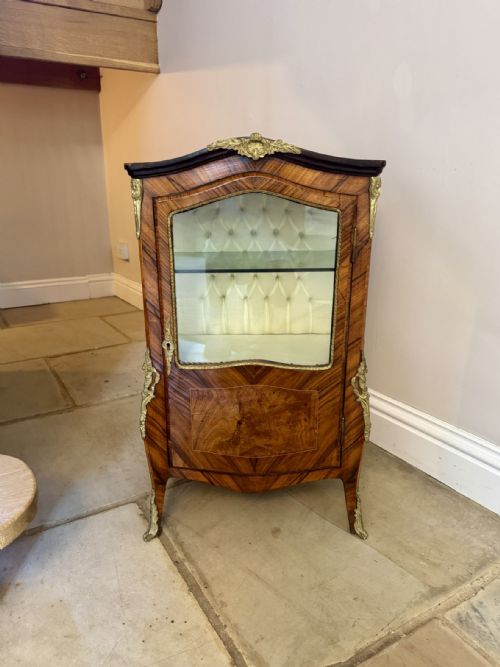

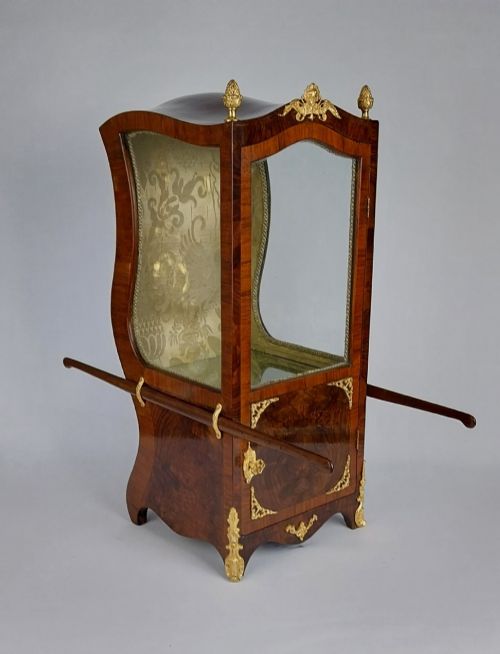
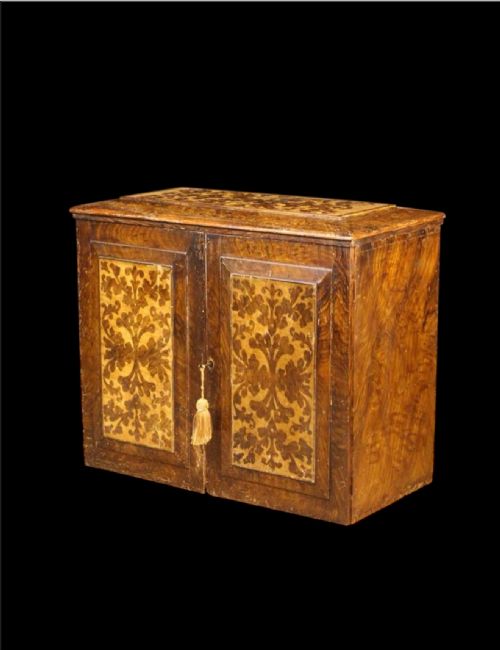


Walnut Tabletop Cabinet
These compact walnut tabletop cabinet examples offer sophisticated desk storage and display across 17th-century to Victorian periods.
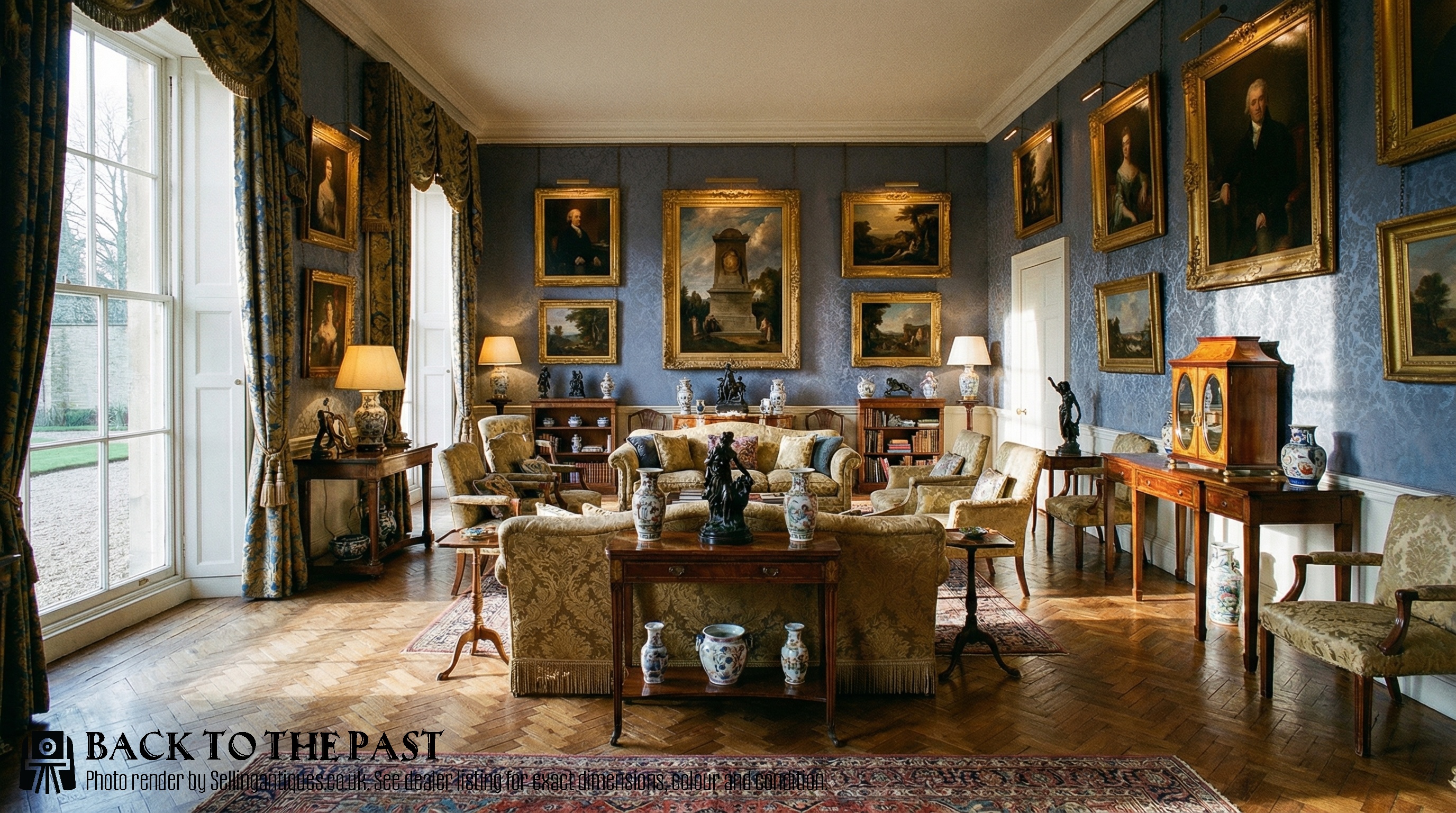
Walnut Tabletop Cabinet
A walnut tabletop cabinet provides compact, portable storage for jewellery, specimens, or documents while remaining a decorative desktop feature. These pieces range from miniature chests of drawers and collector cabinets to small escritoires and vitrines.
The versions most commonly met on this page span the 17th, 18th, and 19th centuries, frequently displaying Victorian, Georgian, or Continental styling. They appear in formats such as jewellery cabinets, compendium boxes, and miniature chests.
Makers designed these smaller receptacles to sit upon larger furniture, serving varied domestic and professional functions. Their forms draw upon diverse regional traditions, including English country house pieces, French vitrines, and German baroque work.
What Varies In Quality
The selection of timber grain, particularly the use of highly figured burr walnut or intricate marquetry inlay, separates standard utilitarian pieces from finer decorative examples. Precision in the dovetailing of miniature drawers and the integration of brass hardware also indicates higher craftsmanship.
The complexity of the interior design, such as revolving tabernacles, fitted writing surfaces, or multi-drawer compendium layouts, distinguishes more ambitious commissions from simpler storage boxes.
Certain miniature chests served as apprentice pieces, where woodworkers proved their skill by shrinking a full-sized wardrobe down to tabletop scale.
The Walnut Tabletop Cabinet Glossary
- Burr walnut
- A figured wood grain derived from the wart-like growths on walnut trees, prized for its swirling patterns on cabinet surfaces.
- Escritoire
- A small writing cabinet featuring a sloping lid or drop-front panel that conceals compartments and small drawers.
- Vitrine
- A glass-fronted display cabinet designed to showcase small objects, jewellery, or curiosities.
- Marquetry
- Decorative veneer work arranged in intricate geometric or pictorial patterns across the exterior surfaces of furniture.
- Apprentice piece
- A fine miniature item constructed by a trainee craftsman to demonstrate mastery of joinery techniques before joining a guild.
Walnut Tabletop Cabinet: Frequently Asked Questions
What were walnut tabletop cabinets used for?
These cabinets served to store precious items such as jewellery, documents, coins, and natural history specimens in a secure, accessible format.
Their compact size allowed them to sit upon larger desks, tables, or chests within private studies and drawing rooms.
How do I date a walnut tabletop cabinet?
Dating relies on examining the construction methods, secondary timbers, and distinct stylistic markers associated with periods like the 17th century, Georgian era, or Victorian reign.
Hardware styles, dovetail construction, and lock mechanisms also provide reliable chronological indicators.
What is the difference between a collector cabinet and a jewellery cabinet?
Collector cabinets typically feature multiple shallow drawers specifically sized for coins, fossils, or botanical specimens.
Jewellery cabinets generally include velvet-lined compartments, ring slots, or specialised swing-out trays suited for personal adornments.
How do I care for antique walnut furniture?
Keep these pieces away from direct sunlight and fluctuating heat sources to prevent the walnut veneer and burr panels from drying out or splitting.
Apply traditional wax polishes sparingly and buff gently with a soft cloth to maintain the historic patina.