




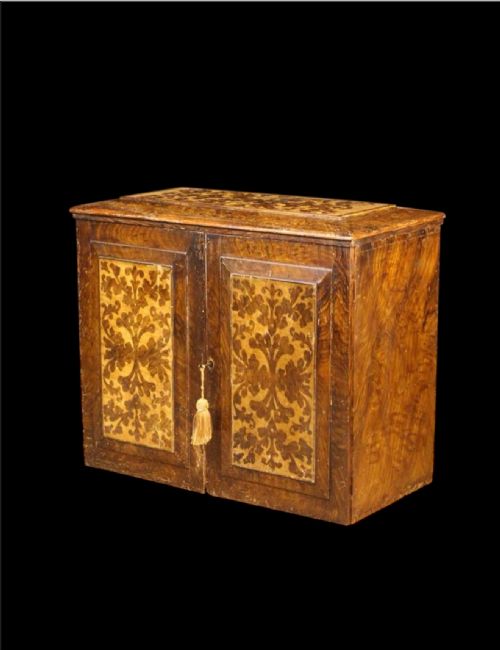

Inlaid Jewellery Cabinet
An inlaid jewellery cabinet gathers precious trinkets behind glazed or polished timber, offering a neat stage for personal treasures that suits a dressing table or side surface.
Inlaid Jewellery Cabinet
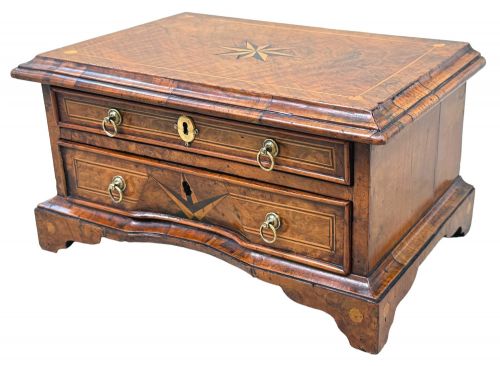
When searching for an inlaid jewellery cabinet, buyers encounter a variety of compact storage forms spanning the Georgian, Victorian, and Edwardian eras. These pieces range from tabletop vitrines and bijouterie display tables to miniature chests of drawers and specialised collectors' cabinets.
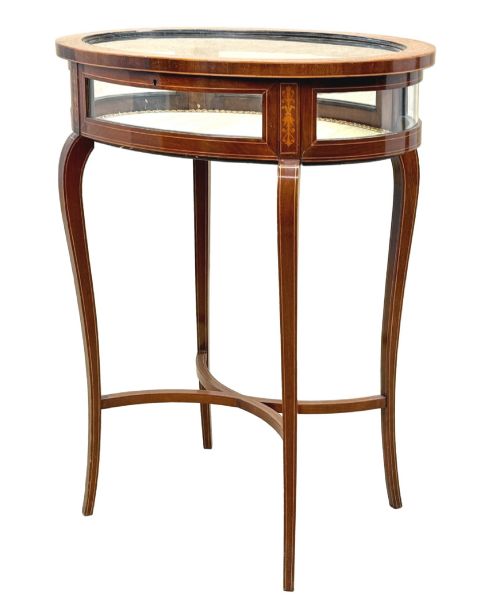
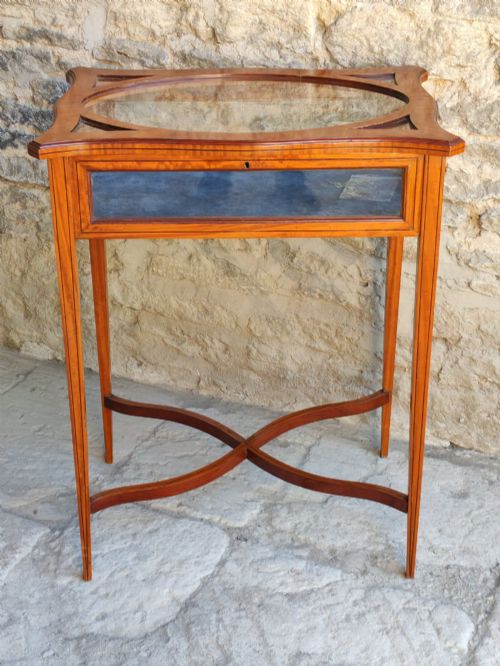
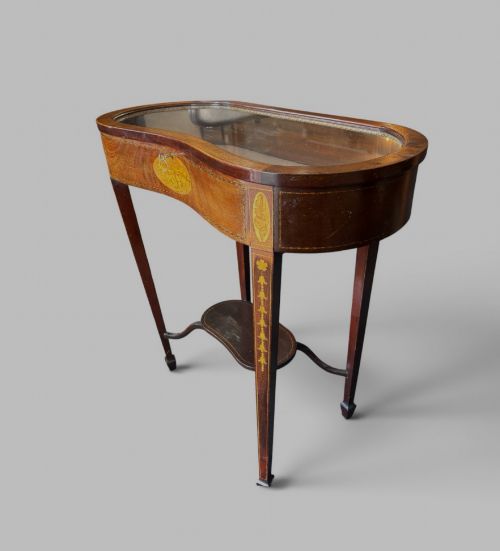
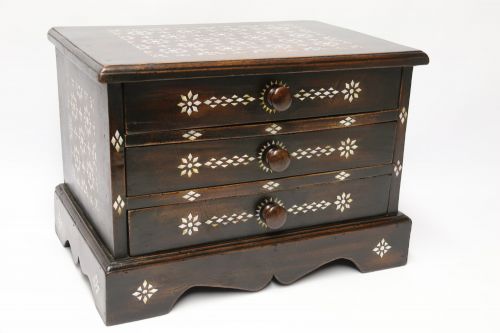
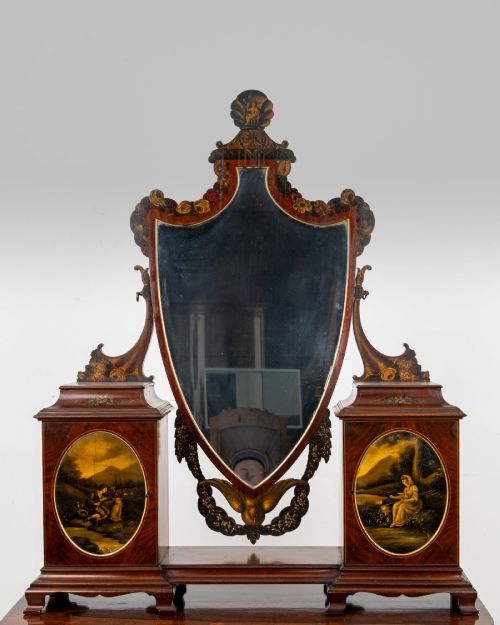
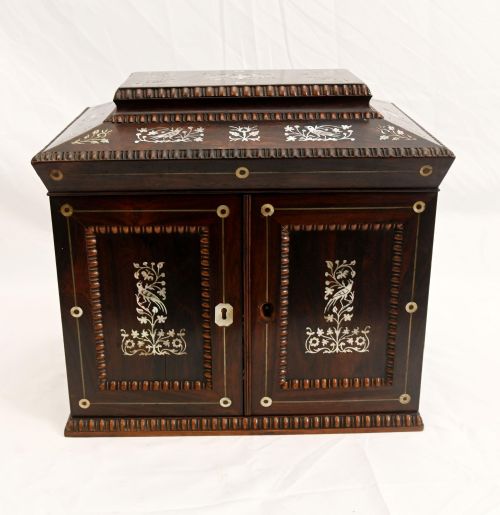
The Edwardian mahogany and satinwood display table is the version most frequently met on this page, often featuring glazed panels or delicate stringing. Alongside these sit heavier Victorian rosewood and walnut boxes, as well as occasional Anglo-Indian hardwood chests and marquetry work boxes.
Makers utilised portable formats designed to protect rings, necklaces, and small keepsakes in domestic settings. The survival of these diminutive containers demonstrates the high regard in which past households held their personal possessions.
How They Were Made
Cabinetmakers relied on dense hardwoods such as mahogany, walnut, and rosewood as a stable foundation for decorative treatments. Satinwood and contrasting timbers were then shaped into delicate geometric stringing or elaborate pictorial marquetry across the outer surfaces.
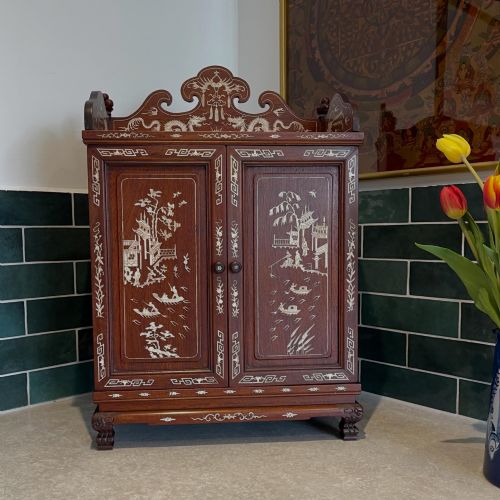
Mother of pearl and brass inlay added reflective highlights, set flush into the timber and secured with animal glue. Interiors were traditionally lined with plush velvet or silk to cushion delicate items against the wooden structure.
Glazed display sections incorporated thin wooden framing or brass mounts to maximise visibility while maintaining structural integrity. French polishing finished the timber, sealing the grain to produce a deep, warm lustre.
Mahogany and satinwood dominate the timber selections across these listings, frequently paired with brass and mother of pearl.
What Varies in Quality
The distinction between ordinary and exceptional pieces lies in the precision of the cabinetwork and the intricacy of the decorative inlay. Master workshops invested significant time in aligning grain patterns and ensuring that contrasting veneers met without perceptible gaps.
Internal appointments strongly influence the standing of a piece, separating basic storage boxes from bespoke items fitted with velvet-lined trays and working brass locks. Original glass panels, unblemished interior textiles, and fully functioning hinges elevate the desirability of a cabinet significantly.
Structural harmony between the miniature scale and the decorative program defines superior examples. When proportions feel balanced and the secondary timbers match the quality of the primary show-woods, the piece represents the pinnacle of period craftsmanship.
Edwards and Roberts·Wright and Mansfield
The Inlaid Jewellery Cabinet Glossary
- Bijouterie table
- A glass-topped display table designed specifically for showcasing small ornaments, coins, and jewellery. These tables often feature hinged lids lined with velvet or silk.
- Marquetry
- The art of forming decorative patterns by fitting together small pieces of tinted wood veneers, shell, or ivory. It differs from inlay by assembling the entire design before applying it to the carcase.
- Vitrine
- A glass-fronted cabinet or display case intended for the presentation of curiosities and precious objects. The term derives from the French word for glass.
- Stringing
- A narrow strip of contrasting timber inlaid into the surface of furniture to create a delicate border or linear pattern. This technique is particularly prevalent on Edwardian satinwood and mahogany pieces.
Inlaid Jewellery Cabinet: Frequently Asked Questions
Where should I place a display table?
These glass-topped tables work best in natural light away from direct sunlight, which can fade internal velvet linings over time. Position them as central focal points in a drawing room or study where the contents remain visible from above.
Ensure the surrounding floor space allows comfortable access to the hinged lid or internal drawers. They pair well beside traditional seating where guests can easily inspect the curated collection inside.
How do I care for the interior velvet?
Original textile linings require gentle maintenance to preserve their texture and colour. Use a soft brush attachment on a vacuum at low power to remove dust without disturbing fragile fibres.
Avoid liquid cleaners entirely, as moisture can warp the underlying timber or stain historic fabrics. If a lining has deteriorated beyond cleaning, professional conservation maintains the structural integrity of the interior.
How do I distinguish Edwardian from Victorian pieces?
Victorian cabinets generally feature heavier rosewood or walnut construction with deep, dark finishes and robust brass mounts. The aesthetic leans toward ornate marquetry and substantial proportions suited to formal nineteenth-century interiors.
Edwardian examples often display lighter satinwood, finer stringing, and tapered legs that reflect a more restrained, airy design sensibility. The presence of Sheraton revival motifs usually points toward this later period.