
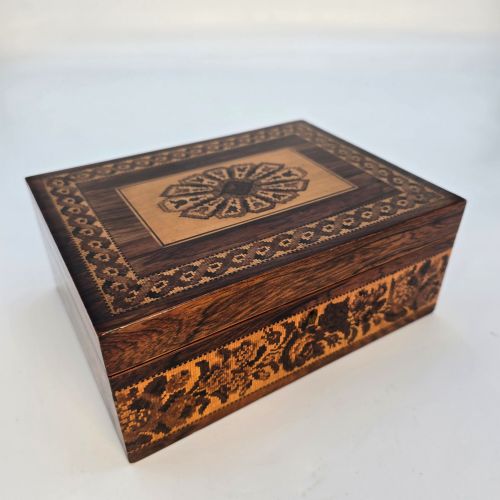


Floral Inlaid Wooden Box
A floral inlaid wooden box brings together precise cabinet work and botanical marquetry, offering both practical storage and decorative depth.
Floral Inlaid Wooden Box
A floral inlaid wooden box encompasses a variety of forms designed for storage, from tea caddies and jewellery boxes to larger coffers and music boxes. When you search for a floral inlaid wooden box, you encounter pieces that span multiple centuries, reflecting changing tastes in surface decoration and cabinet construction.
The Victorian period dominates the selections, alongside examples from the Georgian and seventeenth centuries. Tea caddies and music boxes appear frequently, often employing distinct timber grounds decorated with botanical marquetry and contrasting veneers.
Origins stretch across English workshops, continental centres such as Germany and France, and specialised production hubs like Tunbridge Wells. Each piece utilises traditional woodworking methods to integrate floral motifs directly into the wooden structure.
Materials and construction
Craftsmen built these pieces using dense hardwoods such as rosewood, walnut, harewood and satinwood, often applying them over a secondary timber core. Marquetry and wood inlay techniques allowed artisans to slice various tinted woods and assemble them into intricate floral patterns.
Detailing frequently incorporates boxwood and ebonised wood to create sharp outlines within the botanical scenes. Brass hinges, locks and occasional pietra dura mounts complete the construction, securing the lid and reinforcing the corners.
Early music boxes played tunes so reliably they doubled as domestic alarm clocks.
Assessing quality and execution
The standard of a piece rests upon the precision of the marquetry cutter and the selection of figured timber grounds. Finer examples display tight joins in the floral motifs and minimal shrinkage in the surrounding veneers.
Interior fittings and mechanical components, particularly in music boxes and fitted tea caddies, separate standard production from superior craftsmanship. The integration of the inlay into the structural wood rather than a superficial surface application indicates higher skill.
Edmund Nye·Nicole Freres
The Floral Inlaid Wooden Box Glossary
- Marquetry
- The art of creating decorative patterns by fitting together small pieces of veneered wood. This technique allows for detailed pictorial representations of flowers and foliage.
- Tea caddy
- A container designed to store loose tea leaves securely. These often feature internal compartments and detailed exterior inlay.
- Tunbridge ware
- A distinct type of woodwork originating from Kent, characterised by mosaic patterns made from many tiny wood blocks. It frequently depicts floral or geometric scenes.
- Harewood
- Sycamore wood that has been stained green using iron or chemical treatments. It provides a distinct pale greenish-grey hue highly prized in eighteenth and nineteenth-century cabinet work.
- Petra dura
- An inlay technique using cut and fitted polished coloured stones to create images. It appears on select European boxes alongside wood elements.
Floral Inlaid Wooden Box: Frequently Asked Questions
How do I date a floral inlaid wooden box?
Dating relies on examining the timber species, construction joints, and style of the floral marquetry. Secondary woods inside the box often provide clues to the period.
Changes in hardware, such as hinges and lock plates, further narrow down the decade of manufacture.
What were tea caddies used for?
Tea caddies stored expensive tea leaves safely under lock and key in period households. They often included internal lidded canisters to separate different varieties.
The boxes protected the delicate leaves from moisture and light.
How do I care for a wood box with inlay?
Keep wooden boxes away from direct sunlight and sudden temperature changes to prevent the veneers from lifting. Maintaining stable indoor humidity protects the delicate floral marquetry.
Dust gently with a dry, soft cloth and avoid chemical polishes.
How do music box mechanisms work?
Mechanical music boxes utilise a pinned metal cylinder that plucks the tuned teeth of a steel comb. A spring motor drives the rotation of the cylinder.
Regulators control the speed to ensure a steady melody plays when the lid opens.