

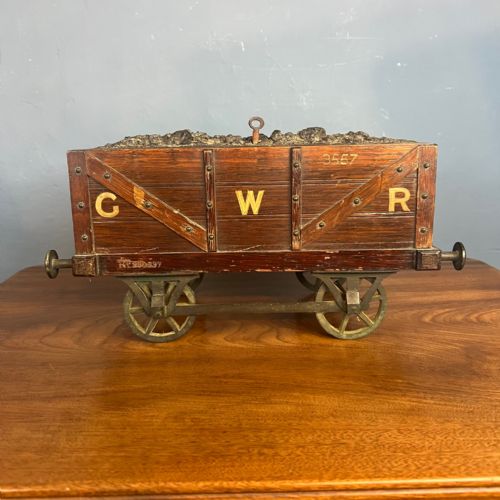
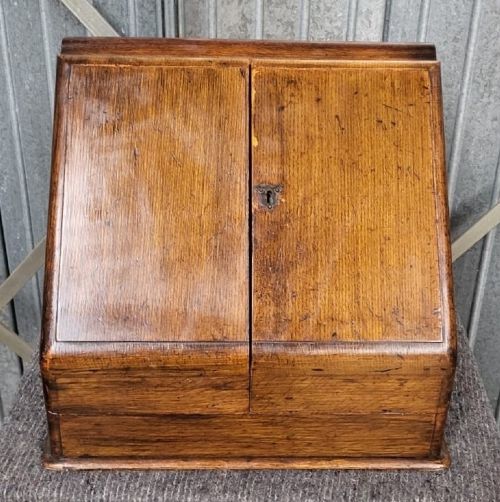
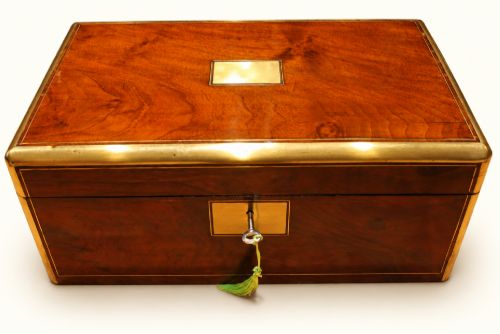
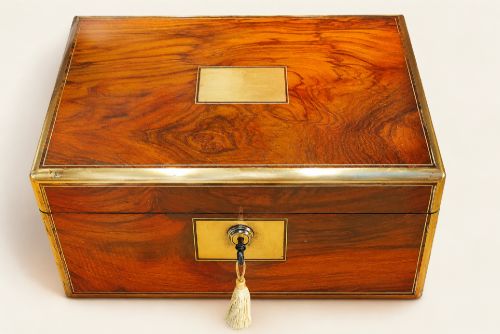

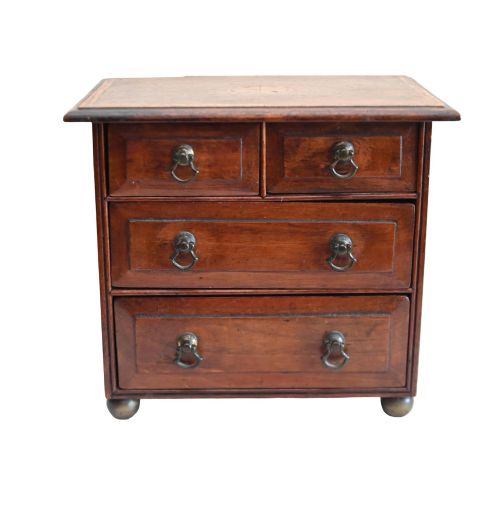
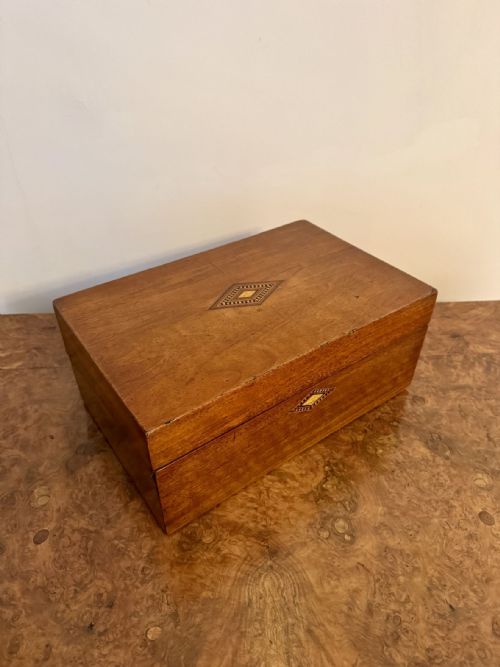
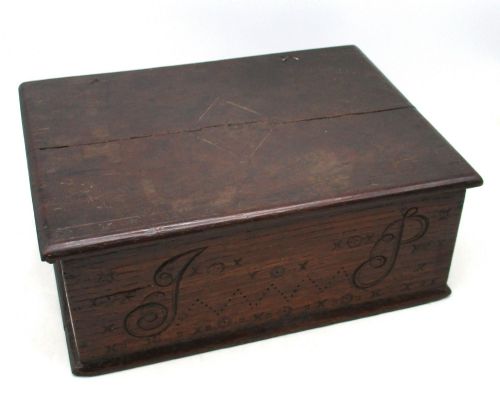
Brown Wooden Desk Box
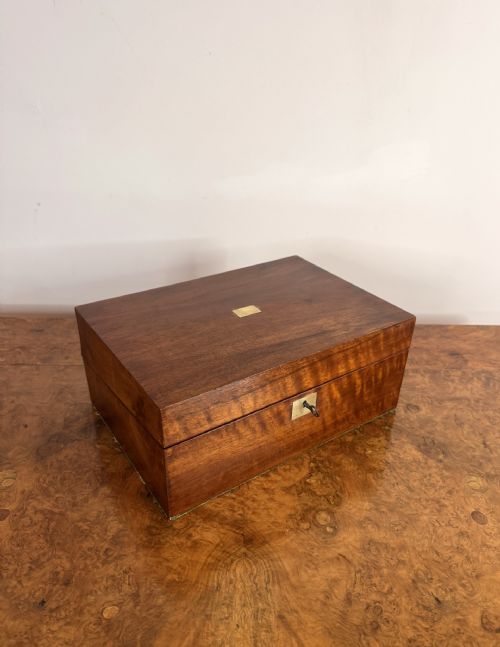
These brown wooden desk box items are practical timber containers built for correspondence and papers, chosen for warmth of grain and everyday utility on a writing table.
Brown Wooden Desk Box
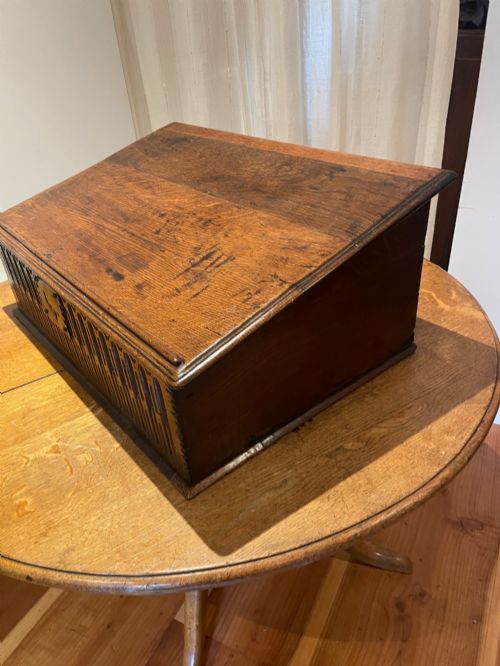
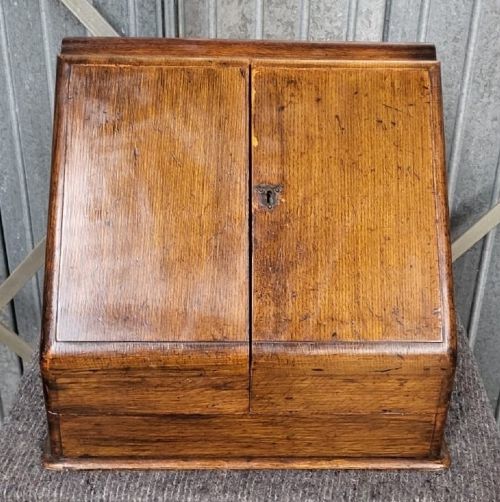
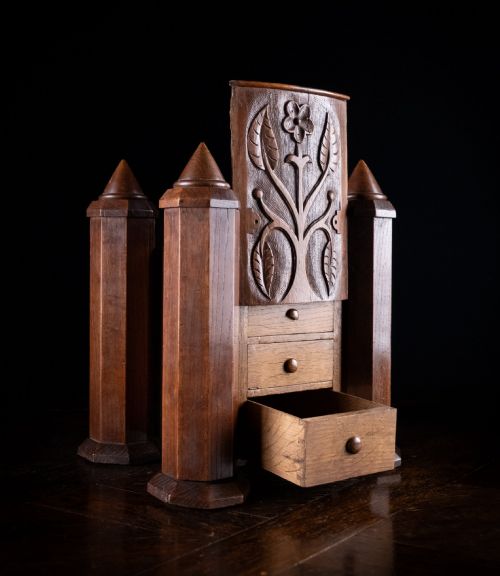
A brown wooden desk box encompasses writing slopes, stationery cases, document boxes, and Bible boxes designed to organise papers and writing instruments. You will encounter pieces spanning from the seventeenth century through to the Edwardian era, with Victorian and Georgian examples appearing frequently.
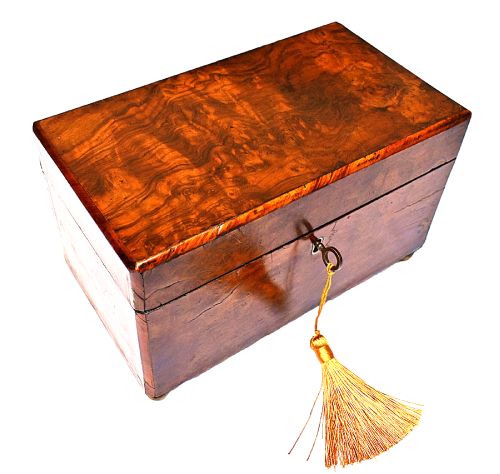
The materials reflect traditional cabinet timbers, predominantly mahogany, oak, and walnut, often enhanced with burr walnut veneers or brass mounts. Earlier centuries favour sturdy oak construction for deed and Bible storage, while nineteenth-century variations lean towards polished mahogany and walnut for correspondence.
Origin and stylistic influence vary from plain English country workshop pieces to sophisticated Regency writing slopes and decorative Victorian stationary boxes. These containers range from simple hinged-lid document holders to elaborate fitted desks with secret compartments.
Materials and construction
Cabinet makers utilised dense hardwoods like mahogany, oak, and walnut, selecting boards for stability and figured grain patterns such as burr walnut. These timbers were joined with traditional dovetail or pegged joints to ensure durability under daily use.
Metal hardware, specifically brass for handles, hinges, and escutcheons, was fitted flush to the timber surfaces alongside occasional silver or iron details. Internal compartments frequently incorporated fabric linings or finely fitted dividers for stationary and inkwells.
Brown Wooden Desk Box Retail Price Guide 2026
Typical asking prices for brown wooden desk box among the pieces listed under this phrase on Sellingantiques today, from the lower quarter to the upper quarter. They describe what is for sale here now, not the wider market.
Listings feature timbers like mahogany, oak, walnut, burr walnut, and camphor wood across centuries ranging from the seventeenth to the twentieth.
Markers of execution
Quality rests in the selection of timber grain and the precision of the cabinet work, particularly in the tightness of dovetails and the smooth operation of hinged lids. Superior items display careful matching of wood veneers across surfaces and well-integrated brass hardware.
The sophistication of the internal fittings defines the upper tier of these pieces, showing secret drawers, clever sliding trays, and fully realised writing slopes. Finer examples retain their original locks, keys, and compartmentalised interior dividers without later replacement.
Mappin and Webb·Edmund Nye·Austin
The Brown Wooden Desk Box Glossary
- Writing slope
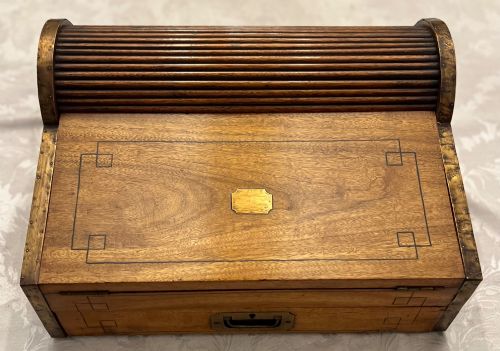
- A portable box with a hinged, slanted lid that folds down to form a writing surface, often containing internal compartments for ink and pens. These slope-fronted chests were essential for portable correspondence before fitted studies became common.
- Stationery box
- An upright desk cabinet featuring fitted tiers or slots designed to hold letters, envelopes, and correspondence paper vertically. They typically open via a hinged front or top lid to display letters neatly.
- Bible box
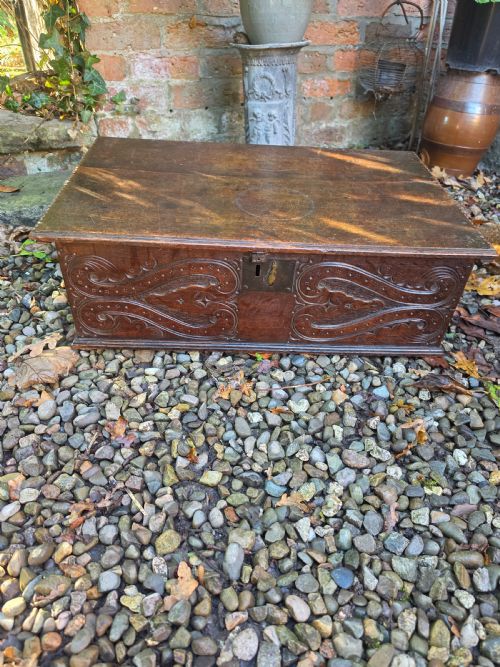
- A sturdy seventeenth or eighteenth-century timber chest, usually carved in oak, originally built to safeguard family religious texts and important documents. Their heavy lids and flat tops served both protective and utilitarian functions.
- Tunbridge ware
- A meticulous form of British woodwork characterised by intricate mosaic patterns assembled from thousands of tiny coloured wood blocks. This decorative technique adorned Victorian boxes and stationery cases with geometric or pictorial scenes.
- Dovetail
- A traditional interlocking woodworking joint formed by interlocking wedge-shaped fingers, prized for its structural strength in box construction. Fine, numerous pins indicate skilled cabinet making.
Brown Wooden Desk Box: Frequently Asked Questions
How do I tell an 18th-century box from a Victorian one?
Earlier eighteenth-century boxes, such as Bible or document chests, usually feature solid oak construction, hand-carved details, and heavy pegged joints. They prioritize rugged utility over complex internal mechanisms.
Victorian and later nineteenth-century examples often utilise polished mahogany or burr walnut veneers, incorporating sophisticated brass mounts, spring-loaded compartments, and fitted stationery tiers.
How were these boxes used originally?
These containers served as portable writing desks and secure archives for households before modern stationery storage existed. People kept inkwells, quill pens, wax seals, and letters inside, using the sloping lids for writing.
Many included hidden drawers or secret compartments to safeguard valuables, currency, and private documents away from casual view.
How do I care for antique wooden boxes?
Maintain antique timber by keeping it away from direct heat sources and sudden humidity changes, which can cause wood to split or veneers to lift. Apply a traditional wax polish occasionally to nourish the grain and protect the patina.
Handle brass fittings gently and avoid harsh liquid cleaners that might damage aged wooden surfaces or original fabric linings.