
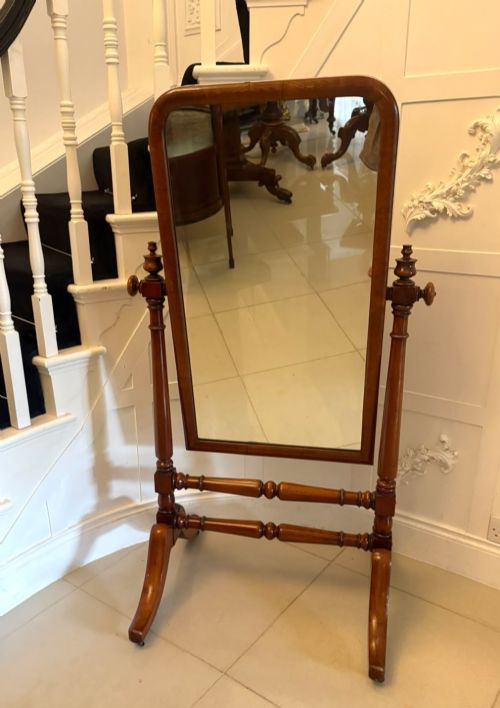
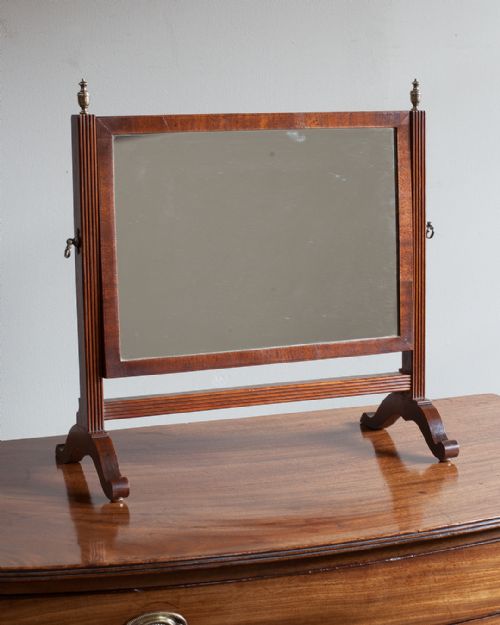
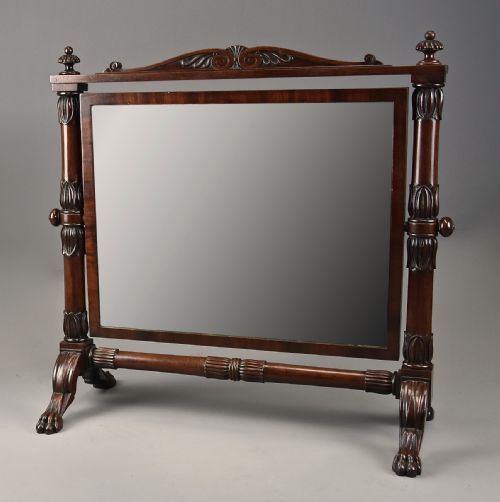
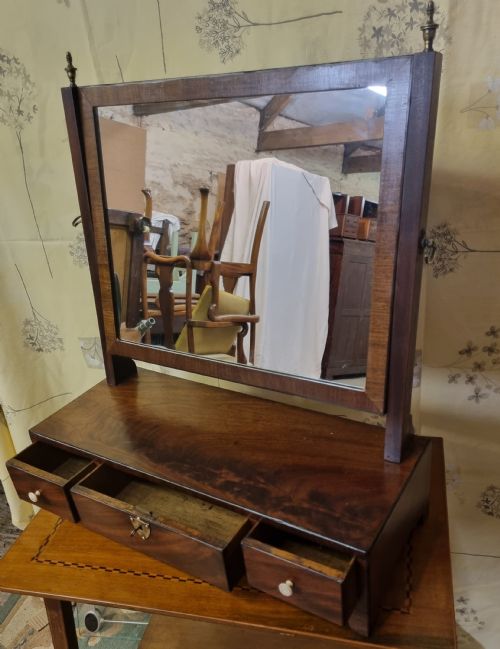

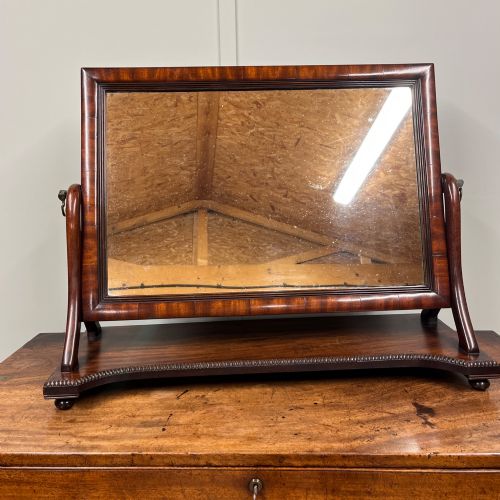
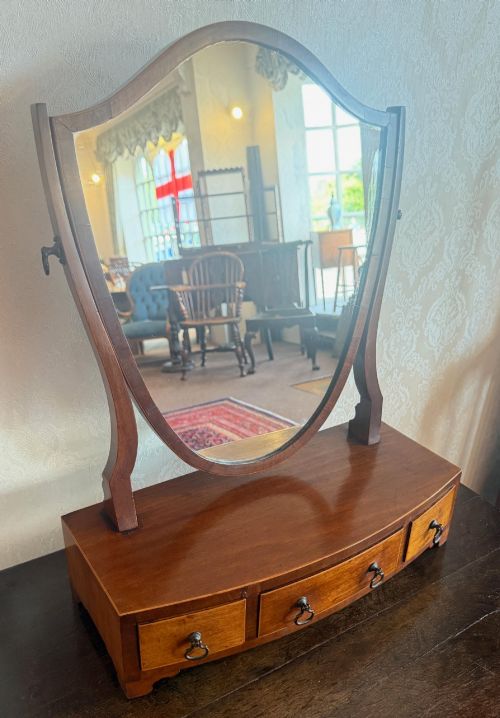
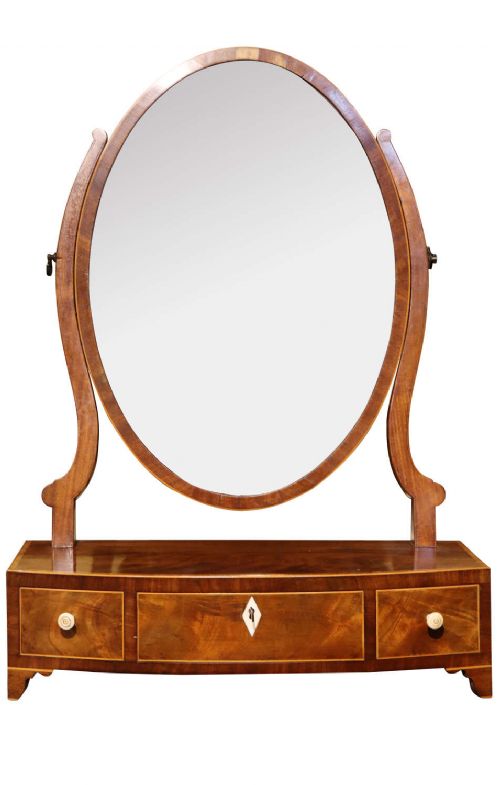
Brown Wood Swing Mirror
A brown wood swing mirror is a pivoting table or floor glass for the dressing room, bringing warmth and functional adjustment to an interior.
Brown Wood Swing Mirror
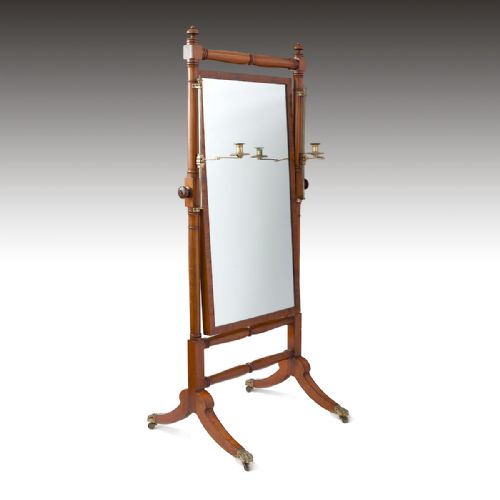
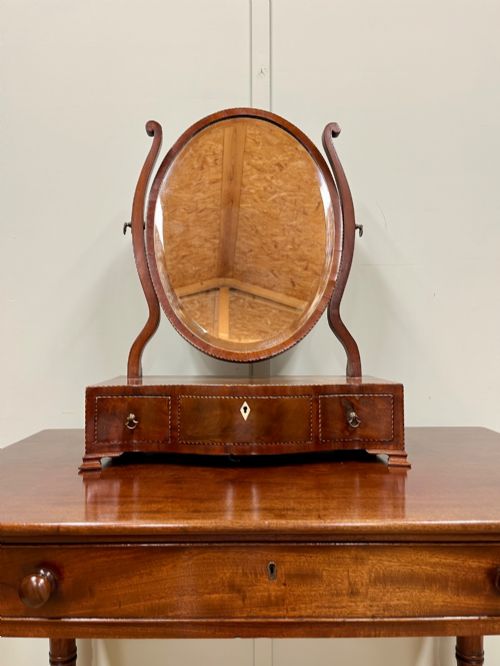
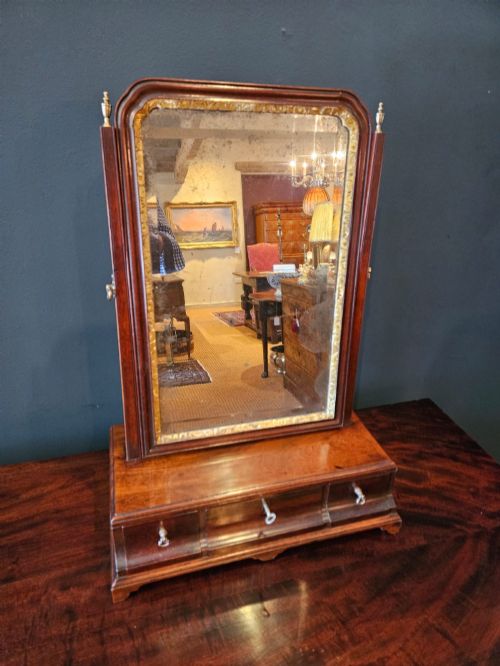
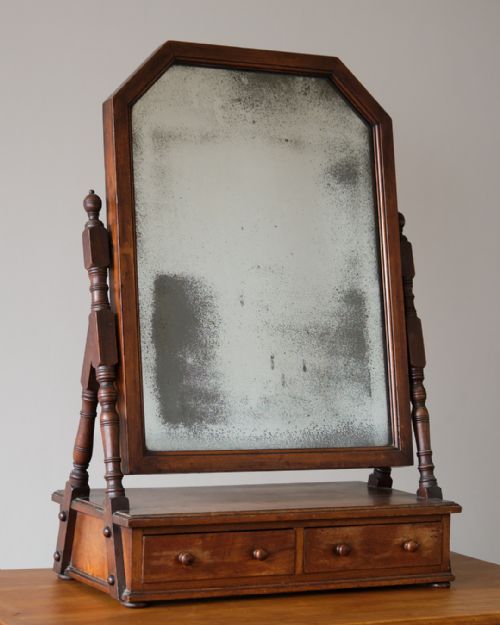
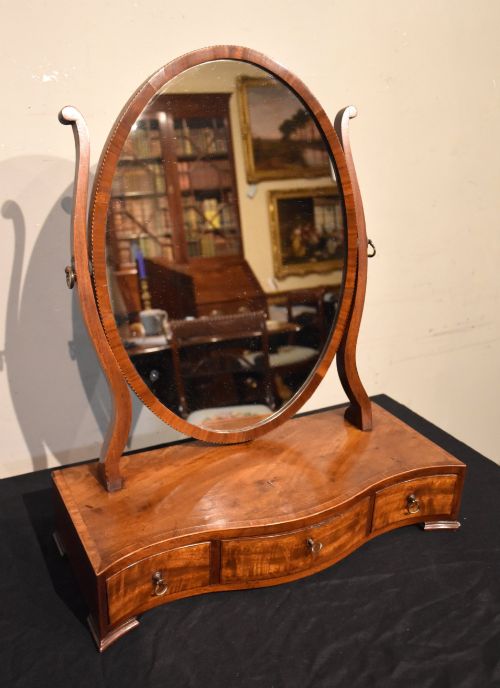
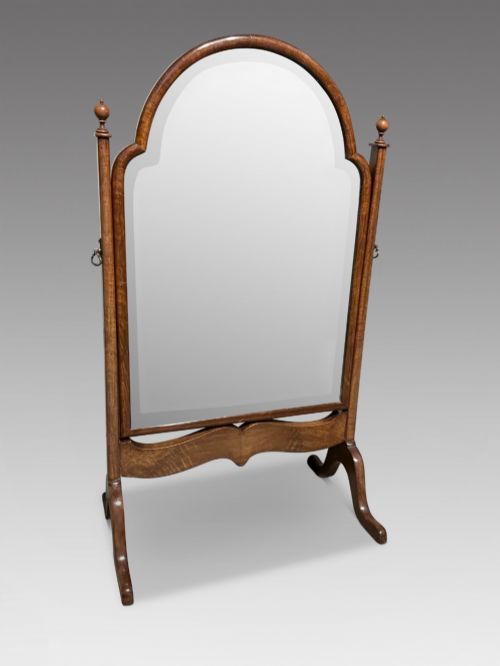
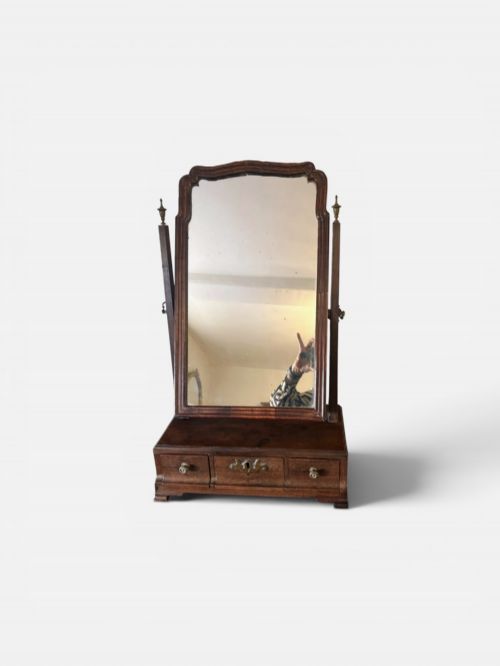
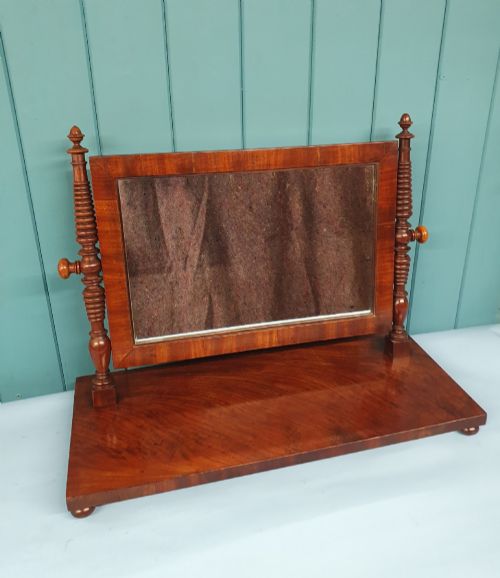
When you search for a brown wood swing mirror, you encounter freestanding and table-top glasses designed for personal grooming. These pieces take the form of dressing table mirrors, toilet mirrors, and larger cheval mirrors that pivot on upright frames.
The versions most commonly met on this page date from the Georgian, Regency, and Victorian periods. They are constructed primarily in mahogany and walnut, frequently incorporating small drawer bases for storage.
Materials and construction methods
Cabinet makers utilised dense timbers such as mahogany and walnut, sometimes enhanced with wood inlay, burr veneers, and crossbanding. Brass fittings secure the pivoting mechanism of the glass within its upright supports.
Mirror glass is mounted within adjustable frames, resting above box bases that often feature serpentine or bow-front drawers constructed with traditional joinery.
Some diminutive Georgian toilet mirrors include secret compartments hidden behind the small drawer interiors.
Distinctions in craftsmanship and form
The standard of a piece depends on the choice of timber figure, such as Cuban mahogany or burr walnut, and the precision of the box base construction. Refined proportions and well-executed serpentine drawers elevate the piece.
Detailing like bone escutcheons, delicate brass adjusting screws, and sophisticated marquetry distinguish finer workshop production from simpler provincial examples.
Heal & Sons·P & MA Nicholson·Gillow
The Brown Wood Swing Mirror Glossary
- Cheval mirror
- A full-length dressing glass supported by a freestanding frame with four legs. This large pivoting mirror stands independently on the floor rather than resting on a table or chest.
- Toilet mirror
- A smaller dressing glass designed to sit upon a table or chest of drawers. These portable mirrors frequently incorporate a box base fitted with small drawers.
- Crossbanding
- A narrow strip of veneer laid around the border of a panel with the grain running at right angles to the central wood. This decorative framing technique is common on finer Georgian furniture.
- Serpentine
- A curved line that undulates with a convex centre flanked by concave sides. This rhythmic shaping appears frequently on the drawer fronts of dressing mirrors.
- Escutcheon
- A protective plate surrounding a keyhole, often fashioned from brass or bone. It prevents the wood surrounding the lock from wearing down through repeated use.
Brown Wood Swing Mirror: Frequently Asked Questions
Where should I place a brown wood swing mirror?
These mirrors suit dressing tables, chest of drawers, or console tables in a bedroom. Tabletop versions require a sturdy surface of adequate depth to support the pivoting frame.
Larger cheval mirrors stand directly on the floor in dressing areas or hallways. Position them near natural light sources to maximise their reflective utility.
How do I adjust the tension on a swing mirror?
Most swing mirrors use brass screw pins or threaded bolts set into the upright supports. Tightening these fittings increases friction to hold the glass at the desired angle.
Take care not to over-tighten the hardware, as this can strain the wooden frame or damage the surrounding mountings.
What is the difference between a toilet mirror and a cheval mirror?
A toilet mirror is a compact piece designed to sit on top of a table, desk, or chest of drawers. It usually includes a small base fitted with one or more drawers for trinkets.
A cheval mirror is a tall, floor-standing glass that allows the viewer to see their entire outfit. It rests on a substantial frame with supporting feet rather than sitting on furniture.
How do I identify a Georgian mahogany swing mirror?
Georgian examples typically feature rich mahogany timbers, hand-cut dovetails on the drawer boxes, and simple horn-shaped or scrolled upright supports. The glass is often old plate with slight bevels or imperfections.
Look for secondary woods like pine or oak inside the drawers, and traditional construction methods that precede machine-made manufacturing.