


Rococo Revival Dressing Mirror
These rococo revival dressing mirror pieces bring exuberant scrolling frames and adjustable glass to your bedroom or dressing room.
Rococo Revival Dressing Mirror
A rococo revival dressing mirror combines ornate asymmetric framing with practical pivoting glass for grooming and display. You encounter forms ranging from small tabletop vanity mirrors with easel backs to large dressing table swing mirrors.
The aesthetic draws heavily on 19th-century interpretations of earlier French and Italian designs, featuring prominently in periods spanning the Victorian era through the early 20th century. Most examples you meet here sit upon larger tables or function as standalone vanity pieces.
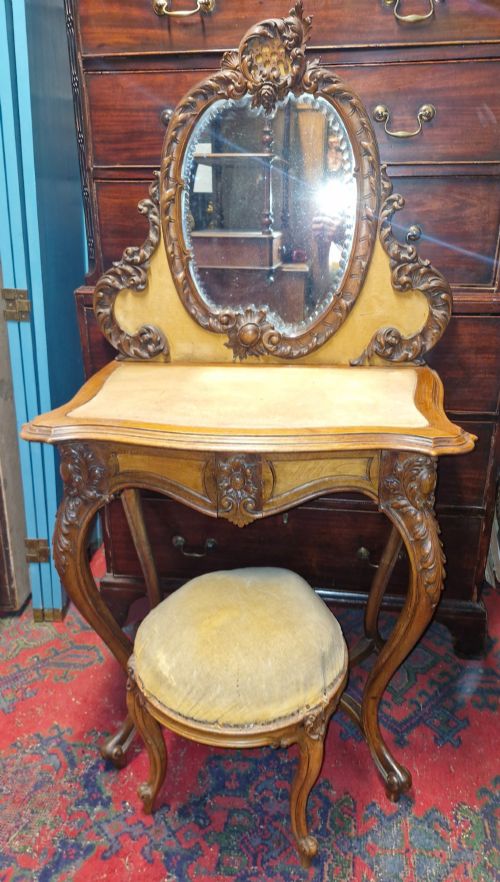
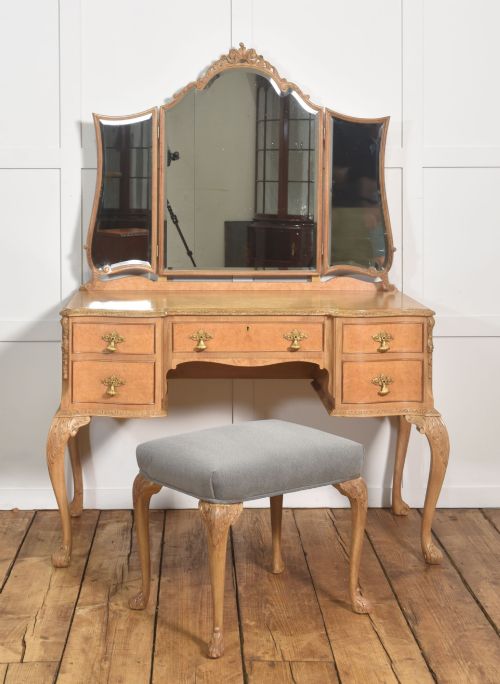
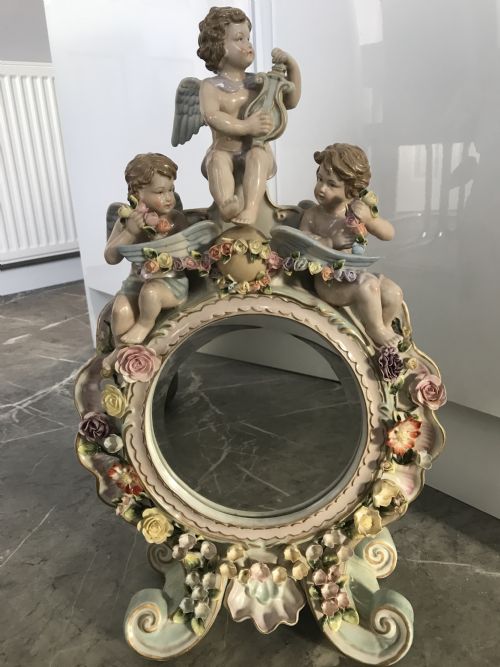
Makers utilised diverse formats, including triple mirror suites, marble-topped dressing tables with integrated glass, and porcelain-mounted easel pieces. Each iteration prioritises decorative impact alongside functional reflection.
Materials and construction
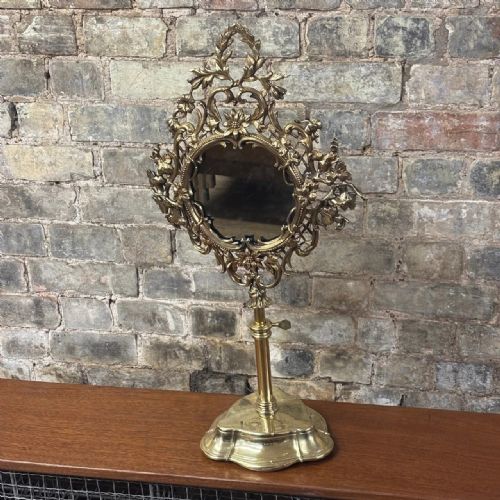
Frames rely on timber foundations such as mahogany, walnut, burr walnut, and carved oak, alongside solid brass, giltwood, and cast ormolu. Artisans shaped these materials into the characteristic scrolls, leaves, and asymmetric curves defining the style.
Ceramic elements frequently incorporate continental porcelain from factories such as Dresden, Sitzendorf, and the workshop of Jean Gille, often adorned with applied flowers and figural cherubs. These porcelain components merge structural mounting with delicate sculptural detail.
Mirror glass sits within hinged pivots allowing adjustable angles, mounted above fabric surfaces or marble tops where applicable. The combination of reflective glass, polished timber, and glazed porcelain creates a layered visual texture.
Listings feature walnut, mahogany, oak, and burr walnut alongside solid brass, porcelain, and glass across the 19th and early 20th centuries.
Assessing craftsmanship and finish
The distinction between standard production and finer work lies in the depth and sharpness of the carving or the crispness of the brass and ormolu casting. Hand-carved timber and detailed sculptural porcelain display a fluidity of line that mechanical execution misses.
Quality also rests on the integration of materials, such as the snugness of the mirror plate within its rebated frame and the stability of the easel backs or support pivots. Heavier woods like burr walnut and solid mahogany provide structural integrity that supports the decorative ornament.
Jean Gille·Sitzendorf Porcelain
The Rococo Revival Dressing Mirror Glossary
- Easel mirror
- A freestanding mirror supported by a hinged prop at the back, designed to stand upright on a tabletop or dressing chest.
- Ormolu
- Gilded bronze or brass mountings applied to furniture and mirror frames for decorative effect. The technique was widely utilised during the 19th century.
- Swing mirror
- A plate suspended on vertical pivots within a frame, allowing the glass to tilt forward or backward. This mechanism is central to dressing tables and vanity setups.
- Silver deposit
- A chemical process applying sterling silver patterns directly onto a porcelain or glass surface. This technique appeared on decorative vanity items during the Victorian period.
- Giltwood
- Timber coated with a thin layer of gold leaf or gesso preparation. It provides a bright, reflective finish suitable for ornate revival frames.
Rococo Revival Dressing Mirror: Frequently Asked Questions
How do I date a rococo revival dressing mirror?
Dating relies on examining the timber construction, the composition of the mirror glass, and the manufacturing marks on any porcelain or metal mounts. Pieces from the mid-19th century often display heavier hand-carved details and older backing boards.
Later Edwardian and early 20th-century examples may incorporate machine-assisted joinery or different fastening hardware. Comparing the style to documented periods helps narrow the decade of production.
Were these mirrors meant for walls or tables?
Most pieces designed for this category function as tabletop accessories, vanity mirrors, or dressing table components. They sit on horizontal surfaces rather than hanging permanently from walls.
Easel backs and weighted bases allow them to remain stable while resting on wood or marble tops. Some larger iterations integrate directly into dedicated dressing tables with matching stools.
What is the difference between French and Italian revival styles?
French revival pieces typically follow Louis XV precedents with restrained asymmetry, delicate floral motifs, and porcelain mounts from factories like Sevres or Dresden. The lines emphasise graceful curves and lighter woods like walnut.
Italian interpretations often push ornamentation further with deeper carving, giltwood finishes, and substantial proportions. These Italian examples favour high-relief scrolling and dramatic visual weight.
How should I clean porcelain mounts on a mirror?
Cleaning porcelain components requires a dry microfibre cloth or a very slightly damp brush to remove surface dust without disturbing applied flowers or hand-painted details. Moisture must not reach exposed timber or vulnerable adhesive joints.
Harsh chemical cleaners should be avoided entirely to preserve the original glaze and any metallic highlights. Gentle maintenance protects both the ceramic body and the surrounding frame.