


Carved Wood Psyche Mirror
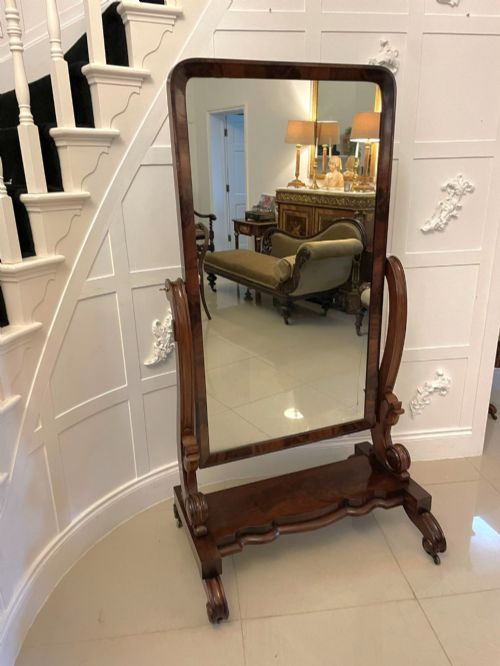
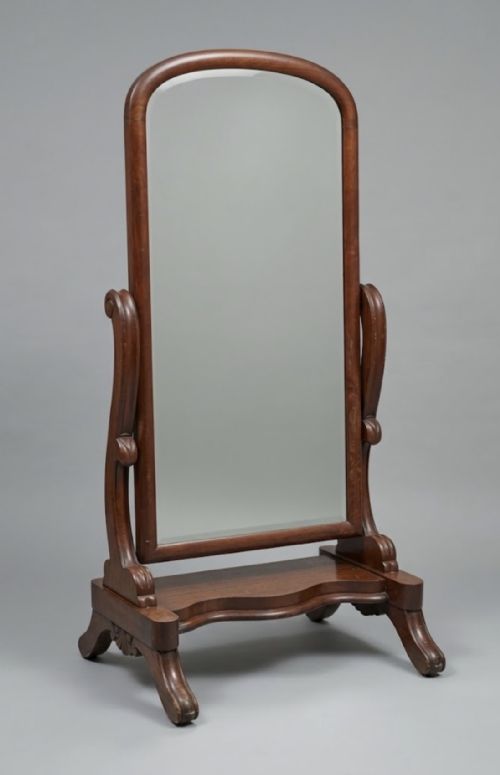
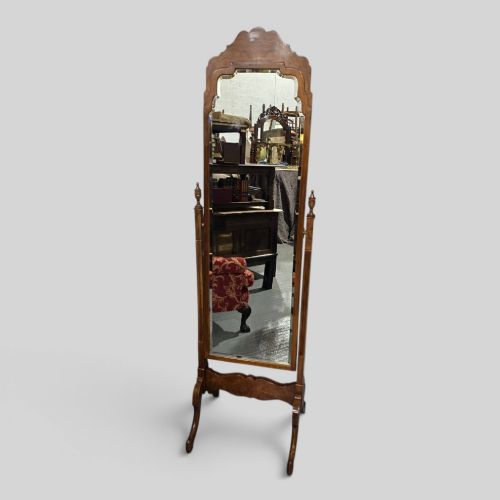
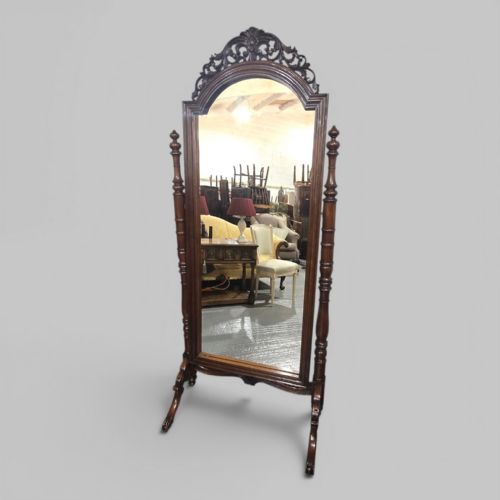
A carved wood psyche mirror is a pivoting glass plate in a wooden frame that stands on a floor base or sits on a table, offering a full-length reflection.
Carved Wood Psyche Mirror
A carved wood psyche mirror is designed to tilt on pivots, allowing the user to adjust the angle of the glass plate. The forms on this page include floor-standing cheval mirrors, swing mirrors, and dressing table mirrors.
The periods represented stretch from the nineteenth century into the twentieth, taking in Victorian examples alongside later Queen Anne style, French Chateau, and Art Deco pieces.
Makers utilised woods such as mahogany, walnut, and burr walnut veneer, often mounted with brass fittings and glass plates.
How they were made
Carpenters shaped solid mahogany and walnut into heavy frames and supporting stands, sometimes applying burr walnut veneer to create decorative grain patterns across the surfaces.
Pivots of brass connect the swinging glass frame to the upright supports, allowing the mirror plate to tilt freely without sagging.
Floor-standing cheval mirrors earned their equine moniker because their four-legged wooden frame resembled a horse.
What varies in quality
The distinction between standard examples and finer pieces lies in the choice of cabinet timbers and the complexity of the frame carving, with burr walnut veneer and dense mahogany indicating more ambitious workshop production.
The stability of the floor-standing frame and the precision of the brass pivoting mechanism determine how well the mirror holds its position during daily use.
The Carved Wood Psyche Mirror Glossary
- Cheval mirror
- A large floor-standing mirror that swings within a vertical frame. It gets its name from the French word for horse.
- Psyche mirror
- A pivoting dressing mirror supported on a frame or stand. The term derives from the mythological figure associated with beauty.
- Swing mirror
- A glass plate hung on side pivots within a stationary frame. This allows the user to alter the reflection angle.
- Burr walnut veneer
- A thin slice of figured walnut timber applied to a carcase wood. It provides decorative patterns of swirling grain.
Carved Wood Psyche Mirror: Frequently Asked Questions
What is a psyche mirror?
A psyche mirror is a pivoting glass plate mounted in a frame that allows the user to tilt the reflection angle. They appear in both floor-standing and tabletop formats.
These pieces served practical functions in dressing rooms and bedrooms, helping people check their attire from head to toe.
How do I date a wooden mirror?
Dating relies on observing the timber species, the construction methods of the frame, and the stylistic details. Victorian and Edwardian pieces show specific cabinet-making traits.
Comparing the hardware, such as brass pivots, alongside the period styles helps place the piece within the nineteenth or twentieth century.
Where should I place a cheval mirror?
A floor-standing cheval mirror requires a stable spot with enough clearance around the base for the frame to tilt safely. Bedrooms and dressing areas work best.
Positioning the glass opposite a window helps bounce natural light deeper into the room while providing a full-length view.
How do I care for the wood and glass?
Keep wooden frames away from direct heat sources and strong sunlight to prevent the timber and veneer from drying out. Dust regularly with a dry cloth.
Clean the glass plate with standard glass cleaner applied to a cloth rather than sprayed directly, protecting the surrounding wood finish.