



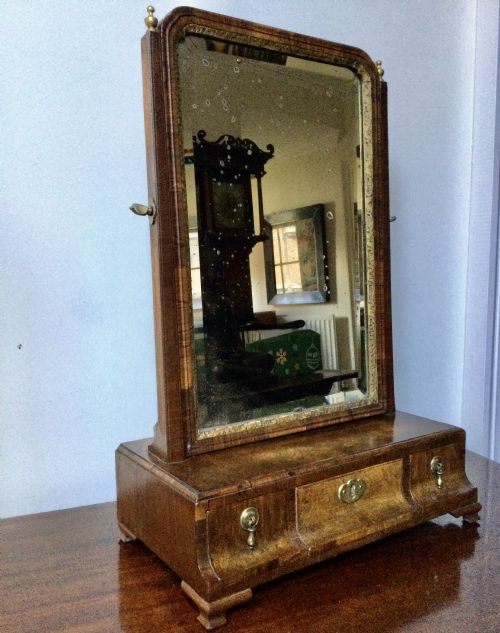

Antique Tabletop Desk Mirror
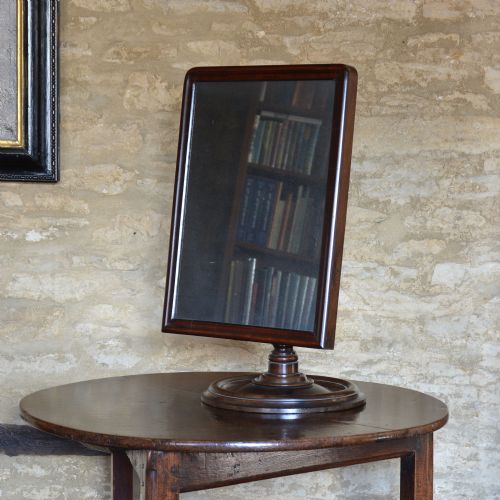
An antique tabletop desk mirror sits on a chest or bureau, offering a moveable glass surface for grooming and writing across periods from the seventeenth century to the twentieth.
Antique Tabletop Desk Mirror
An antique tabletop desk mirror offers a practical bureau fitment or a simple glass on a frame designed to sit upon furniture. The pieces seen here span from the seventeenth century to the Edwardian period, covering Georgian and Victorian iterations.
Most examples function as dressing table mirrors, toilet mirrors, or vanity mirrors, sometimes incorporating small drawers within the base. Walnut and mahogany dominate the earlier centuries, while giltwood, gesso, and cast bronze appear in revival styles.
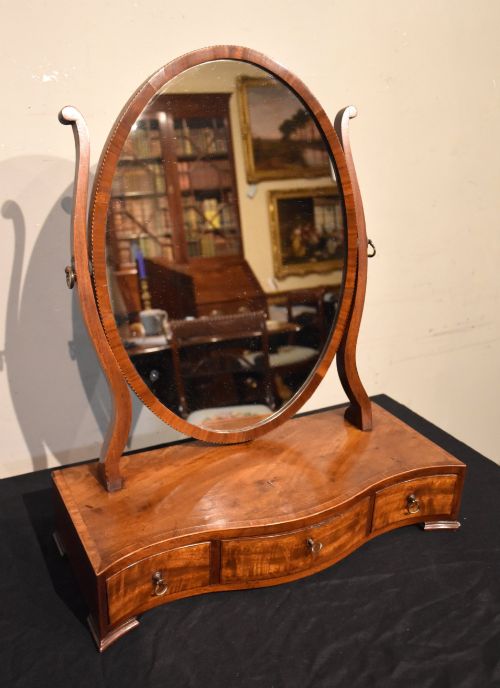
Makers produced these mirrors for boudoirs and dressing rooms, leading to diverse formats such as easel mirrors and bureau combinations. Buyers encounter serpentine fronts, marquetry decoration, and scientific optical adjustments among the available stock.
Materials and construction
Cabinetmakers utilised timber veneers like walnut, mahogany, satinwood, and boxwood over solid foundations, often adding stringing or marquetry. Frames incorporated mirror glass held within pivoting uprights attached to box bases or feet.
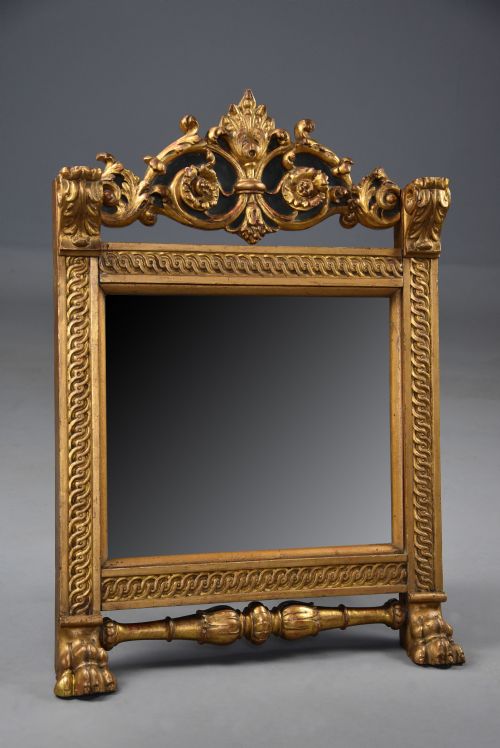
Giltwood and gesso pieces relied on carved wooden carcases coated in plaster and gold leaf, frequently following Italian or French Rococo revival designs. Cast bronze and brass provided structural mounts, hinges, and easel supports for later nineteenth-century examples.
A scientific optical mirror proves that even reflection required precision engineering by Victorian times.
Quality and execution
The sophistication of the cabinetwork and the figuring of the wood set finer examples apart from simpler utilitarian pieces. Crisp carving in giltwood frames and well-fitted drawer interiors indicate skilled workshop production.
Original mirror glass with appropriate ageing differs from later replacement plates, while sound construction in the pivoting mechanism ensures the glass holds its angle properly during daily use.
Thomas Rubergall of London
The Antique Tabletop Desk Mirror Glossary
- Toilet mirror
- A small mirror designed for a dressing table or washstand, popular from the seventeenth century onwards. These pieces frequently feature small drawer compartments in the base.
- Bureau fitment
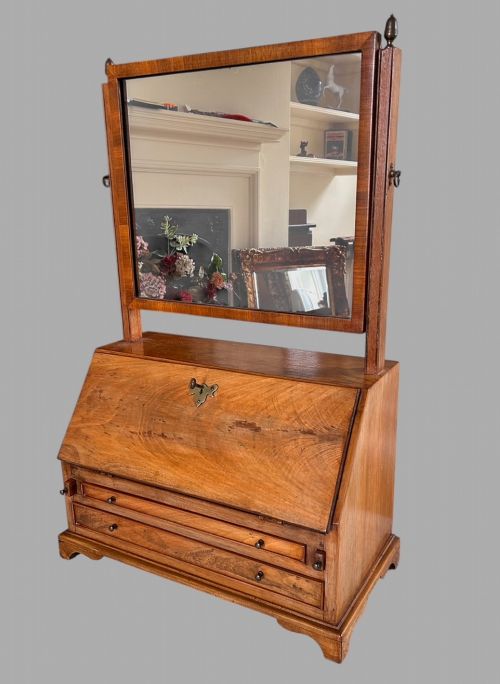
- A tabletop desk component incorporating a slanted writing flap and small internal compartments. Certain mirror designs integrate this feature directly into the base structure.
- Gesso
- A plaster-based material applied to wood surfaces and carved before gilding. It provides the raised decorative relief seen on Rococo revival frames.
- Serpentine front
- A furniture profile curving outward at the sides and inward at the centre. This shape appears on the bases of finer Georgian dressing mirrors.
- Easel mirror
- A freestanding mirror supported by a hinged leg at the rear rather than fixed uprights. This form allows easy adjustment of the viewing angle on a desk.
Antique Tabletop Desk Mirror: Frequently Asked Questions
How do I date an antique desk mirror?
Cabinet timber choices, construction methods, and hardware styles indicate the period of manufacture. Walnut and specific dovetailing point towards earlier centuries, while cast bronze and specific revival motifs suggest Victorian or Edwardian dates.
Examining the mirror plate itself and the backing boards provides further clues to age. Original bevels and old fixings support a period attribution.
Where were these mirrors placed?
These mirrors sat upon dressing tables, chests of drawers, or specialised bureau desks in bedrooms and boudoirs. Their portable nature allowed owners to move them around rooms to catch the best light.
Some versions combined a writing slope with the mirror, serving a dual purpose for correspondence and personal grooming.
Are the mirror plates usually original?
Many mirrors retain their original glass, which often exhibits characteristic foxing, light oxidation, and minor blemishes. These subtle signs of age distinguish period glass from modern replacements.
When a mirror plate has been replaced, the clarity of the reflection and the lack of historical surface wear usually give it away.
What is a bureau mirror?
A bureau mirror combines a small sloping writing desk base with an upright pivoting glass. They provided a compact workstation for writing letters alongside grooming facilities.
Interior compartments within the base held documents, inkwells, and small valuables.