

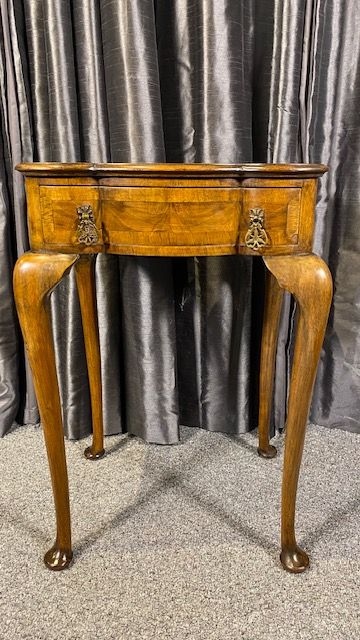
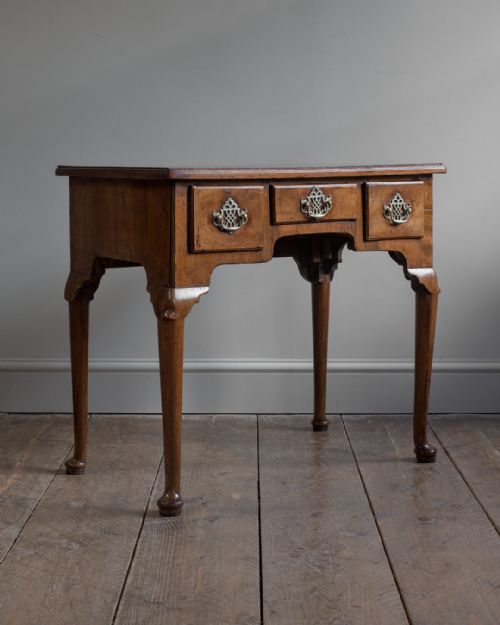
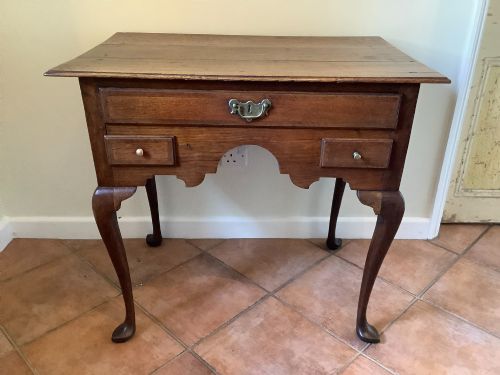
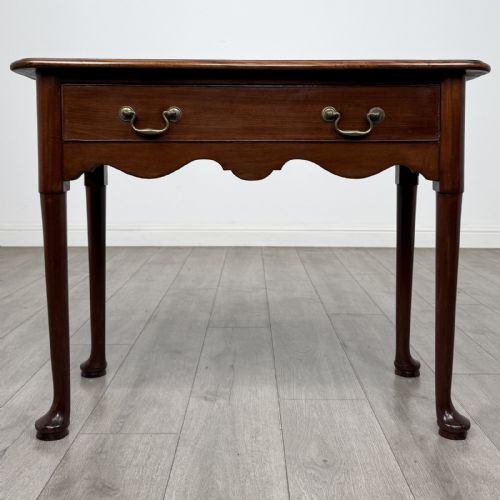
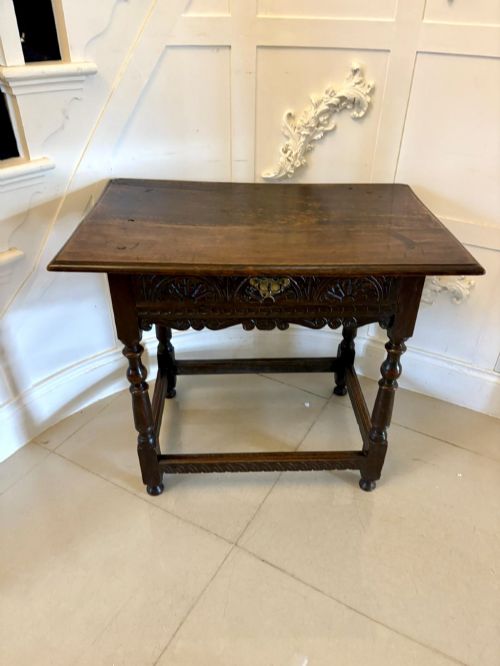
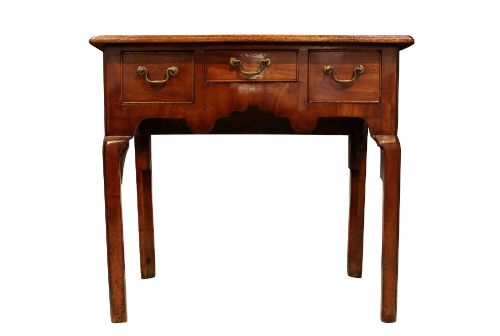
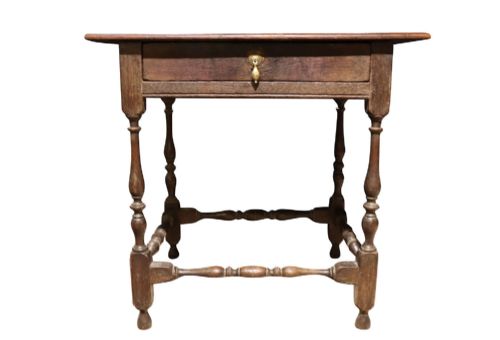
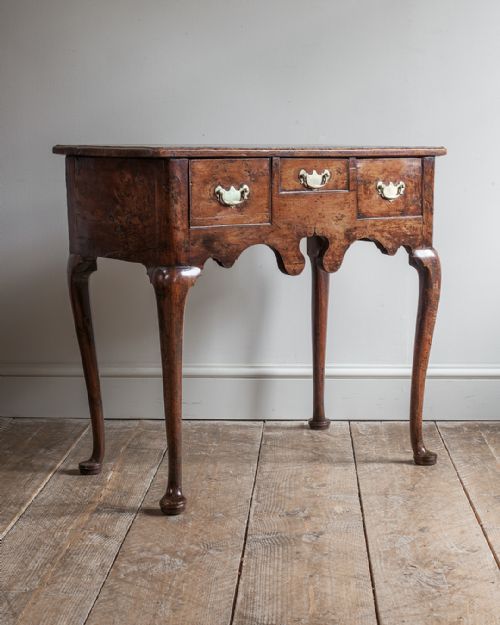
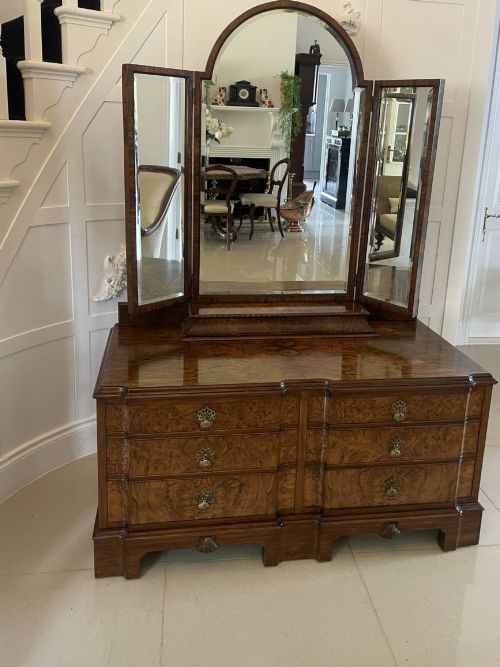
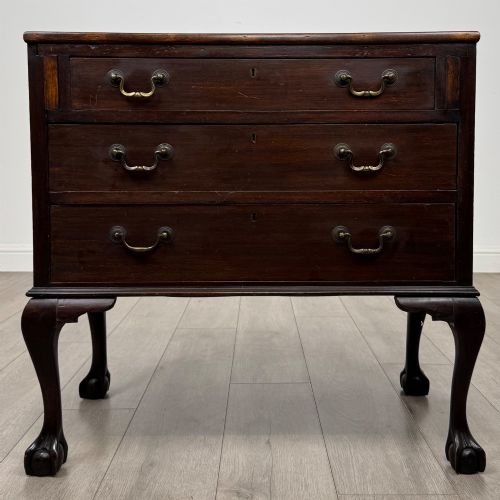
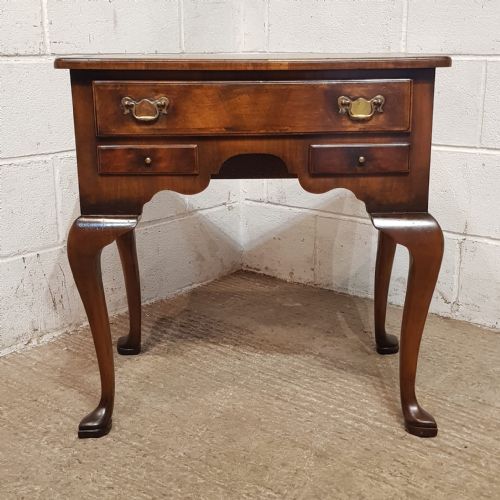
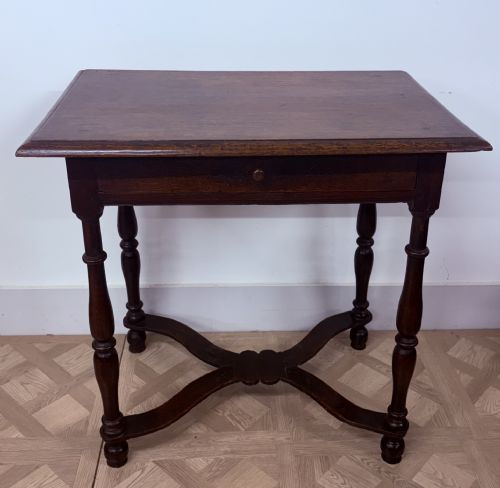
Brown Wood Lowboy
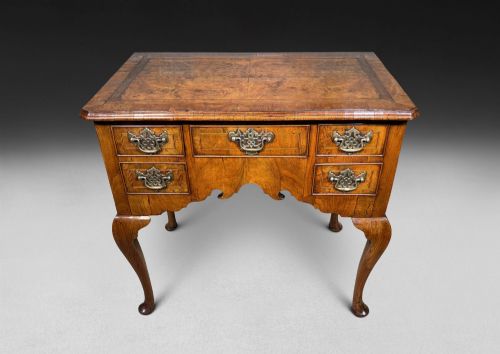
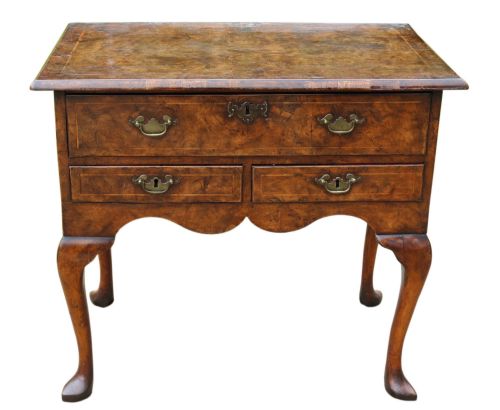
A brown wood lowboy offers compact table storage with drawers, combining period joinery and timber grain.
Brown Wood Lowboy
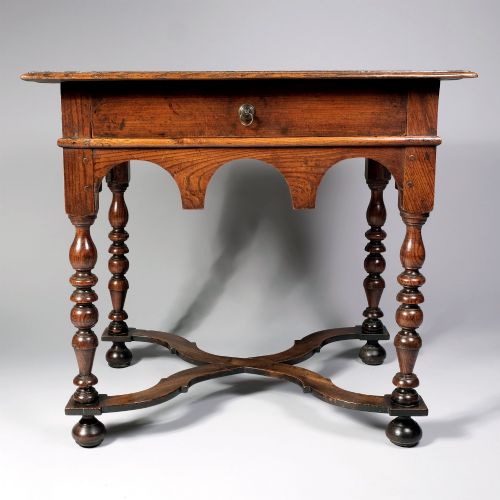
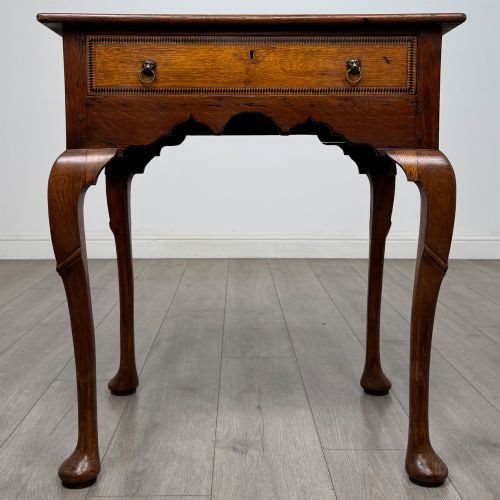
A brown wood lowboy functions as a small dressing table, side table or writing desk equipped with drawers beneath the surface. You will frequently encounter forms originating from the Georgian and 18th century periods, alongside later revivals.
The pieces span walnut, oak, mahogany, elm, fruitwood and yew, often standing on cabriole or straight legs. They appear under various descriptions including side tables, dressing tables and occasional tables.
Earlier examples display traditional construction methods like pegged joints and hand-cut dovetails within the drawer boxes. Later 20th-century revivals replicate these classic proportions using period timbers.
How they were made
Cabinetmakers constructed these tables using native and imported hardwoods such as oak, walnut, mahogany, elm, fruitwood and yew. Timber selection dictated the character, utilising plain boards for structure and figured or burr veneers for primary display surfaces.
Joinery relied on mortise and tenon frames combined with hand-dovetailed drawer construction. Brass drop handles and escutcheons secured the drawer fronts, while timber shrinkage allowances governed the panel fits.
Brown Wood Lowboy Retail Price Guide 2026
Typical asking prices for brown wood lowboy among the pieces listed under this phrase on Sellingantiques today, from the lower quarter to the upper quarter. They describe what is for sale here now, not the wider market.
Listings span multiple centuries, ranging from 17th-century oak and William and Mary periods through Georgian eras to 20th-century revivals.
What varies in quality
Quality depends upon the choice of timber figure, such as burr walnut or figured mahogany, and the crispness of the drawer dovetails. Superior examples retain their original brass hardware and untouched timber patination.
Proportion and leg carving separate standard pieces from finer ones, particularly where cabriole legs meet carved knees or pad feet. The thickness of secondary woods used in drawer linings also signals workshop standards.
The Brown Wood Lowboy Glossary
- Lowboy
- A small kneehole-free table with one or more rows of drawers, typically standing on four legs. These tables served various domestic functions from dressing to writing.
- Dovetail
- A joint formed by interlocking wedge-shaped fingers, used extensively in drawer construction. Hand-cut variations indicate period craftsmanship before machine production.
- Burr walnut
- A prized timber veneer showing swirling knot formations. It creates highly decorative patterns across table tops and drawer fronts.
- Cabriole leg
- A furniture leg featuring a double curve, swelling outward at the knee and tapering inward at the foot. This form characterises much 18th-century design.
- Dresser base
- A low heavy table fitted with drawers, sharing similar proportions and storage utility with larger lowboys.
Brown Wood Lowboy: Frequently Asked Questions
What is a brown wood lowboy used for?
These tables originally served as small dressing tables for personal grooming or as side tables for holding writing materials and correspondence.
Today they function effectively as lamp tables, hallway consoles or compact desks within modern interiors.
How do I tell an 18th-century lowboy from a later revival?
Examination of the timber movement, hand-cut dovetails and interior secondary woods reveals the age of construction. 18th-century pieces show natural wear and timber shrinkage consistent with their age.
Twentieth-century revivals often display more uniform machine working and timber preparation inside the drawer framing.
Which timbers appear most often on these tables?
Oak and walnut dominate the earlier periods, alongside mahogany and fruitwoods like cherry or elm. Yew and burr walnut also feature prominently among figured examples.
Cabinetmakers matched these primary hardwoods with corresponding secondary timbers inside the drawer boxes.
Are all lowboys fitted with drawers?
Most lowboys incorporate one, two or three drawers beneath the top surface to provide concealed storage. Some listings group them alongside side tables which may lack drawers entirely.
Drawer configurations vary from single wide shallow drawers to three-drawer arrangements with a central arched apron.